



Popular Dances Kids Love: 16 Party and Group Dances for Ages 3 to 12
Table of contents
- Key Takeaways
- The 16 dances at a glance (15 named dances plus trend dances)
- Ages 3 to 6: follow-along dances for the littlest partygoers
- Ages 6 to 10: call-out and line dances kids learn along the way
- Ages 9 to 12: line dances and trend dances for tweens
- How to run a kids' dance party with these
- FAQ
-
- About the Stelle Team
The most popular dances kids do at parties, school events, and family celebrations fall into three groups: follow-along classics for little ones (the Hokey Pokey, the Chicken Dance), call-out line dances that teach themselves (the Cha Cha Slide, the Cupid Shuffle), and short trend dances learned from friends and online clips. Most take five minutes or less to pick up because the song or the crowd shows every dancer what to do.
These are the popular dances for kids that actually get played at real events, grouped by age band, with where each came from and how it works. Think of it as a social survival kit rather than a technique manual: for individual moves like the grapevine or the floss, see our 12 easy dance moves guide, and for studio styles like ballet or jazz, start with our types of dance overview.
Key Takeaways
-
Call-out dances like the Cha Cha Slide and Cupid Shuffle are the easiest dances to teach because the lyrics announce every move as it happens.
-
Kids ages 3 to 6 do best with follow-along dances: the Hokey Pokey, the Chicken Dance, freeze dance, and a conga line.
-
Line dances for kids, like the Macarena and Electric Slide, repeat one short pattern, so a child only has to learn a sequence once and then repeat it as the dance changes direction.
-
Trend dances cycle fast; the classics here have stayed in party rotation for 20 to 60 years, so they are worth learning once.
-
No dance experience is required. Watching the crowd for one repetition is usually enough.
The 16 dances at a glance (15 named dances plus trend dances)
|
Dance |
Age band |
How it works |
Staying power |
|---|---|---|---|
|
Hokey Pokey |
3 to 6 |
Circle dance, song calls each action |
Generations |
|
Chicken Dance |
3 to 6 |
Four repeating motions, speeds up |
Since the 1950s |
|
Freeze dance |
3 to 6 |
Freestyle until the music stops |
Timeless game |
|
Limbo |
3 to 6 |
Lean back under a lowering bar |
Party classic |
|
Conga line |
3 to 6 |
Follow the leader in a chain |
Weddings and school parties |
|
Cha Cha Slide |
6 to 10 |
Call-out line dance |
Hit around 2000 |
|
Macarena |
6 to 10 |
16-count arm sequence with a hop |
1996 smash |
|
Y.M.C.A. |
6 to 10 |
Spell the letters with your arms |
Since the late 1970s |
|
Cupid Shuffle |
6 to 10 |
Call-out line dance, four directions |
Since 2007 |
|
Cotton Eye Joe |
6 to 10 |
Kick-and-stomp line dance |
1994 version of an old folk tune |
|
Electric Slide |
9 to 12 |
Grapevine-based line dance |
Since the 1970s |
|
Wobble |
9 to 12 |
Bounce-driven line dance |
Wedding staple |
|
Whip and Nae Nae |
9 to 12 |
Named moves called in the song |
Mid-2010s |
|
Thriller |
9 to 12 |
Zombie group choreography |
Halloween season |
|
Gangnam Style |
9 to 12 |
Gallop-style riding move |
Global viral hit |
|
Trend dances (a category) |
9 to 12 |
Short clips learned from friends |
Weeks to months |
Ages 3 to 6: follow-along dances for the littlest partygoers
Preschoolers do not memorize choreography; they copy. These five group dances for kids work because an adult or the song demonstrates each action in real time.
The Hokey Pokey
Picture a shy preschooler at a skating-rink birthday: this is the dance that gets them into the circle. The song tells everyone to put one body part in, take it out, shake it all about, then spin in place. A preschool staple for generations, it is really a listening game with left versus right built in.
The Chicken Dance
Swiss accordionist Werner Thomas composed this tune in the 1950s as "Der Ententanz," the duck dance; it reached the United States at a 1981 Oktoberfest in Tulsa, where a chicken costume gave it its American name, per the Society of Folk Dance Historians. Kids make beaks, flap their elbows, wiggle down, and clap, faster with every verse.
Freeze dance
Play any song, stop it at random, and everyone holds a statue pose until the music returns. It is about the lowest-prep party dance there is.
The limbo
Two adults hold a broomstick or pool noodle while kids take turns leaning back to pass under it as it lowers, a party game that took off at mid-century parties and rinks. Let small kids duck or crawl once the bar gets low; a birthday party is no place for forced backbends.
The conga line
One leader, hands on the shoulders of the person ahead, and a kick to the side on every fourth beat. The conga is a Cuban carnival dance, per Britannica, and since there are no steps to learn, just a chain to join, it often pulls shy kids onto the floor.

Ages 6 to 10: call-out and line dances kids learn along the way
Once kids can follow repeating patterns, the great call-out songs and easy party dances take over. These are the dances every kid knows by name, many picked up in early elementary school, mostly from school events and family weddings.
The Cha Cha Slide
Chicago DJ Casper, born Willie Perry Jr., created the Cha Cha Slide as an aerobic routine for his nephew, a trainer at a Bally's gym, before a 2000 release turned it into a worldwide party fixture, according to Rolling Stone. The track is a series of spoken instructions (slide left, slide right, hop, stomp, cha cha), so a first-timer is dancing correctly within one verse.
The Macarena
Spanish duo Los del Rio recorded the original in 1993, and the 1996 Bayside Boys remix spent 14 weeks at number one on the Billboard Hot 100, one of the longest runs in chart history, per Mental Floss. The dance is a 16-count arm pattern (hands out, palms up, shoulders, head, hips) capped with a small jump to face a new wall.
Y.M.C.A.
The Village People's late-1970s hit carries the easiest group move on this list: spell the four letters with your arms on the chorus. The song sits in the Library of Congress National Recording Registry, which notes that 40,148 people once did the dance together at the Sun Bowl, a Guinness World Record at the time.
The Cupid Shuffle
Louisiana singer Cupid, born Bryson Bernard in Lafayette, released this in 2007, and the dance landed in the Guinness Book of World Records in 2008 for the largest line dance assembled, per the Louisiana encyclopedia 64 Parishes. At a school dance, the lyrics do the teaching: four steps right, four steps left, kicks, then a freestyle walk where kids get to show off.
Cotton Eye Joe
The underlying folk tune has roots among enslaved Black communities well before the Civil War, and Swedish group Rednex remade it as a techno-fiddle hit in 1994, as Mental Floss recounts. At skate nights, ballparks, and field days, kids do a simple kick-kick-back-stomp pattern or link arms and swing.
Ages 9 to 12: line dances and trend dances for tweens
Older kids want dances with a little style and a social payoff. These carry them through middle school dances, sleepovers, and team celebrations.
The Electric Slide
At the next wedding reception, this is the one the whole room knows. Choreographer Richard Silver created the grapevine-based line dance in the mid-1970s, originally with 22 steps, though most crowds dance an 18-step version to Marcia Griffiths' "Electric Boogie," NPR reported (via LAist). Grapevine right, grapevine left, walk back, lean, quarter-turn, repeat. Once a kid has it, it tends to stick.
The Wobble
A newer wedding and cookout staple with its own song. Dancers jump forward, jump back, bounce loose on the wobble part, then quarter-turn and repeat, and the loose middle section is personal rather than choreographed.
Whip and Nae Nae
A mid-2010s hit built around two named moves the song calls out: the whip is a bent-knee move with one fist stroking forward, the nae nae a raised hand swaying side to side. It often gets a full-floor response at kid events.
Thriller
Michael Jackson's 1983 video gave the world the most elaborate choreography on this list, credited to Michael Peters, and around Halloween, schools and studios teach simplified versions often. Kids only need the iconic parts: the stiff zombie walk, the claw hands, the shoulder shimmy.
Gangnam Style
Psy's global hit made an invisible-horse gallop into a dance, which Britannica describes as a comic horse-riding routine: wrists crossed in front, a bouncy ride on every beat, a lasso arm on the chorus. It is silly on purpose, an easy sell for kids who claim they are too cool to dance.
Trend dances (the Griddy and friends)
Most years bring a short celebration dance that spreads through sports and social clips, like the Griddy, a bouncy running pattern with heel taps and pumping arms. Most run 5 to 15 seconds, which is exactly why kids master them; names change every few months, so ask your kid what is current. Our dance moves names glossary covers the moves that keep resurfacing inside these trends.
How to run a kids' dance party with these
You do not need a DJ, just a phone, a speaker, and a rough plan.
-
Open with freeze dance or the Chicken Dance to lower everyone's guard.
-
Stack two or three call-out songs in the middle; they carry the party while you handle cake logistics.
-
Slot in one tween trend dance if older kids are there, then close with a conga line to sweep in the holdouts.
-
Keep a backup list of upbeat, clean dance songs for kids between the named dances so the floor stays busy, and choose radio or clean edits for tween favorites like Whip and Nae Nae, the Wobble, and Gangnam Style.
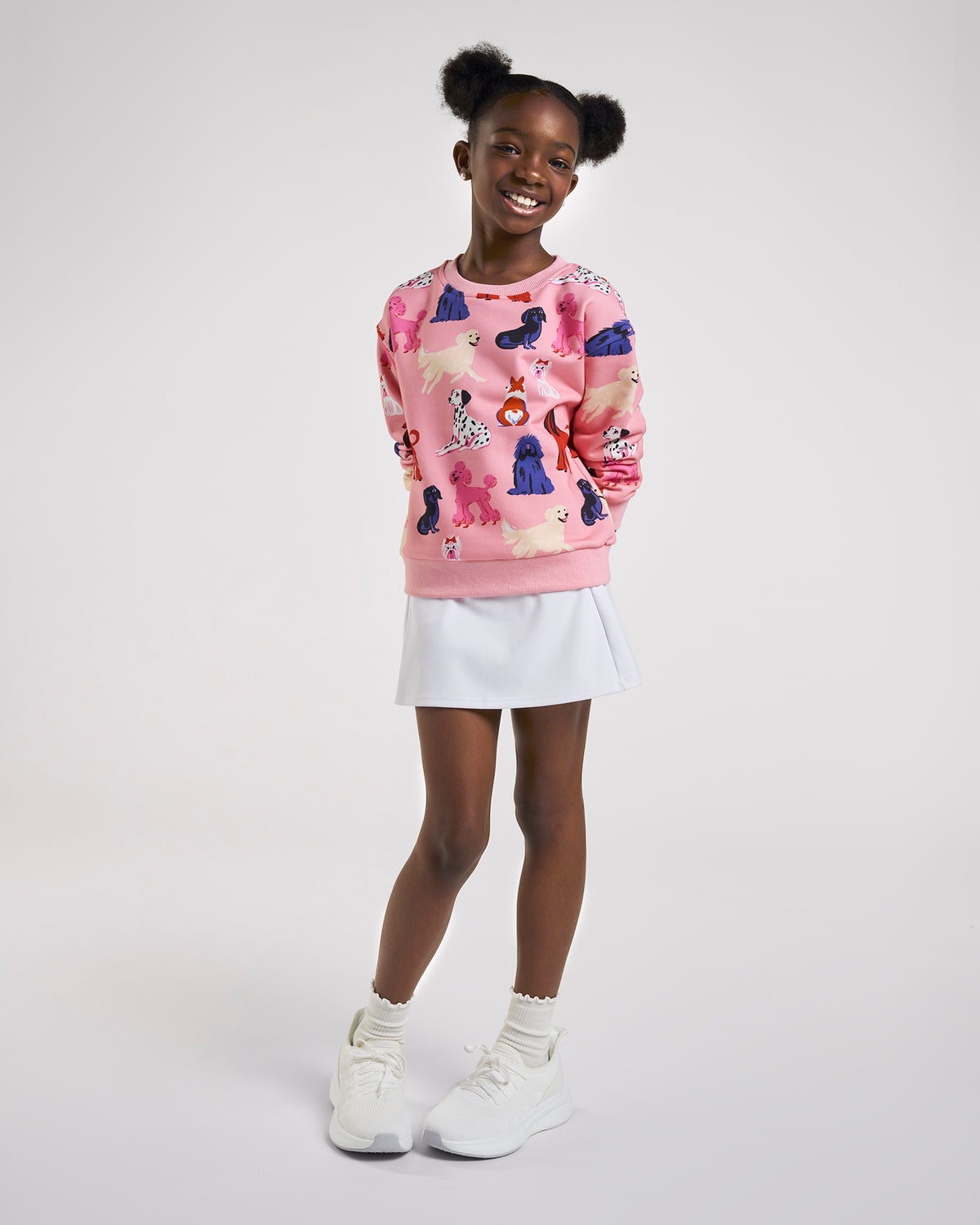
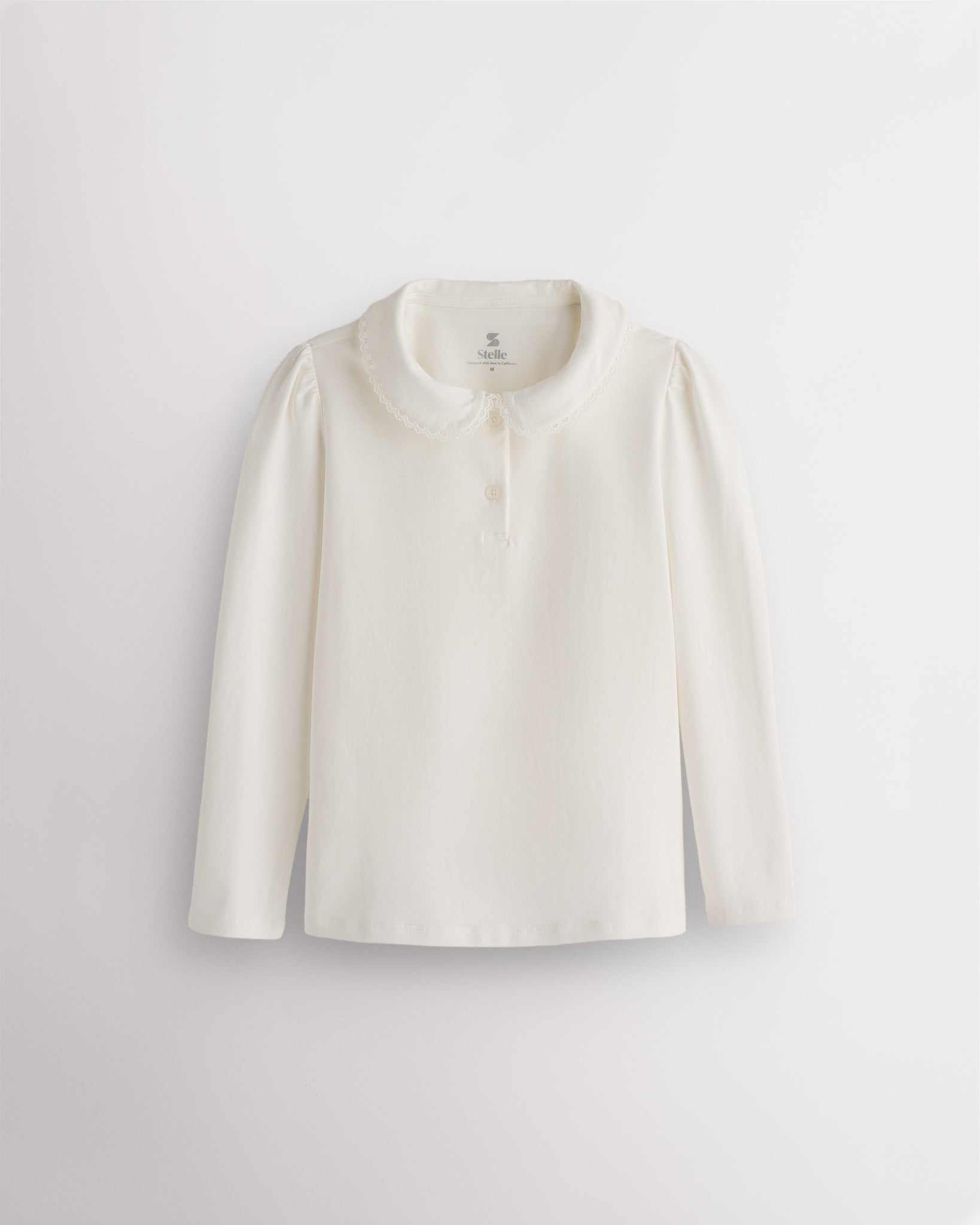
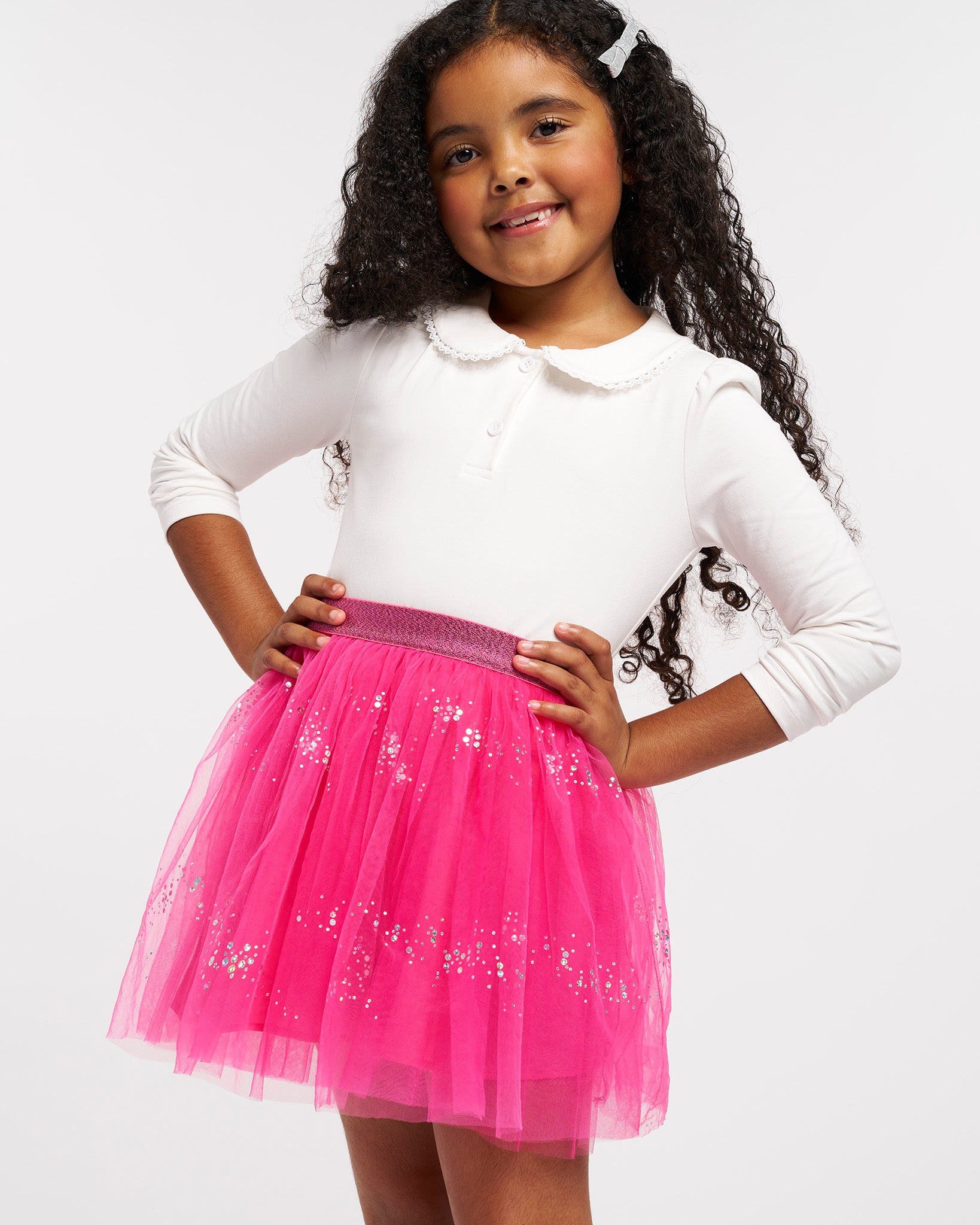
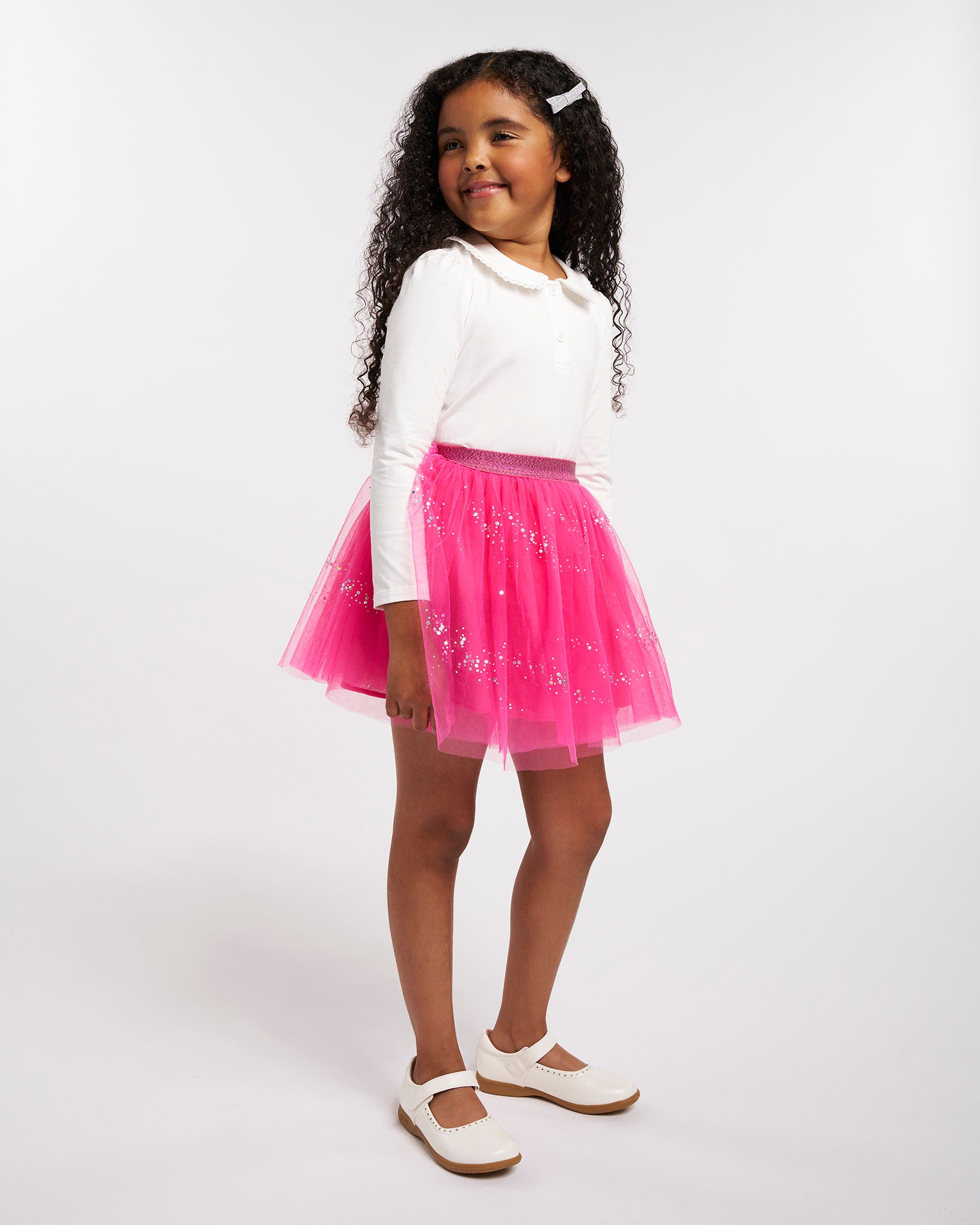
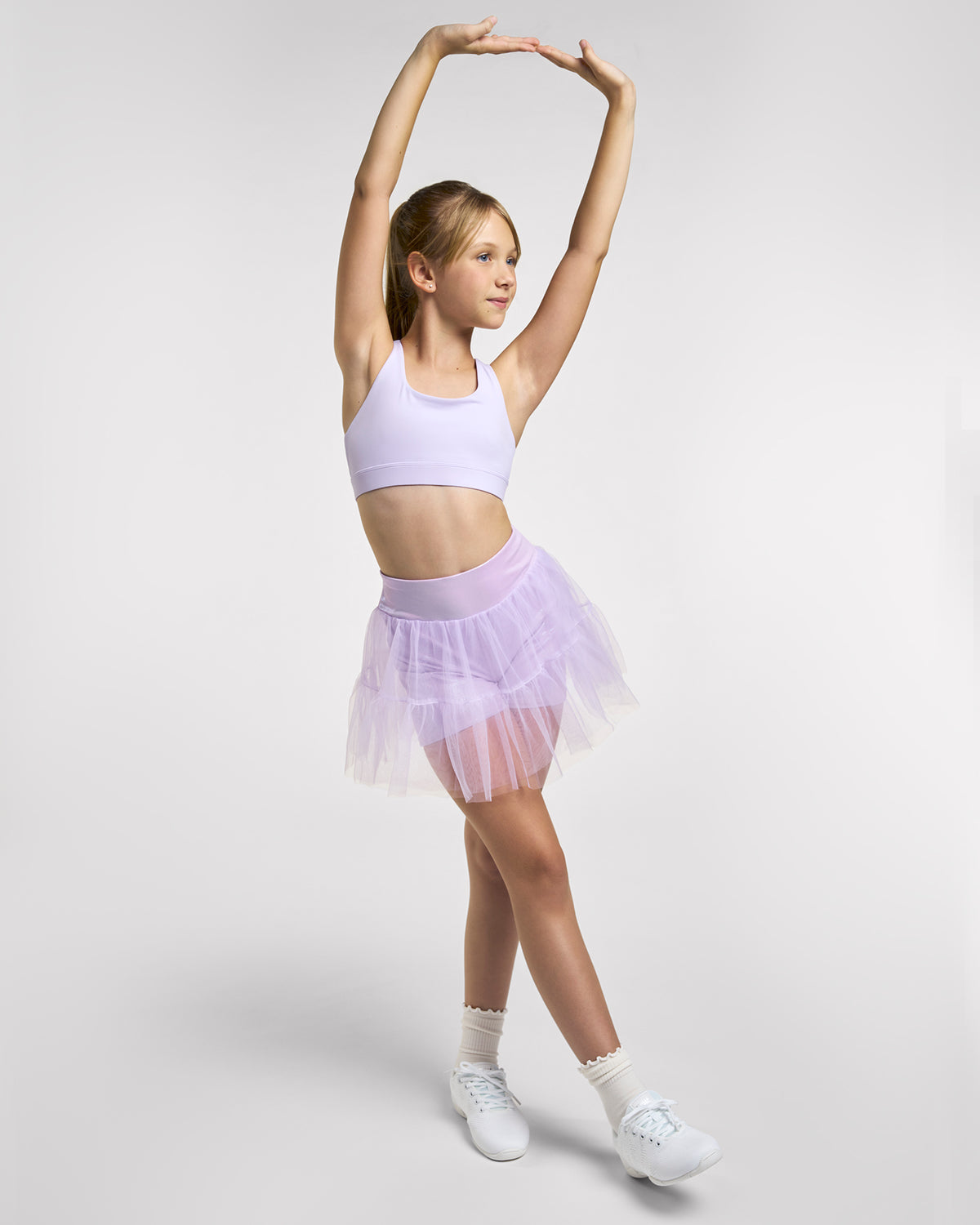
Dress matters more than parents expect: kids move longer in soft, stretchy clothes than in stiff party outfits, so leggings or bike shorts with a breathable top are a smart call, and everyday girls' athleisure does double duty for parties, spirit days, and recess. If the party sparks something bigger, our at-home dance workouts and choreographing a first dance guides give that energy somewhere to go.
Learn two call-out dances and one classic line dance as a family, and the next wedding reception or school social gets a lot less awkward, for the kids and for you.

FAQ
What are the easiest party dances for young kids?
The Hokey Pokey, the Chicken Dance, and freeze dance require no memorization: the song or the game announces every action. A conga line is even simpler, since kids just hold on and follow. Most preschoolers can join in without practice.
What are good group dances for a school event or birthday party?
Call-out and sing-along dances suit mixed ages: the Cha Cha Slide, the Cupid Shuffle, and Y.M.C.A. let newcomers and experienced kids share the floor because instructions arrive in real time. Add the Macarena for kids 6 and up, and a conga line as a finale that includes toddlers through grandparents.
Which line dances should kids learn first?
Start with the Cha Cha Slide and Cupid Shuffle, since the lyrics call the steps, then the Macarena (one repeating 16-count pattern), then the Electric Slide, which adds the grapevine and a quarter-turn. In that order, each dance recycles skills from the one before.
What songs have the dance steps built into the lyrics?
The Cha Cha Slide and the Cupid Shuffle are the two big ones, and school music teachers often use both for that reason. Adjacent options: the Hokey Pokey names each body part as it goes, freeze dance is cued by the music stopping, Cotton Eye Joe pairs a steady kick pattern with a beat kids can hear, and Whip and Nae Nae name their moves in the song.
Are trend dances from social media okay for kids to learn?
Usually yes, with a quick preview. Most are short, silly, and physically easy, but a few come from songs with rough lyrics or moves that read differently on a child, so watch the clip once before it debuts at the talent show. When in doubt, the classics above are safe bets at school.
About the Stelle Team
Stelle is a mom-trusted dancewear & athleisure brand best known for girls’ ballet and dance essentials since 2015. Every article is created and reviewed by the team behind the products, drawing on what we hear from dance teachers, studio owners, and dance parents every day. Learn more about Stelle.