



Easy Hip Hop Dance Moves for Kids: 10 Beginner Steps to Learn at Home
Table of contents
Hip hop dance moves for kids start with a relaxed bounce, not fancy footwork. Once your child can groove to the beat, beginner moves like the kick step, running man, and dougie come together quickly for most kids, and each one below is broken into simple numbered steps for the living room. No experience needed and no gear beyond sneakers, open space, and music your family enjoys.
Key Takeaways
-
The hip hop bounce is the foundation. Teach it first, and most other moves get easier.
-
Easy hip hop moves follow a pattern: learn the footwork slowly, add arms, then speed up.
-
Everything here is a standing move. Floor moves like freezes and spins belong in a class with mats and a teacher.
-
Kids hip hop dance classes often start around ages 5 to 8, and these grooves are great prep.
Where Hip Hop Moves Come From
Hip hop dance grew out of the parties and street culture of the 1970s Bronx, where DJs like Kool Herc extended the danceable "break" sections of records and dancers filled them with new movement. That history is why hip hop moves feel different from ballet or jazz steps: they are grounded, bounce-driven, and leave room for freestyle and personal style. For what hip hop dance is as a studio style, our types of dance guide covers it alongside 30+ styles.
For the moonwalk, floss, and robot, see our easy dance moves guide.
Set Up a Kid-Safe Practice Space
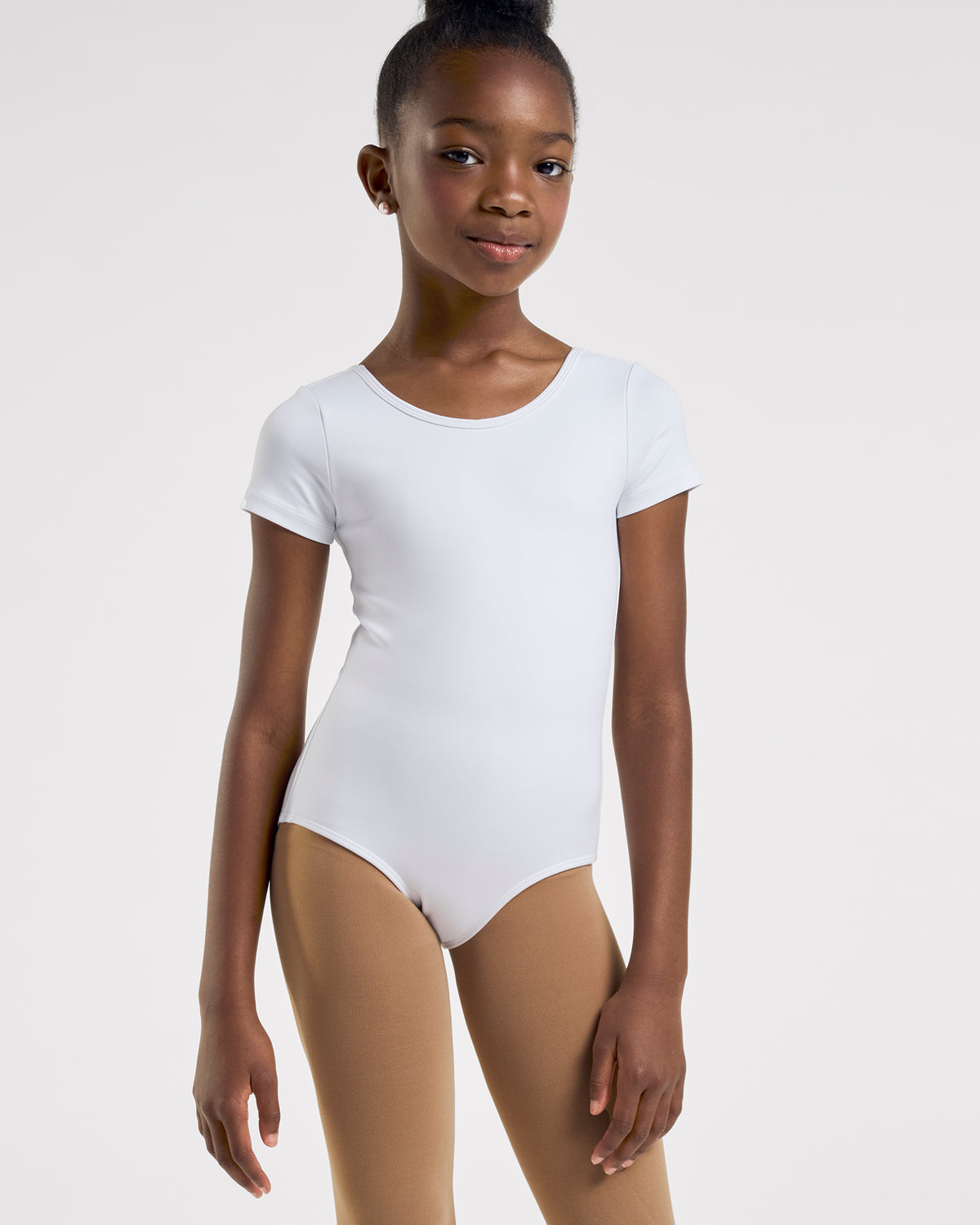
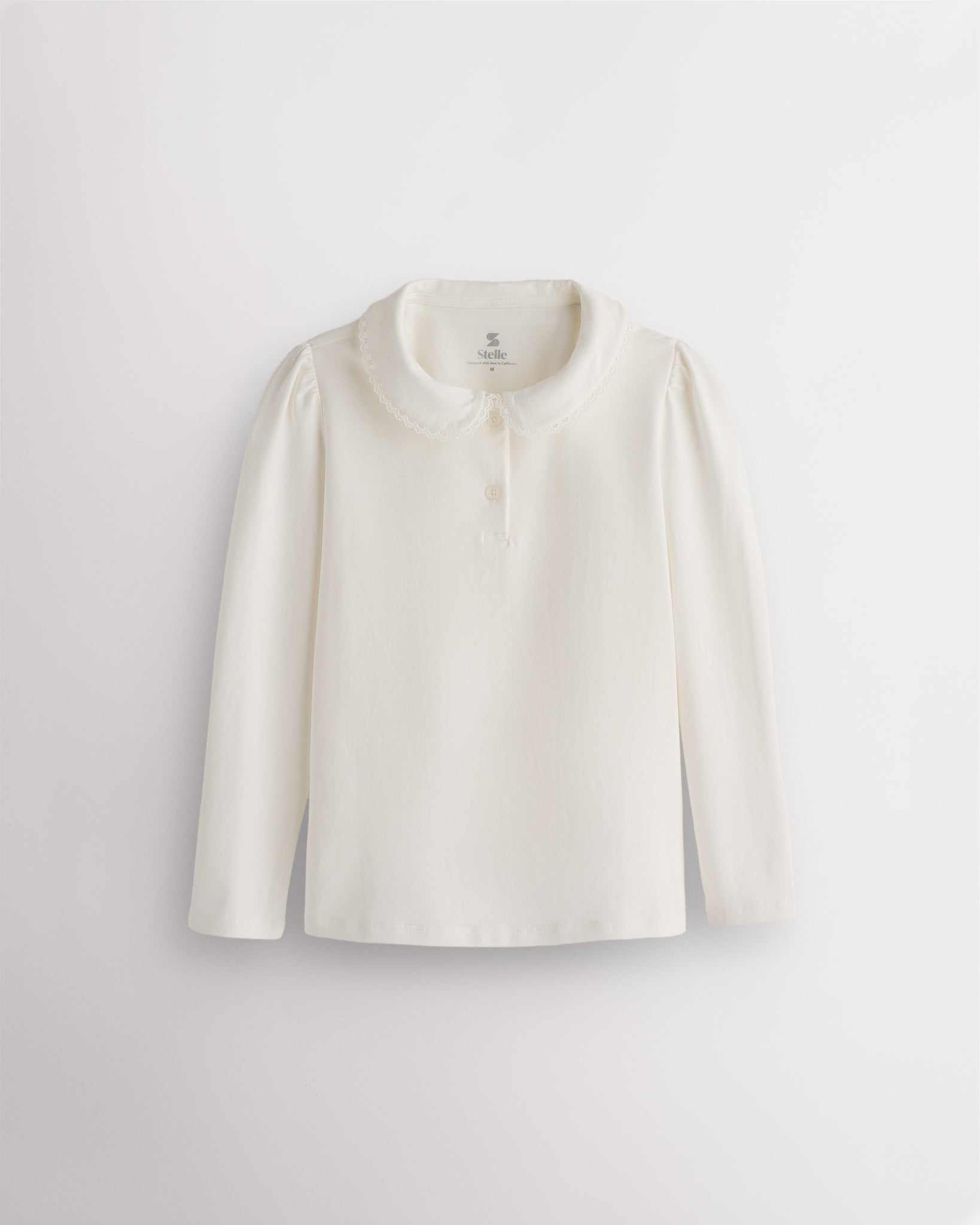
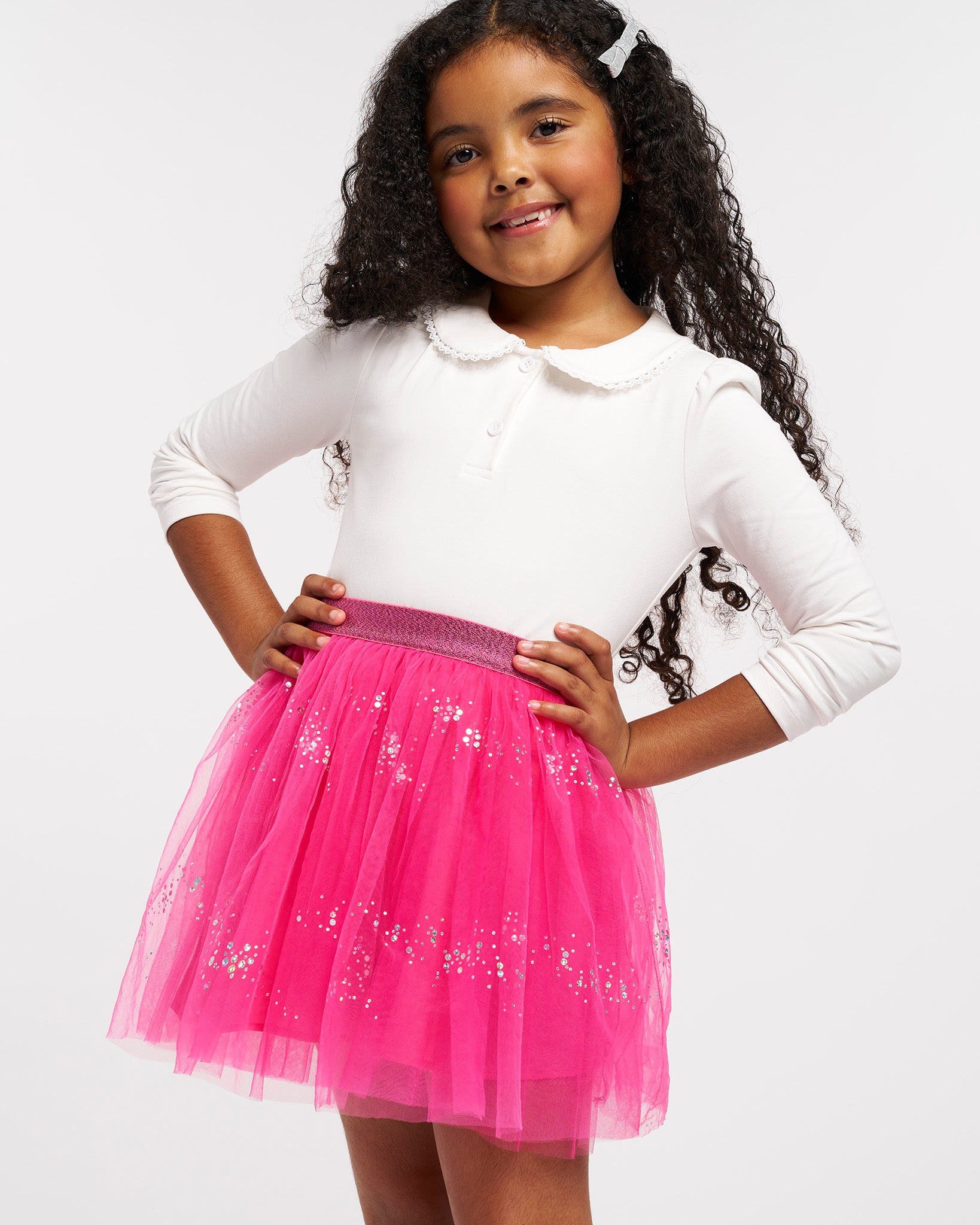
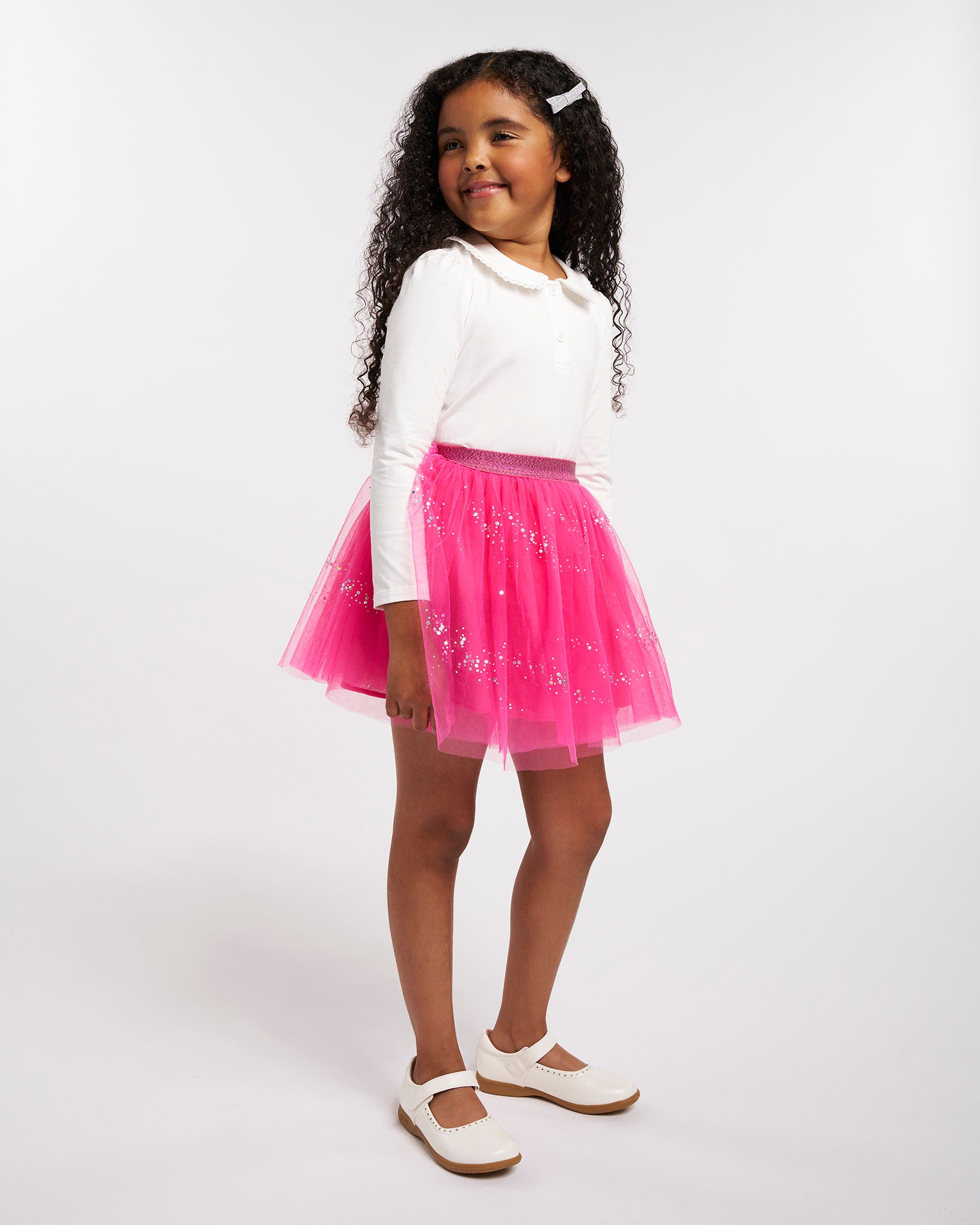
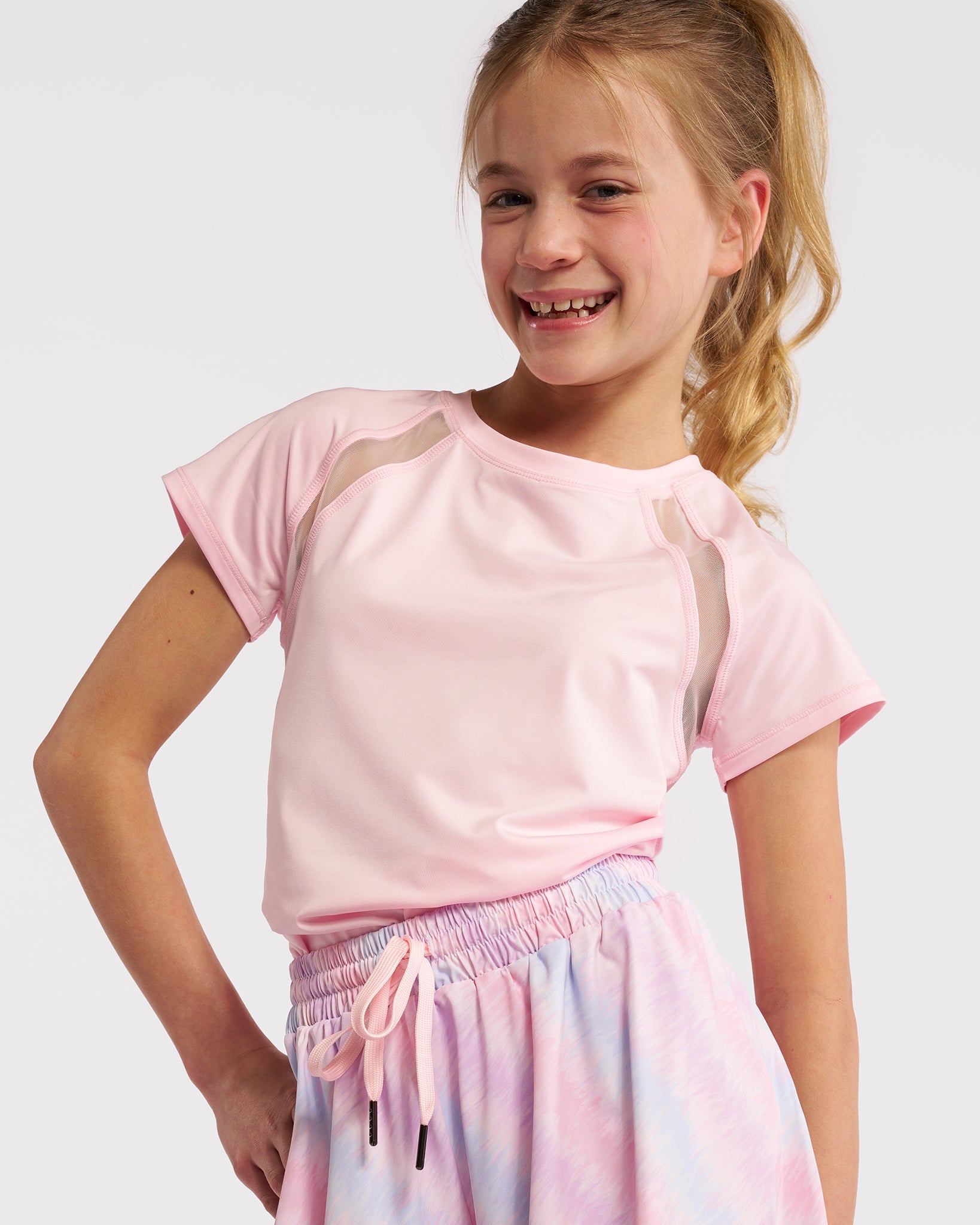
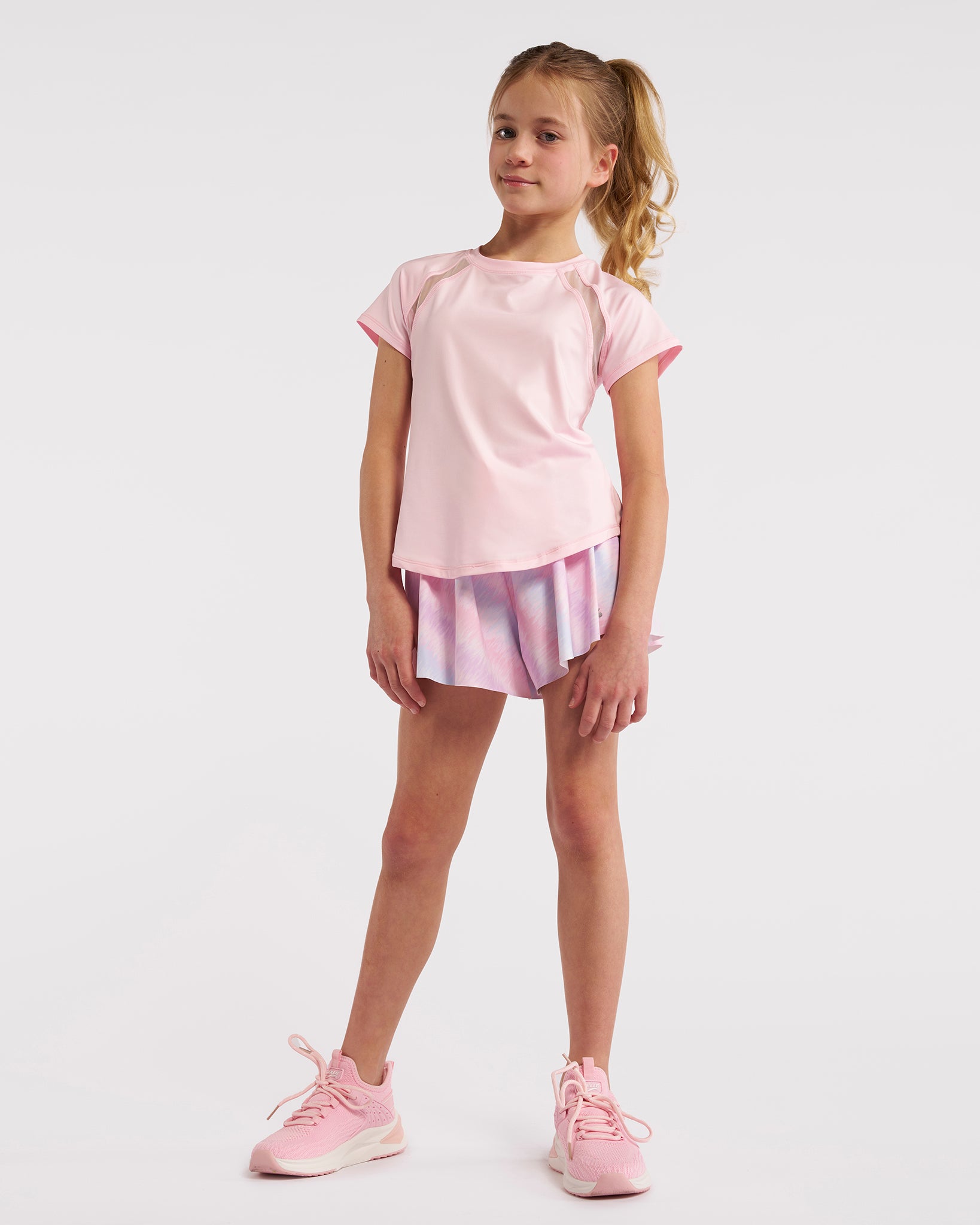
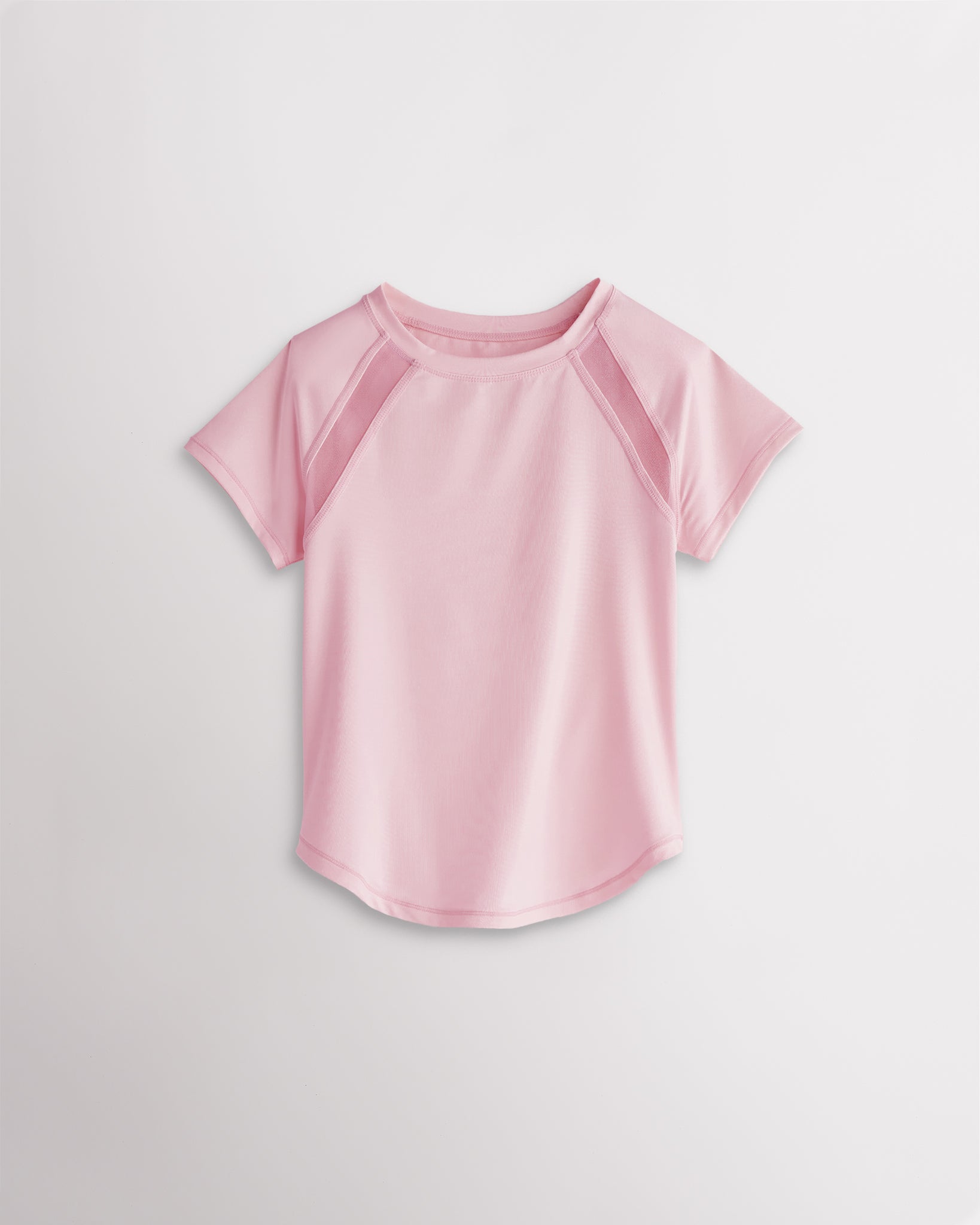
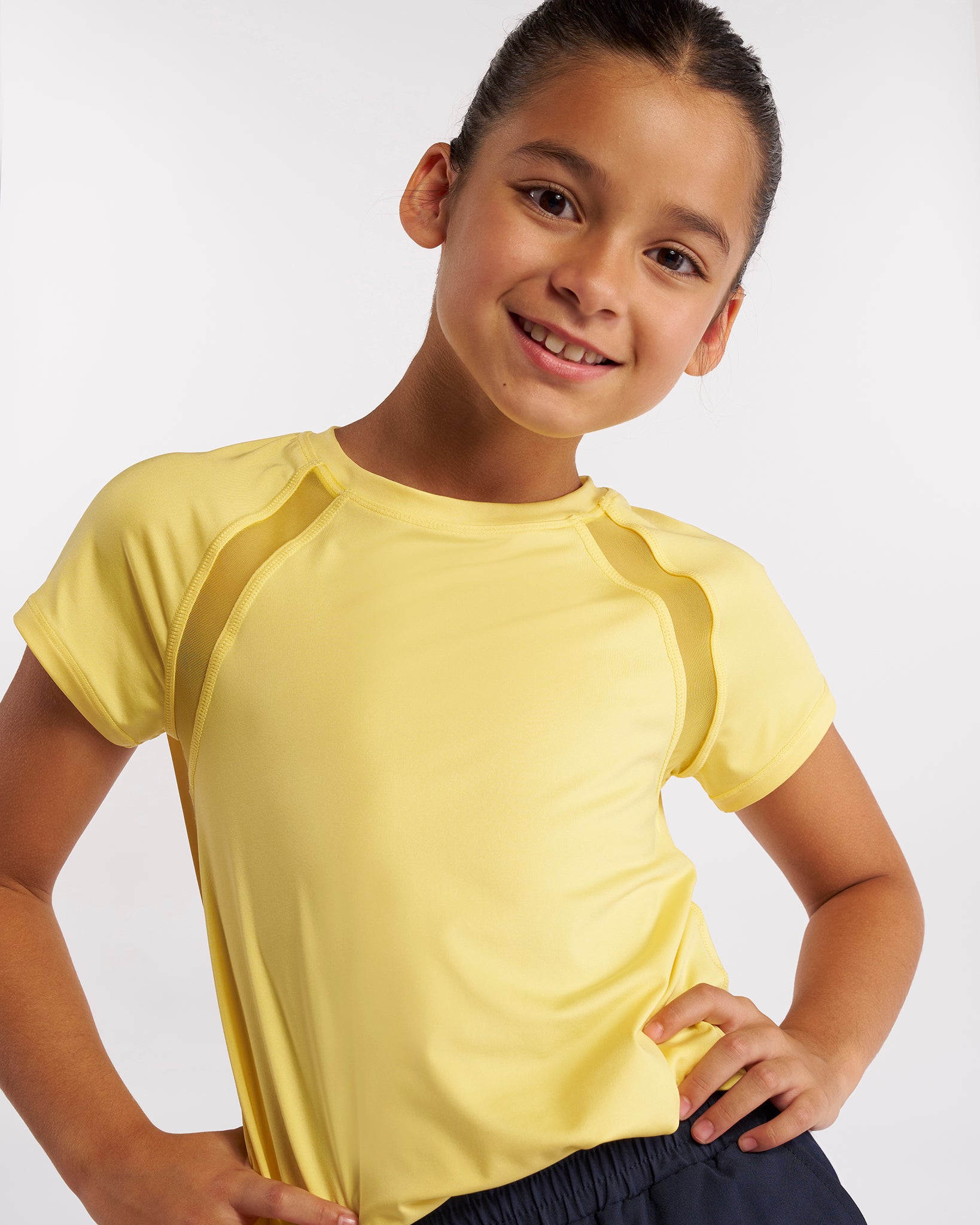
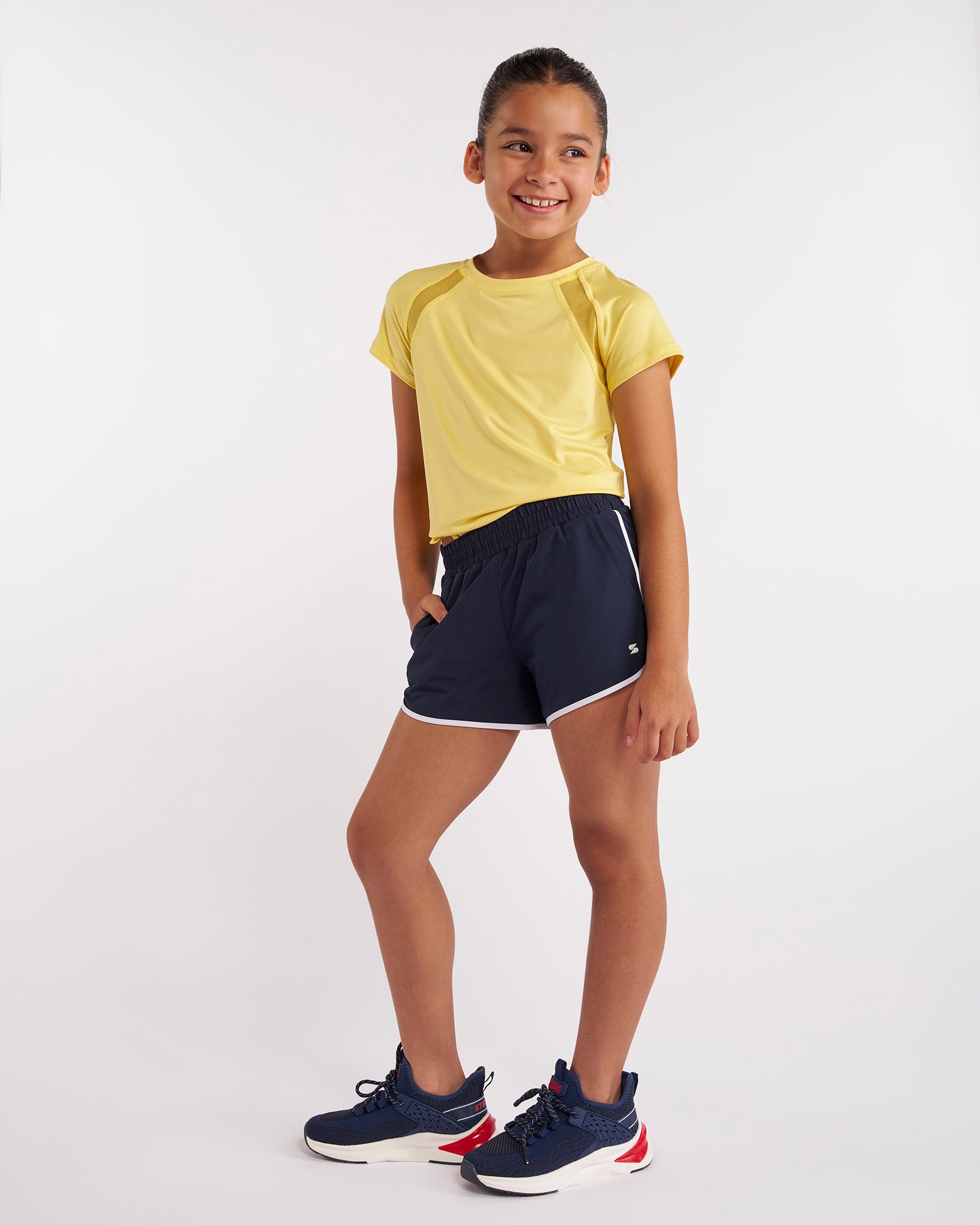
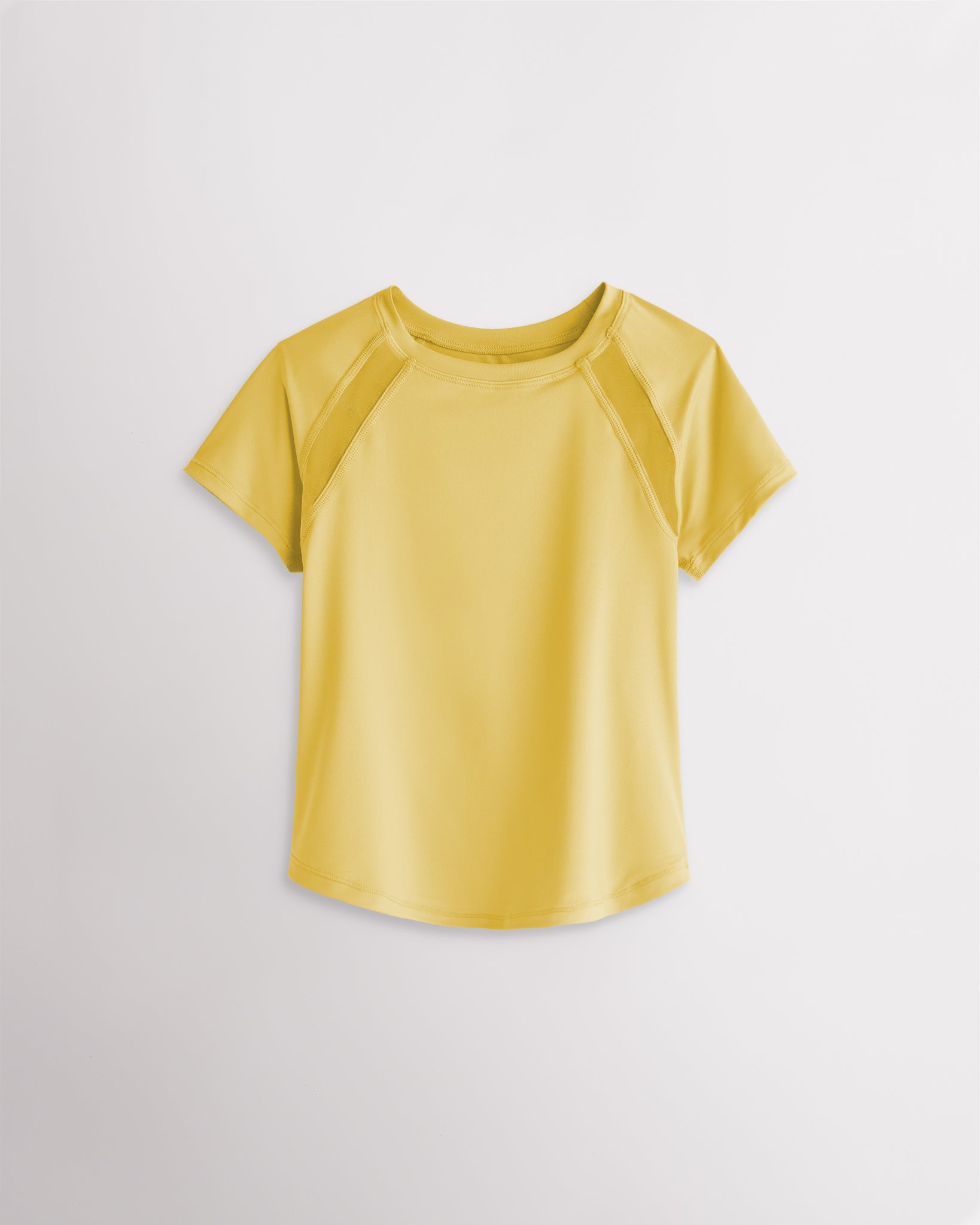
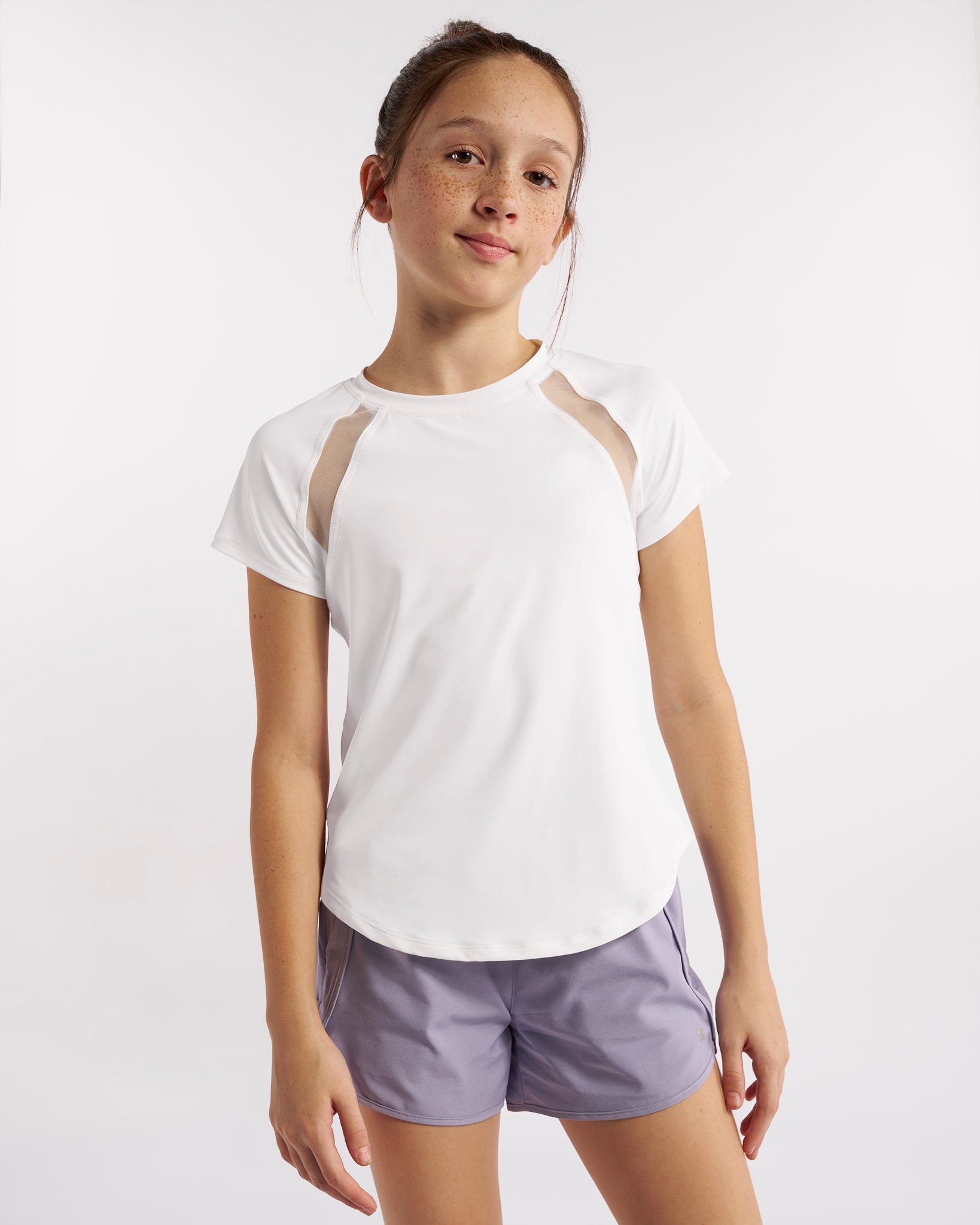
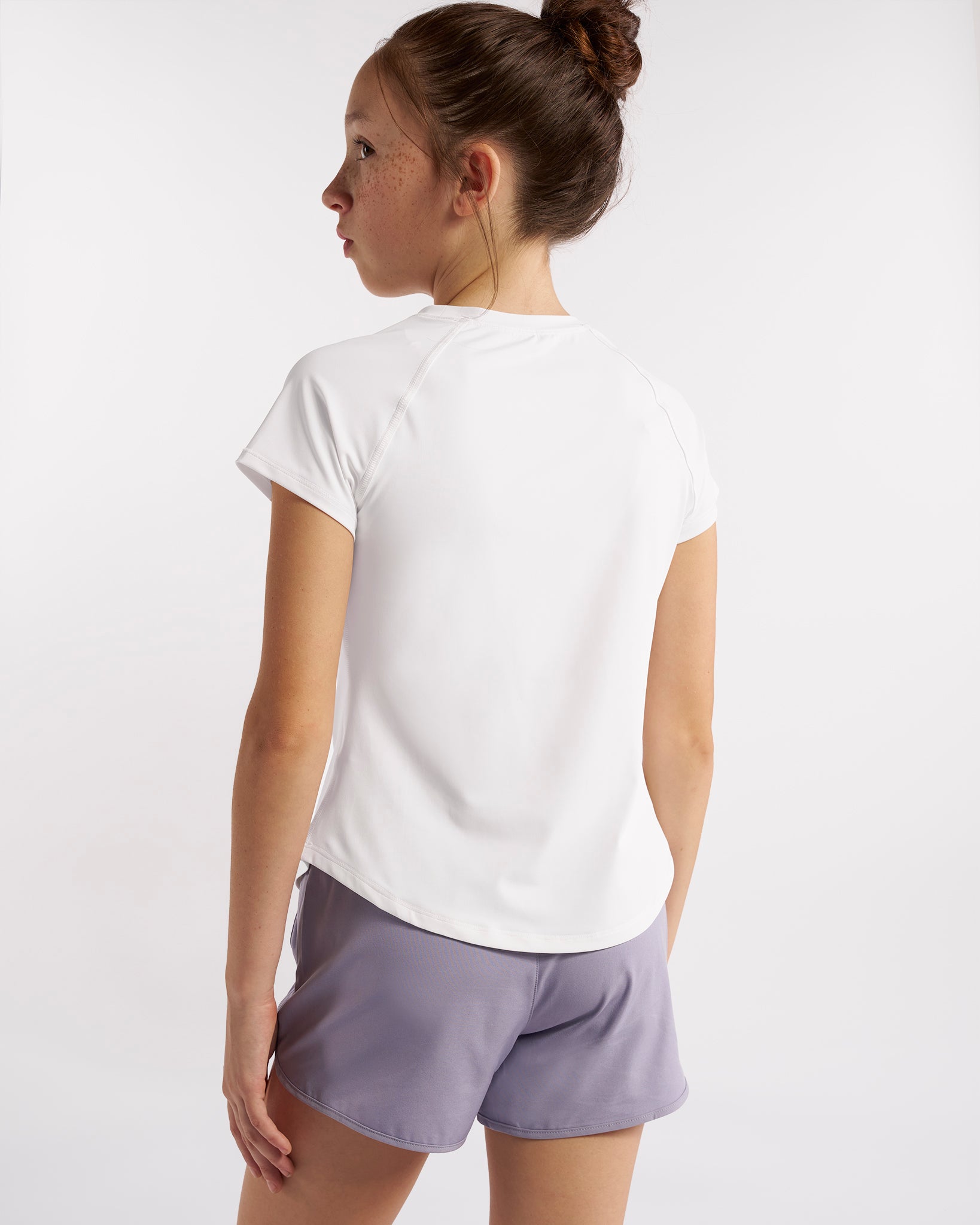
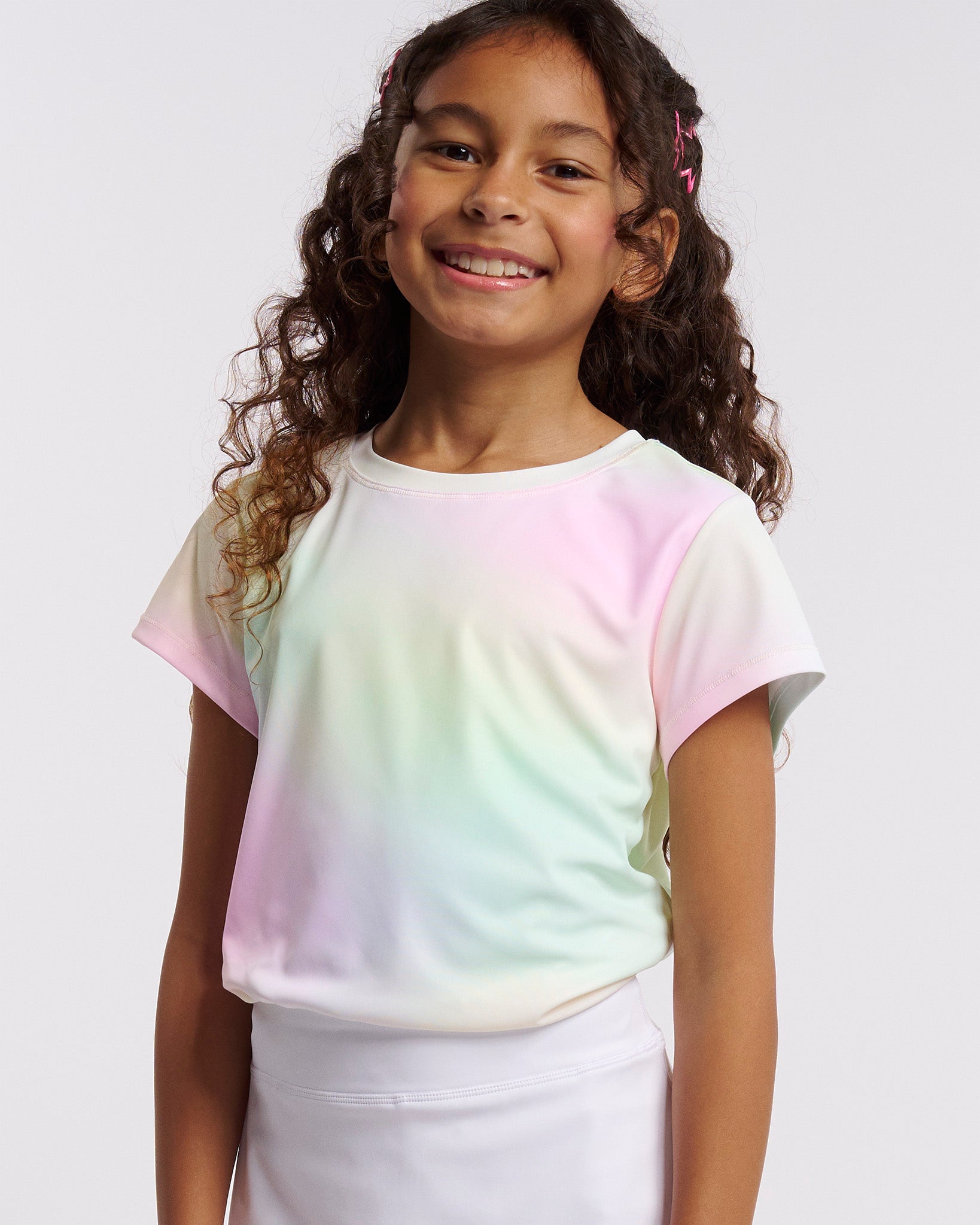
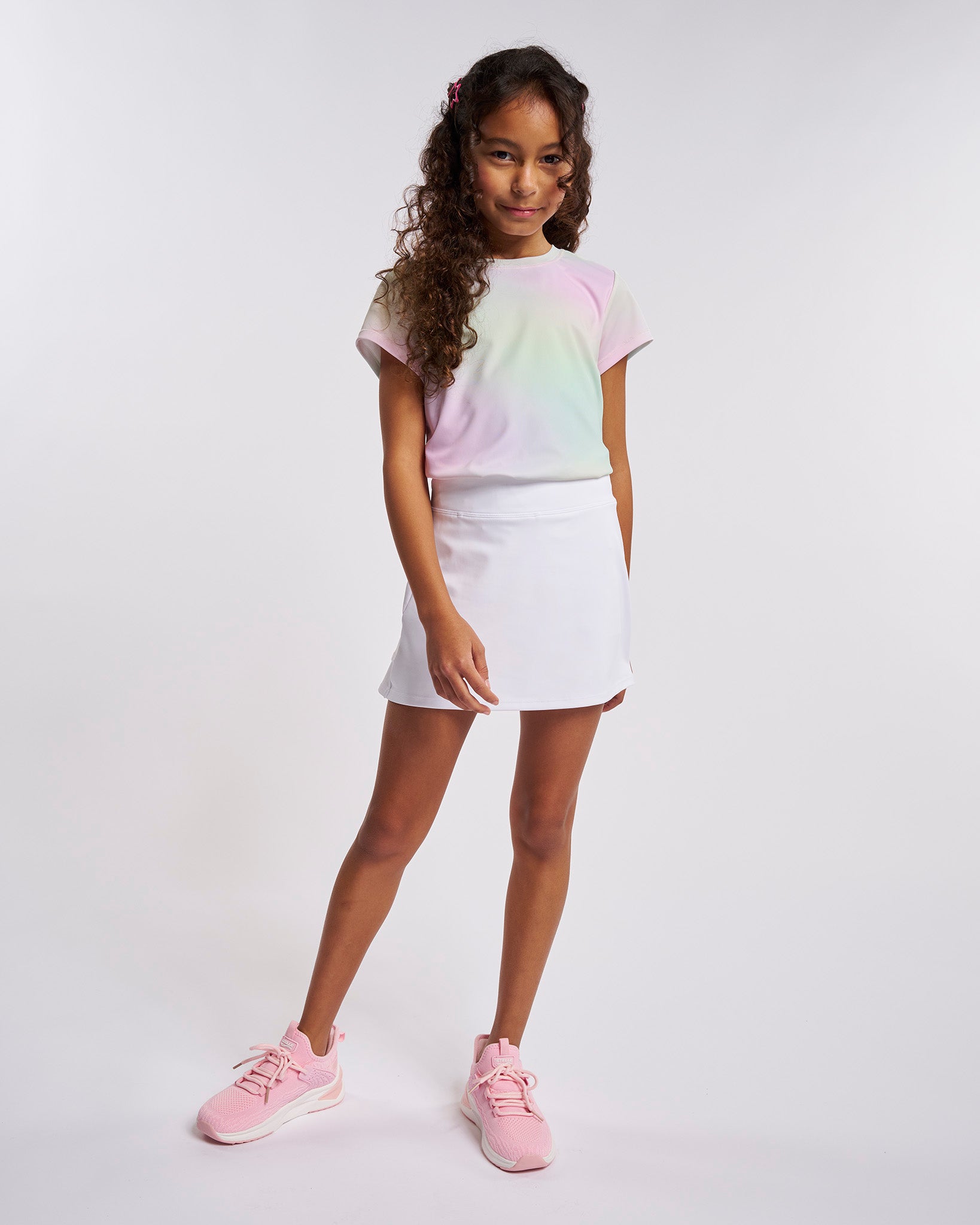
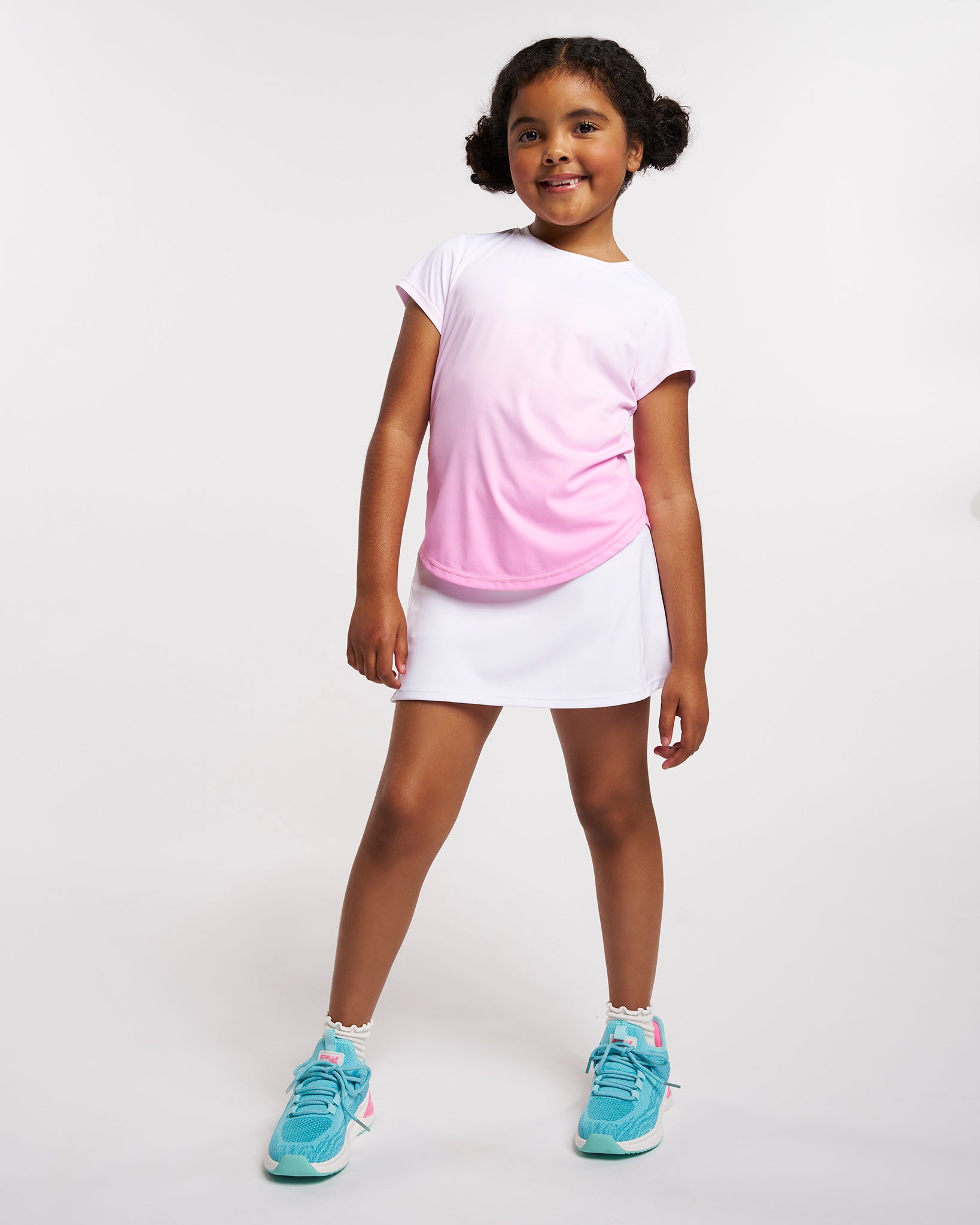
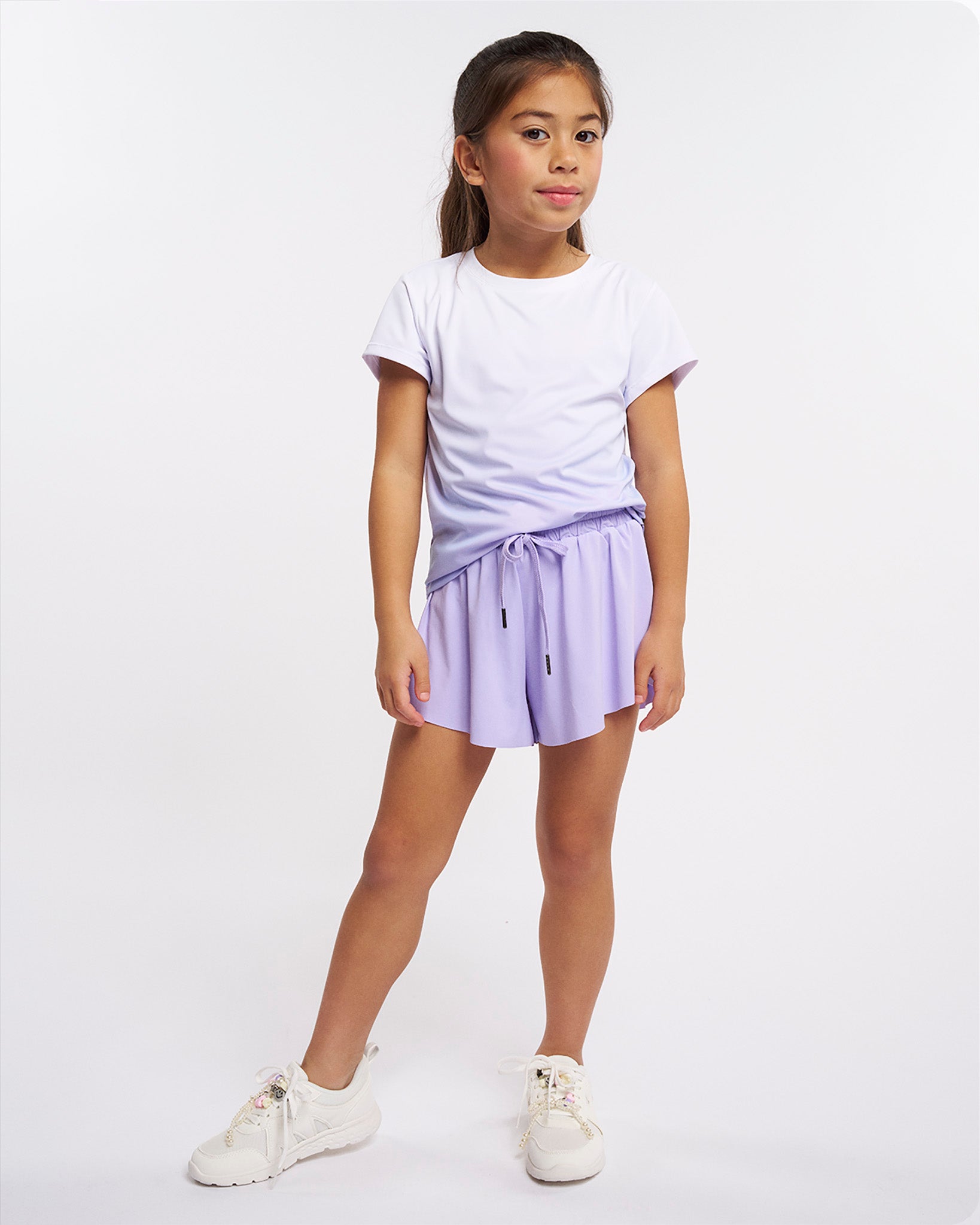
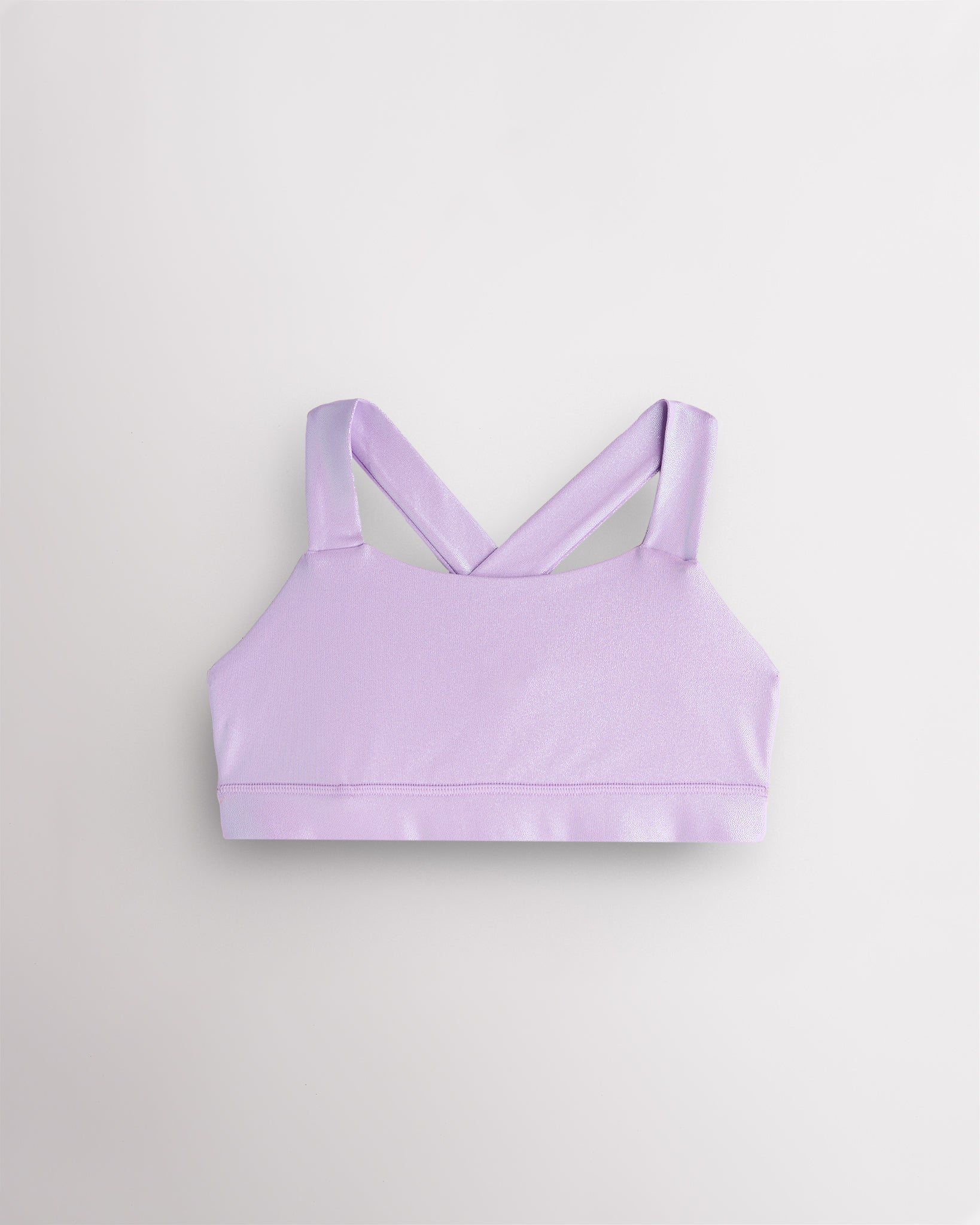
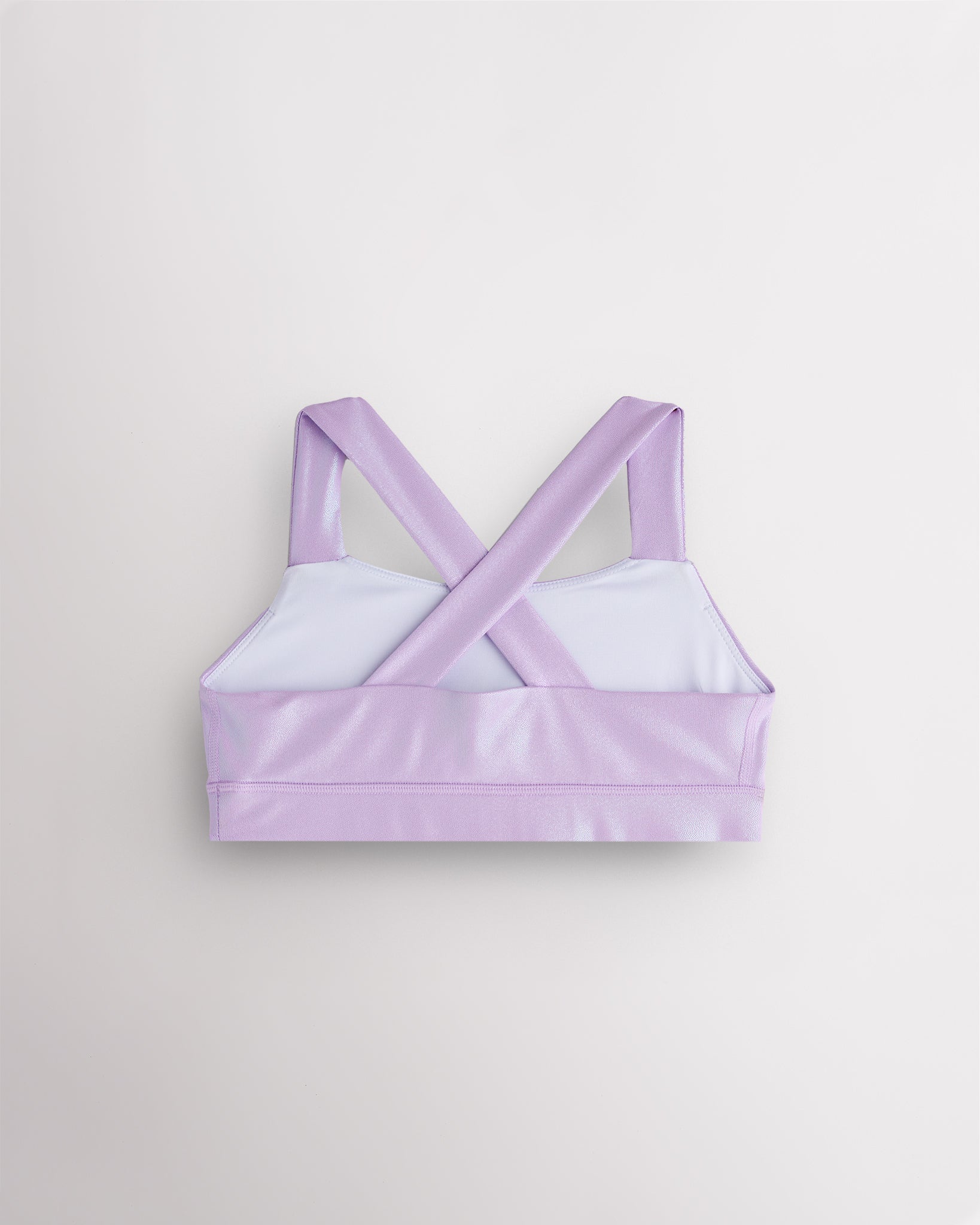
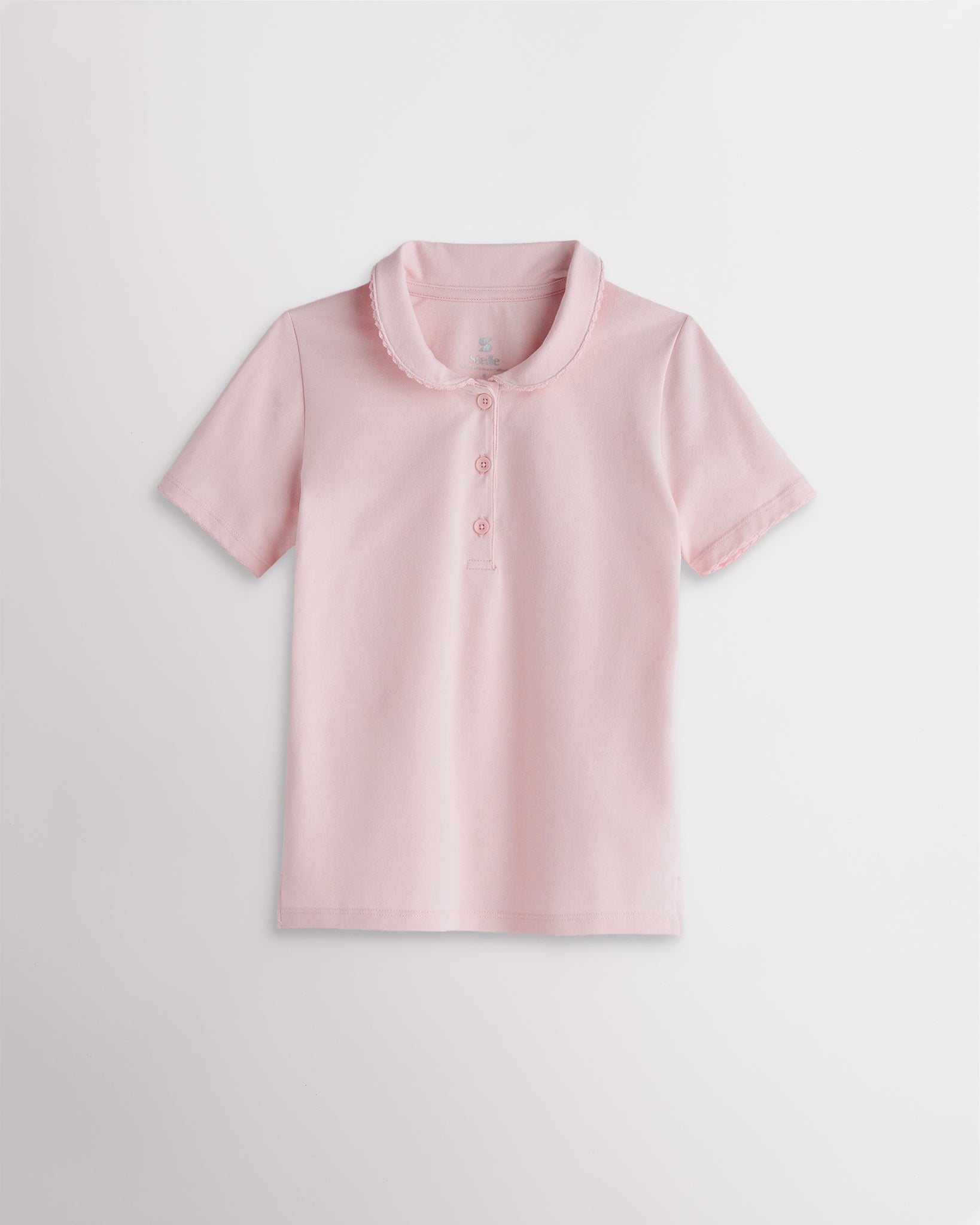
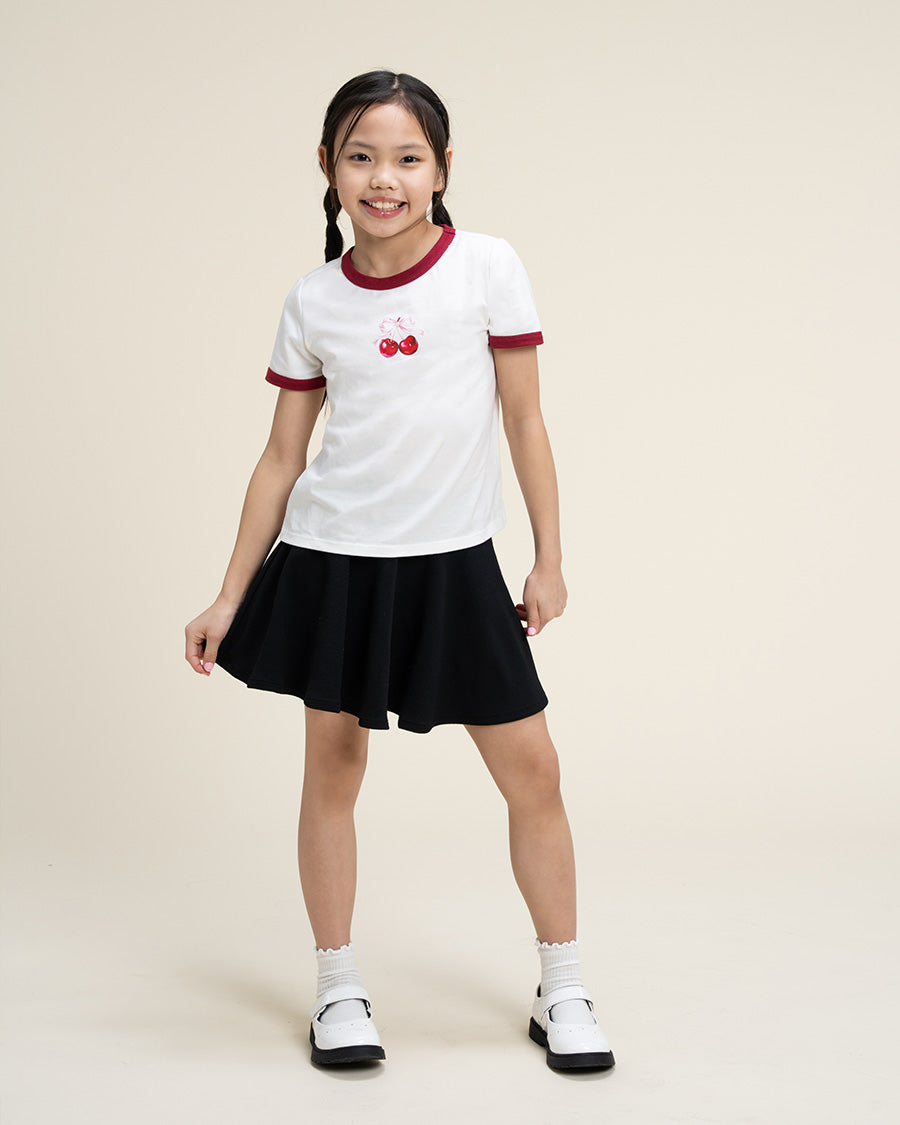
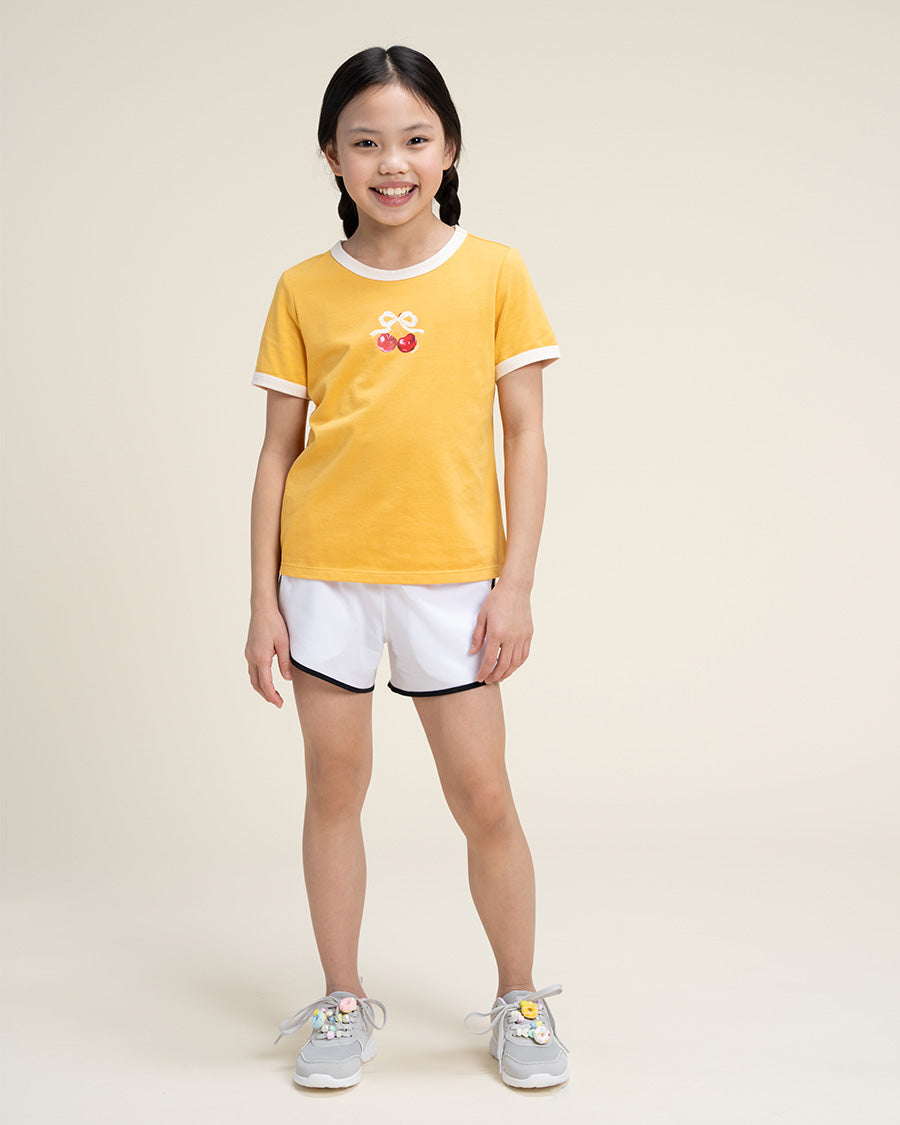
Clear a spot a yoga mat wide plus arm's reach, away from furniture corners. Sneakers with grippy soles beat socks, since slipping on smooth floors is a common risk at home. Leggings or joggers and a tee your child can squat and reach in are all a kid needs for class, and leggings and tees from the play wardrobe usually work. Begin with a 1 to 2 minute warm-up of shoulder rolls and gentle knee bends. Pick music with a clear, medium-speed beat and kid-appropriate lyrics.
One safety rule up front: everything below is done standing. Headspins, baby freezes, and other floor moves put real load on the head, neck, and wrists, which is why coaches teach them with mats and supervision, so save those for a class.

10 Easy Hip Hop Dance Moves, Step by Step
These hip hop moves for beginners work top to bottom: the first three build rhythm, the middle moves add style, and the last two introduce breaking basics safely. Read each move aloud or demo it for your child to copy. Younger kids can start with the first two steps and add arms later; kids 8 and up can chase all four steps plus speed.

1. The Hip Hop Bounce
The engine behind almost every hip hop move; spend a full song here.
-
Feet shoulder-width apart, knees soft.
-
Bend both knees down on the beat, then rise back up.
-
Chest and shoulders dip along with the knees.
-
Keep heels light so the bounce stays springy, not stompy.
Common mistake: bouncing from the ankles with stiff knees. Practice tip: hands on thighs helps kids feel the knees doing the work.
2. The Kick Step
A low, lazy kick that becomes the glue between other moves.
-
Give a small, relaxed kick forward with the right foot, about shin height.
-
Step that foot down next to the left.
-
Kick with the left foot, then step it down.
-
Keep the bounce going underneath and let arms swing naturally.
Common mistake: kicking high like a soccer ball. Practice tip: say "kick, step, kick, step" out loud.
3. The Prep
A lean-and-bounce groove kids can do the moment music comes on.
-
Stand with feet a little wider than shoulders, bouncing.
-
Lean the upper body right and roll the fists in a small circle, or snap.
-
Lean left and repeat.
-
Let the shoulders lead each lean.
Watch for: a frozen lower body; the bounce keeps going. Try this: use it as home base during freestyle games.
4. The Running Man
A classic that still shows up at school dances.
-
Lift the right knee like jogging in place.
-
As the right foot lands, slide the left foot straight back.
-
Lift the left knee and slide the right foot back.
-
Pump the arms in a running motion, opposite arm to knee.
Common mistake: sliding the foot too far back or leaning forward. Practice tip: go slow, one count per movement, then speed up over a week.
5. The Dougie
A laid-back lean named after rapper Doug E. Fresh and and popularized widely in the late 2000s and early 2010s, especially through Cali Swag District's 2010 hit "Teach Me How to Dougie".
-
Start with the bounce, feet apart.
-
Lean the upper body right while the left hand sweeps past the hair.
-
Switch: lean left, right hand sweeps.
-
Add a small side step with each lean once it feels comfortable.
Common mistake: rushing a move that is slow and casual by design. Practice tip: half-speed music makes this one click.
6. The Cabbage Patch
A goofy party-dance classic that kids often pick up quickly.
-
Stack your fists loosely, like holding a steering wheel.
-
Draw a big, flat circle in front of the body with both arms.
-
Shift your weight around the same circle, letting hips and knees follow.
-
Keep bouncing so the circle rides the beat.
Watch for: arms only, legs frozen. Try this: exaggerate it; silly builds confidence.
7. The Body Roll
A smooth wave that travels from head to knees.
-
Imagine a bar in front of the face and duck the chin under it.
-
Let the chest follow, then ribs, then hips.
-
Bend the knees to finish the wave.
-
Rise and repeat as one smooth motion.
Common mistake: folding everything at once. Practice tip: count it out (head, chest, hips, knees) before smoothing it.
8. The Snake
A side-to-side wave through the upper body.
-
Reach the head out to the right, like peeking around a corner.
-
Let the chest follow the head.
-
Pull through and repeat to the left, tracing a sideways S.
-
Keep shoulders relaxed.
Common mistake: jerking between positions. Practice tip: start with slow songs.
9. Top Rock
The standing footwork breakers use before they touch the floor. Breaking took shape in New York in the late 1960s and early 1970s alongside hip hop music, and it debuted at the Paris 2024 Olympics.
-
Start with feet together, arms relaxed.
-
Step the right foot forward and slightly across the body while the arms open wide.
-
Step back to the start position.
-
Repeat with the left foot, keeping a bounce between steps.
Common mistake: staring at the feet. Practice tip: a quick phone video helps kids see where their eyes and chest point during the steps.
10. Freeze Poses
The standing version of a freeze: stopping sharp on the beat.
-
Groove with the bounce or any move above.
-
Pick a stop moment, like the end of a musical phrase.
-
Hit a strong pose and hold for two counts. Big shapes work well: arms crossed, one knee up, superhero stance.
-
Melt back into the bounce and repeat with a new pose.
Common mistake: wobbling through the hold. Practice tip: family freeze dance is the same skill as a game.
Which Move Should Your Child Learn First?
|
Move |
Difficulty |
What it builds |
Best for |
|---|---|---|---|
|
Hip Hop Bounce |
Easiest |
Rhythm and timing |
Every beginner's first move |
|
Kick Step, Prep |
Easy |
Coordination, confidence |
Ages 4 and up, freestyle games |
|
Cabbage Patch, Dougie |
Easy |
Style and musicality |
Party-ready fun, ages 5 and up |
|
Running Man, Body Roll, Snake |
Moderate |
Control and smoothness |
Kids who want a challenge |
|
Top Rock, Freeze Poses |
Easy to moderate |
Breaking basics, performance |
Future b-boys and b-girls |
Turn the Moves Into a Mini Routine
Many kids find moves stick better inside a routine. Try 8 counts of bounce, 8 of kick step, 8 of running man, and 8 of dougie, ending with a freeze pose on the last beat: a full 32-count combo built in an afternoon. For structured practice, our dance workouts for kids include a beginner hip hop combo for ages 8 to 12, and our beginner's roadmap to dancing shows where home practice fits. For unfamiliar move names, our big list of dance moves names is a handy glossary.
How to Start Hip Hop Dancing
Ready to take it beyond the living room? Here is how to start hip hop dancing with a class:
-
Find a beginner or "hip hop foundations" class nearby. Many studios start beginner hip hop around ages 5 to 8, and some offer "tot hop" classes for children as young as 3.
-
Ask what a class includes. Per DanceParent101, beginner classes typically run 45 minutes to an hour with a warm-up, progressions across the floor, and a center combo.
-
Ask about music policy, since reputable studios screen lyrics for kids.
-
Try one class first; many studios offer a trial or drop-in rate.
Prices, class schedules, and age ranges can change, so use these examples as a starting point and confirm details on each studio's site before signing up.
FAQ
What is the easiest hip hop dance move for kids?
The hip hop bounce. It is nothing more than bending the knees on the beat, so most kids can do it within a single song, and it is the foundation for nearly every other move on this list. If it feels too basic, the kick step is the next easiest.
What age can kids start hip hop dance?
At home, as soon as they can bounce to a beat, often around age 4. Studio classes commonly accept kids around ages 5 to 8 for beginner hip hop, and some studios take 3-year-olds in rhythm-and-movement classes. Age cutoffs vary, so check locally.
How long does it take to learn hip hop moves?
An easy move like the kick step or cabbage patch often clicks within a session or two. Smoothing it out usually takes a couple of weeks of short practices, and harder moves like the running man may take a month.
What should kids wear to practice hip hop dance moves?
Comfortable, stretchy clothes and clean sneakers. Many studios have no special hip hop dress code, though some ask for non-marking soles, so check first.
How can my child become a hip hop dancer?
Master the beginner hip hop dance moves here, practice a few times a week, and play with freestyle. Then add a weekly class for technique, and look for chances to perform, such as a studio recital number, a school dance team, or a kids' crew. Competitions can come later; most routes start with these grooves.
Keep practice sessions short, celebrate the silly attempts, and let your child pick the music. Hip hop was built on making movement your own.
About the Stelle Team
Stelle is a mom-trusted dancewear & athleisure brand best known for girls’ ballet and dance essentials since 2015. Every article is created and reviewed by the team behind the products, drawing on what we hear from dance teachers, studio owners, and dance parents every day. Learn more about Stelle.