



Ballet Turnout: What It Is, Where It Comes From, and How Kids Build It Safely
Table of contents
- Key Takeaways
- What Is Turnout in Ballet?
- Where Turnout Comes From: A Short Anatomy Lesson
- How Turnout Develops by Age
- Why Forcing Turnout Hurts (and How to Spot It)
- How to Improve Ballet Turnout Safely
- The 180-Degree Myth
- How Much Turnout Does Your Child Need?
- What Teacher Cues Actually Mean
- FAQ
- About the Stelle Team
Ballet turnout is the outward rotation of the whole leg from the hip, so the knees and toes point away from the body's midline. It gives dancers a stable base, a wider range of motion, and the long lines classical ballet is known for. A child's turnout is partly set by hip anatomy and partly trainable through strength work, which is why pushing the feet toward a flat 180-degree line can do more harm than good.
Key Takeaways
-
Turnout starts at the hip. On average about 60 percent of it comes from hip rotation, with roughly 20 to 30 percent from the ankle and the rest from the shin and knee, per the International Association for Dance Medicine and Science (IADMS).
-
Bone structure sets each dancer's range. Training improves strength, flexibility, and control, not the shape of the bones.
-
A flat 180-degree turnout (both legs combined) is rare. One study of professional dancers, summarized by Physiopedia, found functional turnout around 134 degrees combined.
-
Forcing turnout from the feet pushes stress into the knees, ankles, and lower back. Rotating from the hips protects growing joints.
-
Strength work for the hip rotators, such as clamshells, active frog holds, and standing spirals, supports turnout the safe way.
-
Recreational dancers can work within whatever range their hips offer. Controlled rotation matters more than degrees.
What Is Turnout in Ballet?
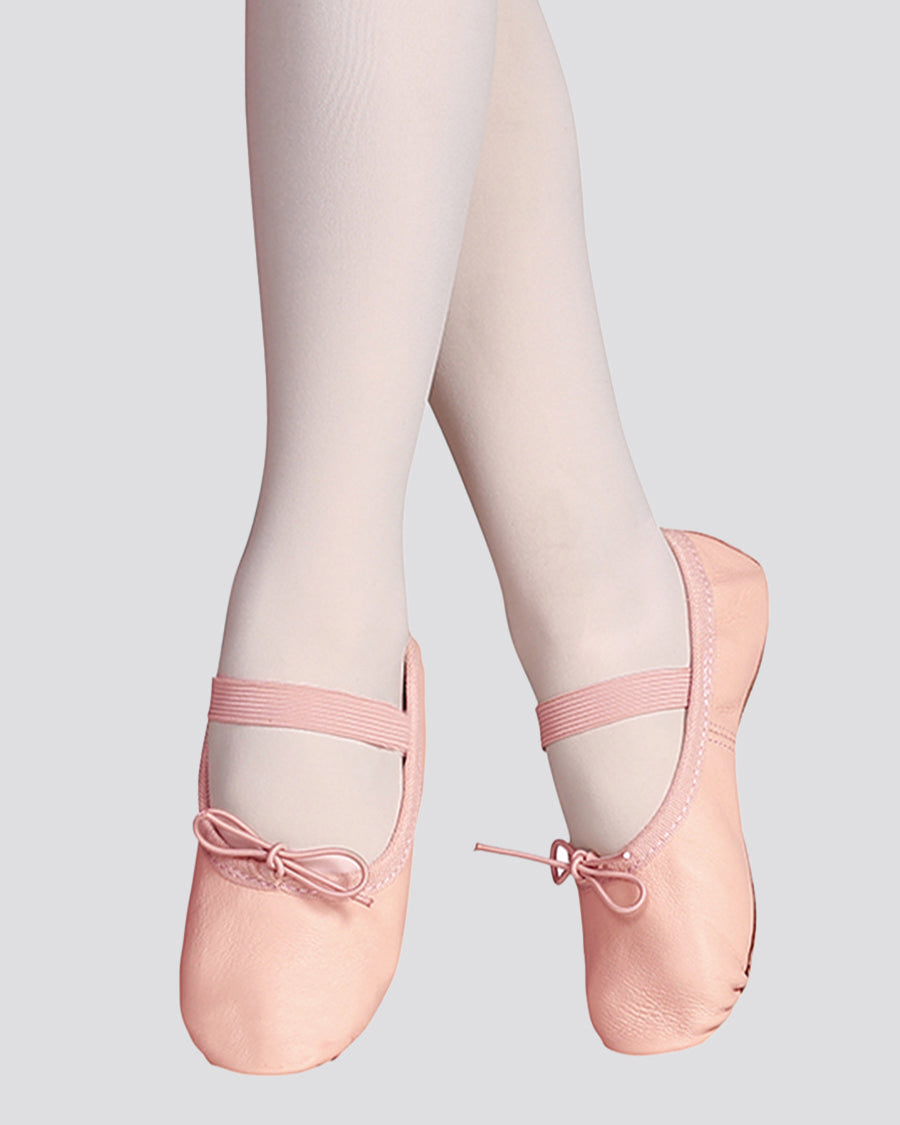
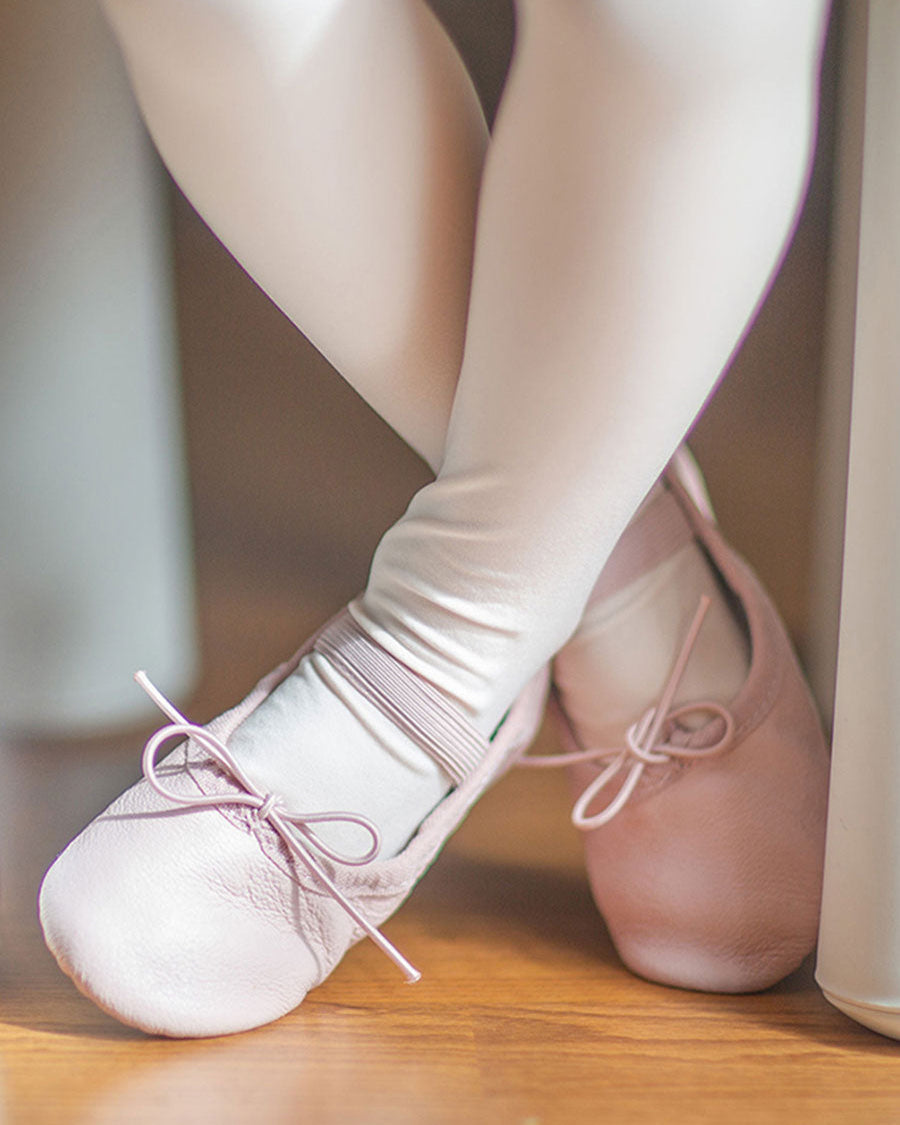
Picture first position, heels touching and feet forming a V. What is a turnout in ballet? It is the rotation behind that V: the whole leg turns outward, starting at the hip, so the knees and toes face away from the midline. It is the same action behind the basic ballet positions your child practices at home, and it runs through nearly every step.
Ballet is built on turnout for practical reasons: rotated legs help a dancer travel in every direction, lift the leg higher without the pelvis shifting, and create the long, open line from hip to toe. Steps like plié and rond de jambe, two of the basic ballet moves beginners learn first, exist partly to train that rotation under control.
Where Turnout Comes From: A Short Anatomy Lesson
The hip is a ball-and-socket joint: the rounded head of the thigh bone (femur) sits in a cup on the pelvis called the acetabulum. External rotation happens when deep muscles under the seat spin the femur outward in that socket. The knees and feet follow.
How far a given hip can rotate depends on structural factors described in the IADMS resource paper on turnout: the angle at which the thigh bone sits in the socket (anteversion), how the hip socket faces, the shape of the femoral neck, and the elasticity of the strong Y-shaped ligament at the front of the hip. IADMS notes that most researchers agree the thigh bone's angle cannot be altered with training, and it calls stretching the ligament controversial. The factor training can clearly change is the strength and flexibility of the muscles around the hip. That mix is why two hardworking kids in the same class can show very different turnout. Each is working with a different set of hips.

How Turnout Develops by Age
Preschool classes introduce "toes pointing out" playfully. Formal technique often begins around age 7 or 8, sometimes earlier depending on the studio, the same window covered in our guide to kids' ballet classes.
Per IADMS, the three bones of each side of the pelvis do not fully fuse into one solid bone until about the 16th year. By late adolescence, progress comes mostly from strength, control, and smart technique rather than from reshaping bones.
Why Forcing Turnout Hurts (and How to Spot It)
Forcing turnout means planting the feet wider than the hips can actually rotate. The rotation has to come from somewhere, so the body compensates: the ankles roll inward, the shins twist against the knees, and the lower back arches as the pelvis tips forward. Physiopedia's review lists these compensations alongside pain in the knees, lower legs, ankles, feet, and lower back (Physiopedia), and IADMS says forcing the feet out is quite possibly linked to increased injury potential. The knees sit between a twisted-out foot and a hip that has stopped rotating, so they take much of the stress.
Signs a child may be forcing turnout:
-
Feet sit nearly flat in a line, but the kneecaps point forward instead of over the toes
-
Ankles roll in and the arches flatten toward the floor
-
The pelvis tips forward and the lower back arches in first position
-
Gripping through the seat just to hold a position
-
Knee, ankle, or hip soreness after class
If you spot these at home, a quiet word with the teacher is a good first step. Rolling ankles can also point to foot strain, which our guide to keeping young dancers' feet healthy covers.
How to Improve Ballet Turnout Safely
The principle is simple: strengthen the muscles that rotate the leg instead of pushing the feet wider. These three turnout exercises are commonly taught starting points for the usable turnout ballet students need while moving; the banded clamshell appears in Performance Health's turnout exercise guide. A few short sessions a week is a reasonable suggestion, and it helps to run home exercises past the teacher or a physical therapist first.

1. Clamshells
-
Lie on one side with knees bent to about 45 degrees, feet together, hips stacked.
-
Keeping the feet touching, lift the top knee like a clam opening, without rolling the top hip backward.
-
Lower with control. Do 10 to 12 reps per side. Older dancers can add a light band above the knees.
2. Active supine frog
-
Lie on the back with knees bent and soles of the feet together.
-
Use the hip muscles to gently open the knees only as far as feels comfortable, hold for a few breaths, then release. Repeat 5 times.
-
Keep the lower back resting and skip pushing the knees down with the hands. Stop if anything pinches or hurts.
3. Standing spiral
-
Stand in parallel, feet under the hips, holding a counter or barre lightly.
-
With heels planted and pelvis still, slowly rotate both legs outward from the hips until the kneecaps point over the toes, letting the feet follow into a small V.
-
Hold for a breath, then spiral back to parallel. Repeat 8 to 10 times.
The 180-Degree Myth
The flat, heel-to-heel line in textbook diagrams is a combined figure: 180 degrees across both legs, or an ideal of 90 degrees per leg, and very few dancers reach that without compensating somewhere. A 2016 study of professional ballet dancers (Washington et al.), summarized by Physiopedia, measured an average functional turnout of about 134 degrees combined, roughly two-thirds of the textbook picture. Even elite, full-time dancers do not naturally sit at 180.
What those dancers have is control: they place their feet where their hips can support them and hold that rotation through every step. A modest V a child can use beats a flat line held only while standing still.
How Much Turnout Does Your Child Need?
|
Recreational dancer |
Pre-professional student |
|
|---|---|---|
|
Typical goal |
Comfortable, controlled rotation from the hips |
Refining their individual structural range |
|
How it is trained |
Weekly classes and normal barre work |
Class plus targeted conditioning |
|
Degrees needed |
Whatever their hips offer today |
Individual; there is no single target number |
If your child dances once or twice a week for fun, turnout is one habit among many. Serious students work toward their own structural range rather than a number.

What Teacher Cues Actually Mean
These are paraphrases of cues commonly heard in ballet class, and they all aim the rotation at the hip. Knowing them helps you echo them at home:
-
"Turn out from your hips, not your feet": start the rotation at the top of the leg and let the feet follow.
-
"Knees over toes": in plié, the kneecap tracks the direction the foot points.
-
"Turn out only as far as you can control": a smaller rotation held well beats a bigger one that collapses.
-
"Don't grip": IADMS says it is not necessary to clench the gluteals to activate the deep rotators.
FAQ
What is turnout in ballet?
In short, turnout is leg rotation that starts in the hip. At home, look at the knees as much as the feet. A child with healthy turnout has kneecaps that track in the same direction as the toes, a steady pelvis, and arches that stay lifted. The feet only show the rotation happening in the hip above them, so a smaller V with good alignment tells you more than a wide one.
Can you improve ballet turnout, or is it all genetics?
Both play a part. The bony shape of the hips sets much of each dancer's range, and IADMS notes that training does not alter the thigh bone's angle. Within that range, strength and flexibility work can meaningfully improve how much rotation a dancer can access and hold while moving, so hip-rotator exercises can help.
Is forcing turnout bad for kids?
Yes, it can be, and it is one of the things dance medicine sources caution against. When the feet are placed wider than the hips can rotate, the ankles roll in, the shins twist against the knees, and the lower back overarches, a pattern IADMS says is quite possibly linked to increased injury potential. Kids do best working at the rotation their hips allow.
How much turnout do you need for ballet?
Less than most people think. Recreational dancers need only a comfortable, controlled V, and even professionals fall well short of the textbook 180. Teachers look for clean alignment and control of whatever range a dancer has, not a specific number.
About the Stelle Team
Stelle is a mom-trusted dancewear & athleisure brand best known for girls’ ballet and dance essentials since 2015. Every article is created and reviewed by the team behind the products, drawing on what we hear from dance teachers, studio owners, and dance parents every day. Learn more about Stelle.