






Is Dance a Sport? The Full Debate
Table of contents
- Quick answer
- Key Takeaways
- What actually qualifies as a sport?
- Why dance is a sport: the athletic case
- Is dance an art or a sport? The artistry counterpoint
- Is dance a sport in the Olympics? The breaking precedent
- How dance compares to traditional sports
- What coaches and medical professionals say
- What the debate means for dance parents
- The verdict
- FAQ
Quick answer
By the criteria most definitions use, dance qualifies as a sport: sustained physical exertion, trained skill, and organized competition with judged outcomes. Breaking's debut at the Paris 2024 Olympics put one dance style on sport's biggest stage, yet many dancers see dance first as an art, and that view has real merit. So is dance a sport? It can be both at once, depending on how it is practiced.
If your kid has ever come home stung because a classmate said dance "isn't a real sport," this debate is not academic. It shapes how seriously schools, doctors, and even relatives take the hours your dancer puts in. So let's lay out both sides properly: the athletic evidence, the artistry counterpoint, the Olympic precedent, and what any of it actually changes for your family.
Key Takeaways
-
Dance satisfies the standard sport criteria: physical exertion, skill, training, and judged competition.
-
A University of Washington study of professional ballet dancers found injury rates comparable to football and wrestling (details below).
-
Breaking competed at the Paris 2024 Olympics, the first dance style to do so, though it was not kept for Los Angeles 2028.
-
Many dancers push back on the sport label, arguing that scoring cannot capture artistry and that the label sells the art short.
-
Medical professionals increasingly treat dancers as athletes, with cross-training, strength work, and structured recovery.
-
For parents, the practical move is to support your dancer like an athlete (warm-up, conditioning, recovery) while respecting the art.
What actually qualifies as a sport?
Most working definitions of a sport require three things: physical exertion, skill developed through training, and competition under agreed rules, usually with winners decided by objective measures or trained judges. Dance checks the first two boxes without much argument, and competitive dance checks the third: dancers compete at regional and national events, scored by credentialed judges on technique, execution, and performance.
The honest complication is that not all dance is competitive. A recreational ballet class is no more a sport than a casual bike ride is the Tour de France. That is why the question stays interesting enough that the Journal of Dance Education published a paper titled "Is Dance a Sport?: A Twenty-First-Century Debate." Scholars have not fully settled it either.
Why dance is a sport: the athletic case
The strongest argument for dance as a sport is simple: measure what dancers' bodies actually do, and the numbers look like sport.
Training loads that match athletes
Serious young dancers commonly train 10 to 20 hours a week across technique classes, rehearsals, and conditioning, and professionals go far beyond that. A look at how professional ballet dancers structure their day reads a lot like a pro athlete's schedule: morning class, hours of rehearsal, cross-training, and physical therapy. Physical therapists who work with dancers report performance heart rates above 160 beats per minute for extended stretches, which is why many now prescribe supplemental cardio and strength work on top of class.
Injury rates on par with contact sports
Injury data may be the most persuasive evidence. A University of Washington study tracked 46 Pacific Northwest Ballet dancers for eight months and found 61 percent sustained an injury in that window, a rate the researchers compared to collision sports like football and wrestling, with an average recovery of 10.5 days. It is hard to get hurt like an athlete without working like one.
Add judged competitions with rulebooks, rankings, and governing bodies (competitive ballroom even has an international federation, the World DanceSport Federation), and the sport case is solid.

Is dance an art or a sport? The artistry counterpoint
Here is the twist that surprises people outside the studio: some of the loudest resistance to the sport label comes from dancers themselves.
Their argument, made well in a student dancer's essay in The Southerner, goes like this: you cannot win a dance the way you win a race. What separates a good performance from an unforgettable one is emotional impact, storytelling, and presence, none of which fit on a scoresheet. Reducing dance to points, they argue, trims away the very thing that makes it dance.
Dance Magazine pushes the point further: maybe the debate itself is the problem. When we ask whether dance qualifies as a sport, we quietly accept sport as the yardstick of legitimacy, which undervalues art on its own terms. Both camps, notably, want the same thing: respect for the work dancers put in.
The counterpoint deserves a fair hearing, not a strawman. Dance existed as ritual, culture, and theater for centuries before anyone scored it. Competition is one thing dance can do, not what dance is.
Is dance a sport in the Olympics? The breaking precedent
For decades, "it's not in the Olympics" was the trump card against dance. That card is gone. Breaking, the athletic street-dance style, made its Olympic debut at Paris 2024, with b-girls and b-boys judged on technique, vocabulary, originality, and musicality. Japan's Ami took the first women's gold and Canada's Phil Wizard won the men's event, per Scripps News.
One caveat: breaking was not retained for Los Angeles 2028, where organizers chose flag football and squash instead. Host cities help pick optional sports, so the drop says more about programming choices than about breaking's athletic legitimacy. Even so, the precedent stands. The IOC put a dance form on the Olympic stage and judged it as sport, and ballroom's DanceSport community continues to campaign for future inclusion.
Whether ballet specifically counts as a sport is its own lively argument, and one we will take up in a separate article. The short version: the same evidence and the same artistry counterpoint apply, turned up to eleven.
How dance compares to traditional sports
|
Demand |
Competitive dance |
Traditional sport comparison |
|---|---|---|
|
Weekly training |
10 to 20+ hours for serious students |
Similar to club soccer or gymnastics at the same level |
|
Cardio intensity |
Performance heart rates can top 160 bpm (Athletico) |
Comparable to interval-heavy sports like basketball |
|
Injury risk |
61 percent of pro ballet dancers injured over 8 months (UW study) |
Researchers compared the rate to football and wrestling |
|
Scoring |
Judged on technique and execution, plus artistry |
Closest to gymnastics and figure skating |
|
Season shape |
Year-round training, competition and recital seasons |
Longer than most school sports seasons |
|
What scores cannot capture |
Emotional impact, storytelling |
Largely absent from timed or scored sports |
The pattern is clear: on physical measures, dance sits comfortably among sports. The one row where it breaks from the pack, artistry, is exactly where the debate lives.
What coaches and medical professionals say
Sports medicine has largely stopped debating and started treating. Physical therapists like Athletico's Alyssa Hartley, PT, DPT, describe dancers plainly as "performing athletes" and note that dancers with stronger legs tend to suffer less severe injuries, which is why supplemental strength and cardio programs are now standard advice. Dance educators tend to land on "both": they train students with sport-science methods while teaching musicality and expression that no conditioning plan can produce.
That dual approach is the quiet consensus among people who work with dancers' bodies for a living: train it like a sport, honor it as an art.
What the debate means for dance parents
Whatever label you prefer, the practical takeaway is the same: a serious dancer's body is under athletic load, so support it the way you would a young athlete's.
-
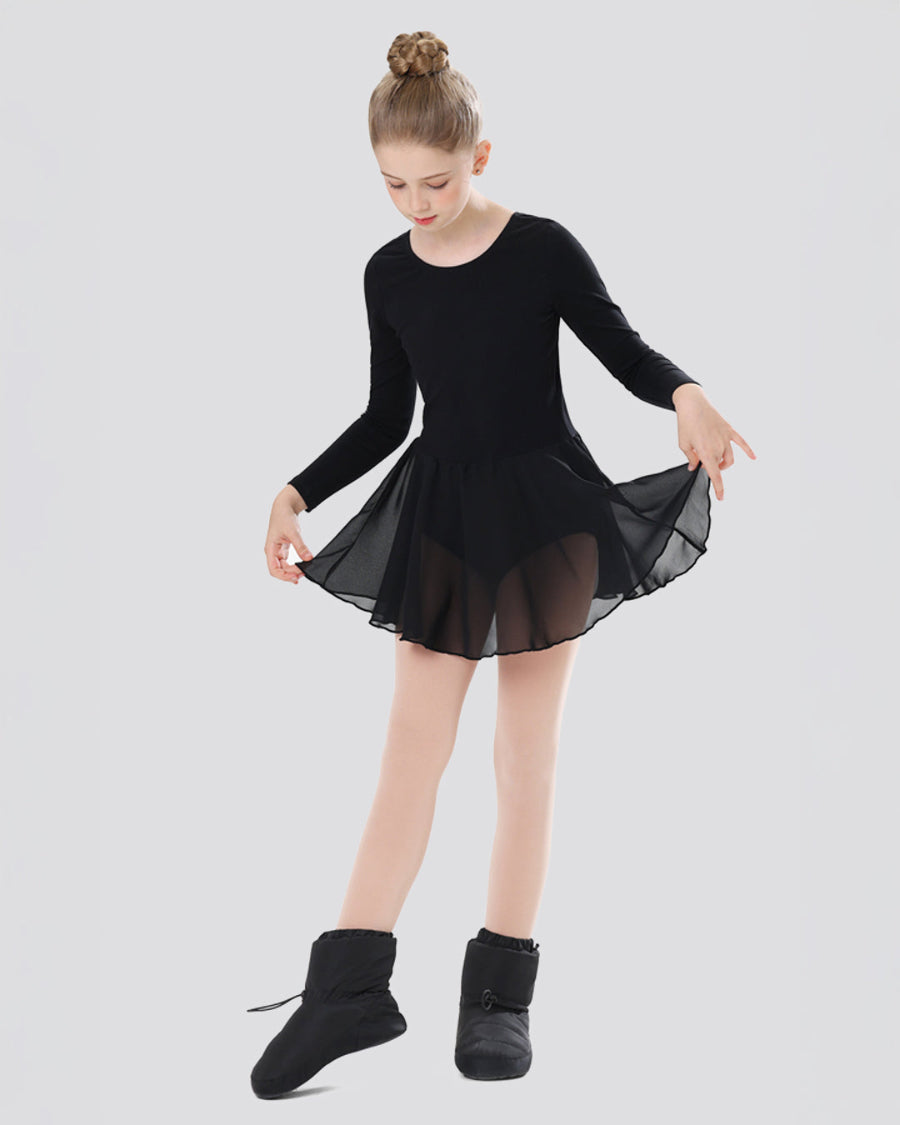
Warm-up matters. Cold muscles are a known injury risk across sports. Encourage arriving early enough to warm up properly, and keep warm-up layers in the dance bag for chilly studios and long waits between numbers.
-
Condition beyond class. Class alone often undertrains cardio and strength. A simple ballet workout at home or targeted flexibility stretches fills the gap for most young dancers.
-
Recover like an athlete. Sleep, refueling, and cool-down stretching reduce the grind of long rehearsal weeks; a post-dance recovery routine is an easy habit to build early.
-
Take pain seriously. Since dancer injury rates rival contact sports, "push through it" is bad advice. Sports-medicine providers who see dancers are worth finding before you need one.
-
Use the label strategically. If your school or state offers PE credit or athletic recognition for dance, take it. If your dancer identifies as an artist first, that is worth defending too.

The verdict
By the evidence, competitive dance earns the title of sport: the training load, the injury profile, the judged competition, and now an Olympic appearance all support it. But the artistry counterpoint is not a technicality. Dance can be practiced purely as art, and even at its most competitive it carries an expressive dimension that scoresheets cannot fully measure.
So the verdict lands in the middle: dance is a sport whenever it is trained and contested like one, and it remains an art the entire time. Few activities can honestly claim both, which is a better answer for your dancer than either side of the argument alone.
FAQ
Is dance a sport or an art?
It is generally both. Competitive dance meets standard sport criteria (exertion, skill, judged competition), while all dance carries artistic expression that scoring cannot fully capture. The mix shifts by style and setting: a competition solo leans sport, a story ballet leans art.
Why do some people say dance is not a sport?
The most common reasons: recreational dance has no competition, artistry cannot be objectively measured, and some dancers reject the label because they feel it reduces an art form to points. Cultural bias plays a role too, since feminine-coded activities often get dismissed as "not real sports."
Is dance a sport in the Olympics?
Breaking at Paris 2024 was the first time a dance style was contested at the Games, and no dance form is on the Los Angeles 2028 program. The World DanceSport Federation continues to campaign for ballroom's inclusion at future Games, so the Paris precedent may not be the last word.
Is dance harder than other sports?
Harder is subjective, but the University of Washington ballet study logged recovery times ranging from a single day to 87 days per injury, in line with contact sports. One thing that makes dance different is that dancers are often expected to make difficult movement look effortless, which can make the athletic work less visible to audiences.
Do colleges treat dance as a sport?
It varies. Dance teams at many universities sit under athletics or spirit programs, and some schools offer dance scholarships, but the NCAA does not govern dance the way it does gymnastics. Most college dance opportunities run through dance departments (as an art) or competitive team programs, so check each school individually.