






















Ballet Shoes for Kids: How to Get It Right the First Time
Table of contents
Buying ballet shoes for your child sounds straightforward until you're on a product page choosing between canvas and leather, full sole and split sole, and four shades of pink — with no obvious way to know which combination is right.
This guide covers the practical side of getting it done: what material and sole type to choose, how ballet shoe sizing works, what to do once the shoes arrive, and which mistakes are worth avoiding before and after you buy. For a deeper look at materials and fit specifically, our separate guide covers both in detail.
1: What to Know Before You Buy
Check Your Studio's Requirements First
Before you look at any product page, check whether your child's studio has a dress code.
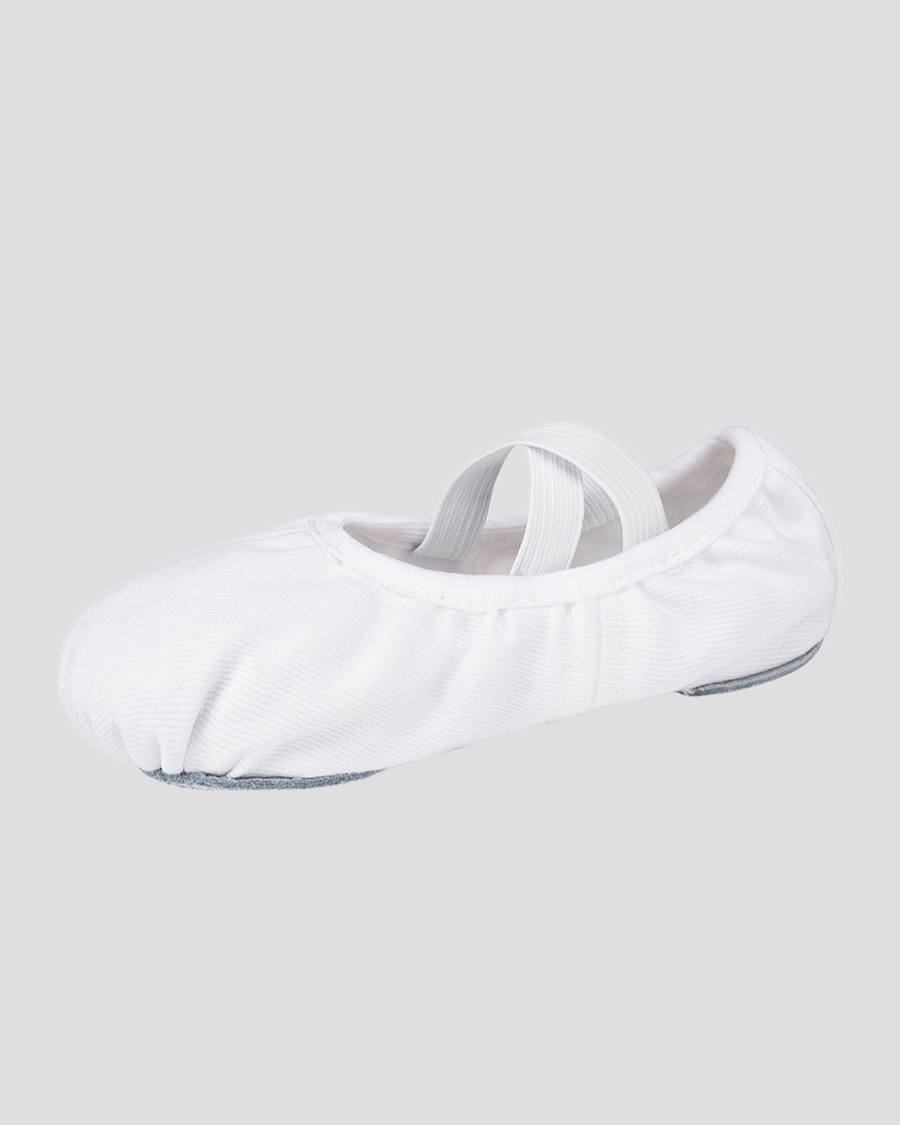
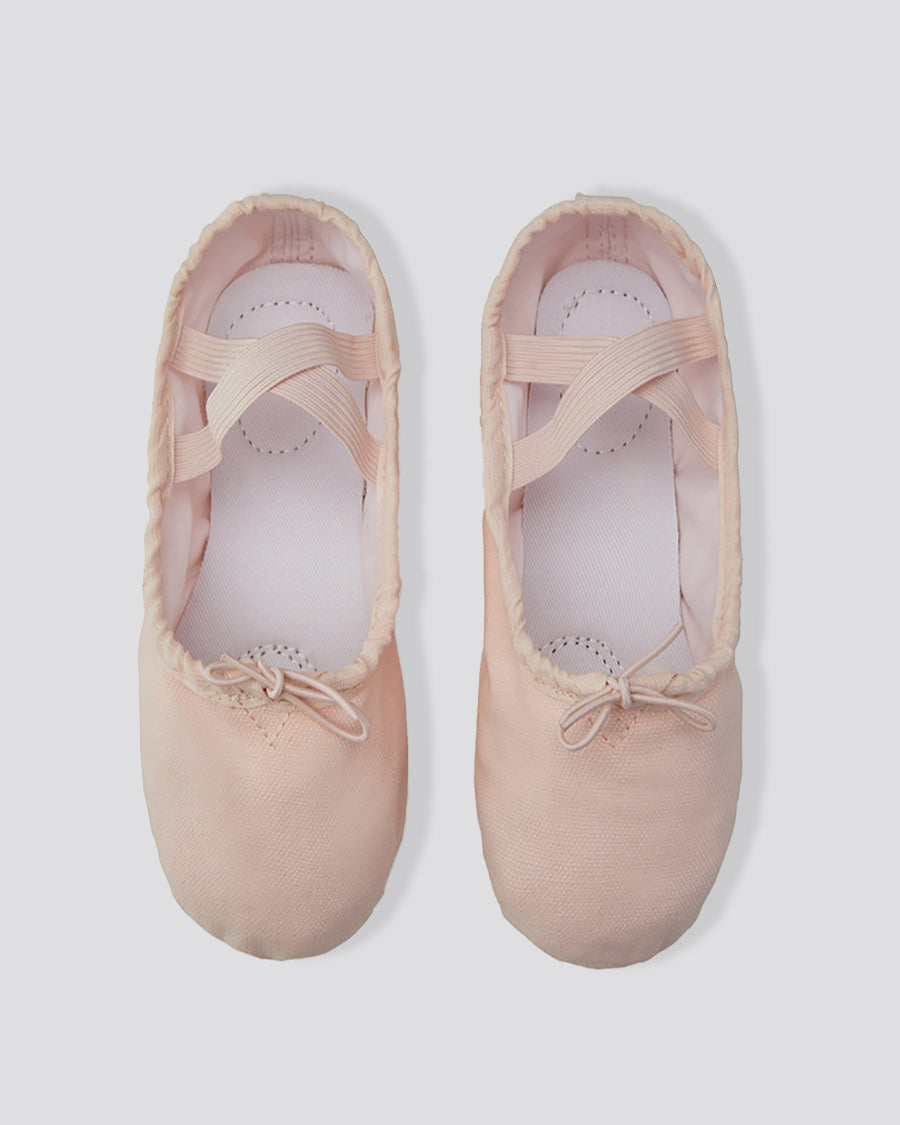
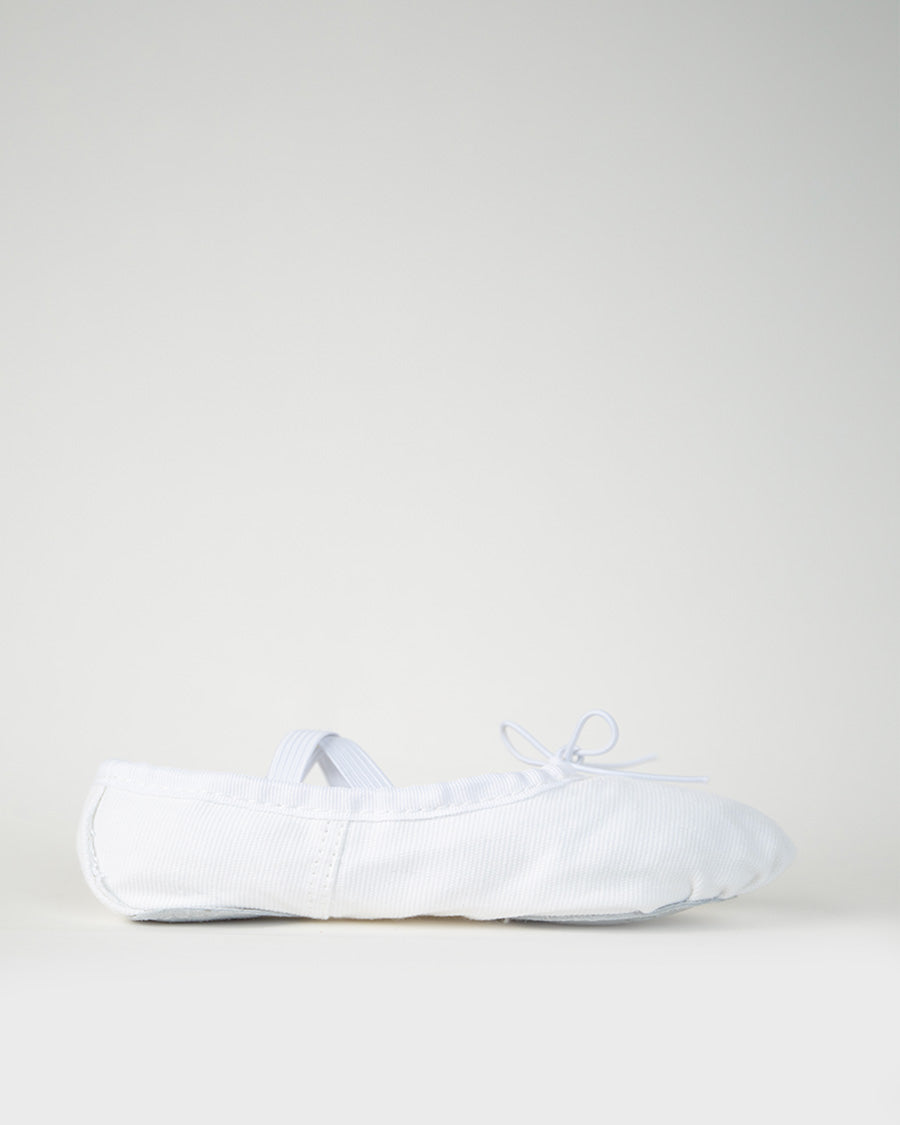
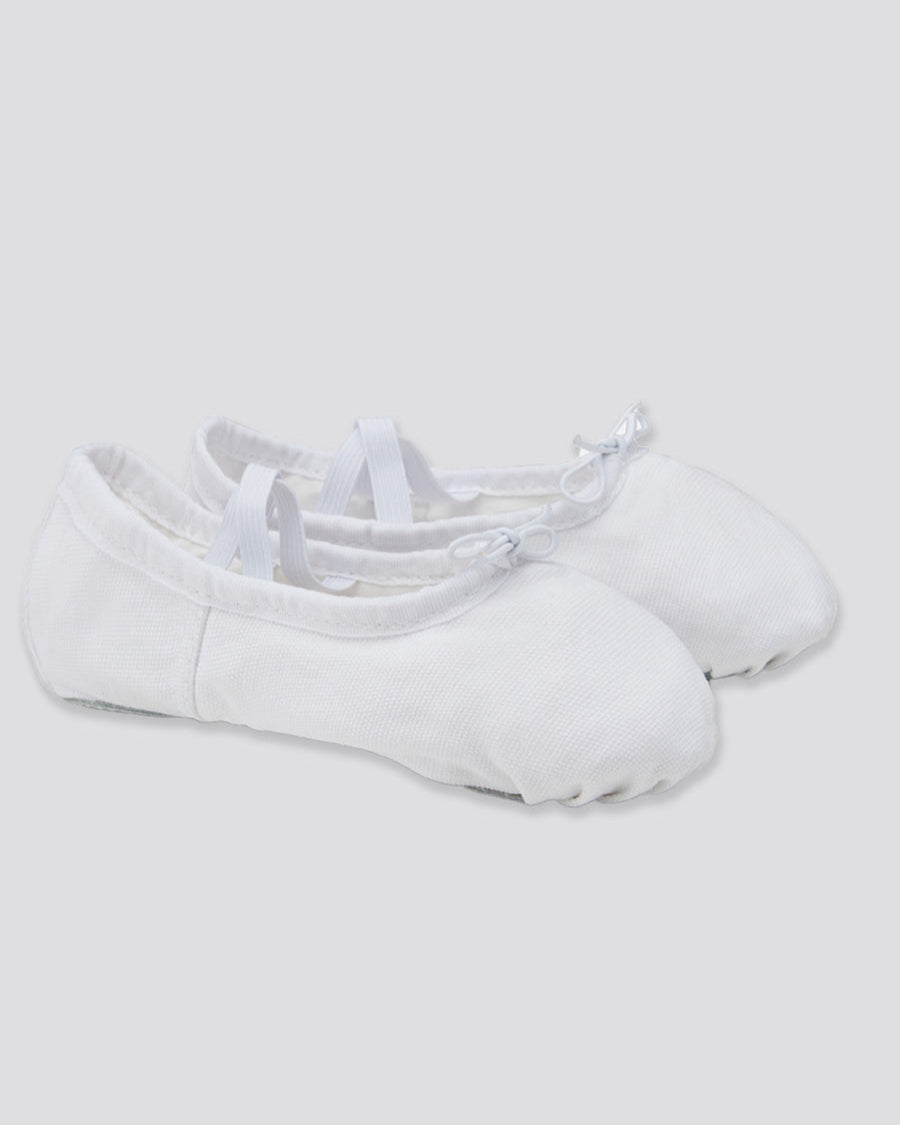
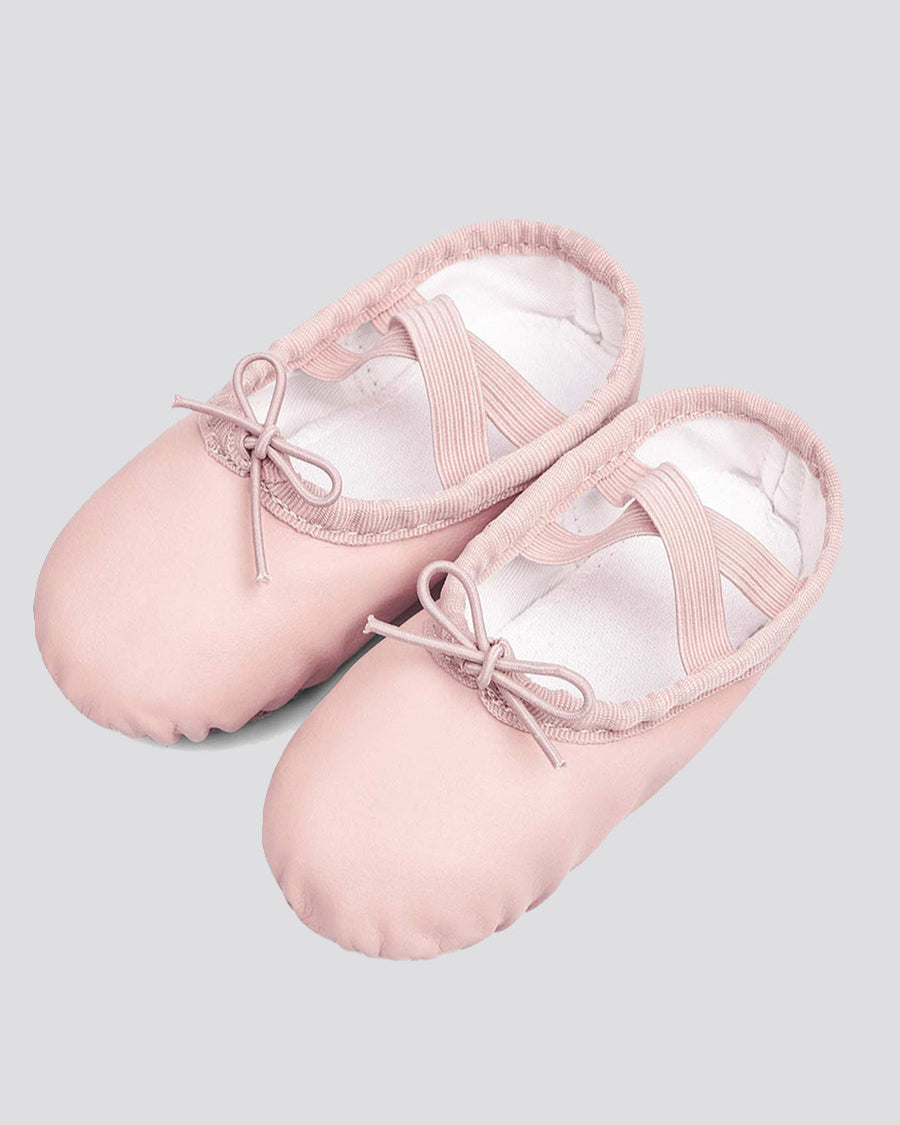
Many studios specify more than just "ballet shoes" — they'll name a color, a material, and a sole type. Pink canvas full-sole is the most common requirement for young beginners, but some schools ask for white, some require leather, and a few have a preferred brand. If your studio has sent a list, follow it. Comparing canvas versus leather is irrelevant if that decision has already been made for you.
If your child hasn't started yet and you haven't heard anything from the studio, the safest default is pink canvas full-sole. It's the most widely accepted beginner option across studios, and it's unlikely to be wrong.

Material: Canvas, Leather, or Satin
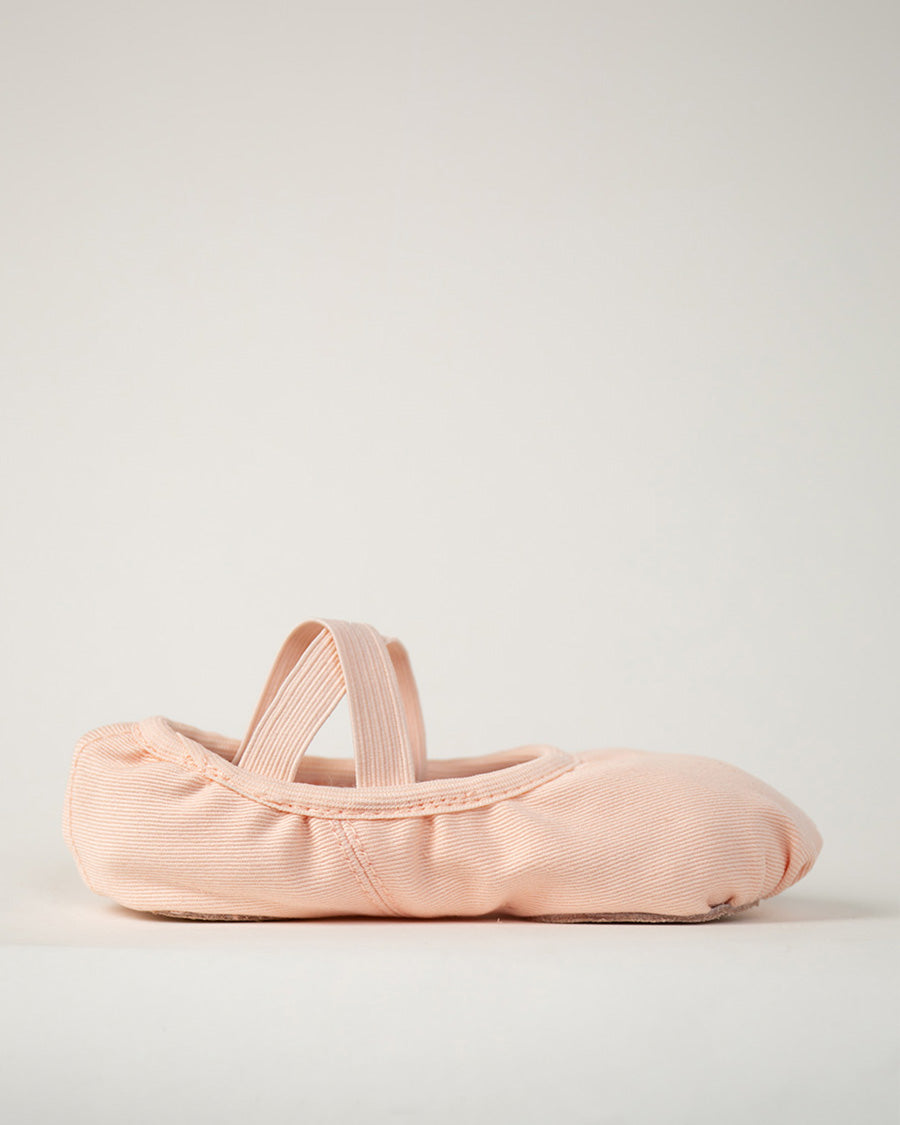
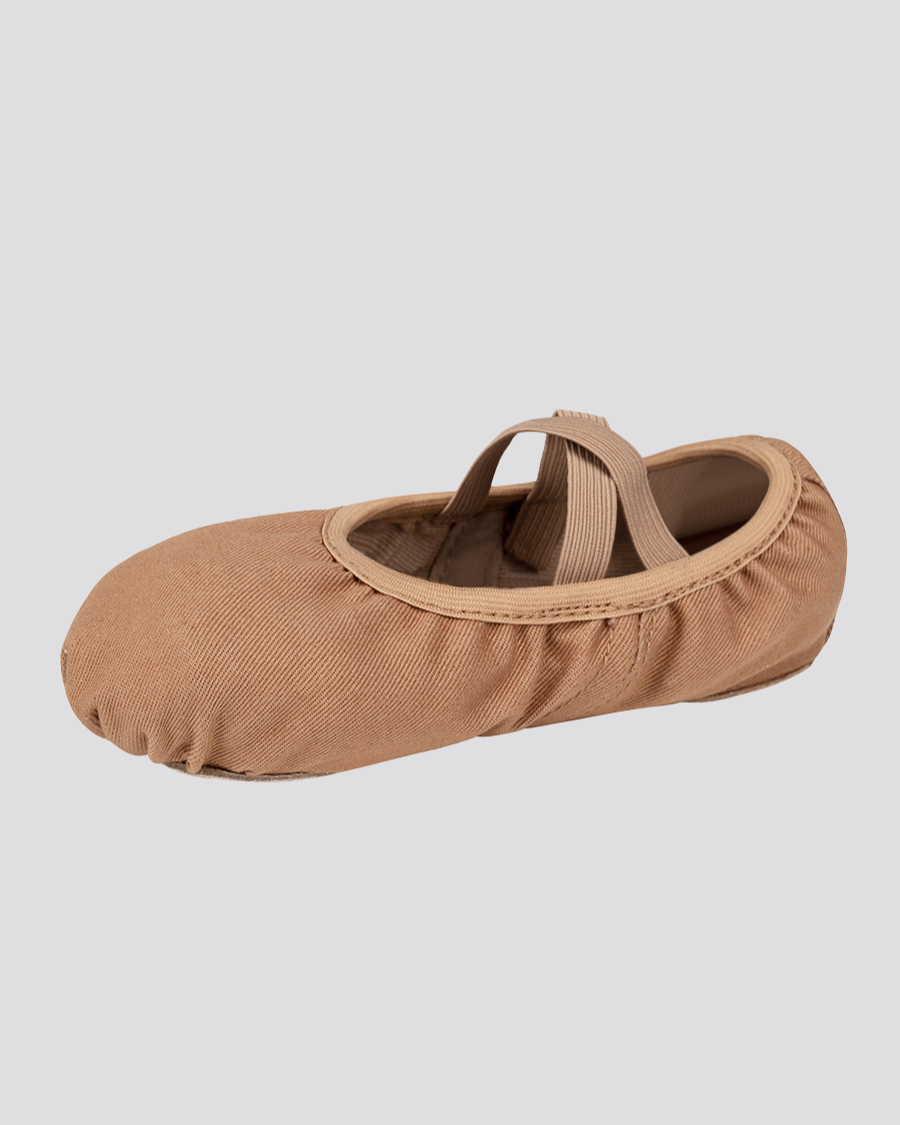
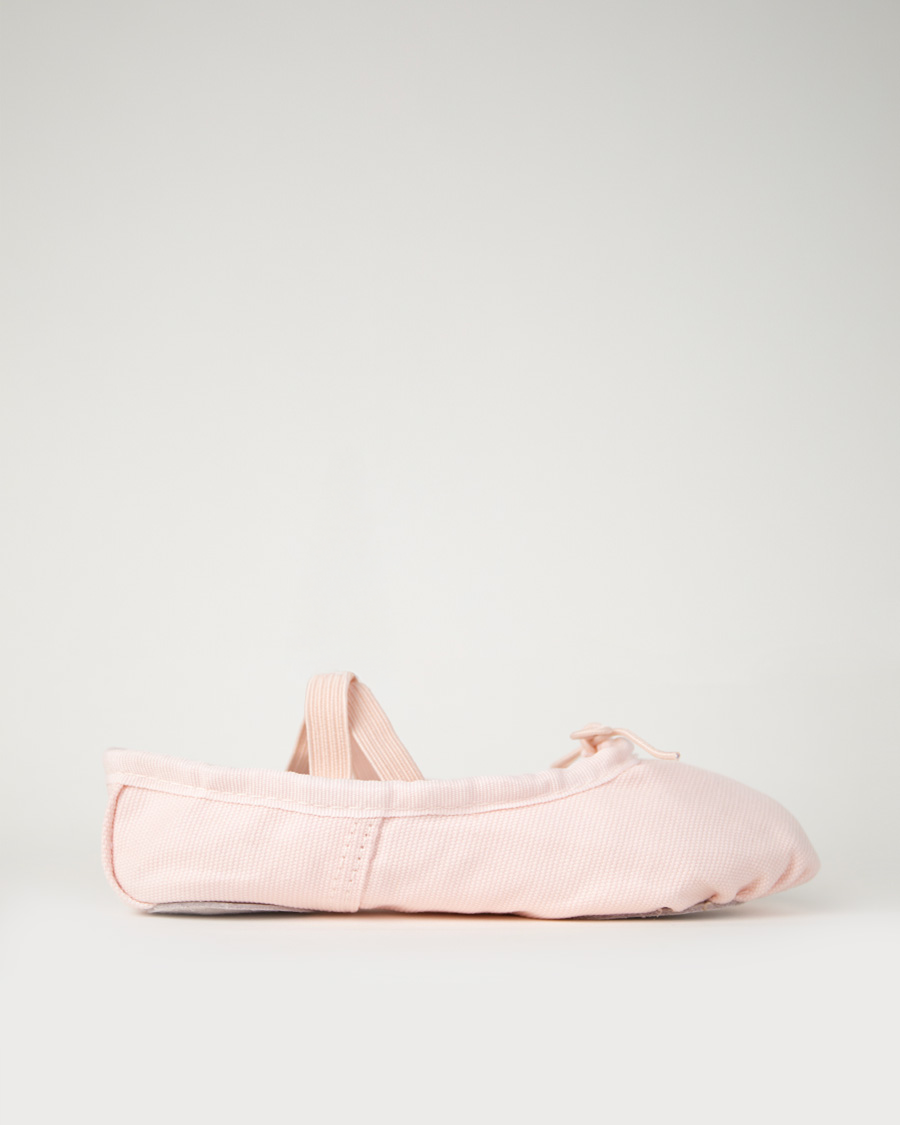
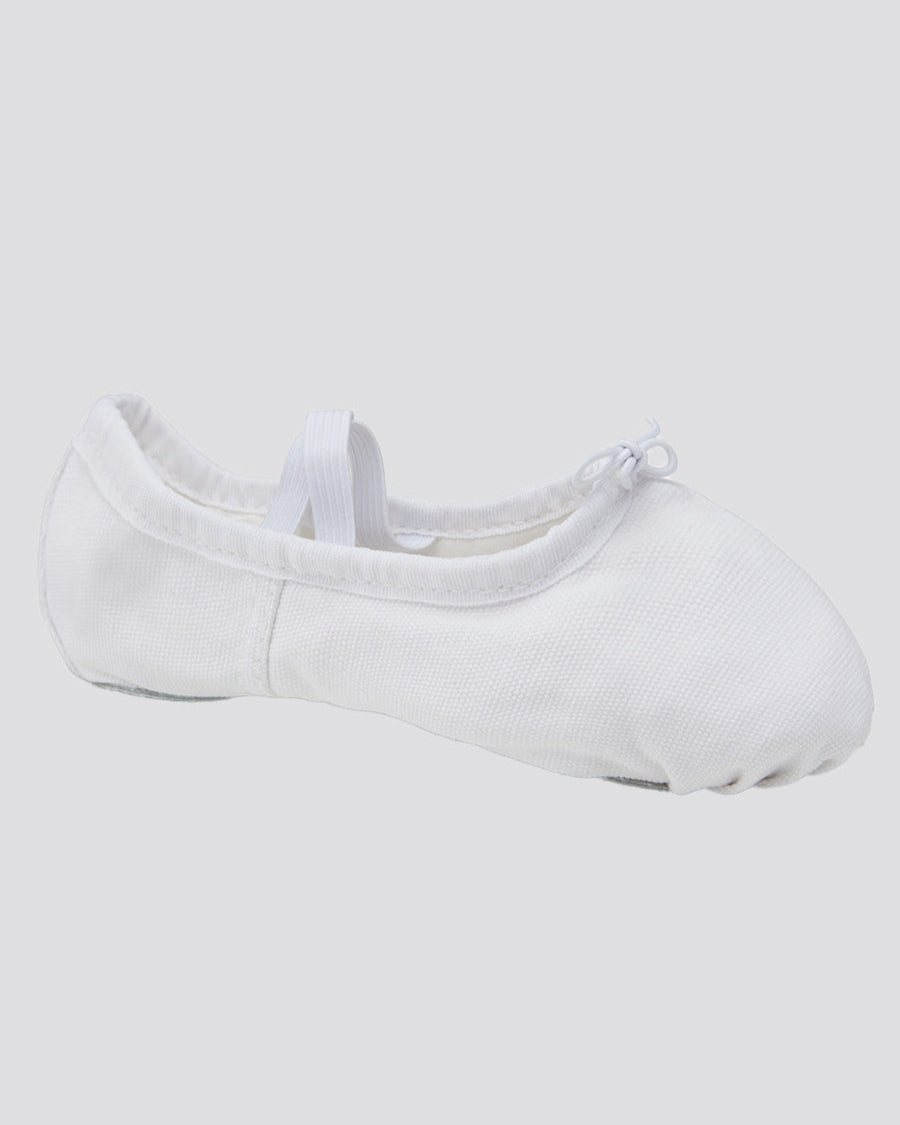
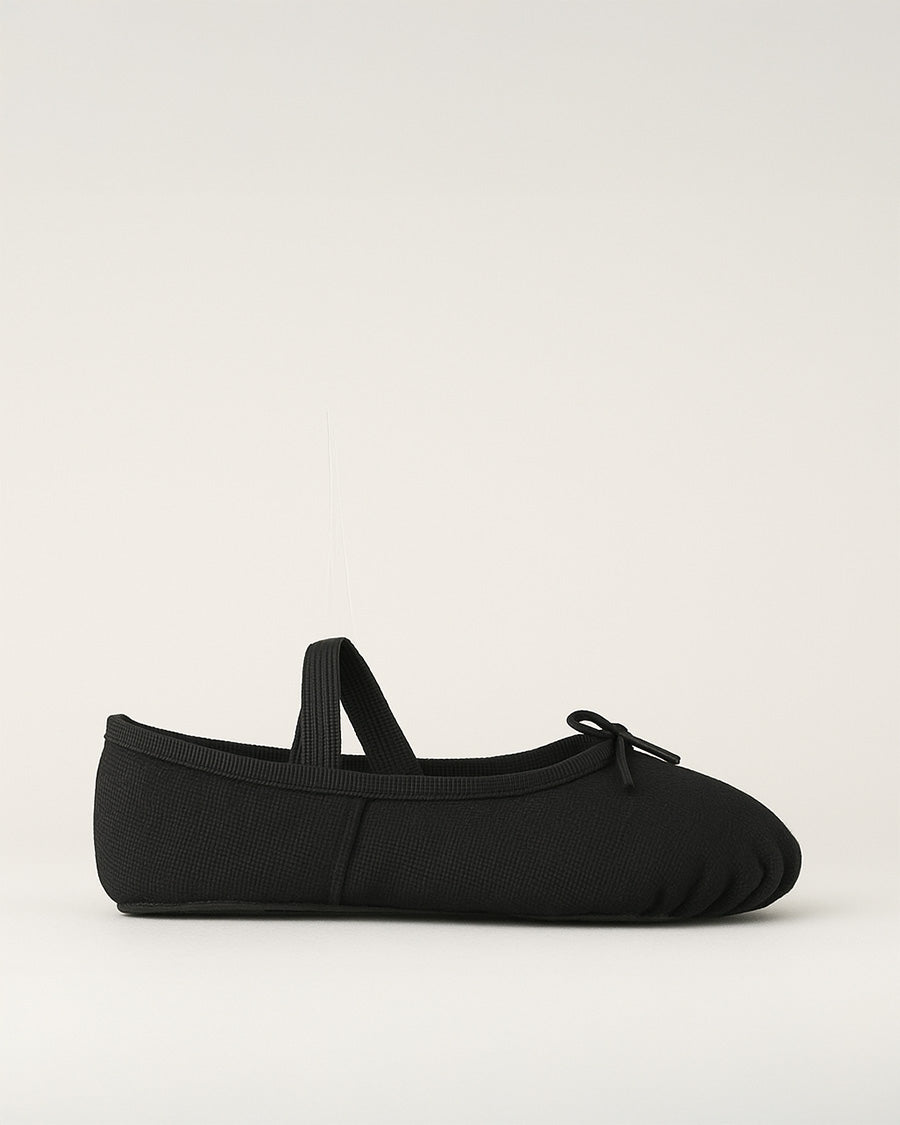
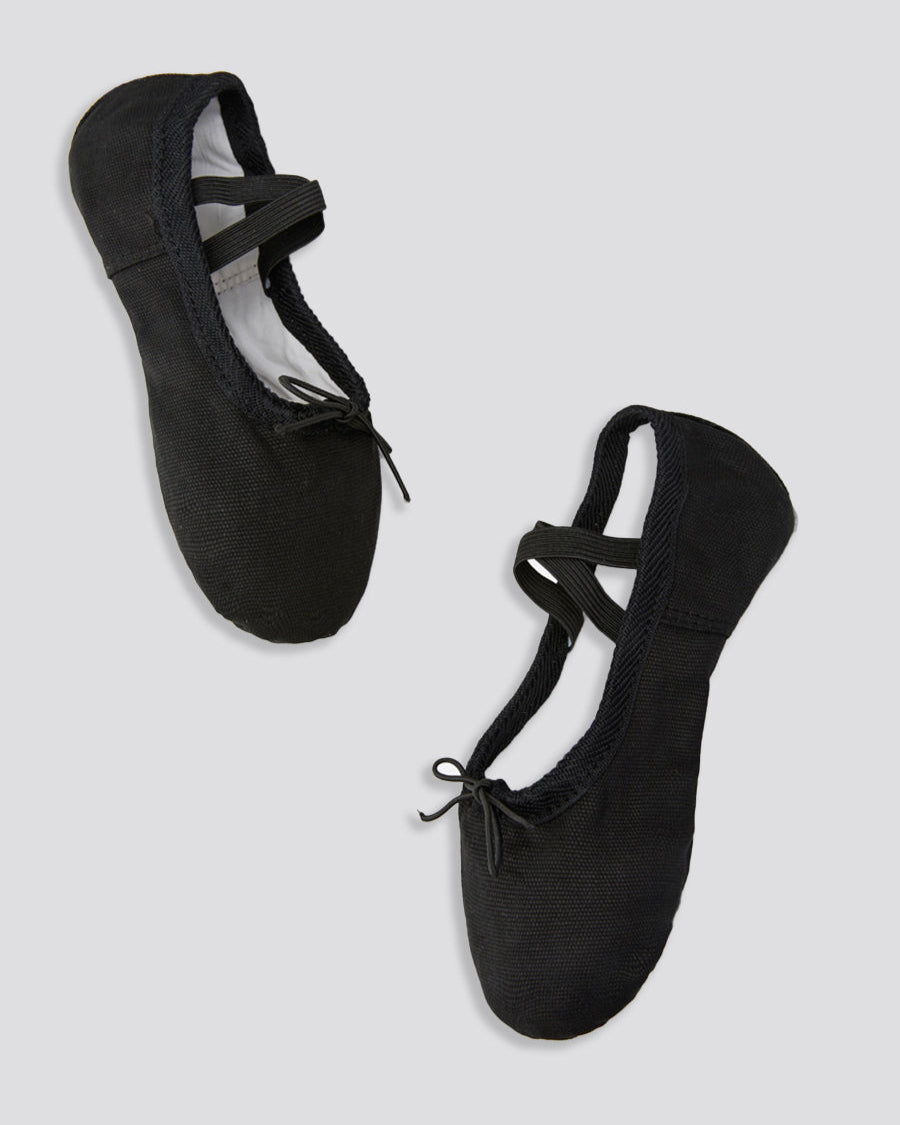
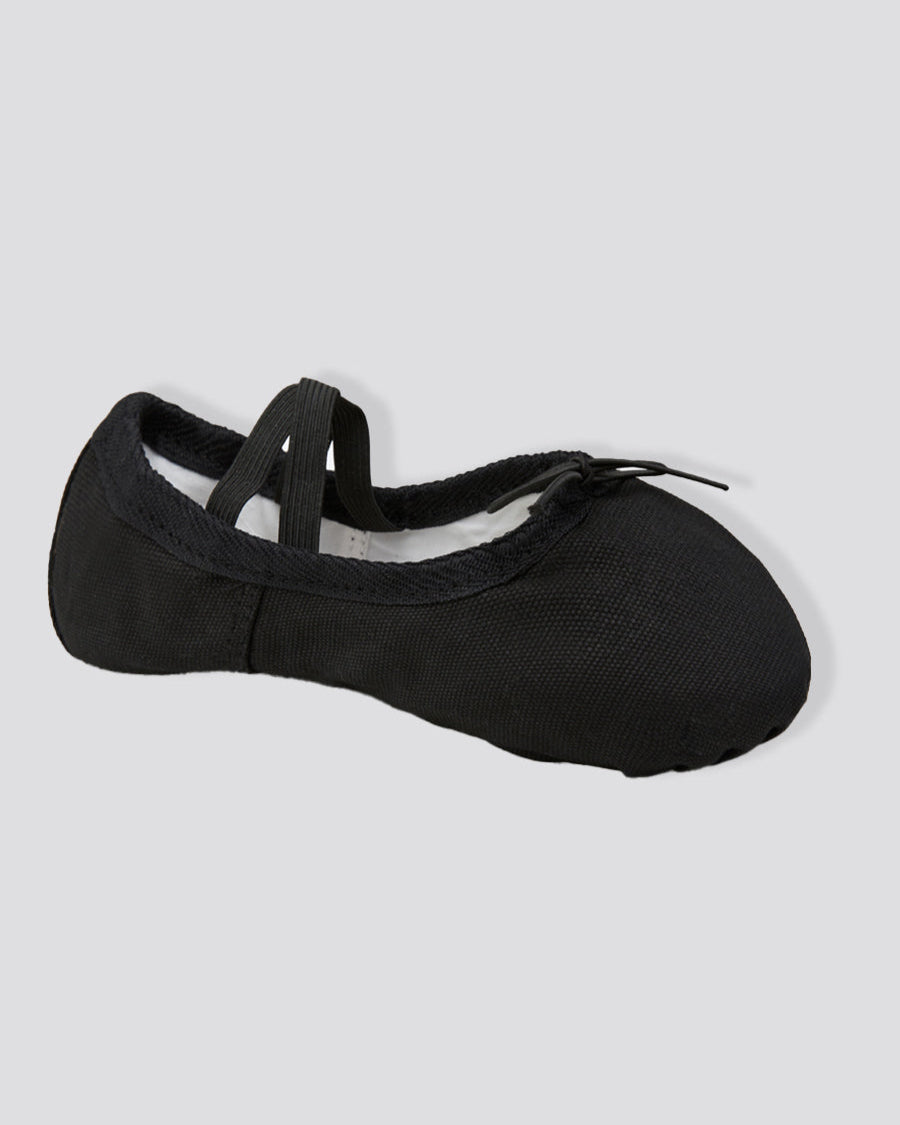
Canvas is lightweight, flexible, and the most practical choice for a child who's still growing. It stretches slightly with wear, so it's comfortable almost immediately. It's also the easiest to wash — relevant when a six-year-old is wearing them twice a week. For most beginners, canvas is the default for good reason.
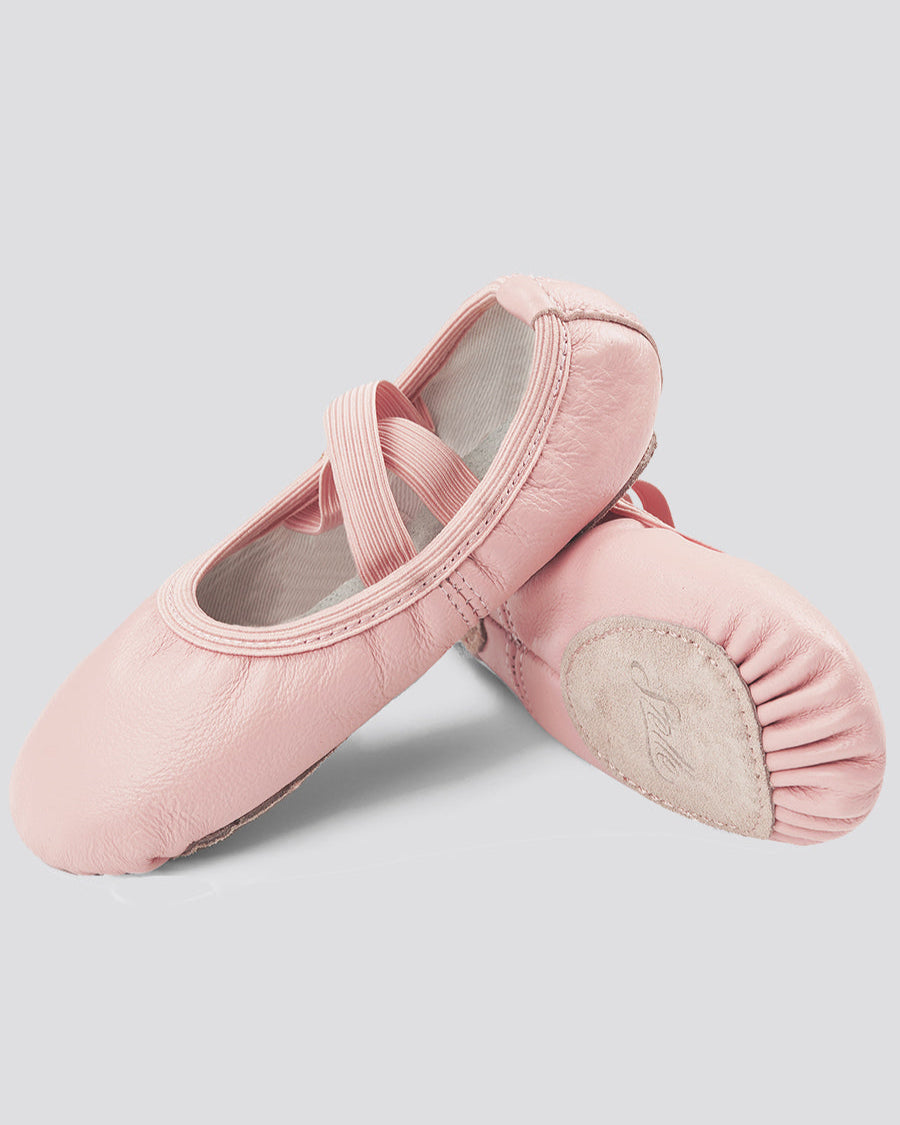
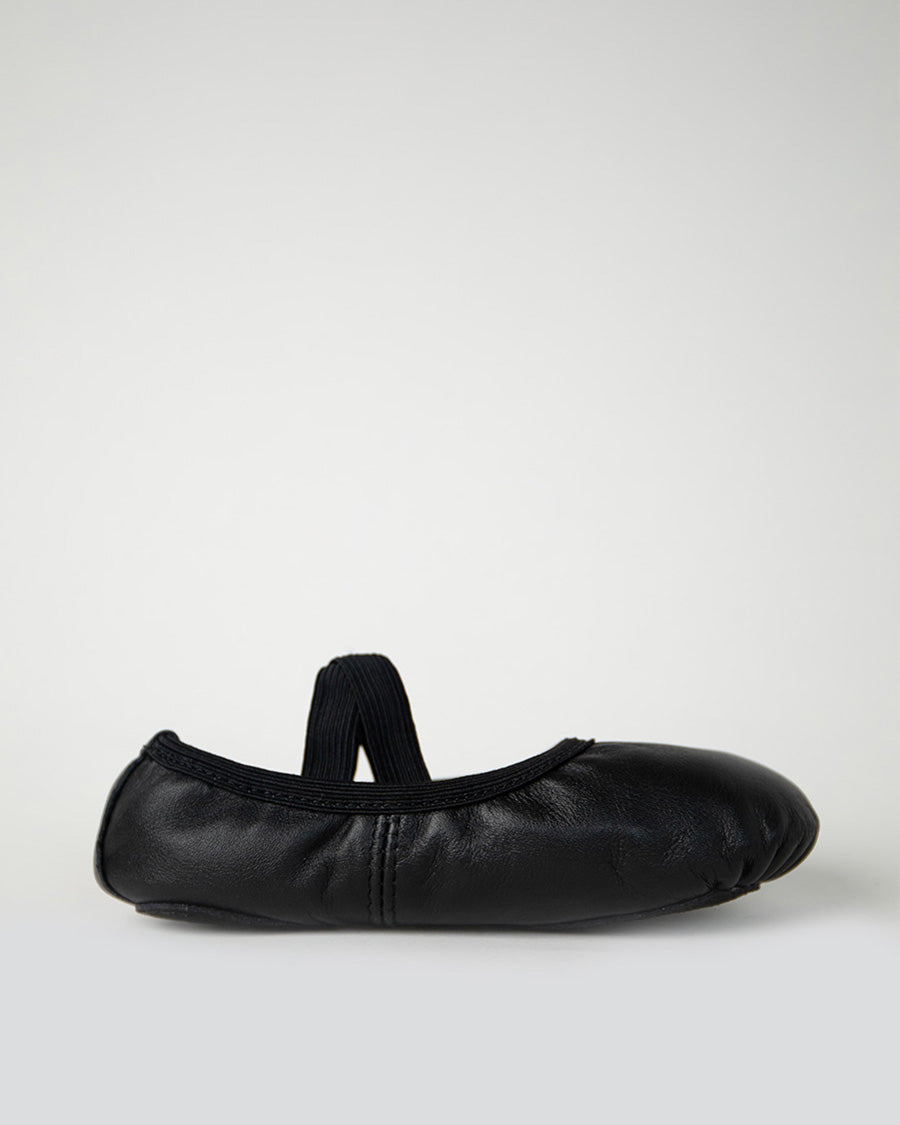
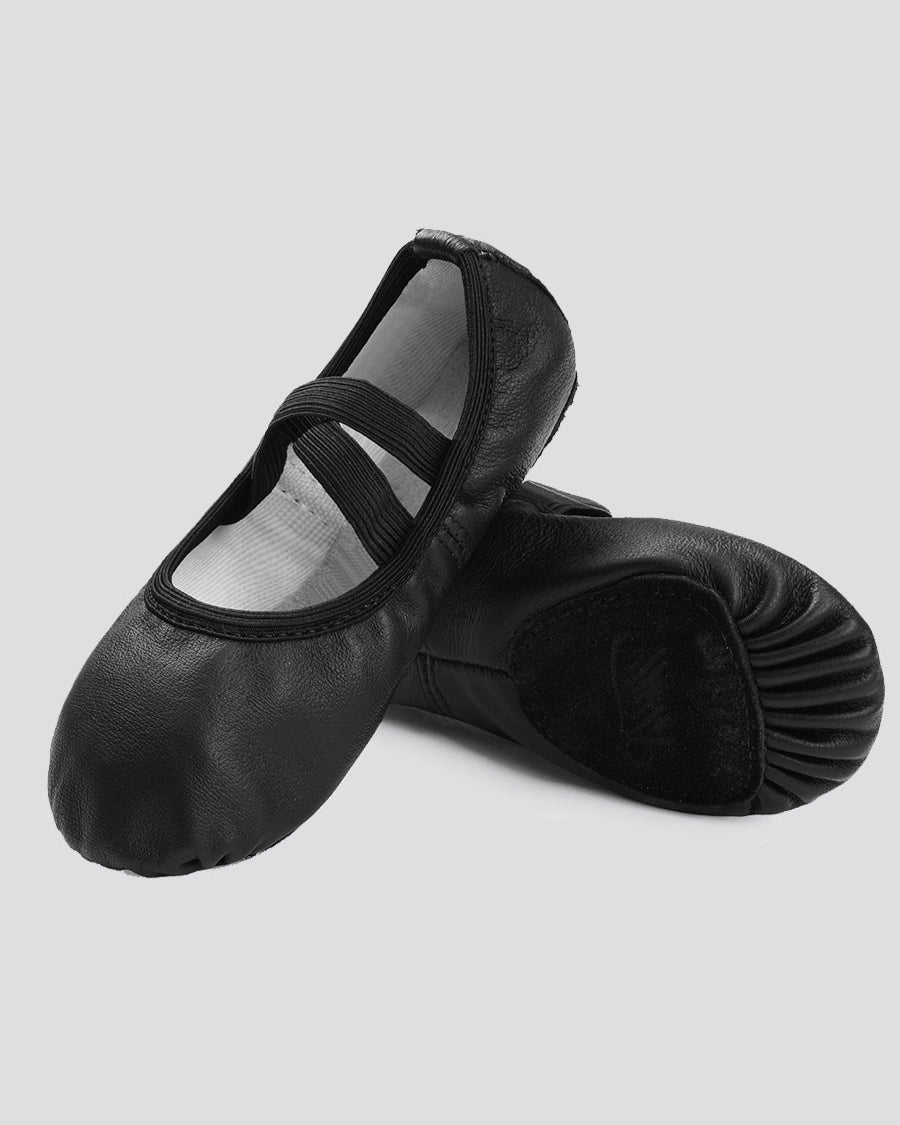
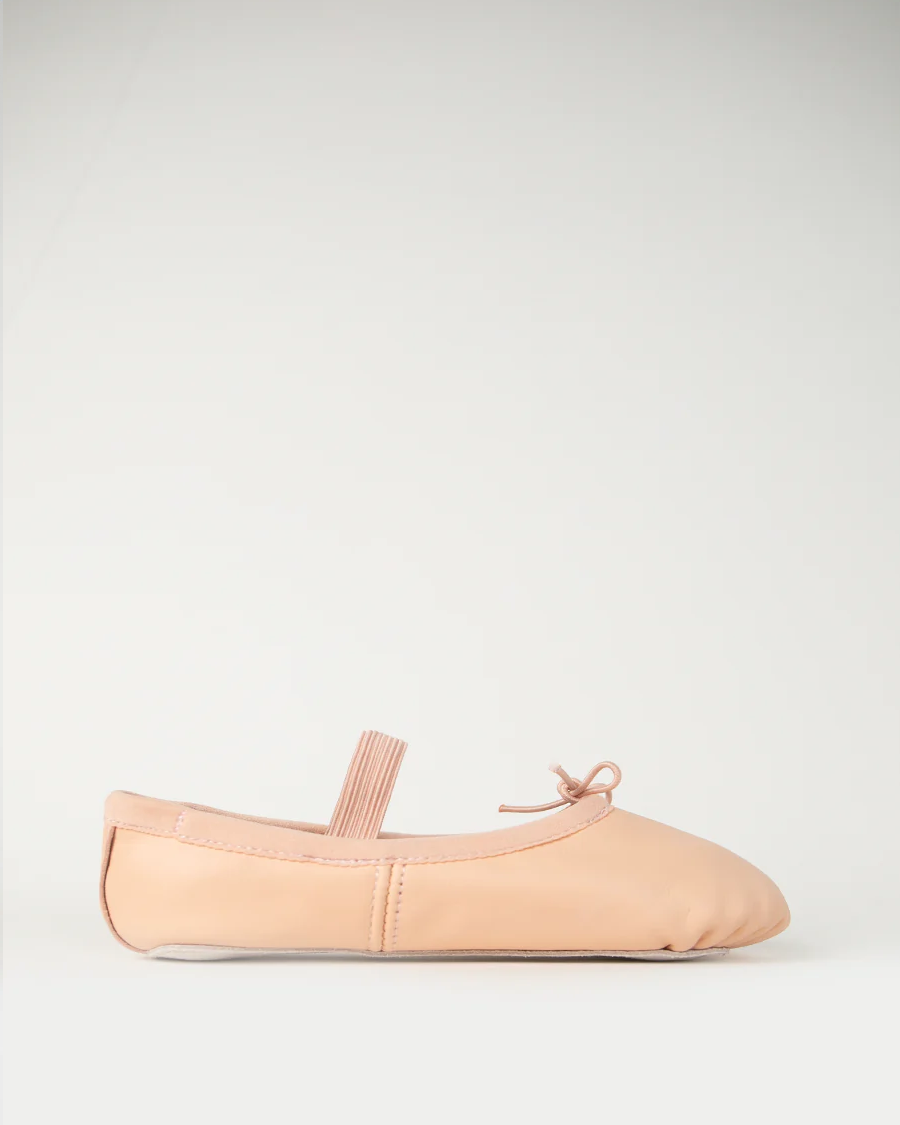
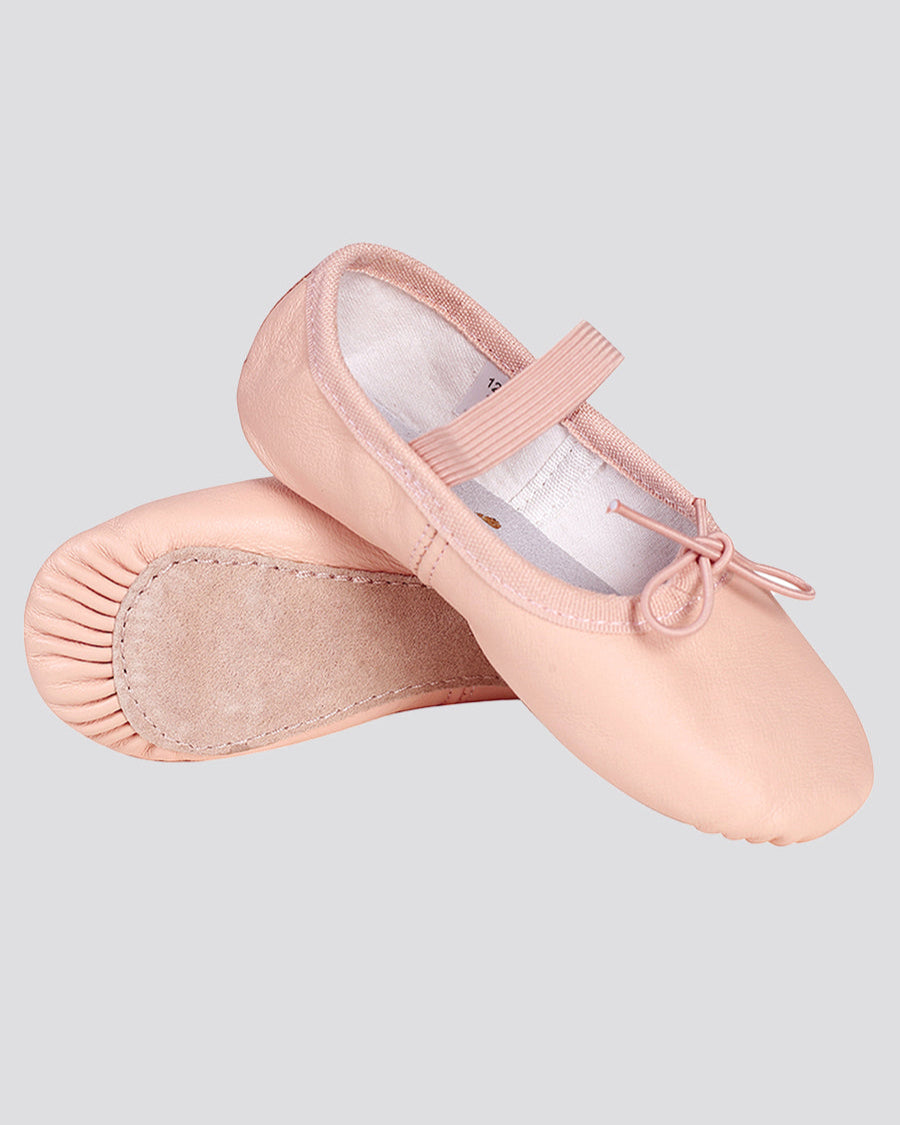
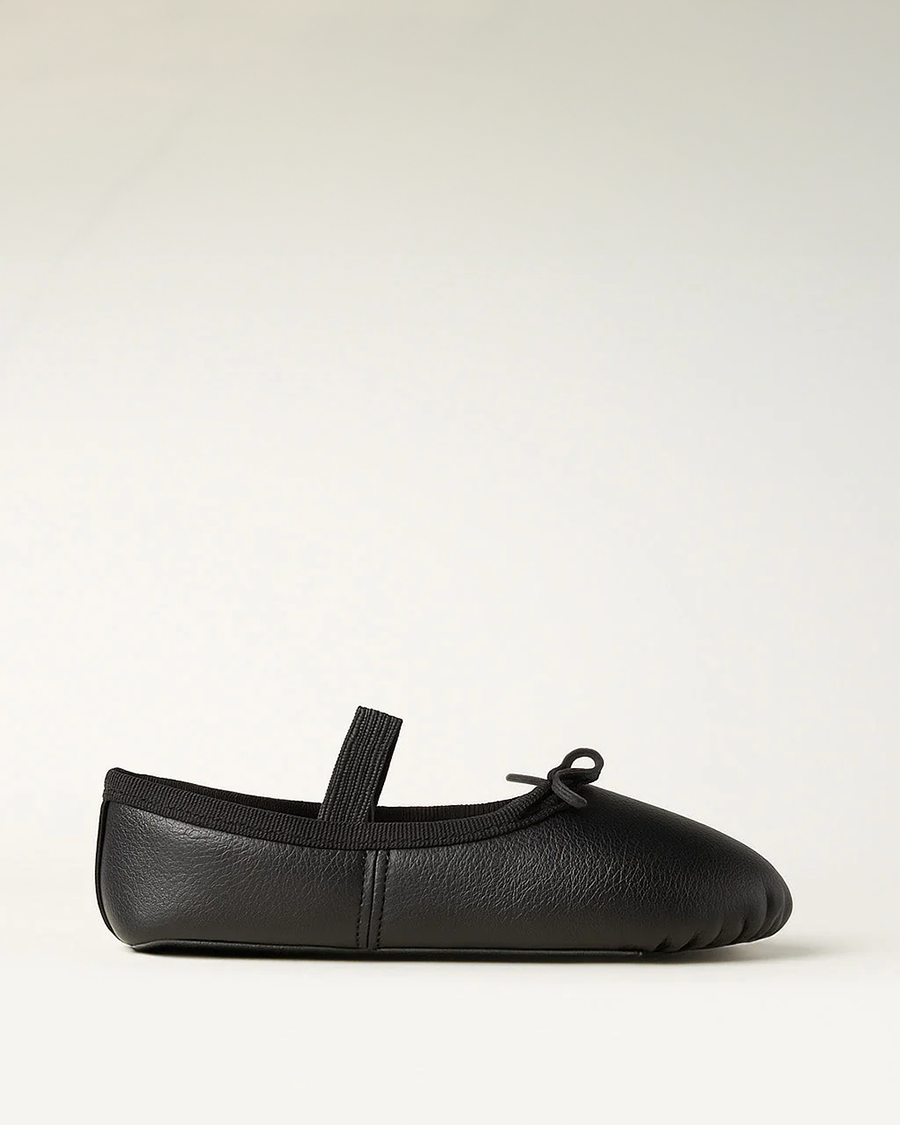
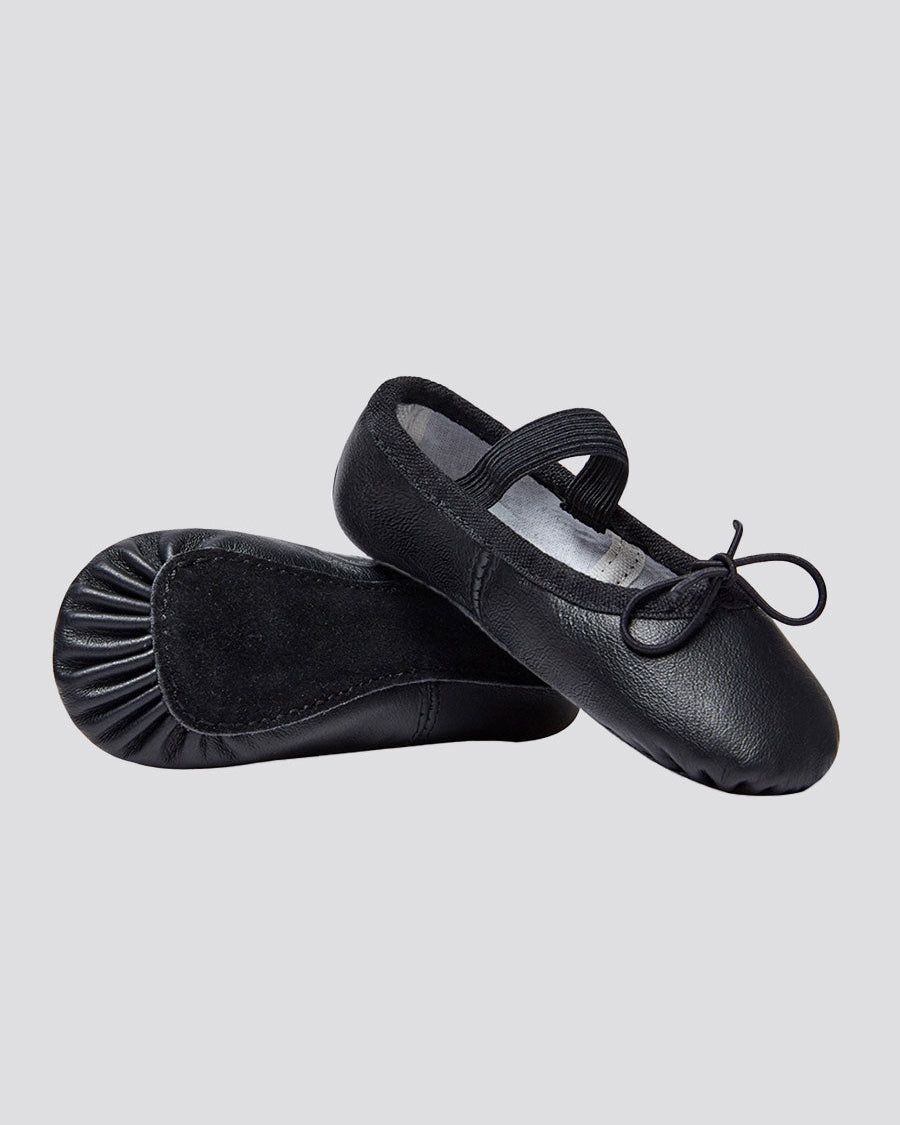
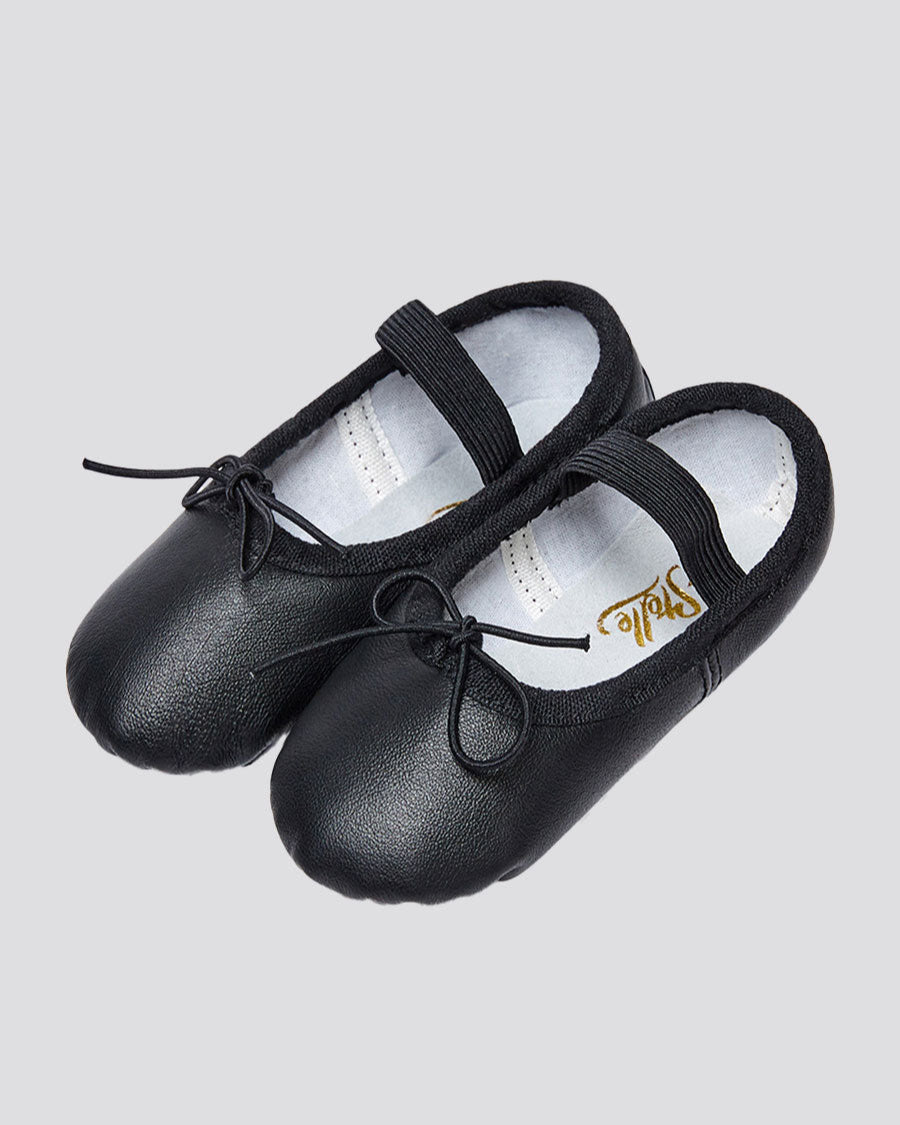
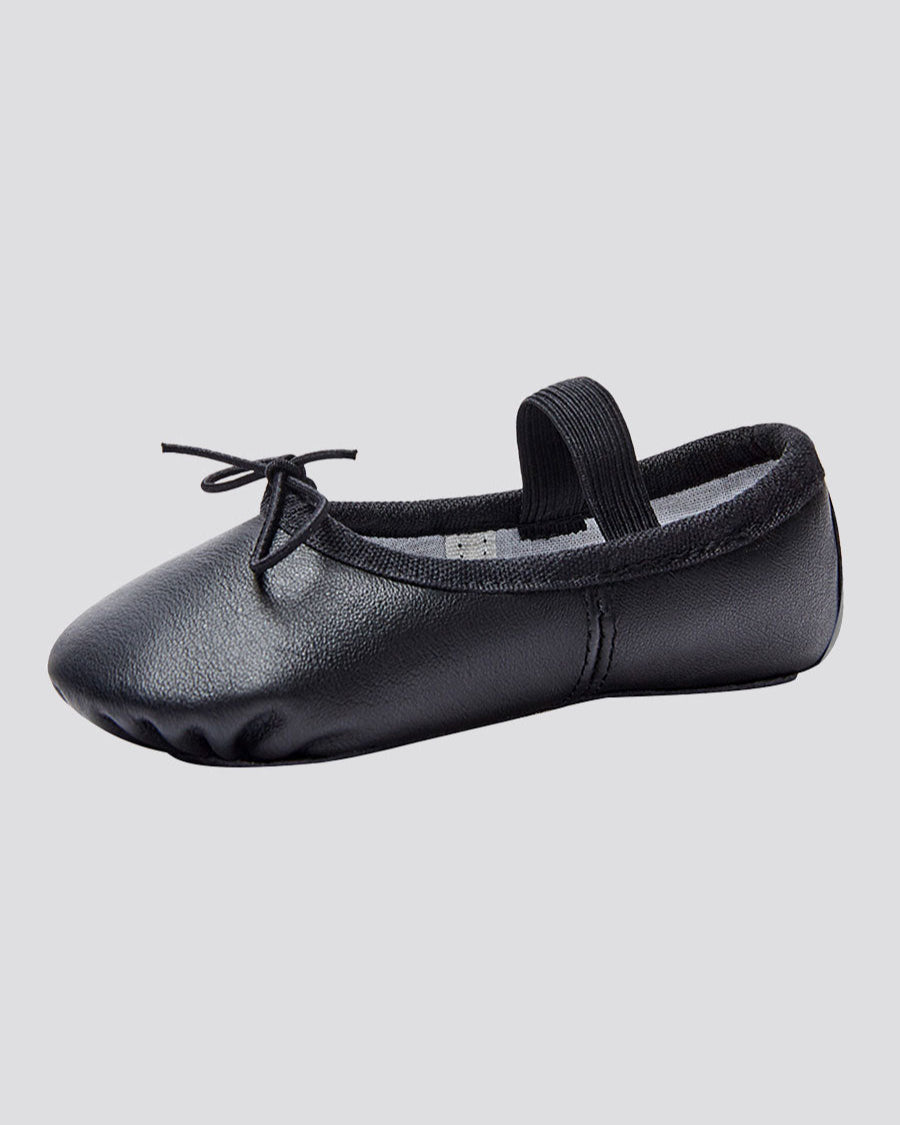
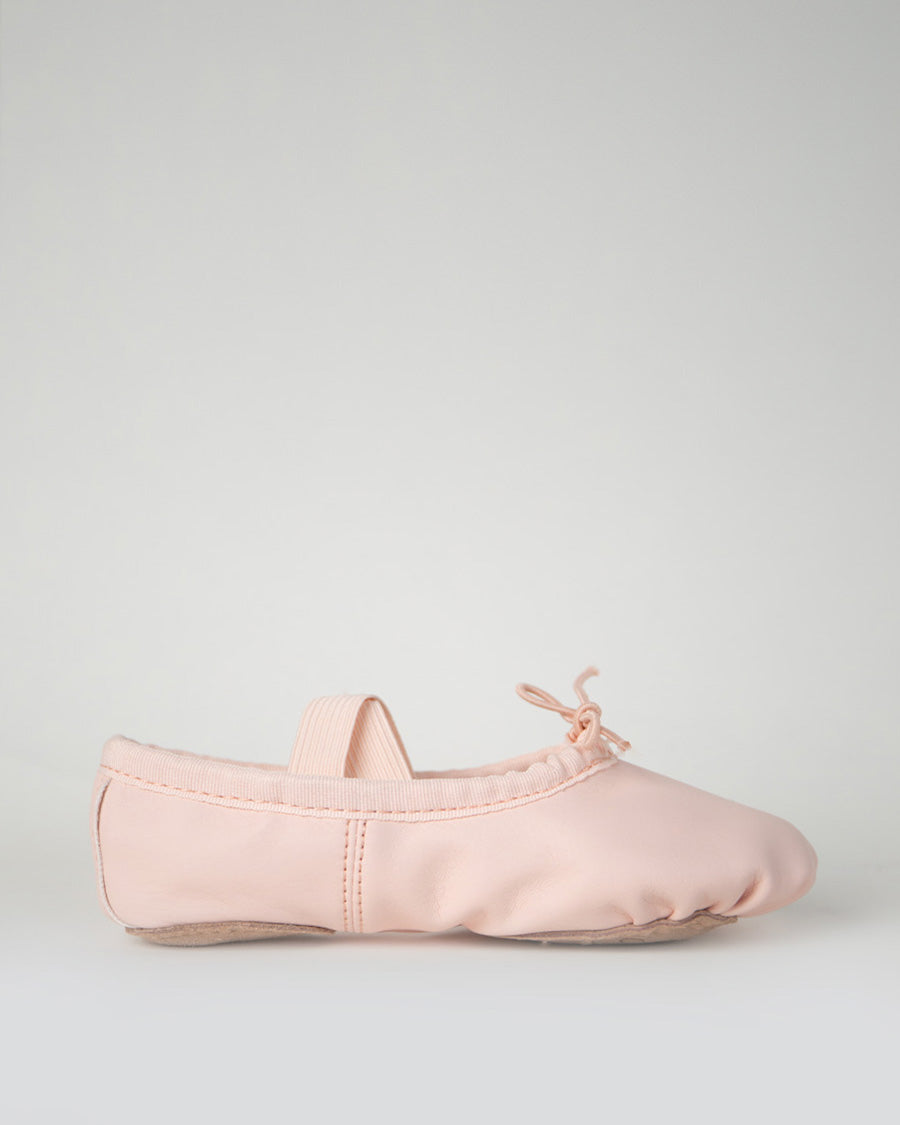
Leather is more durable and holds its shape better over time. It molds to the foot gradually, which gives a cleaner line — something teachers often prefer when assessing technique. It has less stretch than canvas, so it takes a few wears to break in. If your child is dancing two or more times a week, or if her studio requires leather, it's worth the slightly higher upfront durability.
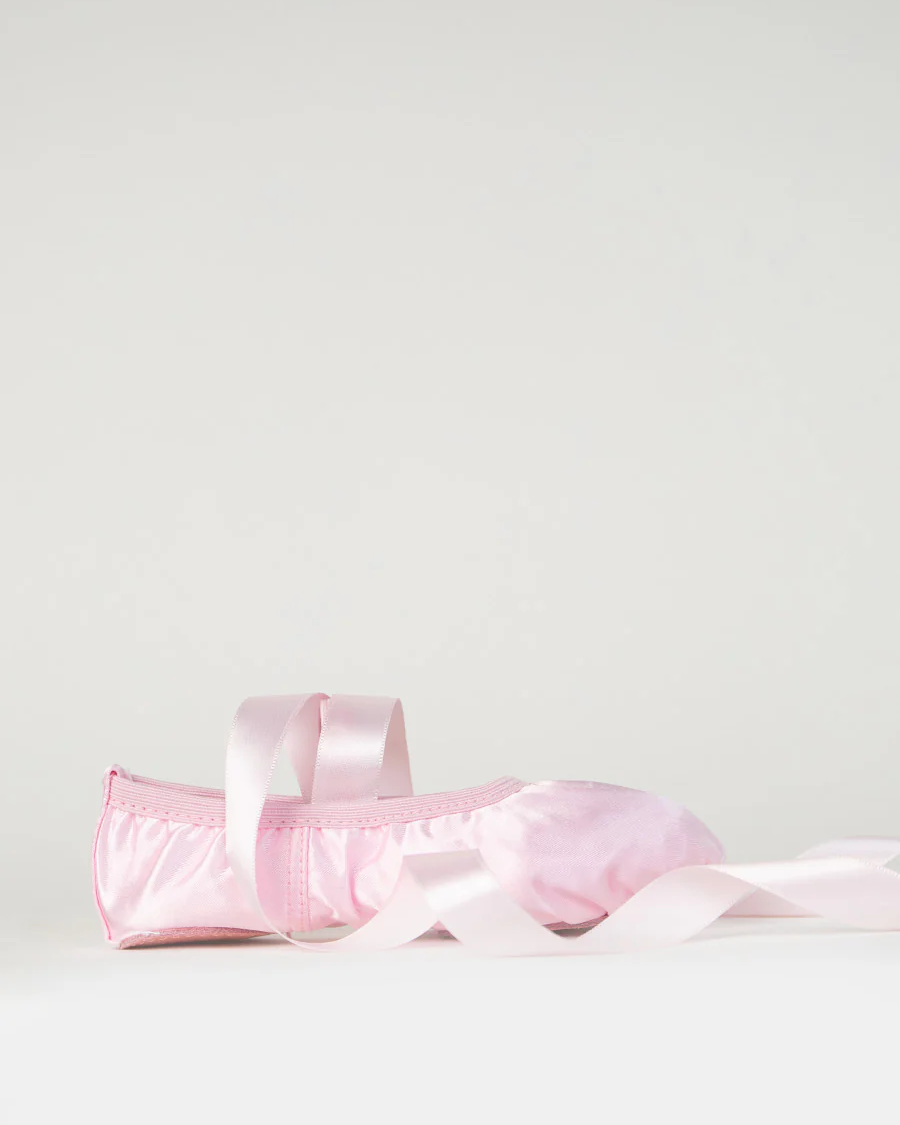
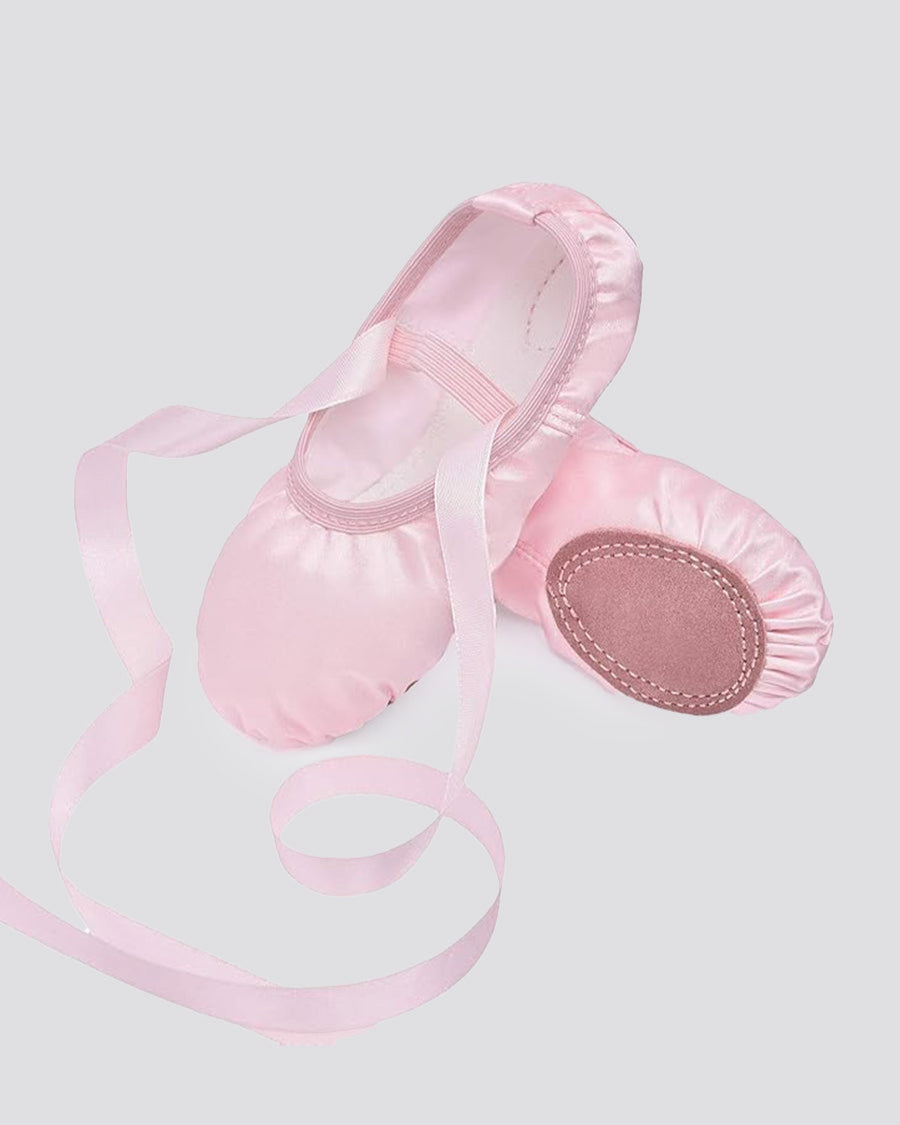
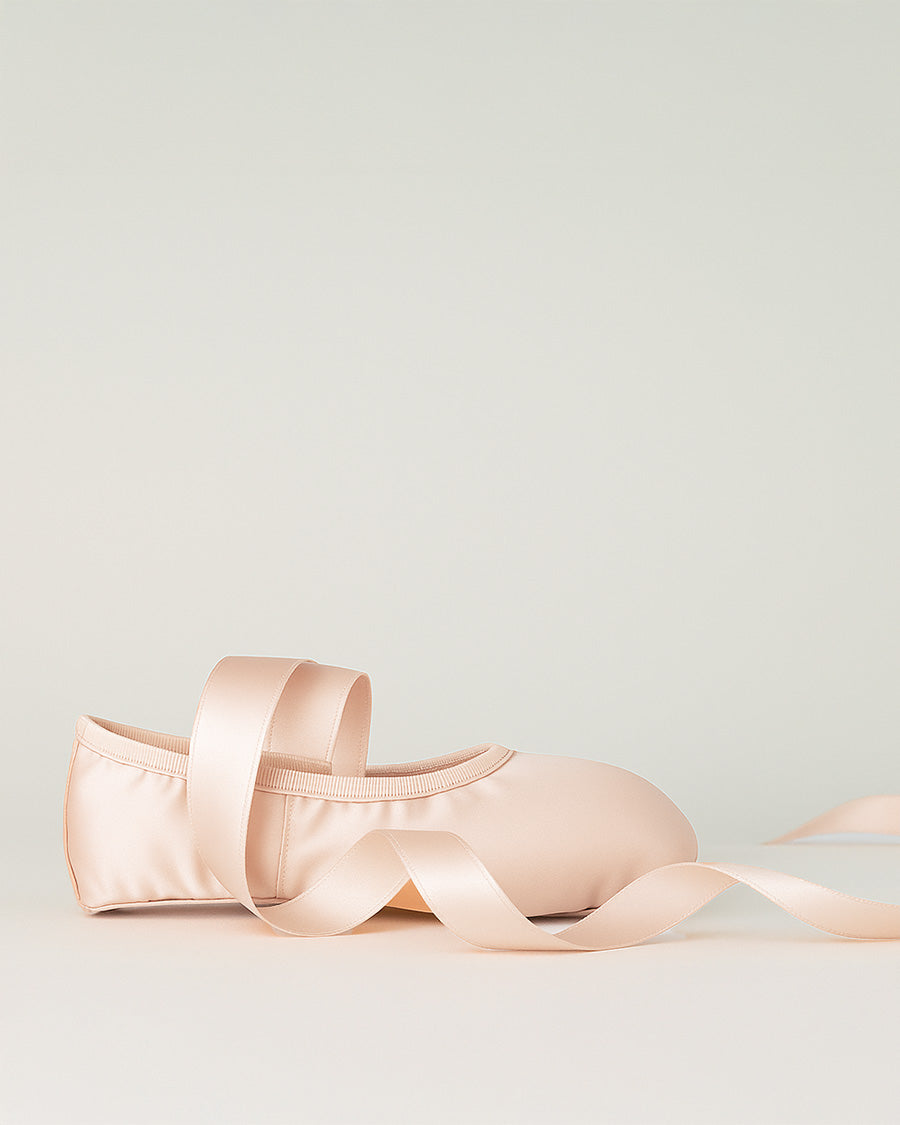
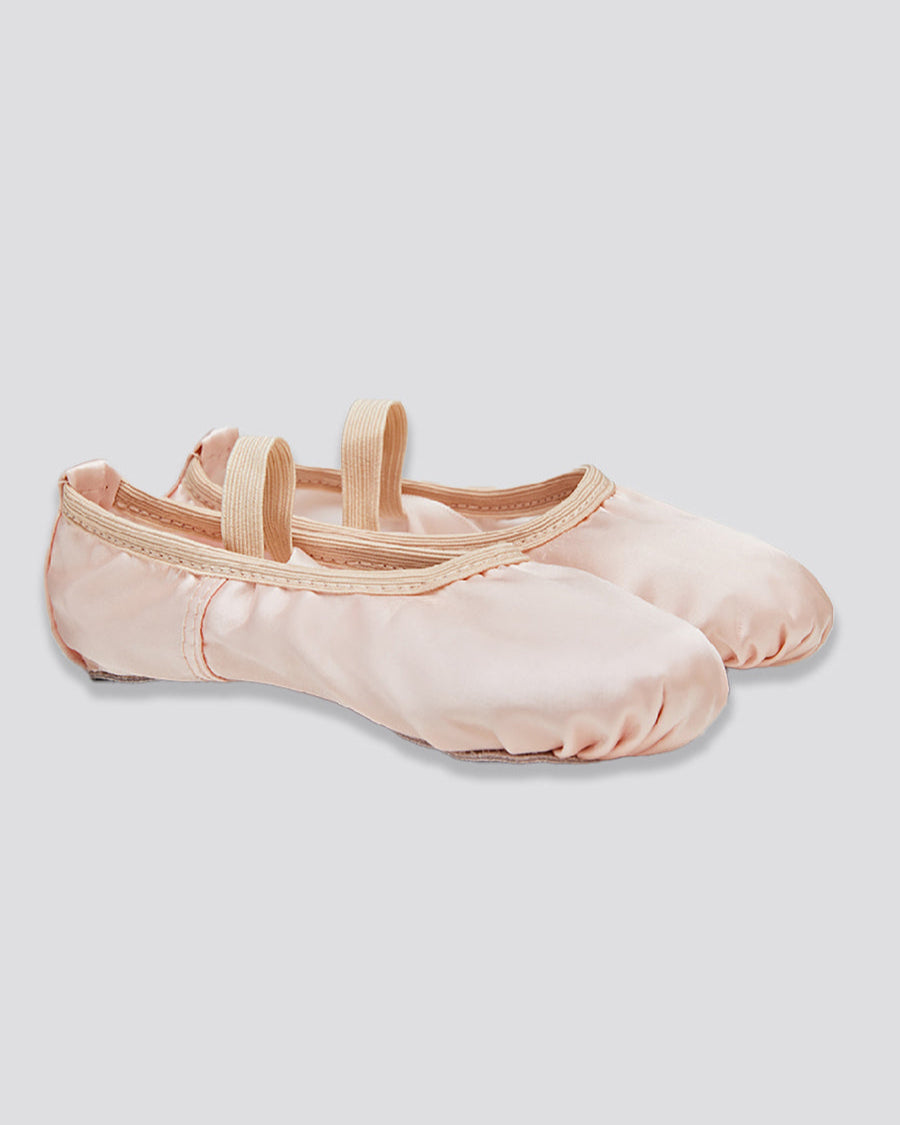
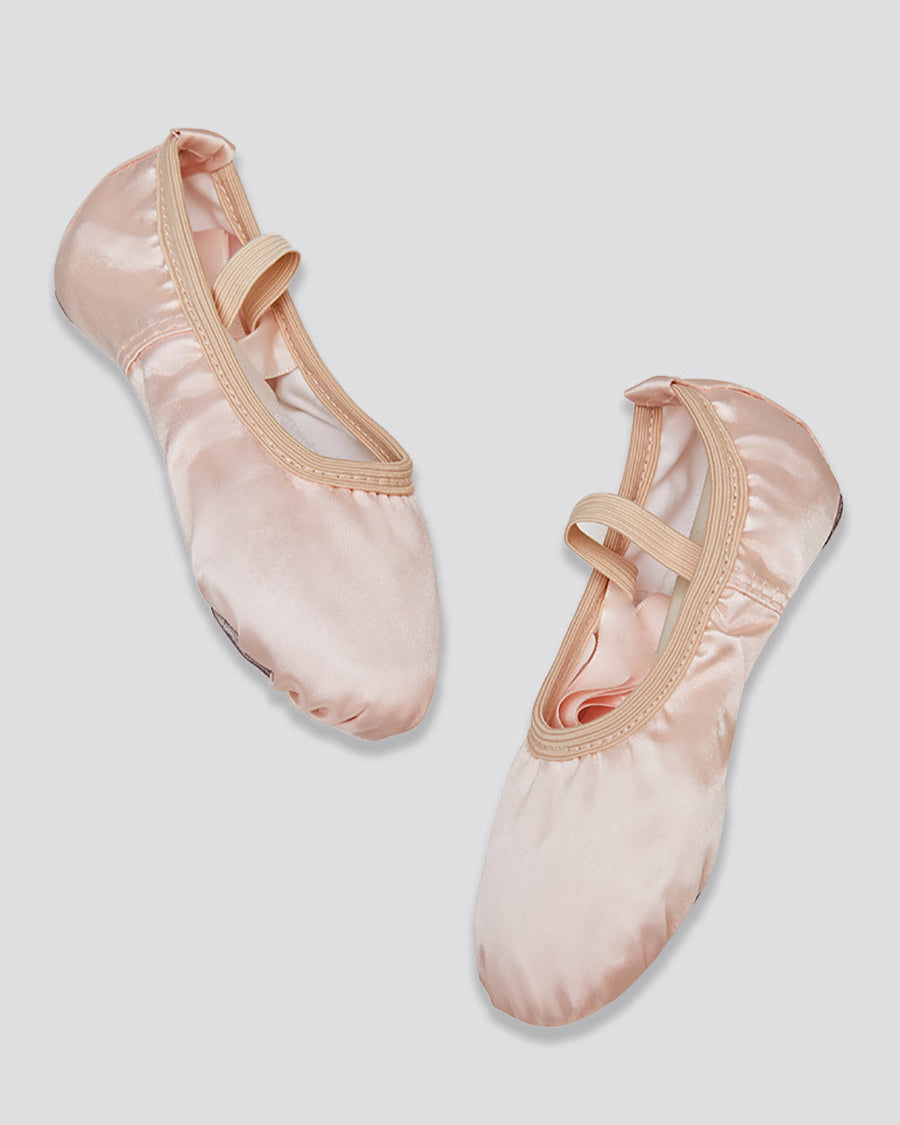
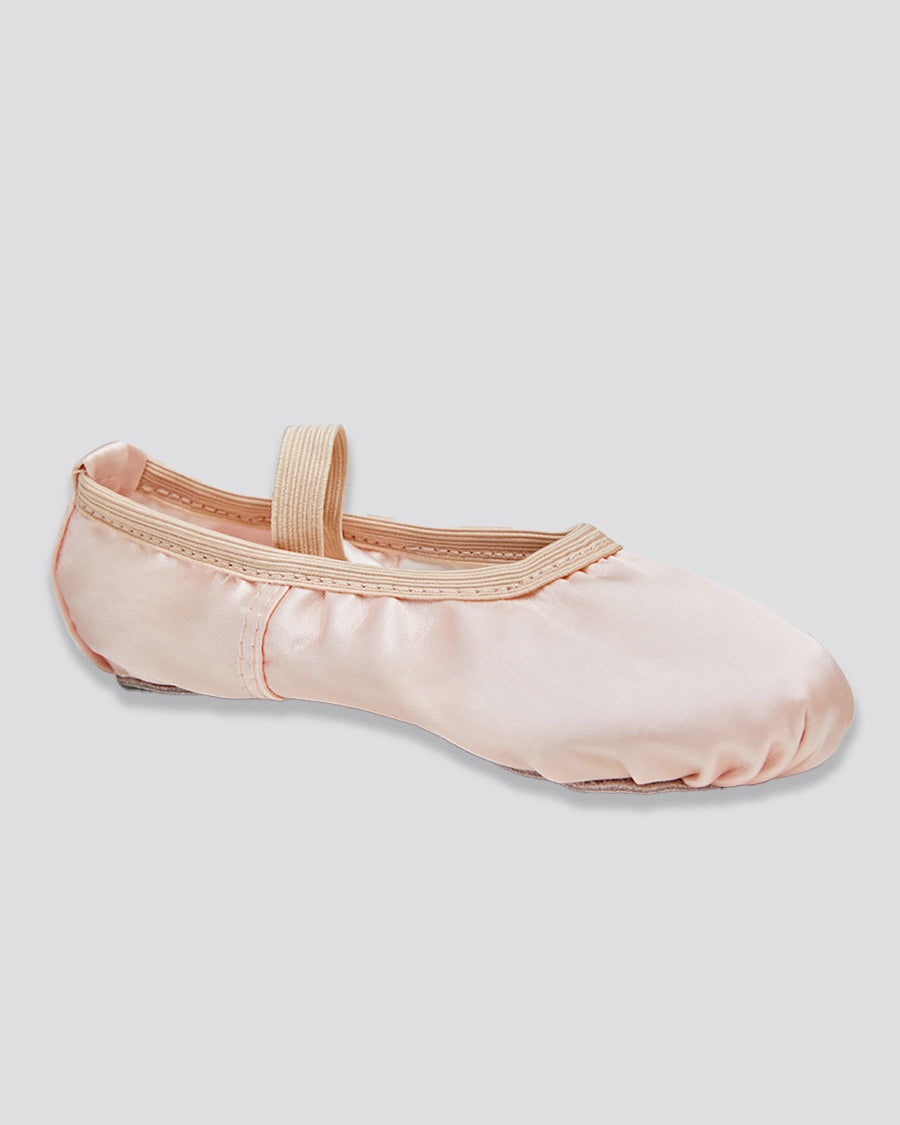
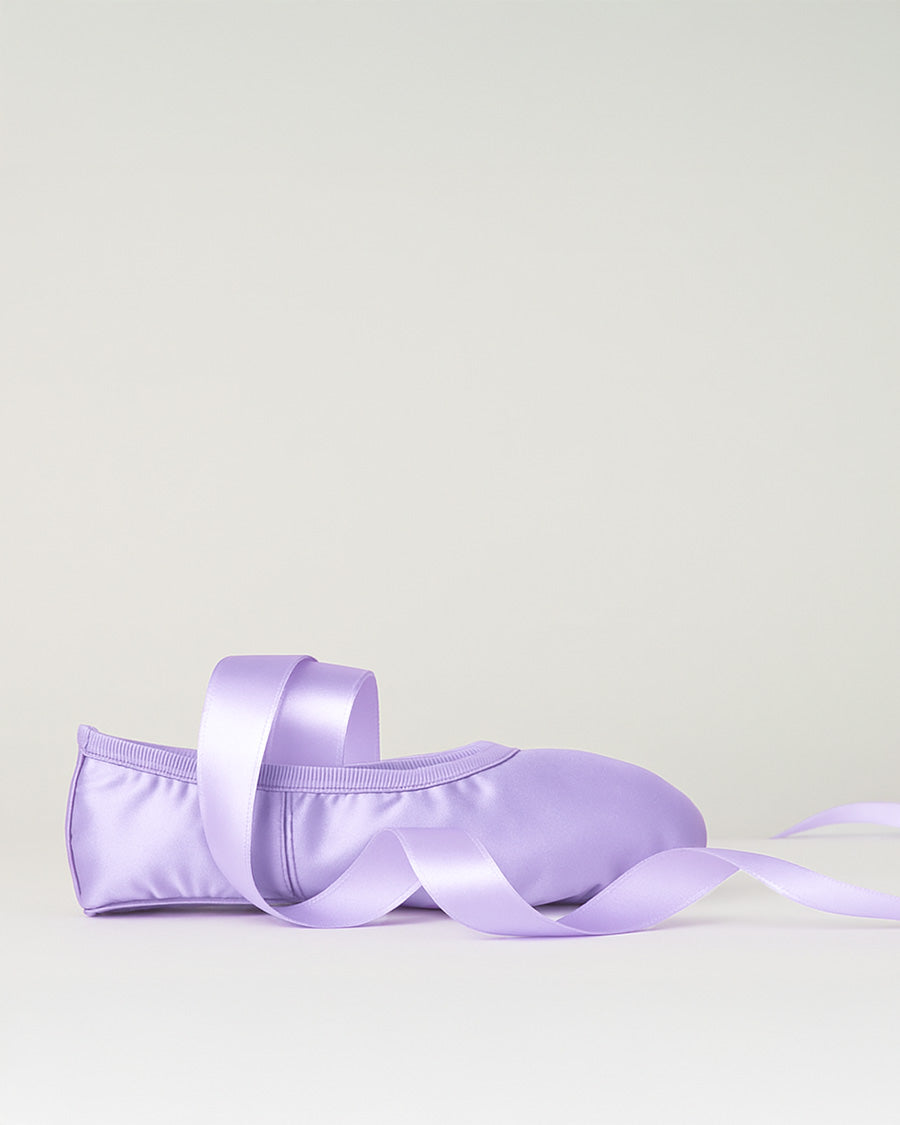
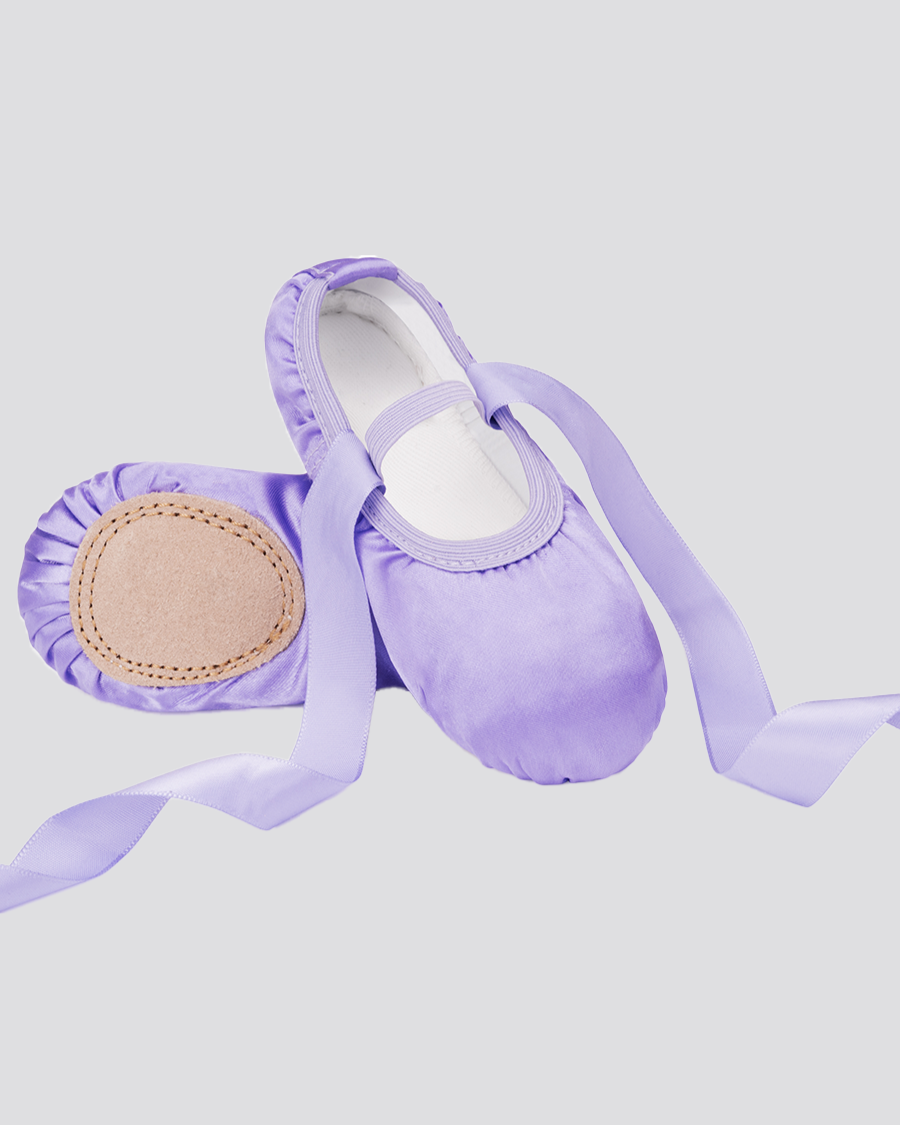
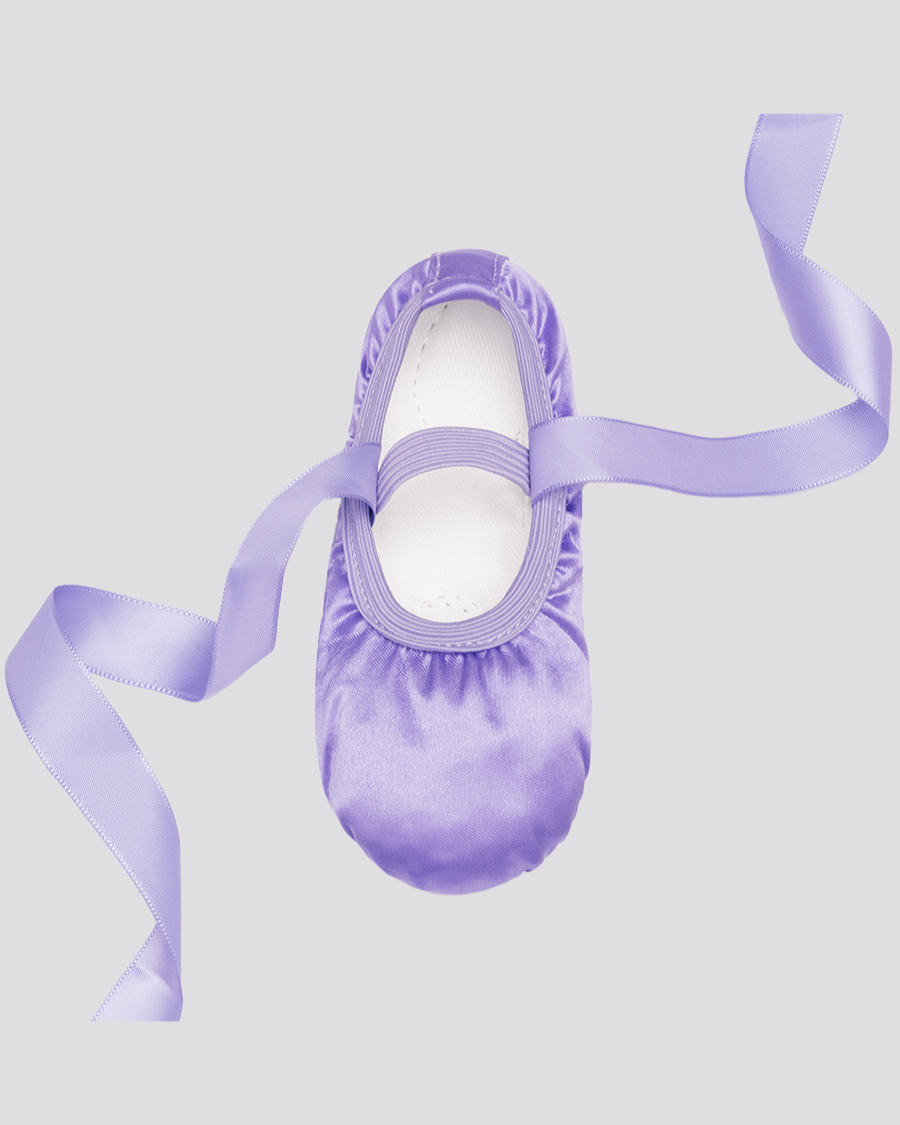
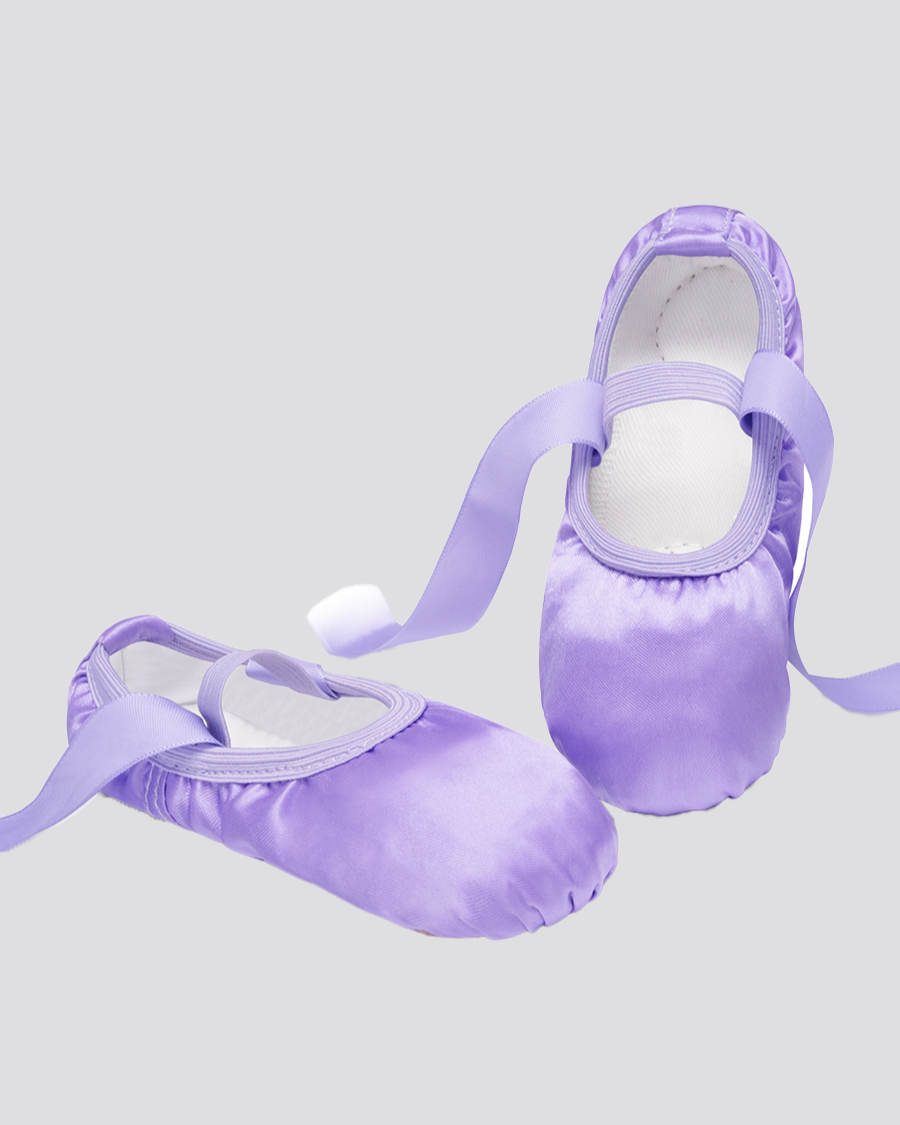
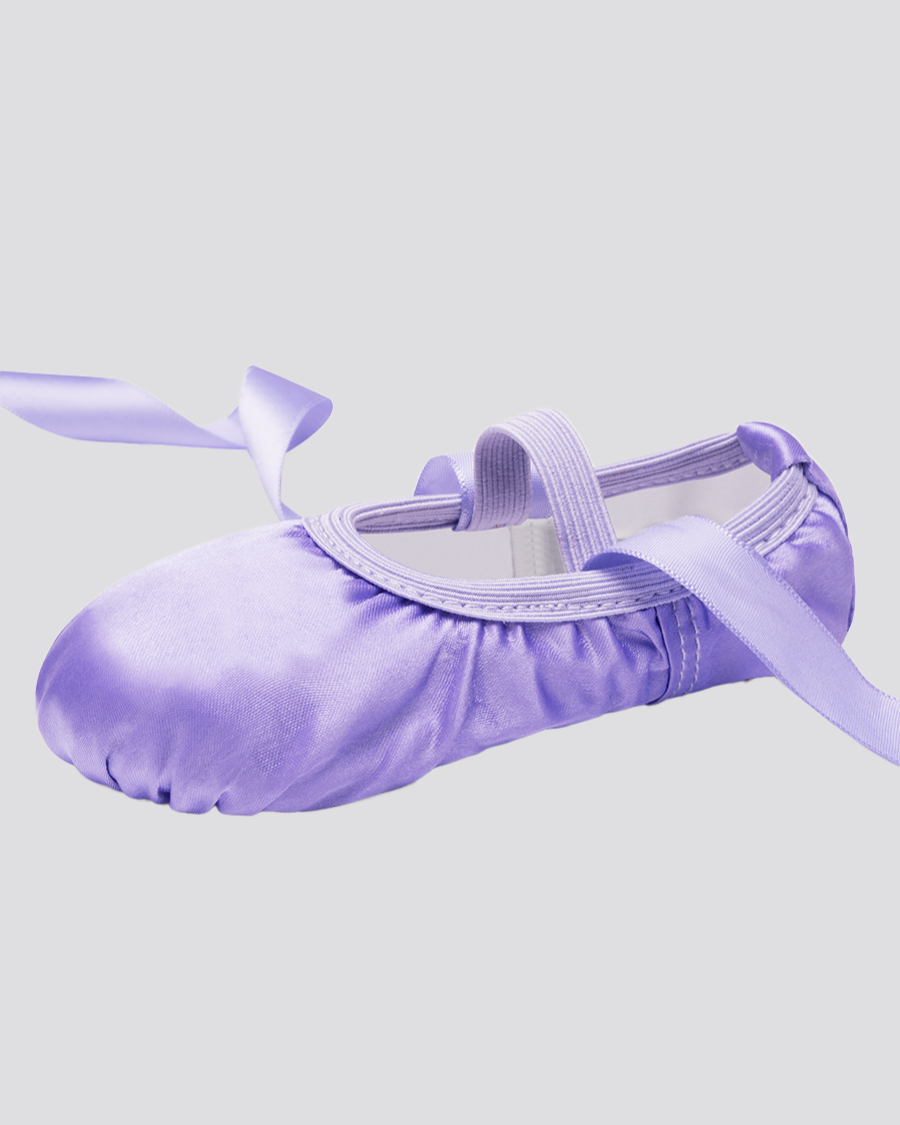
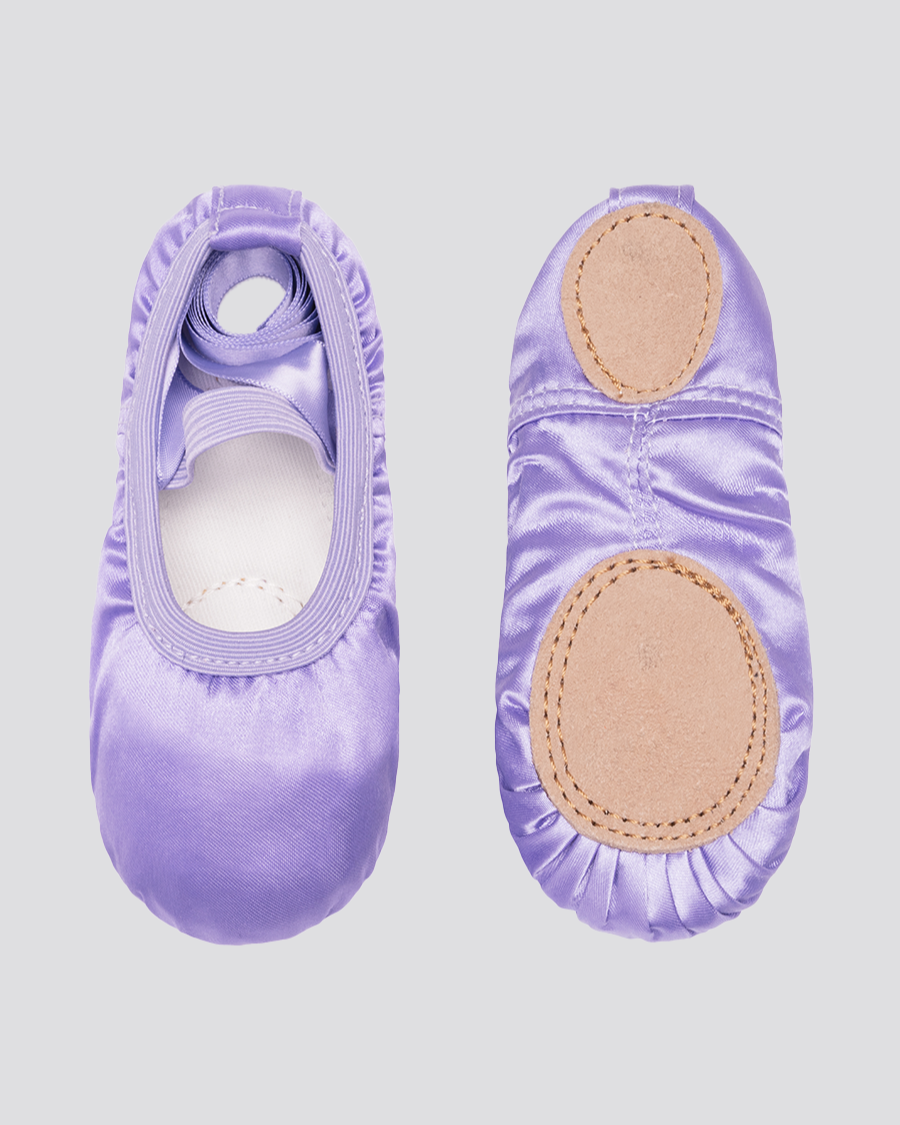
Satin is for performances and exams, not class. It wears quickly on a studio floor and doesn't grip the way canvas or leather does. If your child has a recital, a satin pair makes sense as a second shoe — but it's not a substitute for everyday practice.
For a more detailed comparison of different ballet shoe materials, see our complete ballet shoes guide.

Sole Type: Full Sole or Split Sole
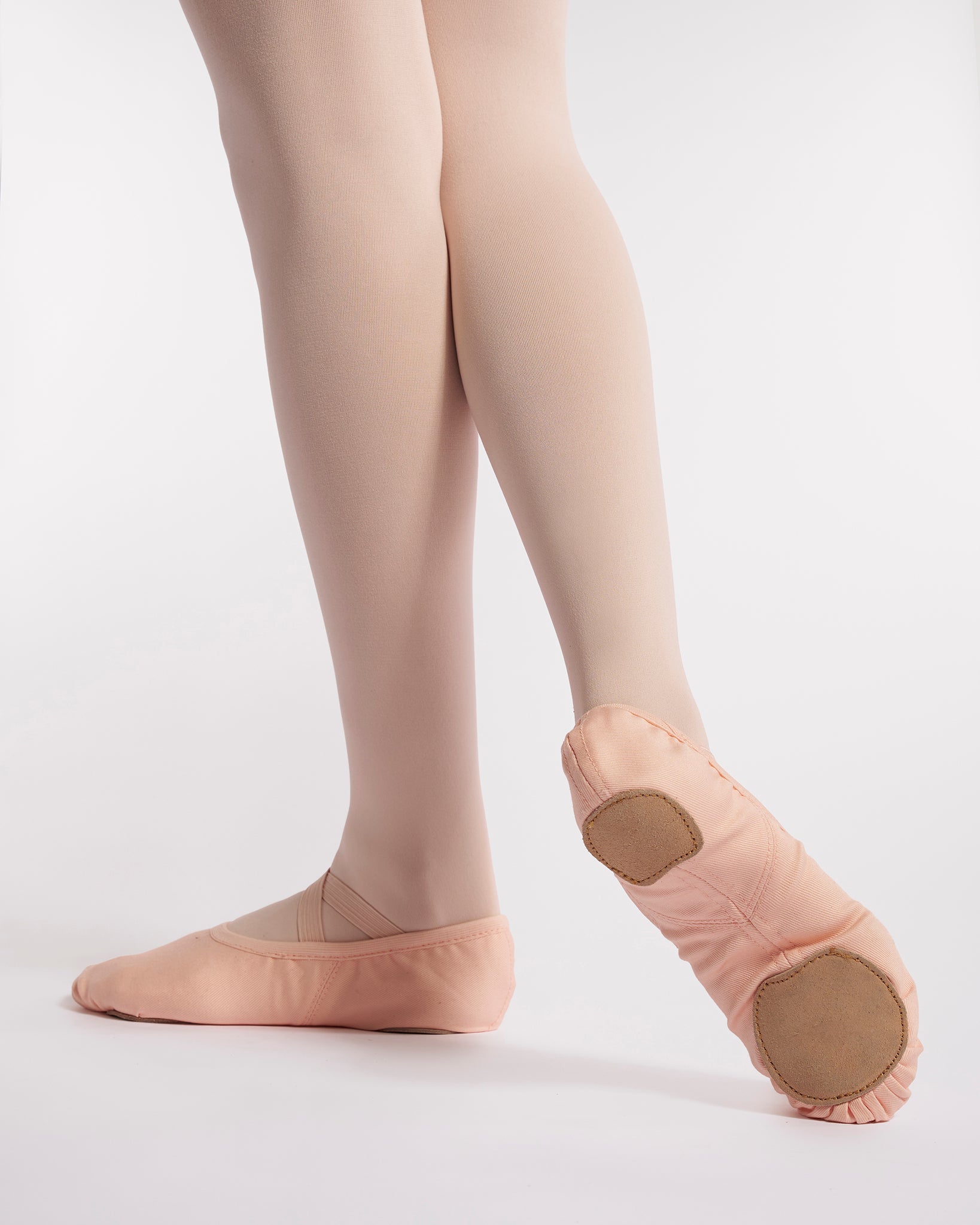
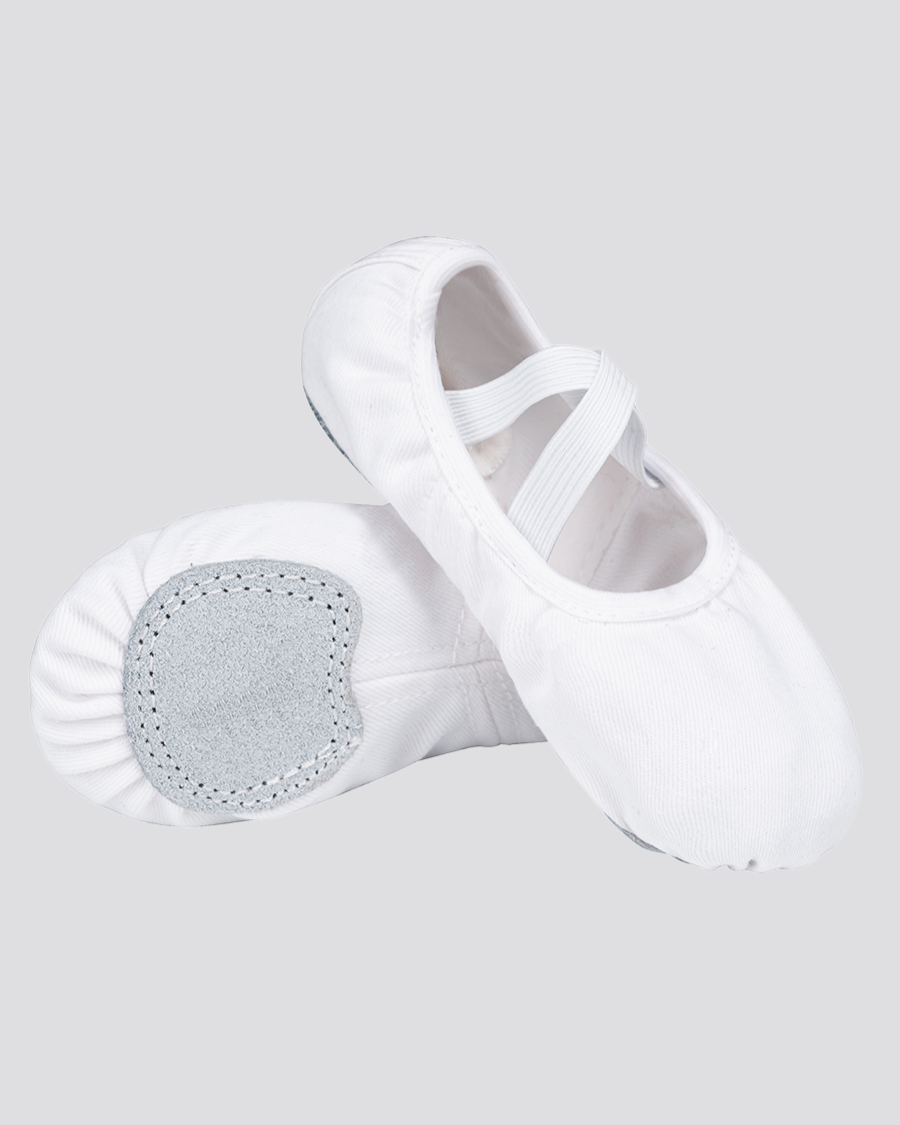
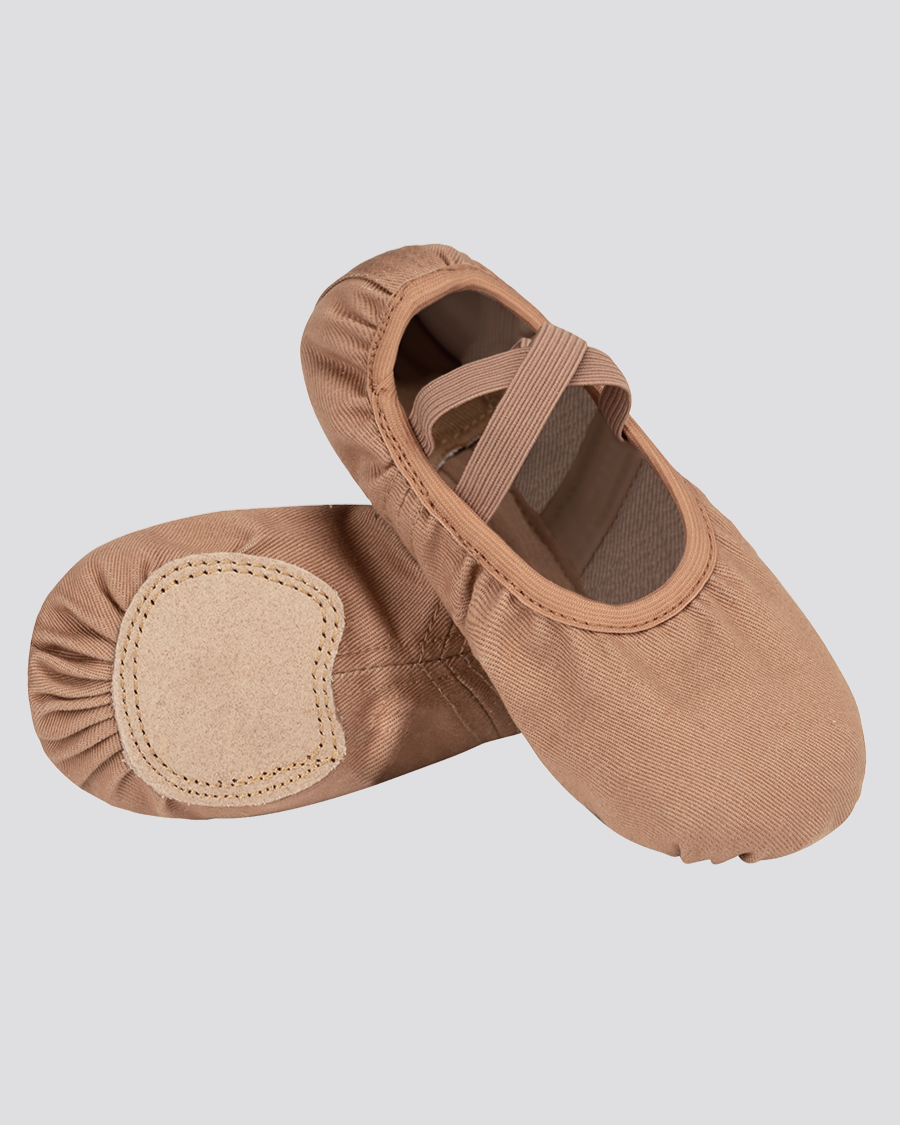
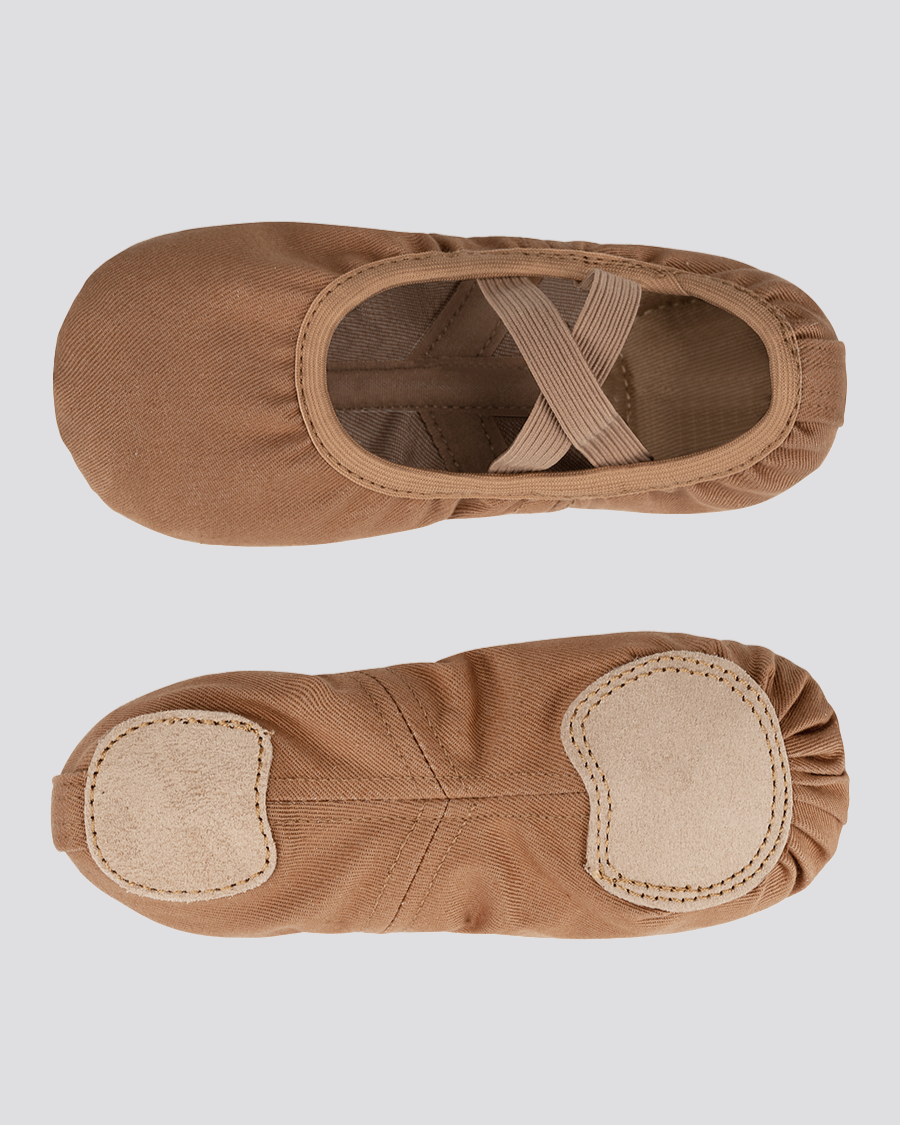
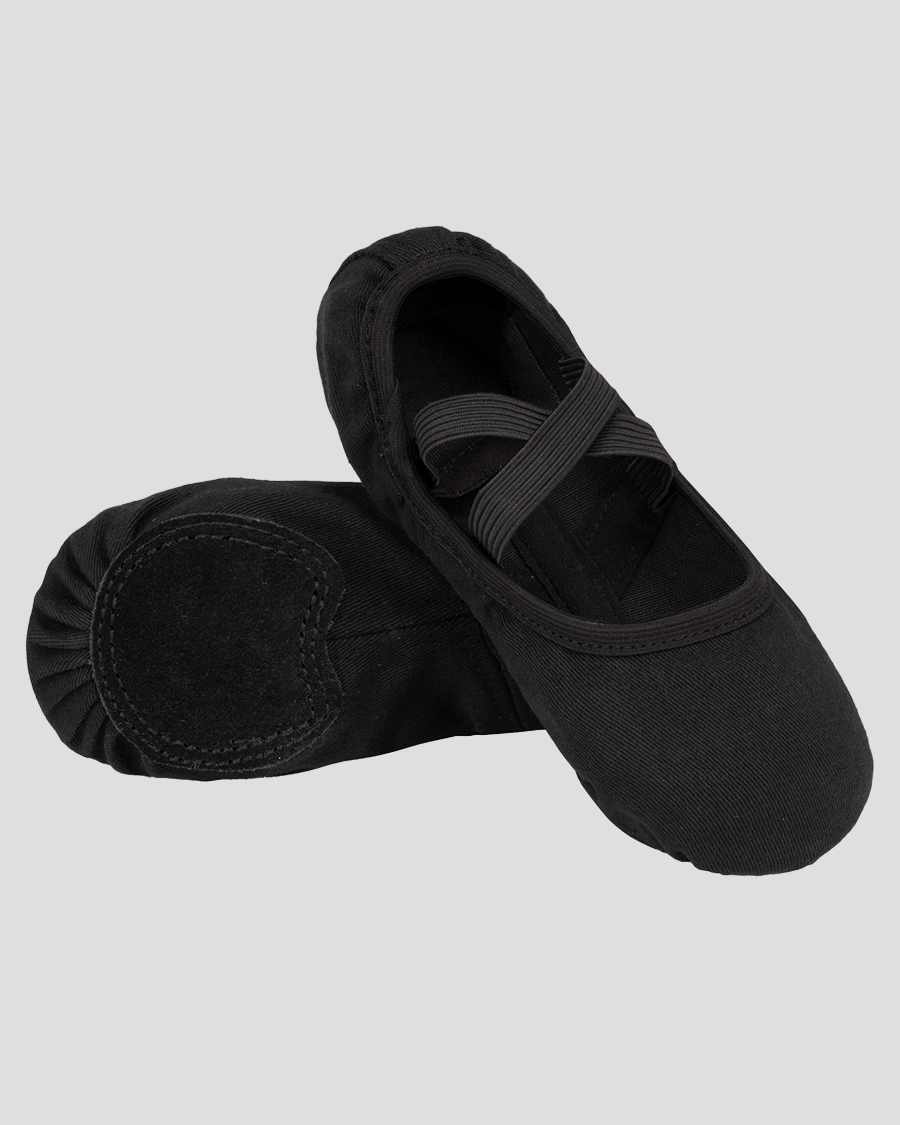
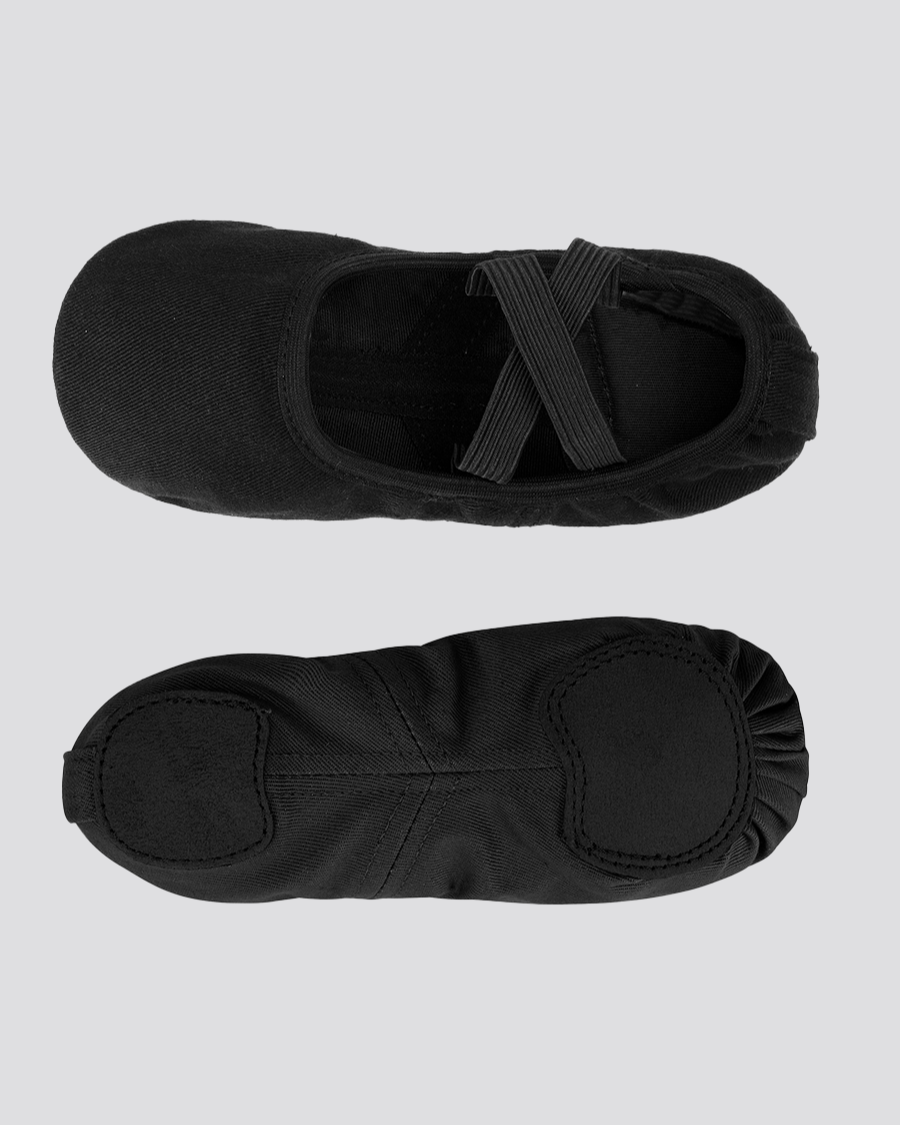
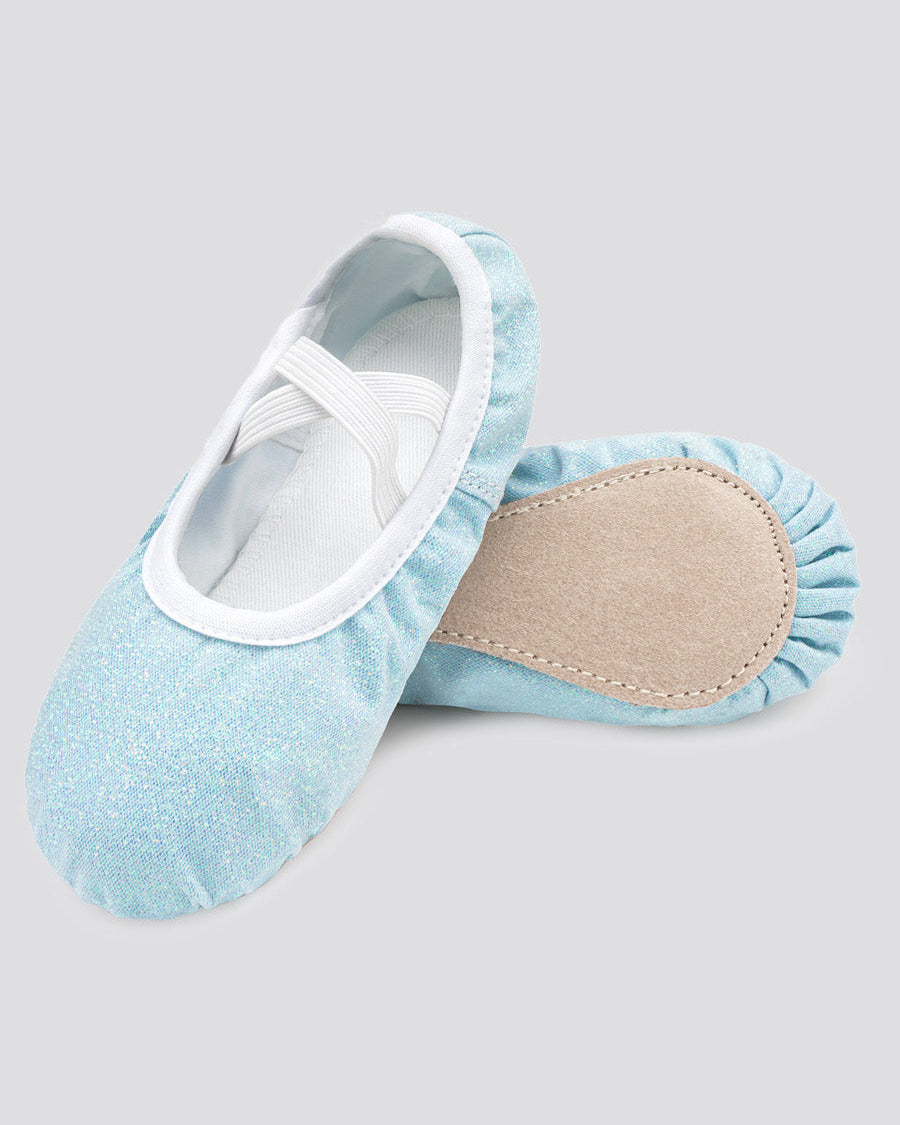
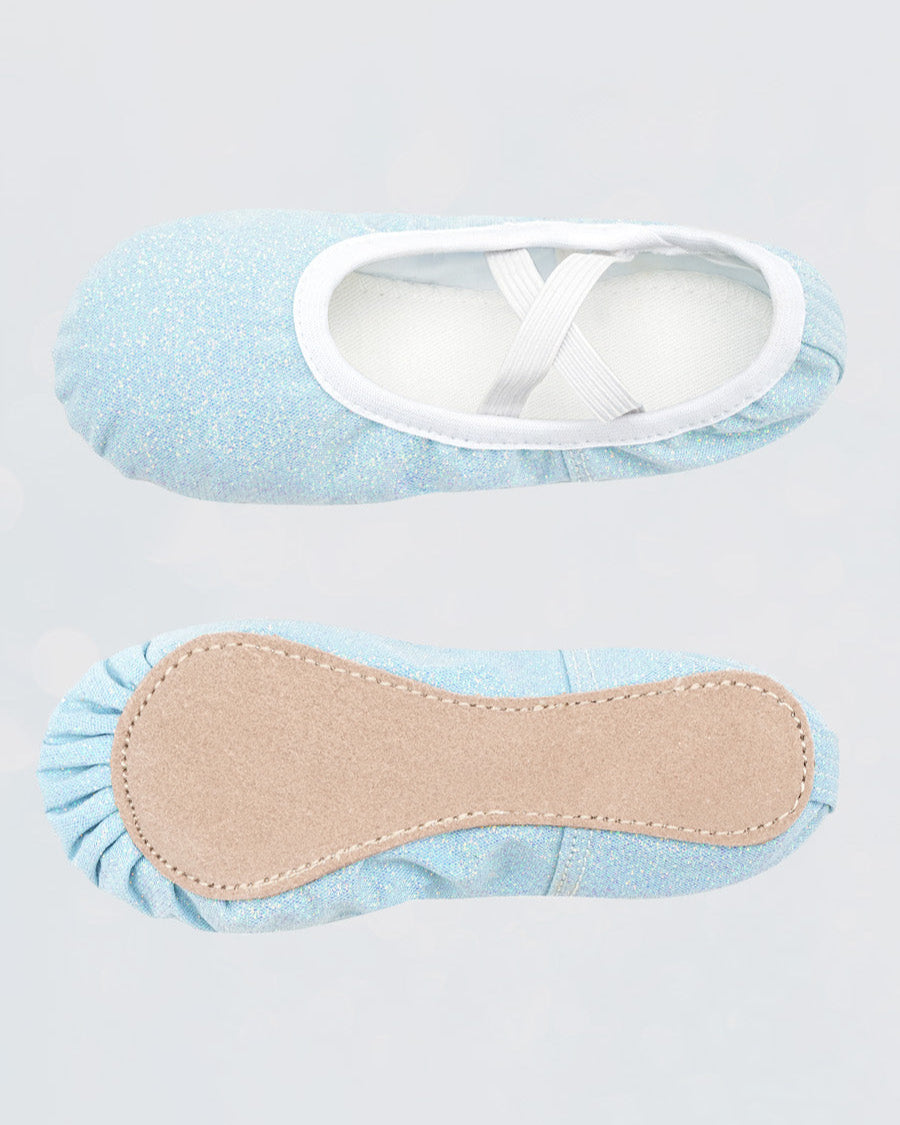
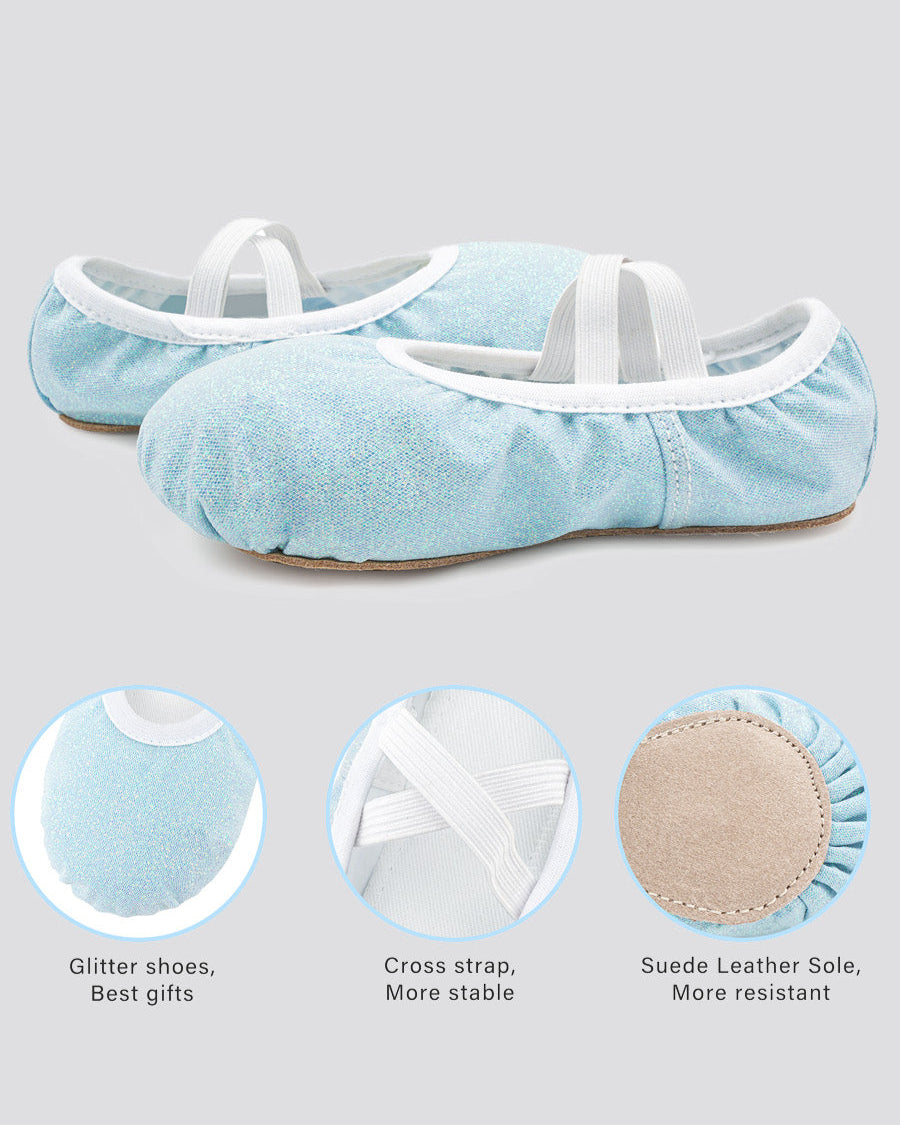
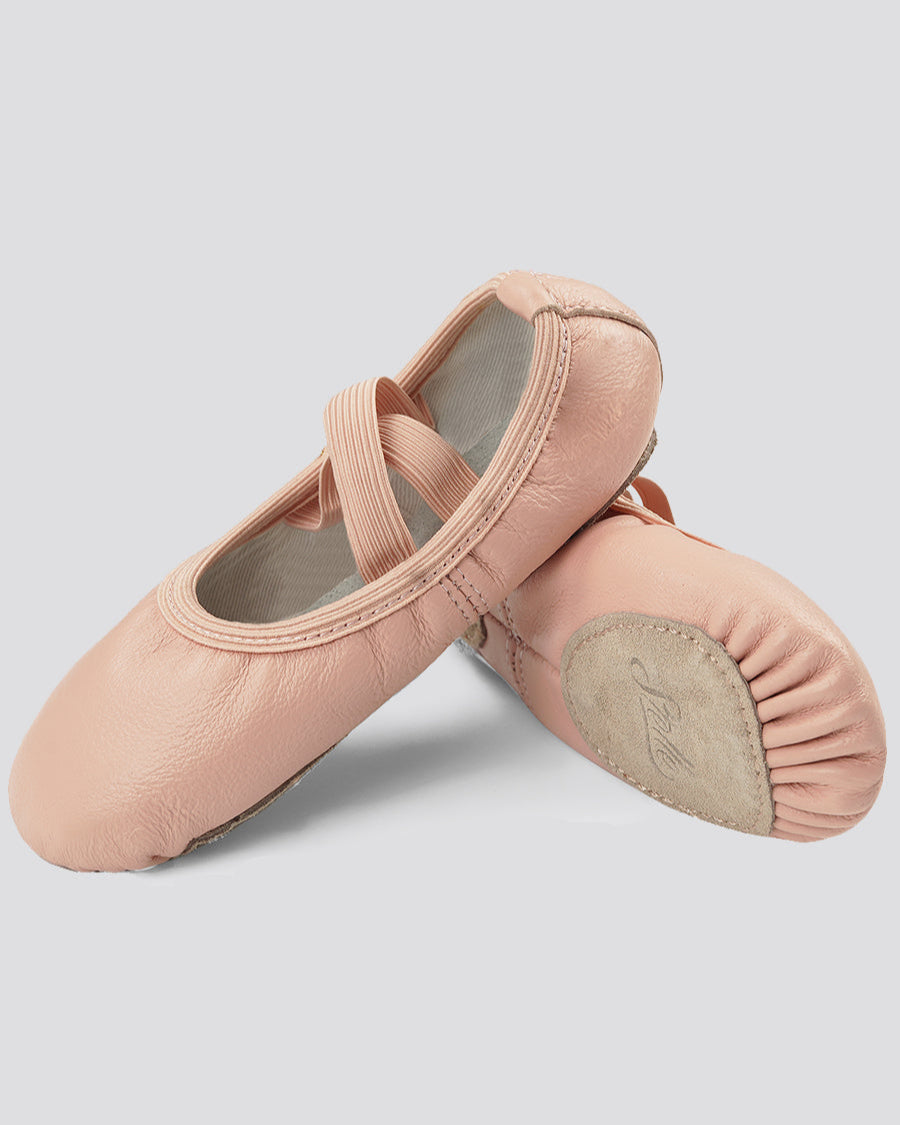
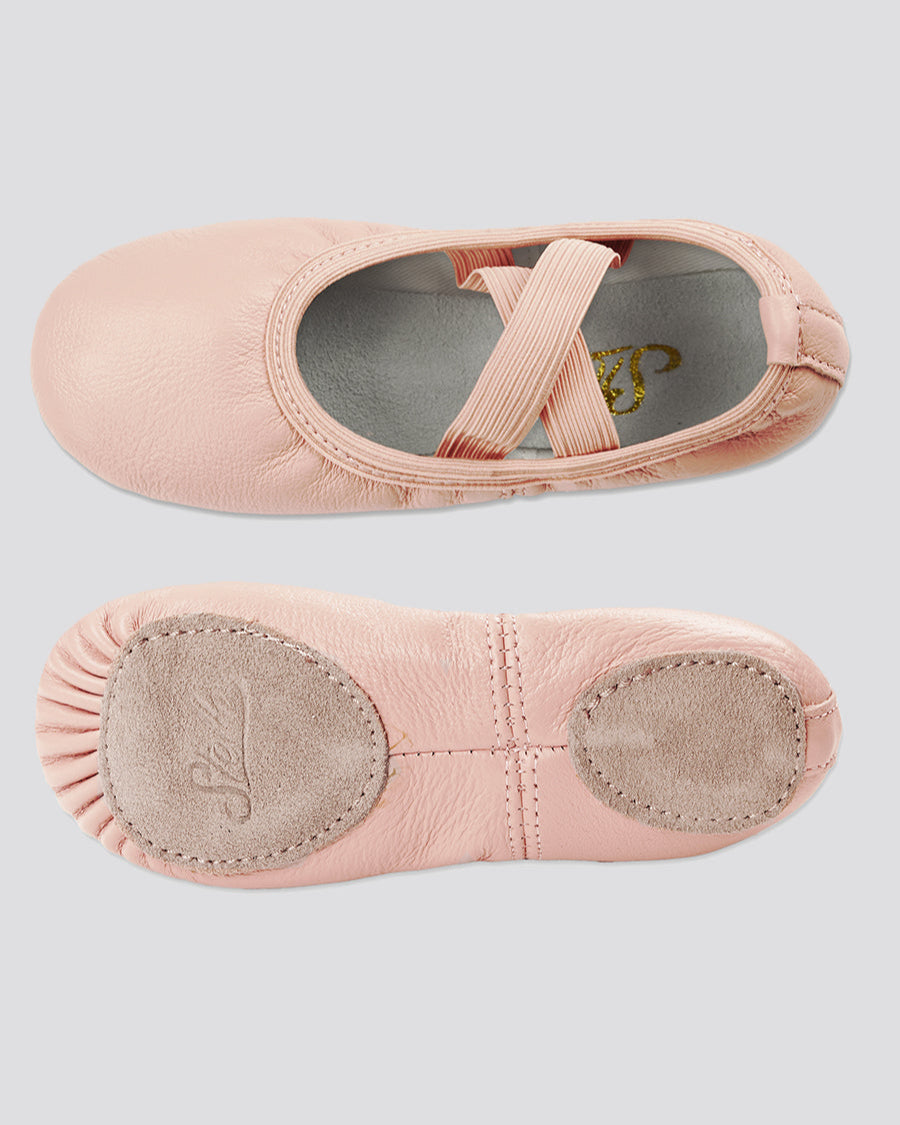
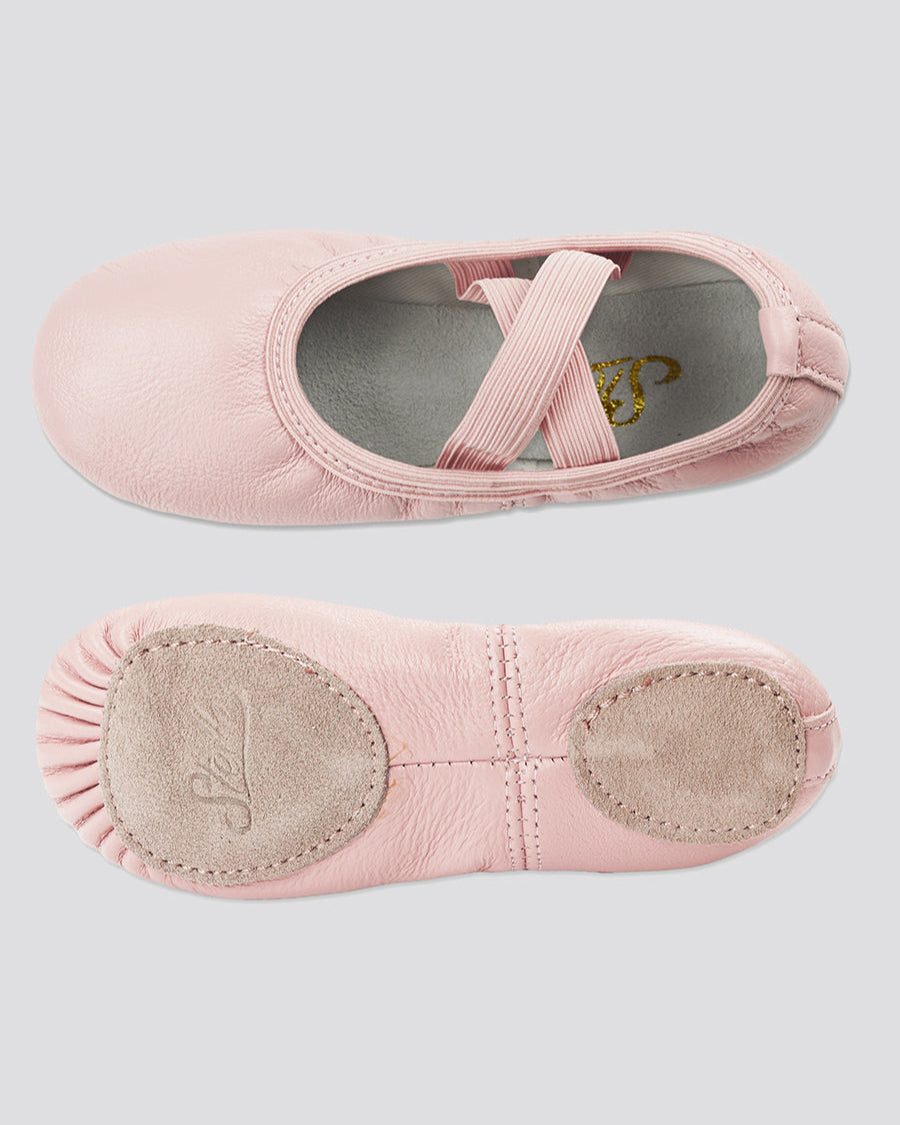
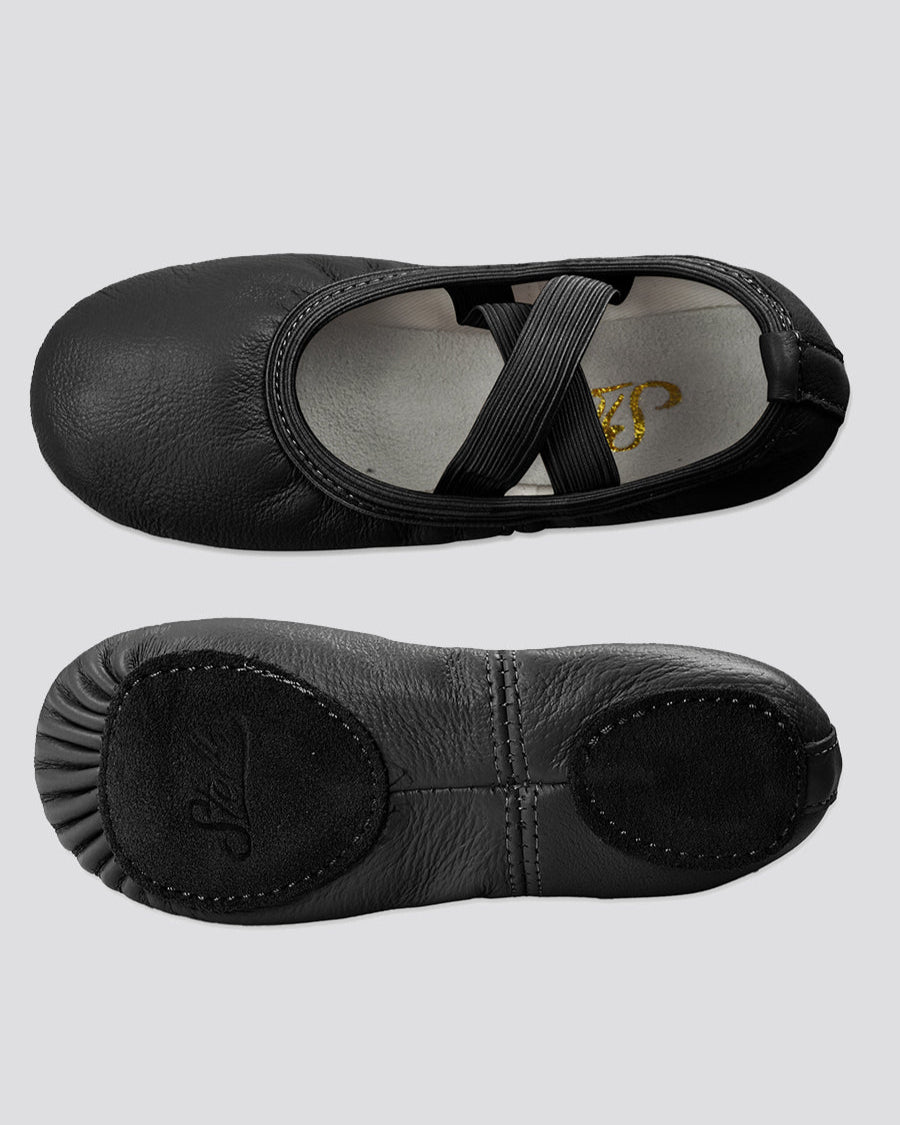
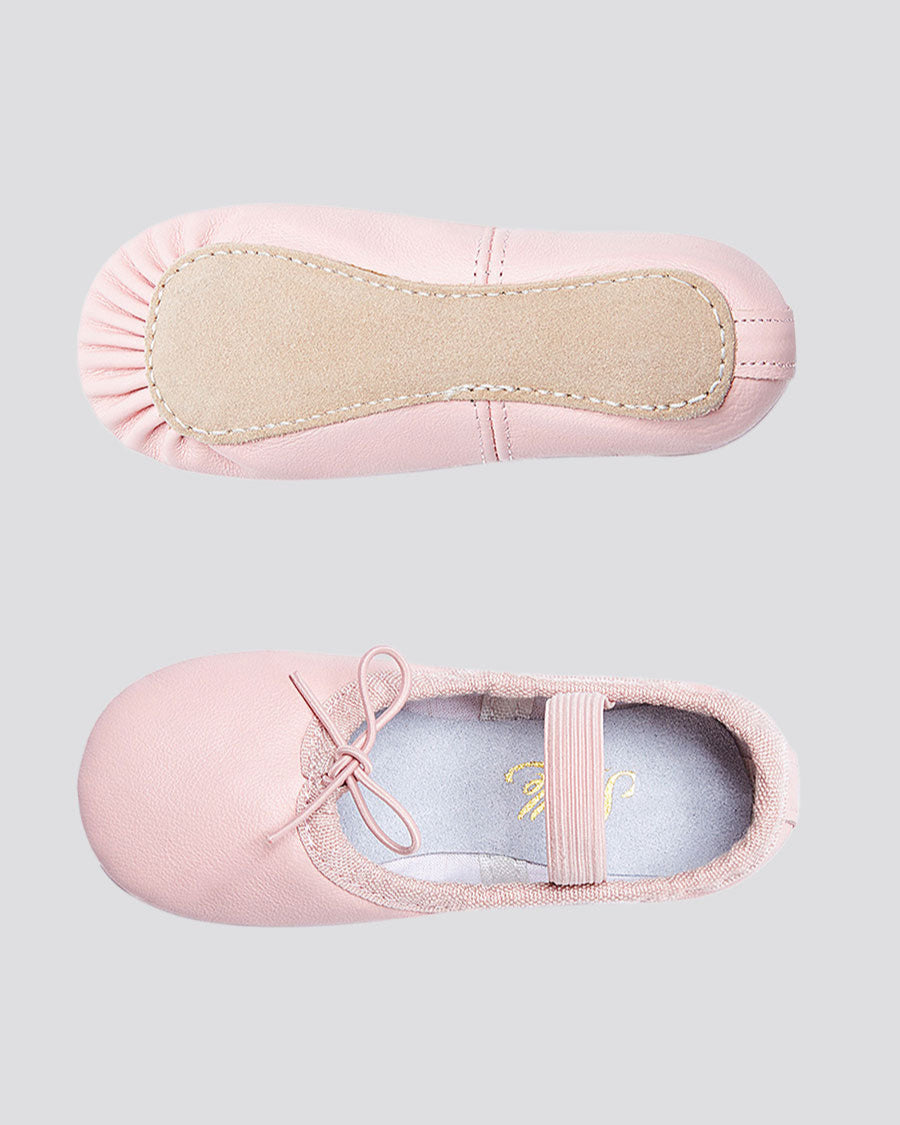
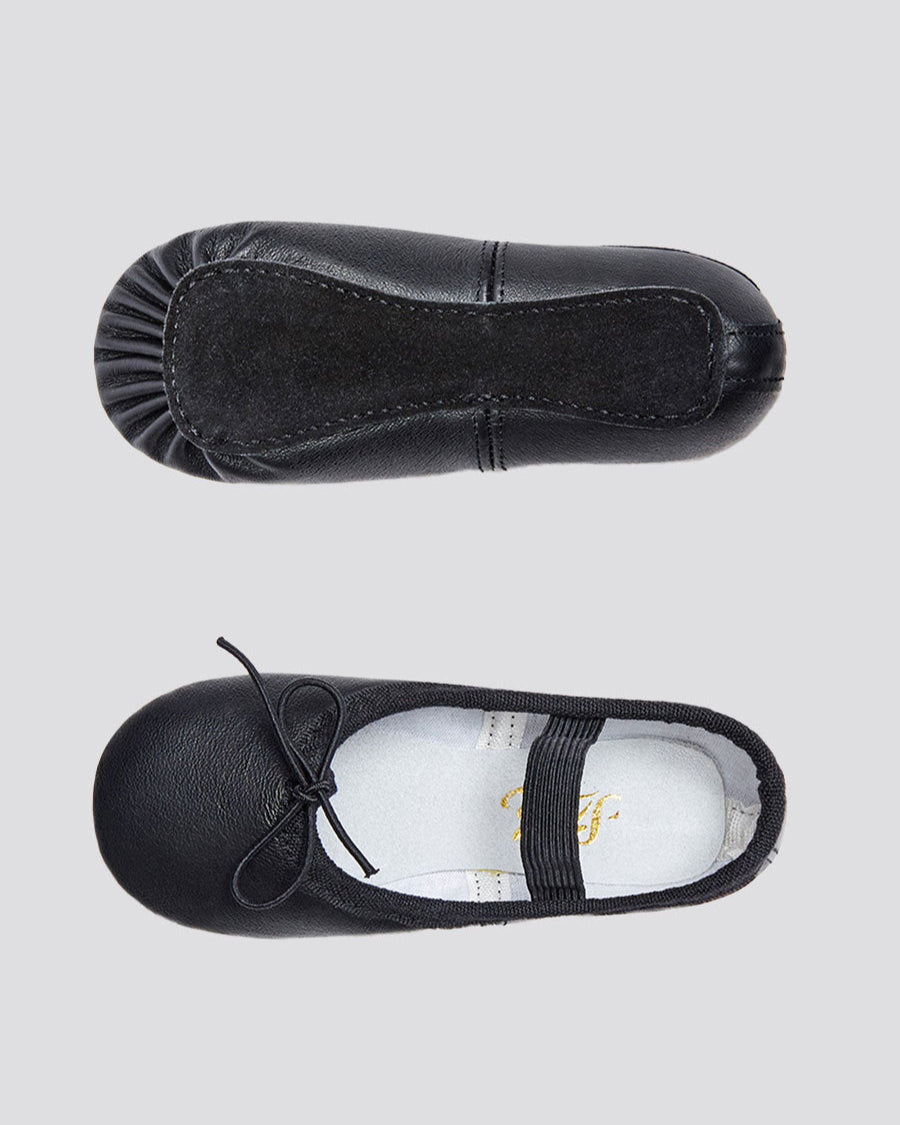
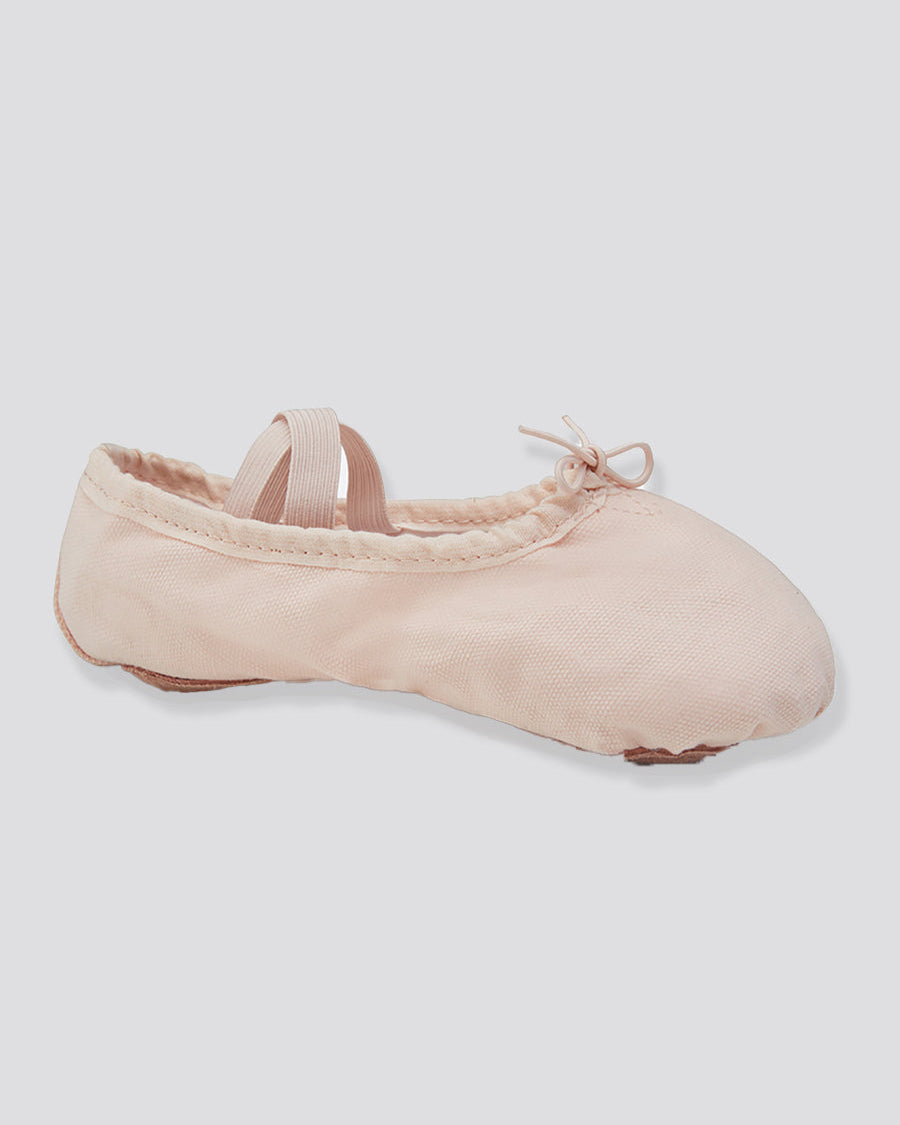
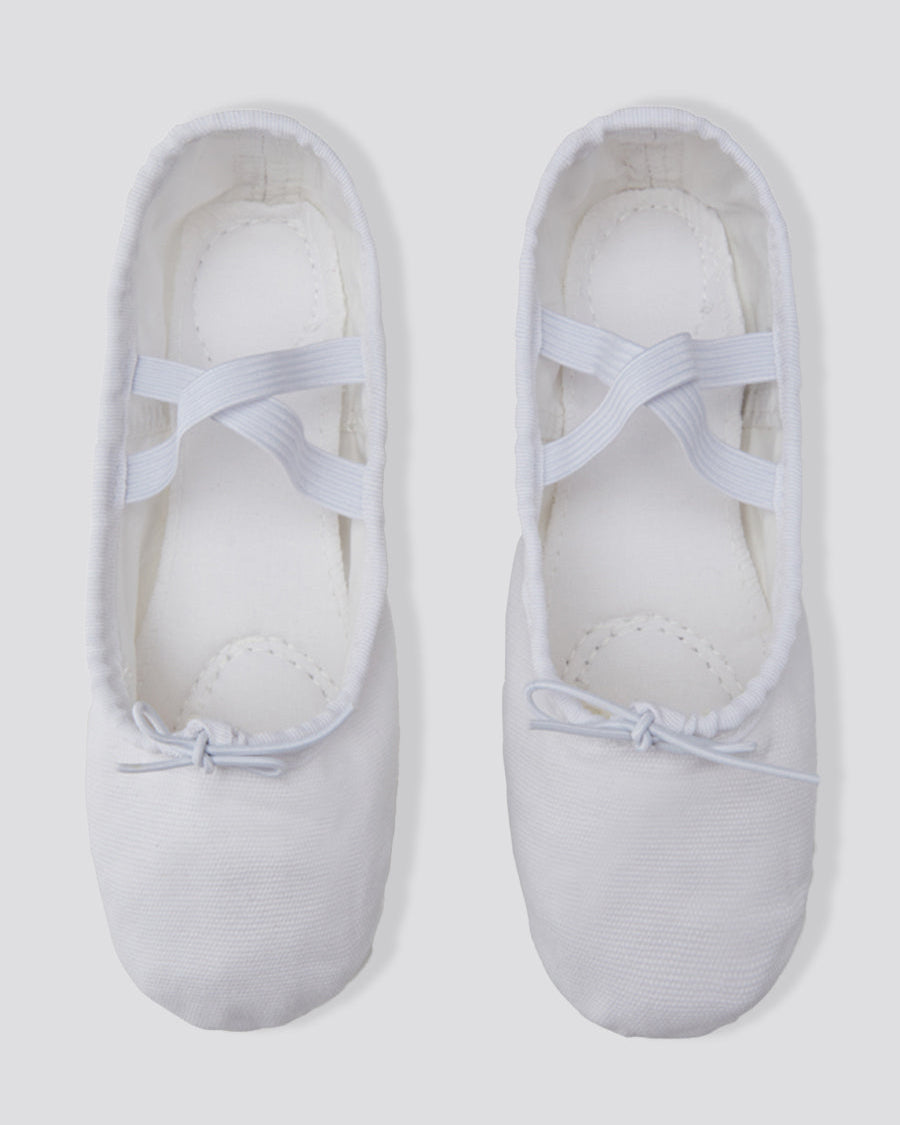
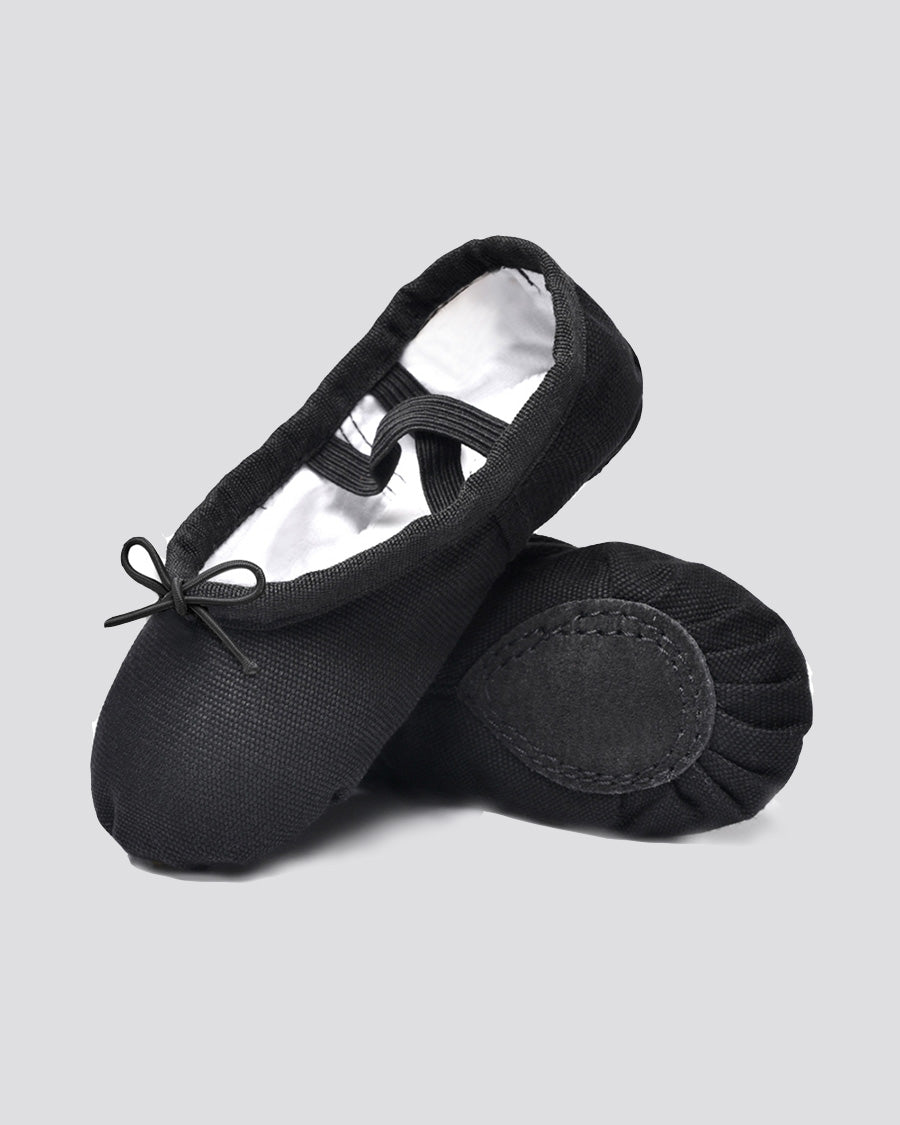
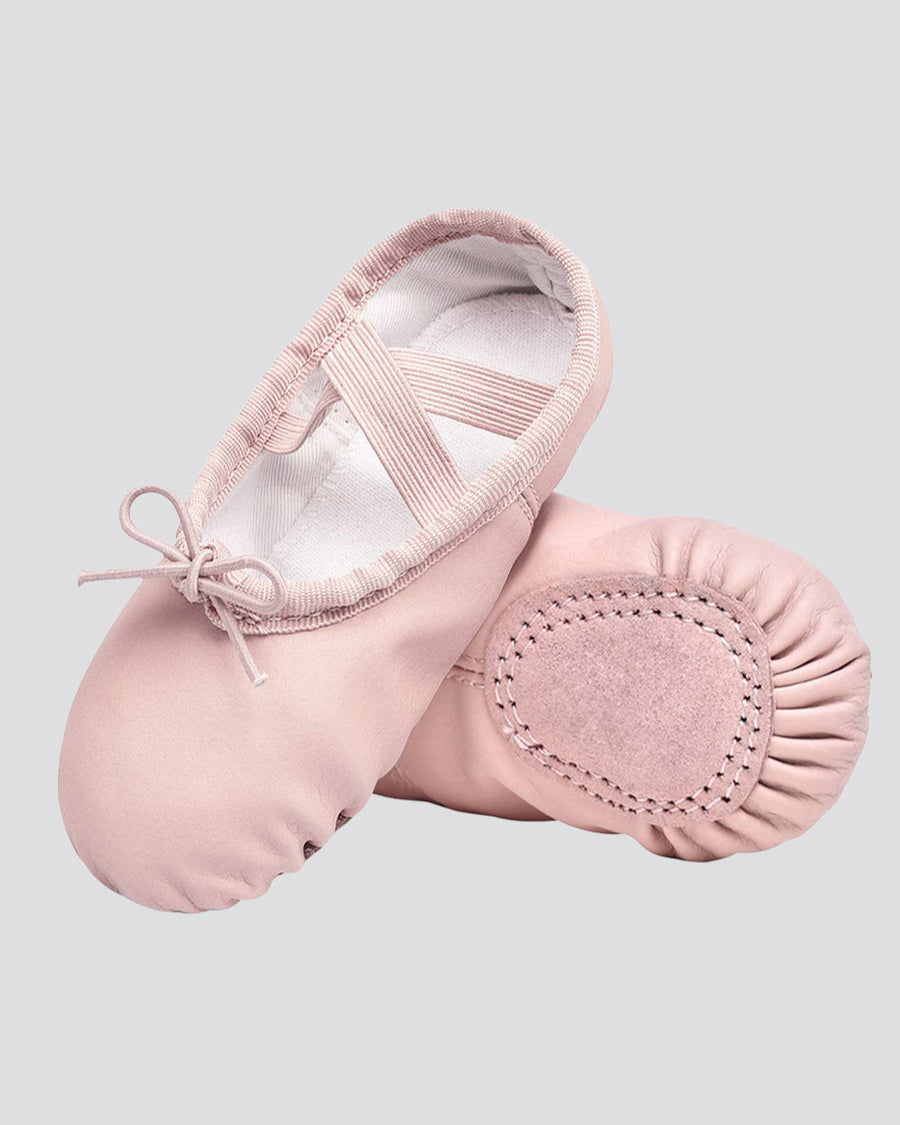
Full-sole shoes have a continuous suede strip running the length of the shoe. The resistance this creates encourages the foot to actively work — pushing down through the floor, building arch strength — rather than relying on the shoe's flexibility to do it. For beginners, full sole isn't just the conventional starting point; it's the one that supports correct muscle development from the start.
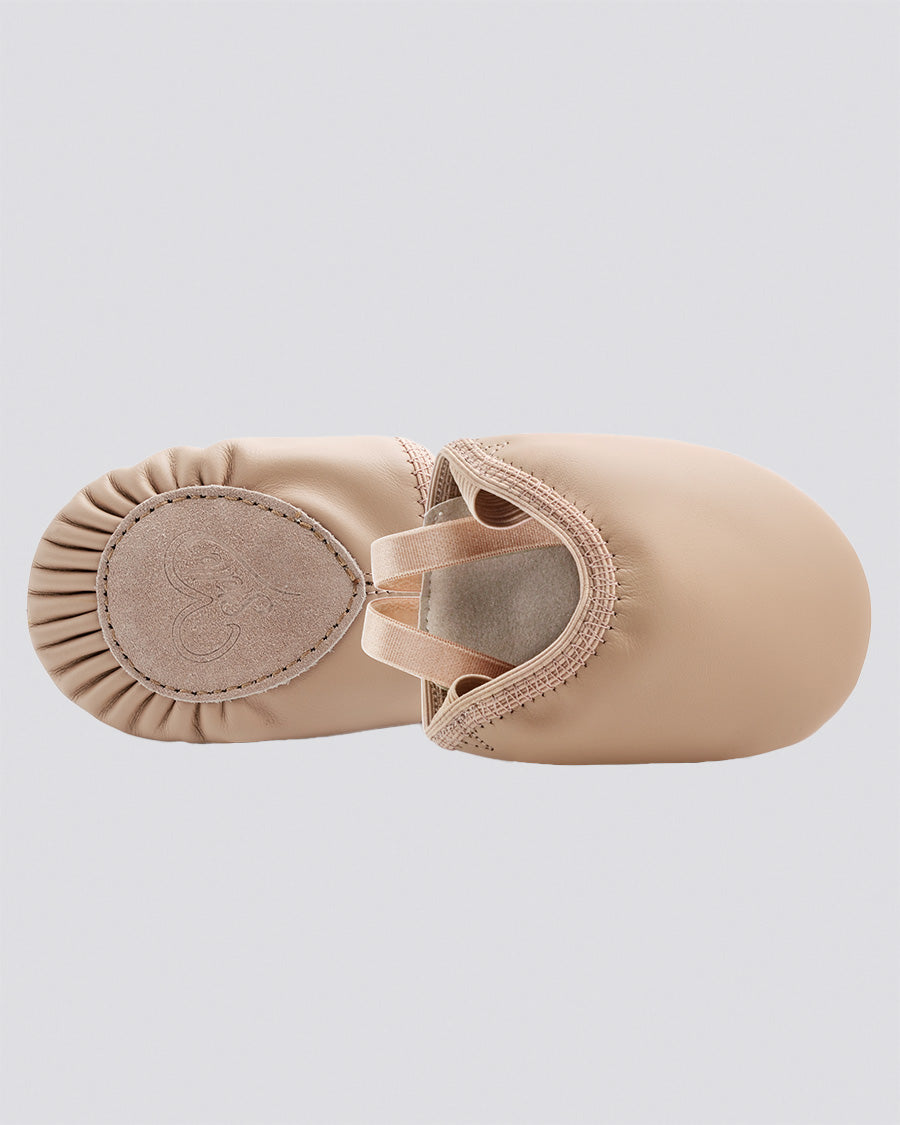
Split-sole shoes have suede only under the forefoot and heel, leaving the arch uncovered. This lets the foot articulate more freely, which makes footwork look cleaner once the strength is there. The important thing to understand is that split sole reveals arch flexibility — it doesn't create it. A child who switches too early just has a shoe that gets out of the way of a foot that isn't ready yet.
As for when to make the switch: there's no set age, but there are reliable signals. If the teacher has started working on relevé, pointed feet, or arch articulation in class, that's usually the cue. Most children stay on full sole for at least the first year. If you're not sure, ask directly: "Is she ready to move to a split sole?" — it's a specific enough question that the teacher can give you a real answer, not a vague one.
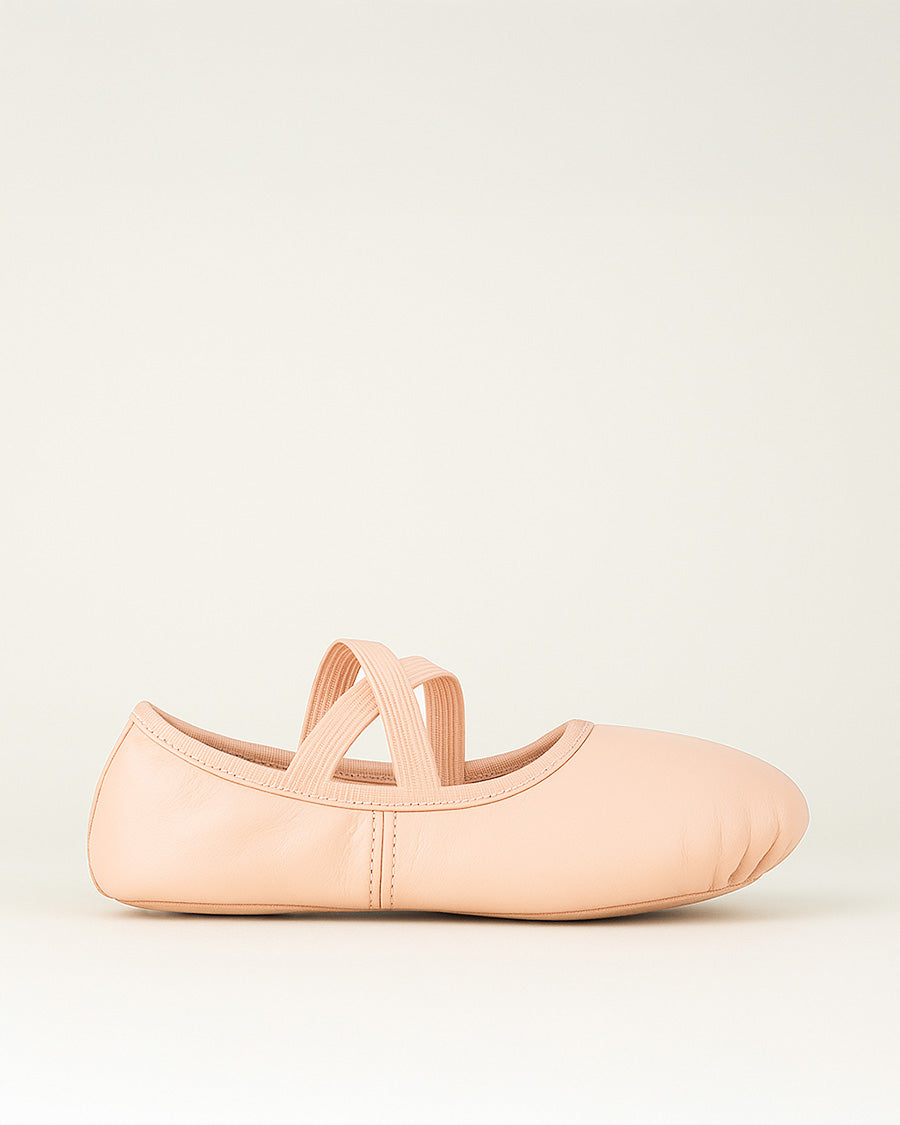
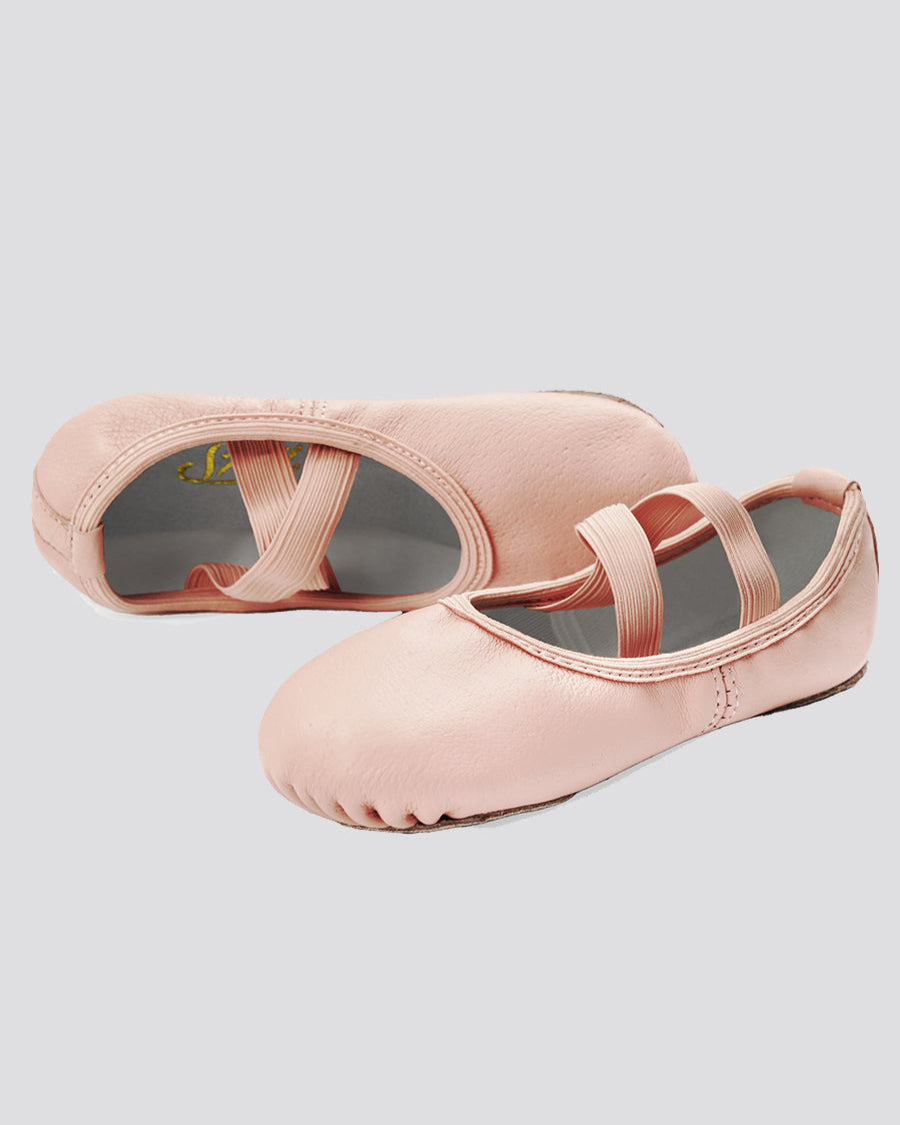
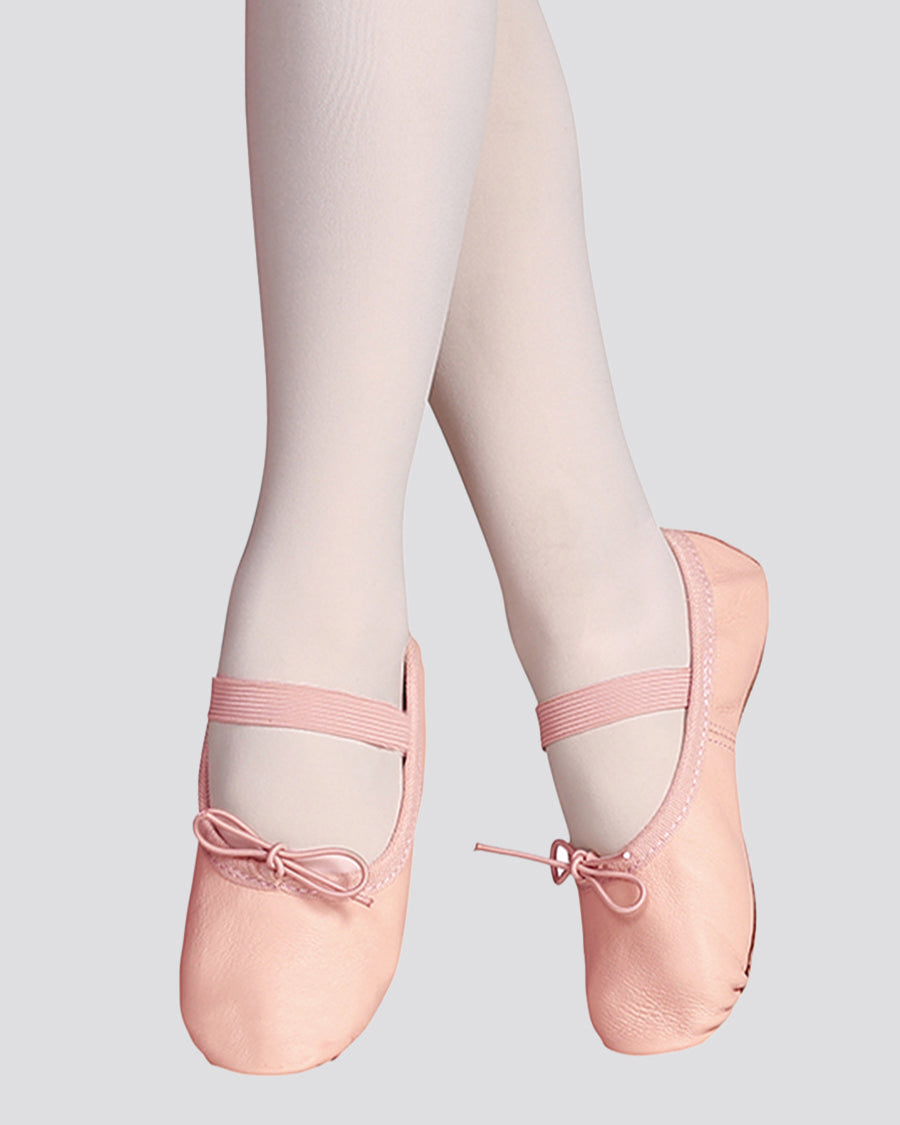
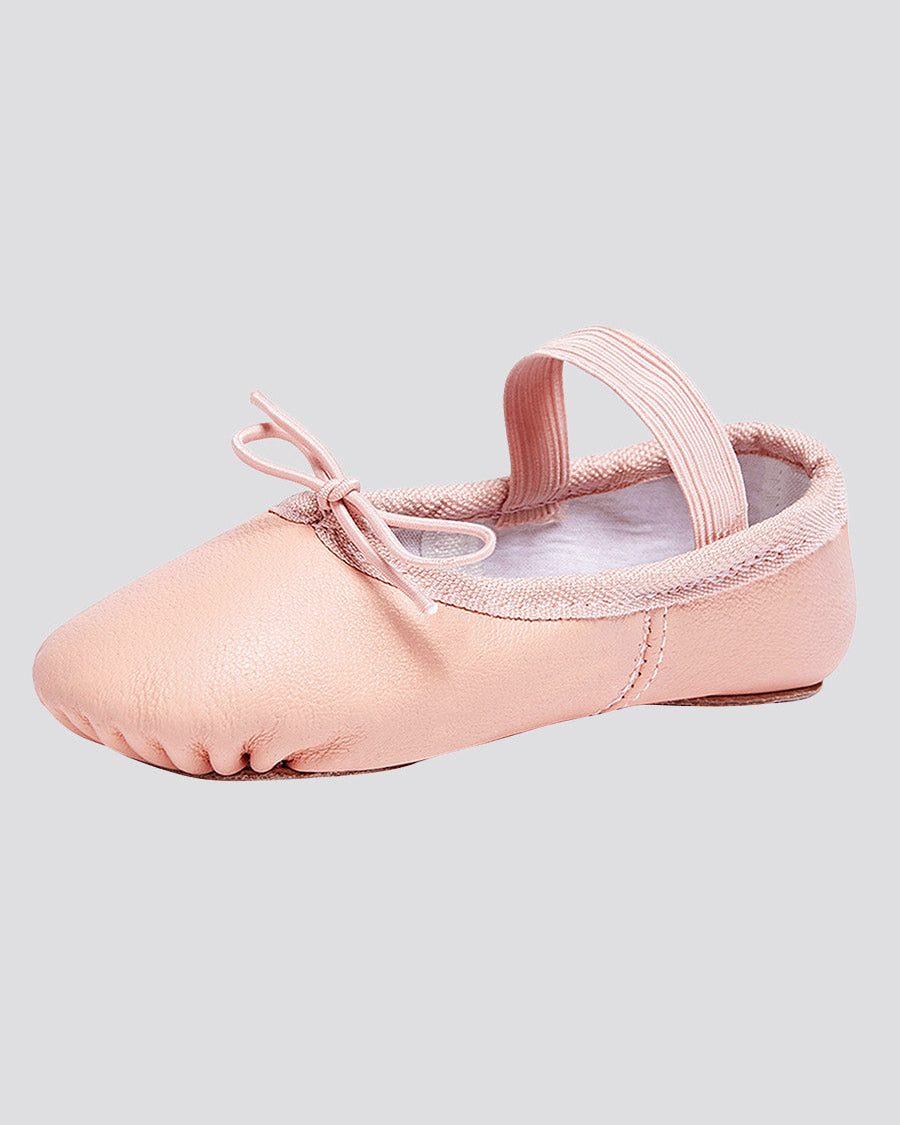
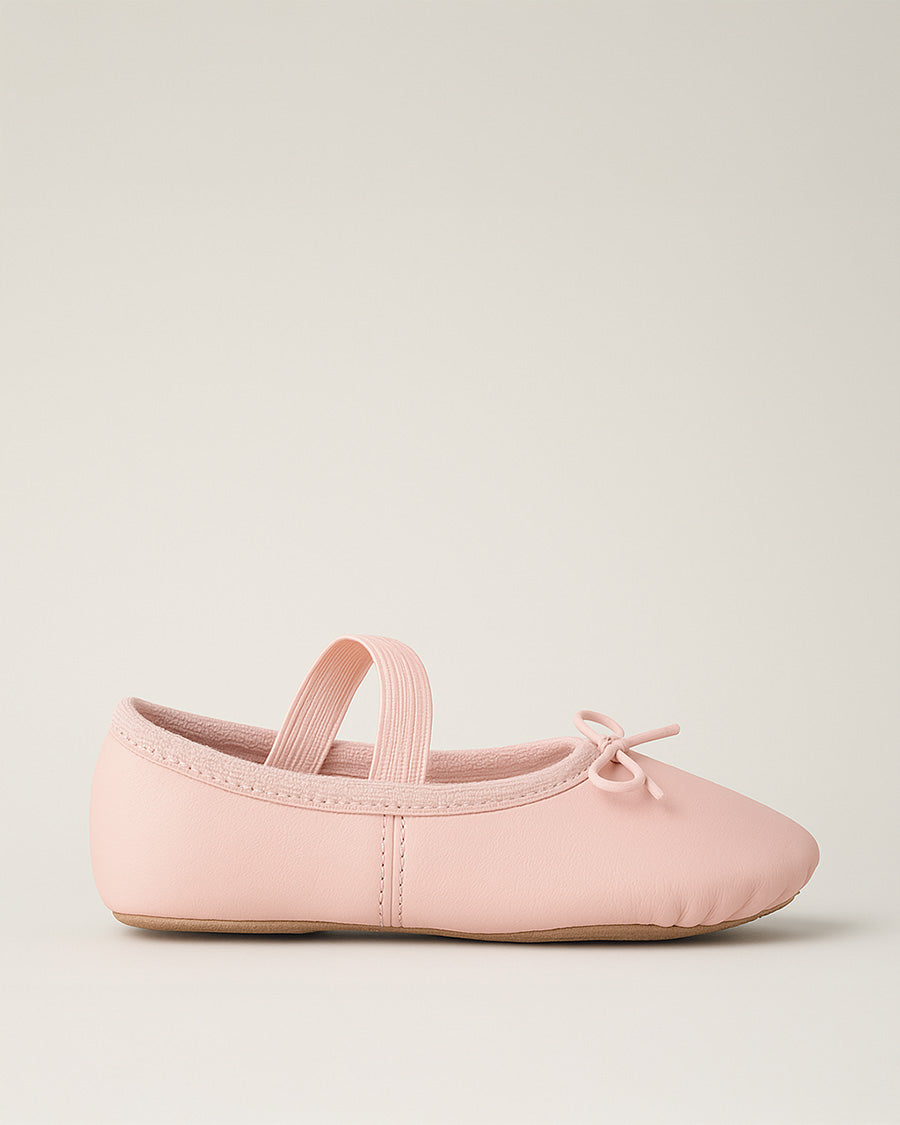
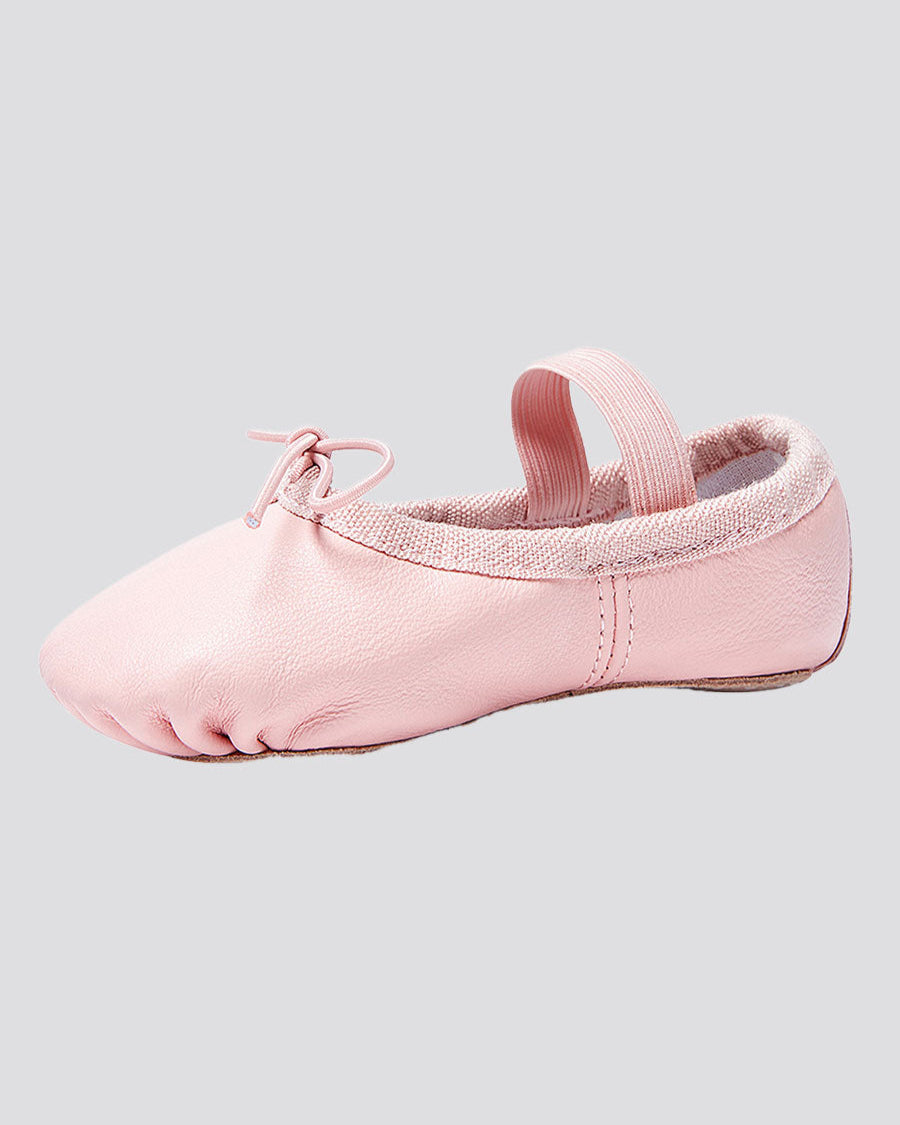
🛍️ Stelle’s kids’ ballet shoes come in canvas, leather, and satin, with full-sole and split-sole options. See the full collection.
2: Getting the Size Right
Why Ballet Shoe Sizing Is Different
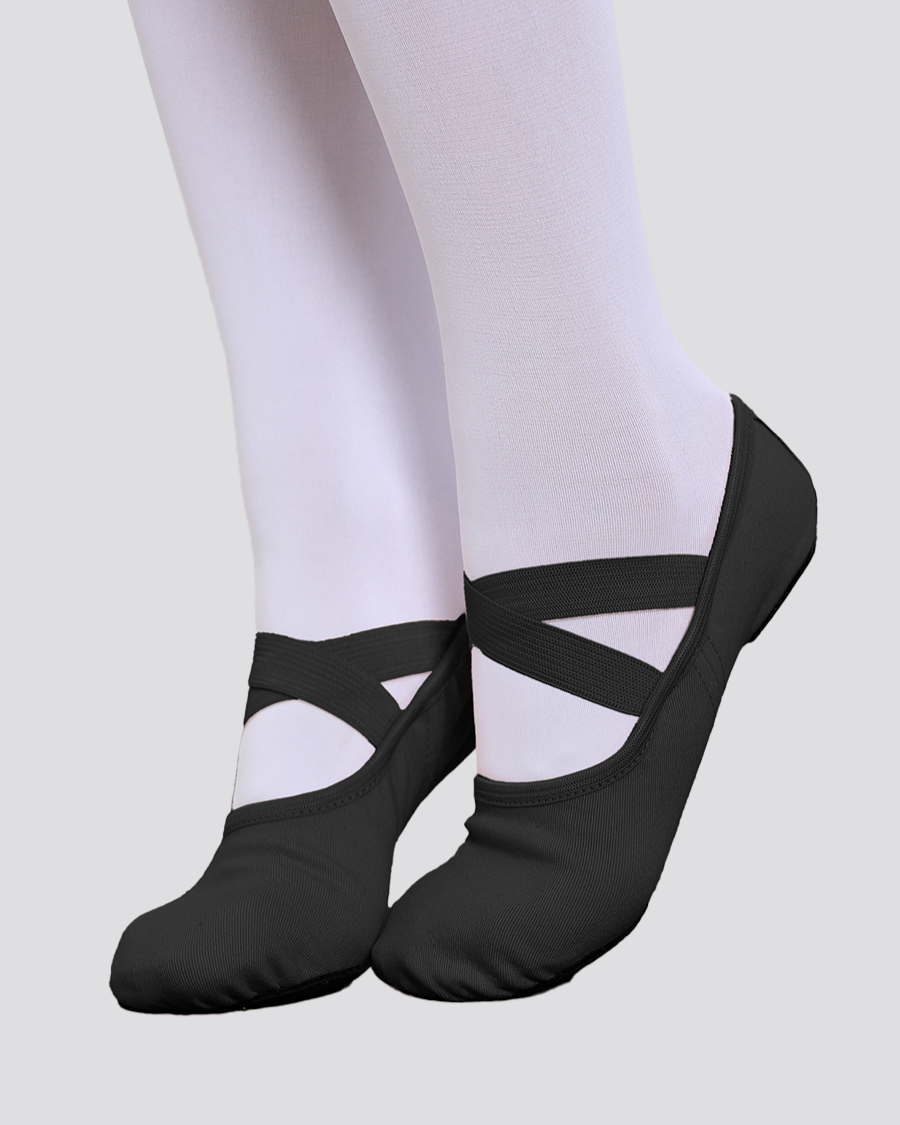
Ballet shoes are meant to fit snugly — significantly more so than everyday shoes. You're not buying for growth room. You're buying for a shoe that fits right now, so your child can feel the floor clearly and move with control. A shoe that's even half a size too big affects both of those things.
Material affects how that fit changes over time. Canvas stretches slightly with wear, so new canvas shoes should feel snug — if they're comfortable the moment you put them on, they may be too loose within a month. Leather doesn't stretch the same way; it molds to the foot gradually, so the initial fit is closer to what you'll have long-term.
How to Buy the Right Size Online
Ballet shoe sizing isn't standardized. A size 1 in one brand is not the same as a size 1 in another — sometimes by half a size, sometimes more. If you've bought from a different brand before, that size is not a reliable starting point.
On Stelle's product pages, each style has its own size chart with foot measurements in centimeters. Measure your child's foot from heel to the tip of her longest toe and match it to the chart. Don't work backwards from her school shoe size.
If she's between sizes, choose based on the specific product size chart and fit guidance. Ballet shoes should feel snug and secure, without extra toe room, heel slipping, or pinching. Leather may soften slightly with wear, but the shoe should never feel painfully tight.
For a step-by-step guide to measuring your child's foot, see our fitting guide.
3: What to Do When the Shoes Arrive
First, Check the Fit
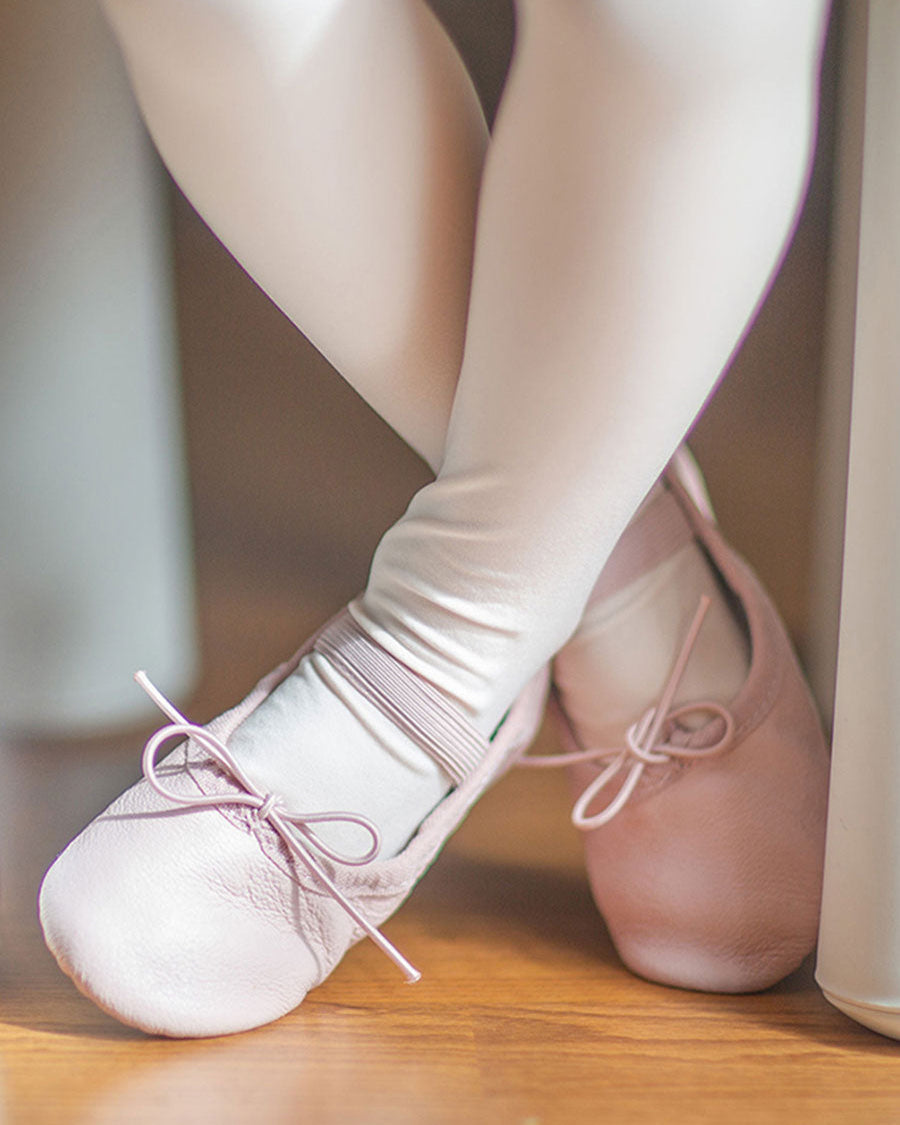
Have your child put the shoes on and stand up — not sit, stand. Fit only reads accurately when she's bearing her full weight.
Four things to check:
Toes: They should lie flat, not curl. Curling means the shoe is too short.
Heel: It should sit firmly in the back of the shoe. Some movement when she walks is fine; the heel lifting when she rises onto the ball of her foot is not.
Top of the foot: The fabric should lie smooth with no bunching or visible gaps. Excess fabric usually means the shoe is too wide or too long.
Overall: Snug, not tight. If she says it hurts or she can't spread her toes at all, it's too small. If it shifts when she moves, it's too big.
If something's off, it's easier to exchange now than after she's worn them to class. For a more detailed fit walkthrough, see our guide to fitting ballet shoes.

Elastic: What You Need to Do
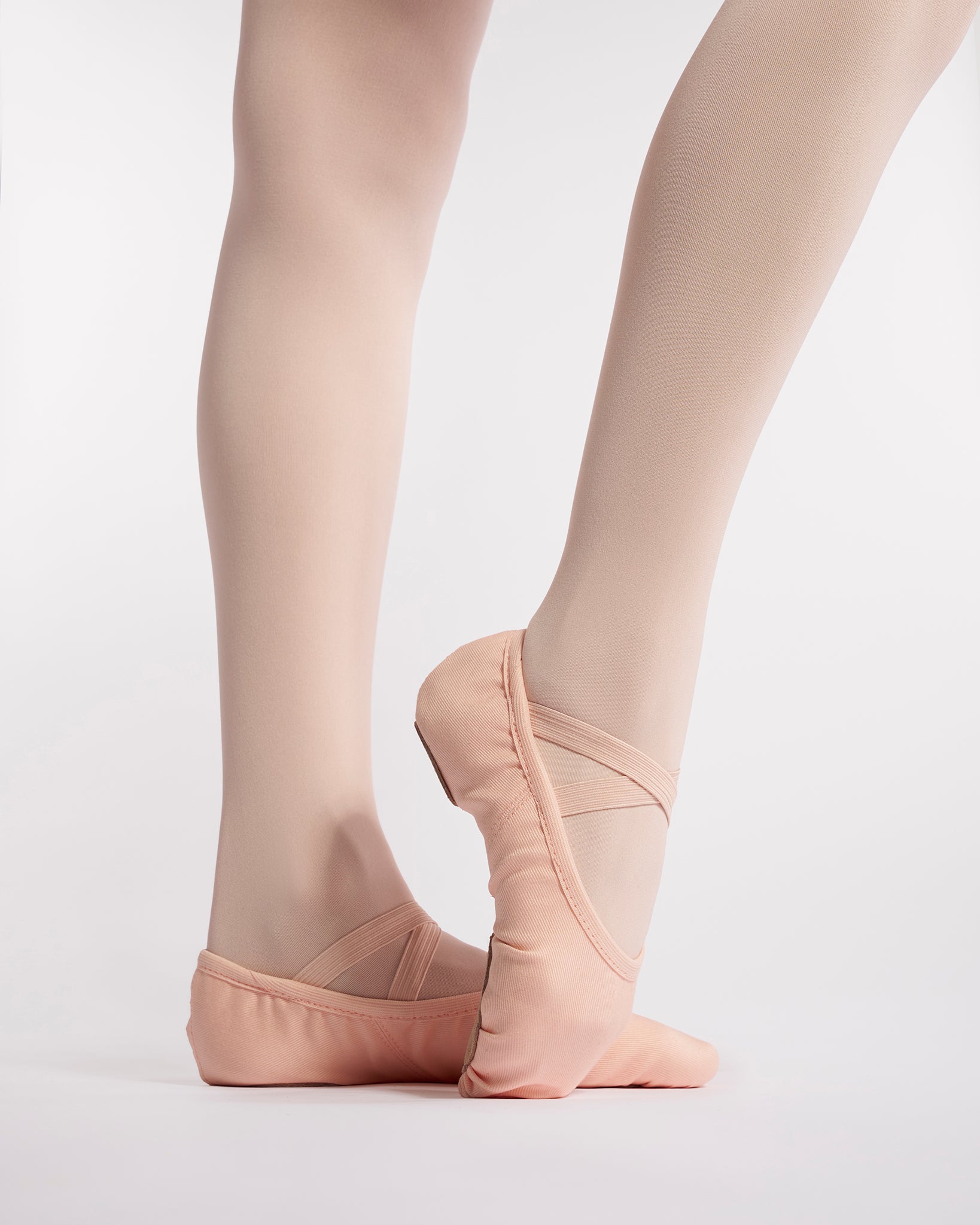
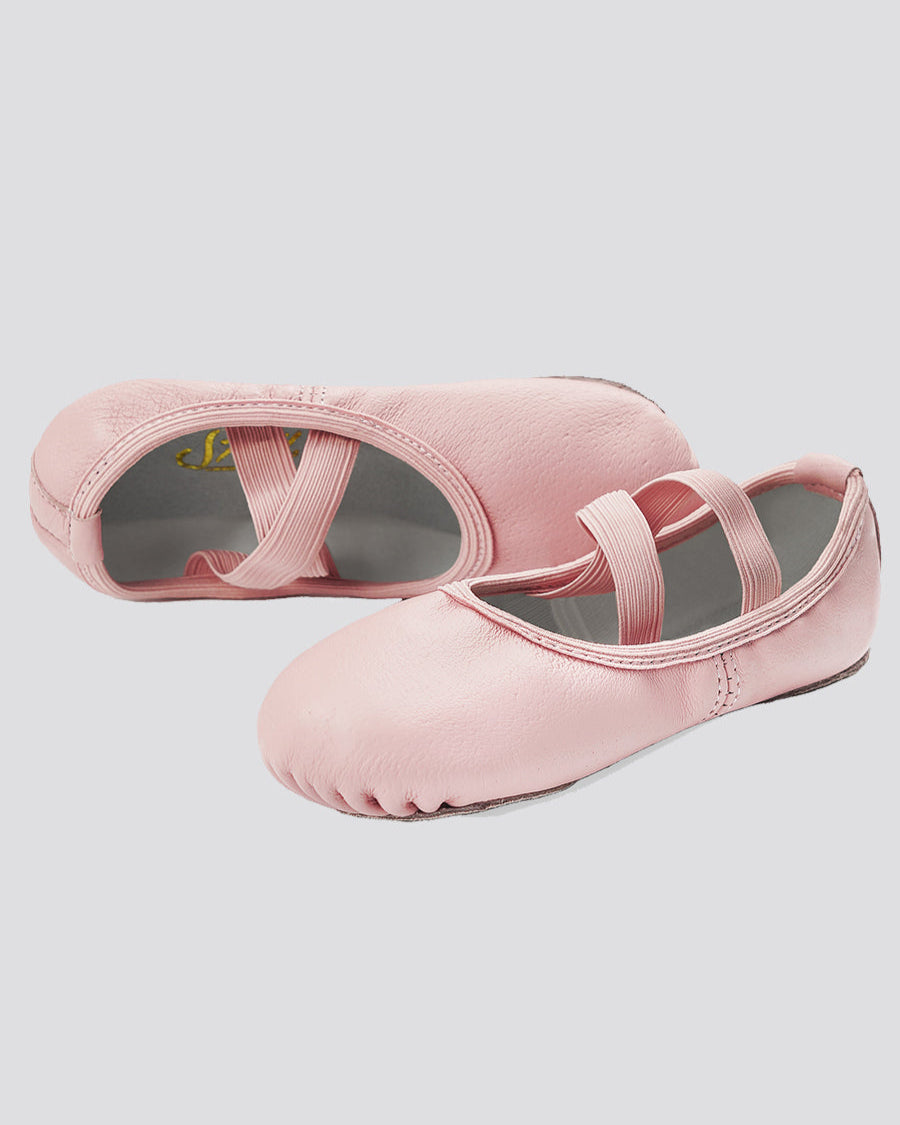
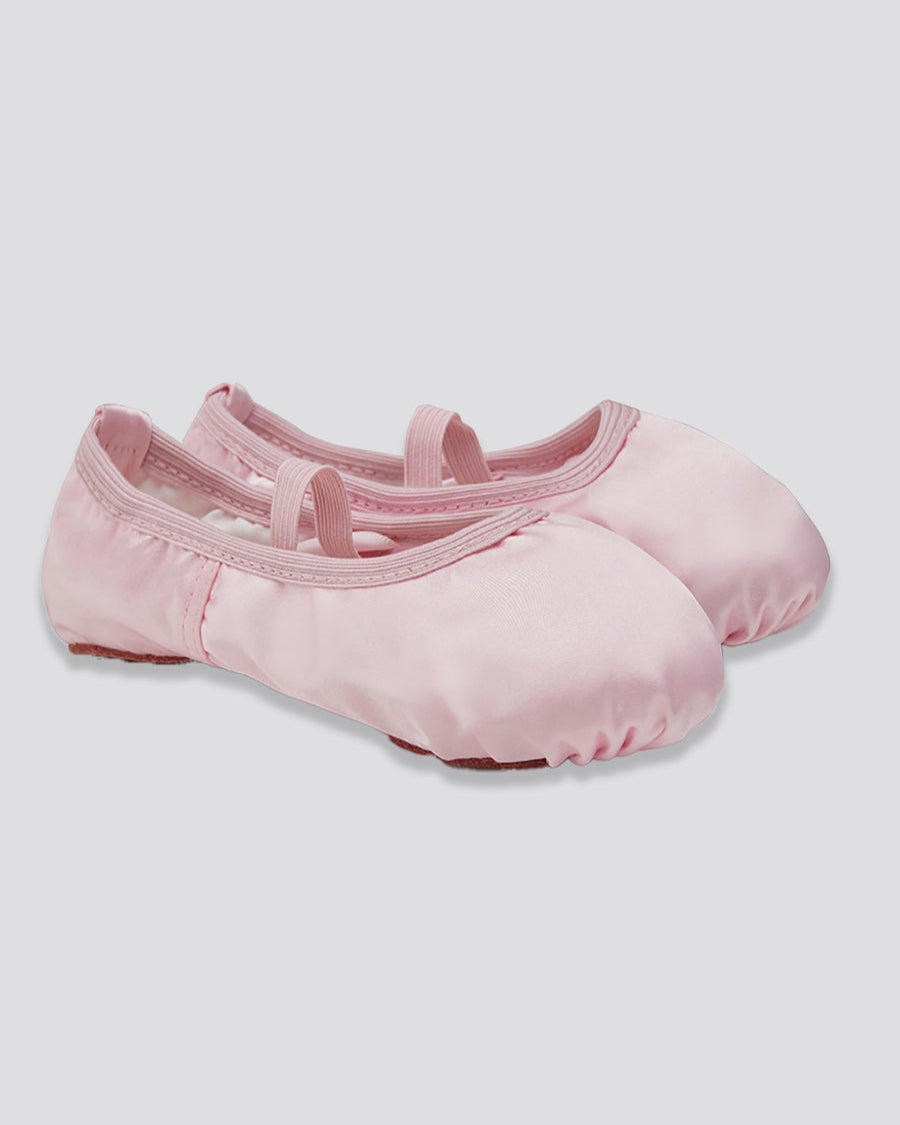
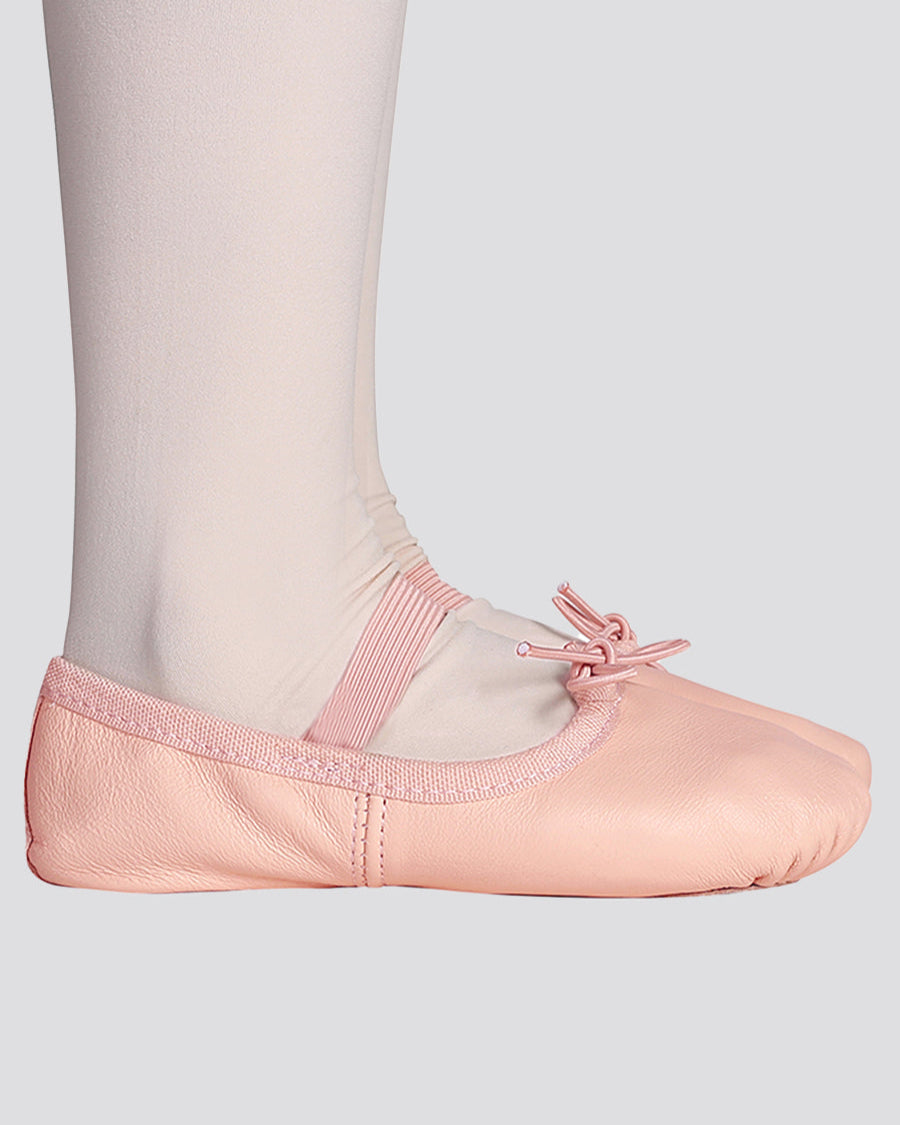
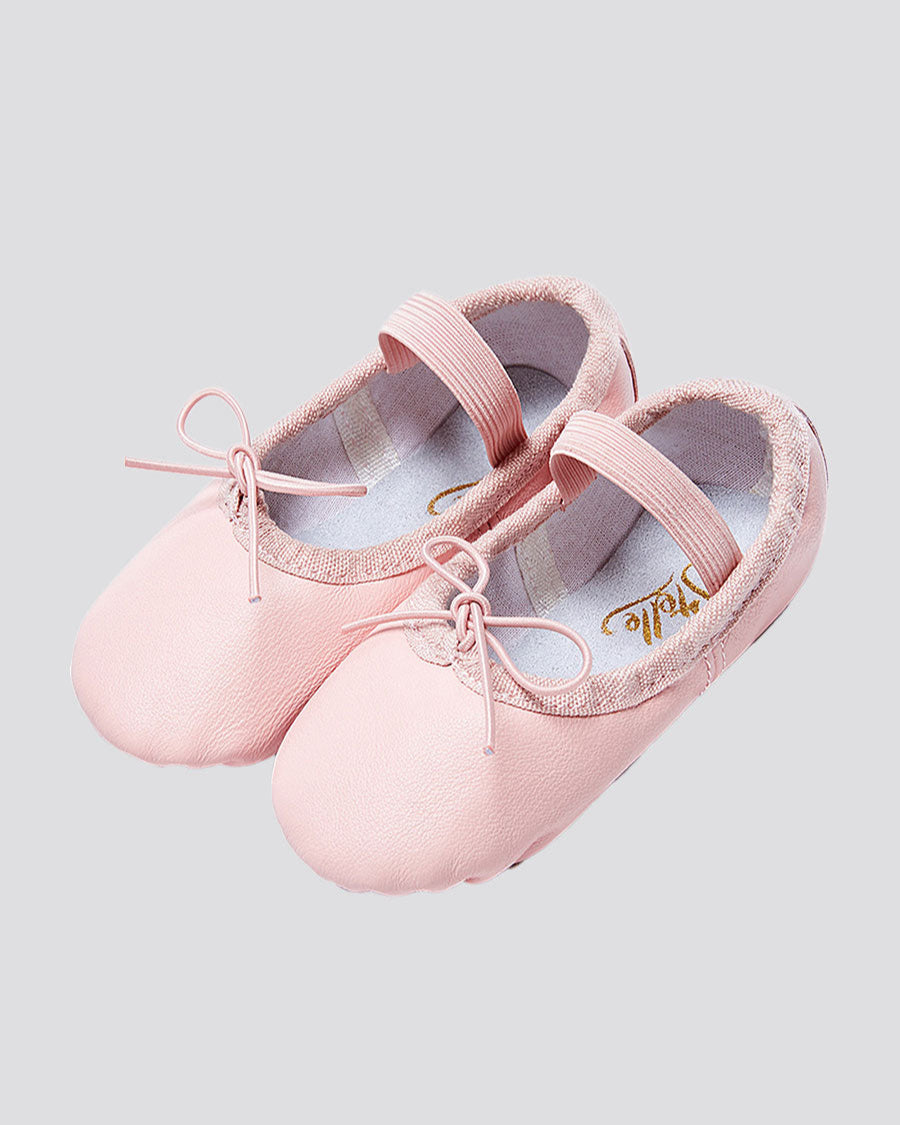
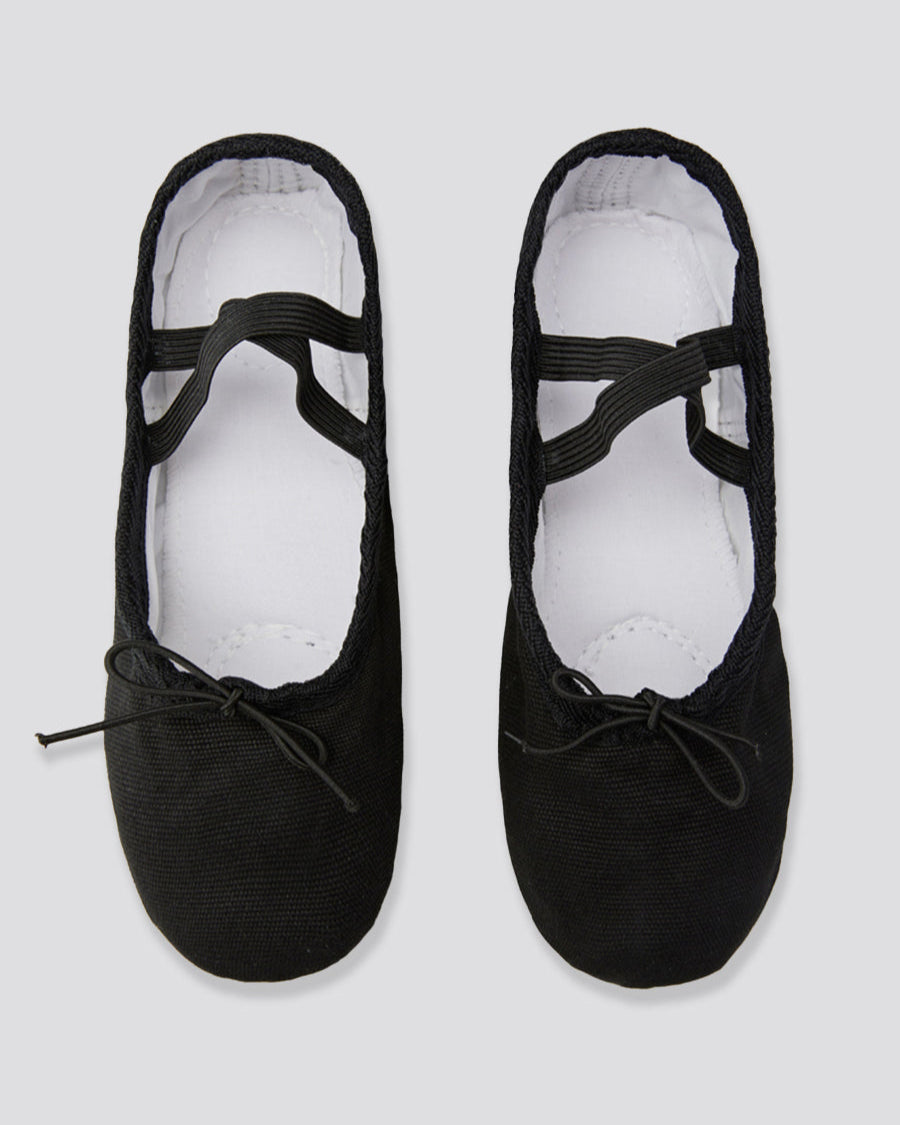
Most children's ballet shoes come with the elastic partially attached — one end sewn in, the other left loose. This isn't an oversight; it's so you can position the elastic correctly for your child's specific foot before finishing the stitch.
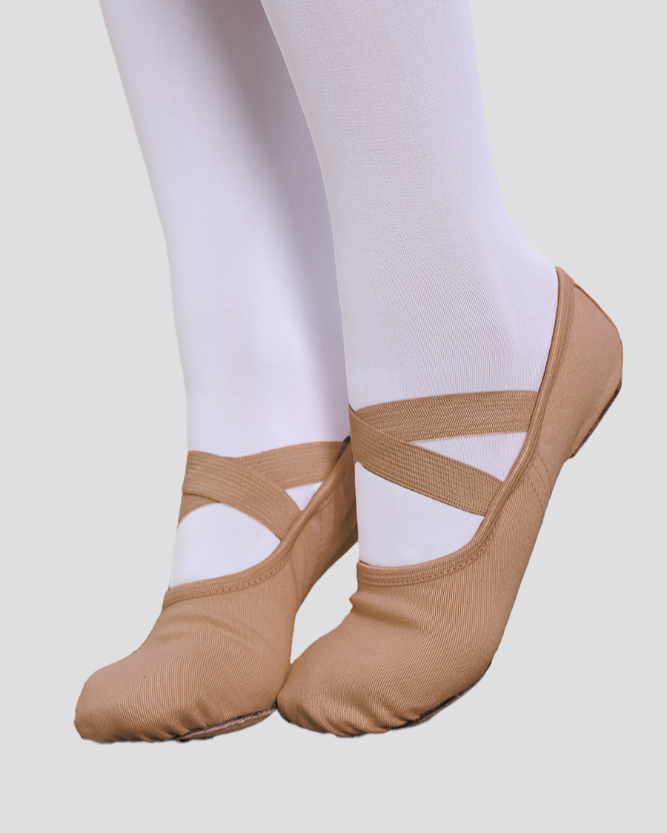
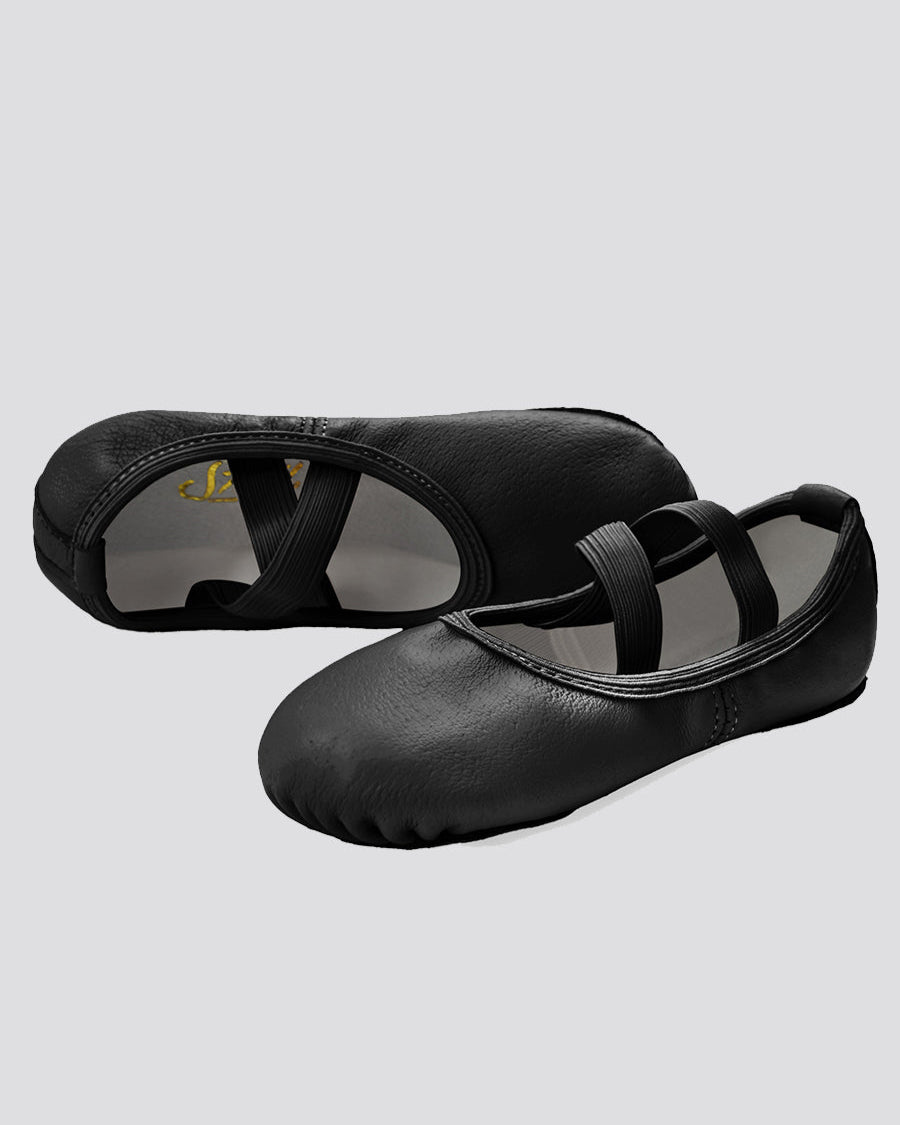
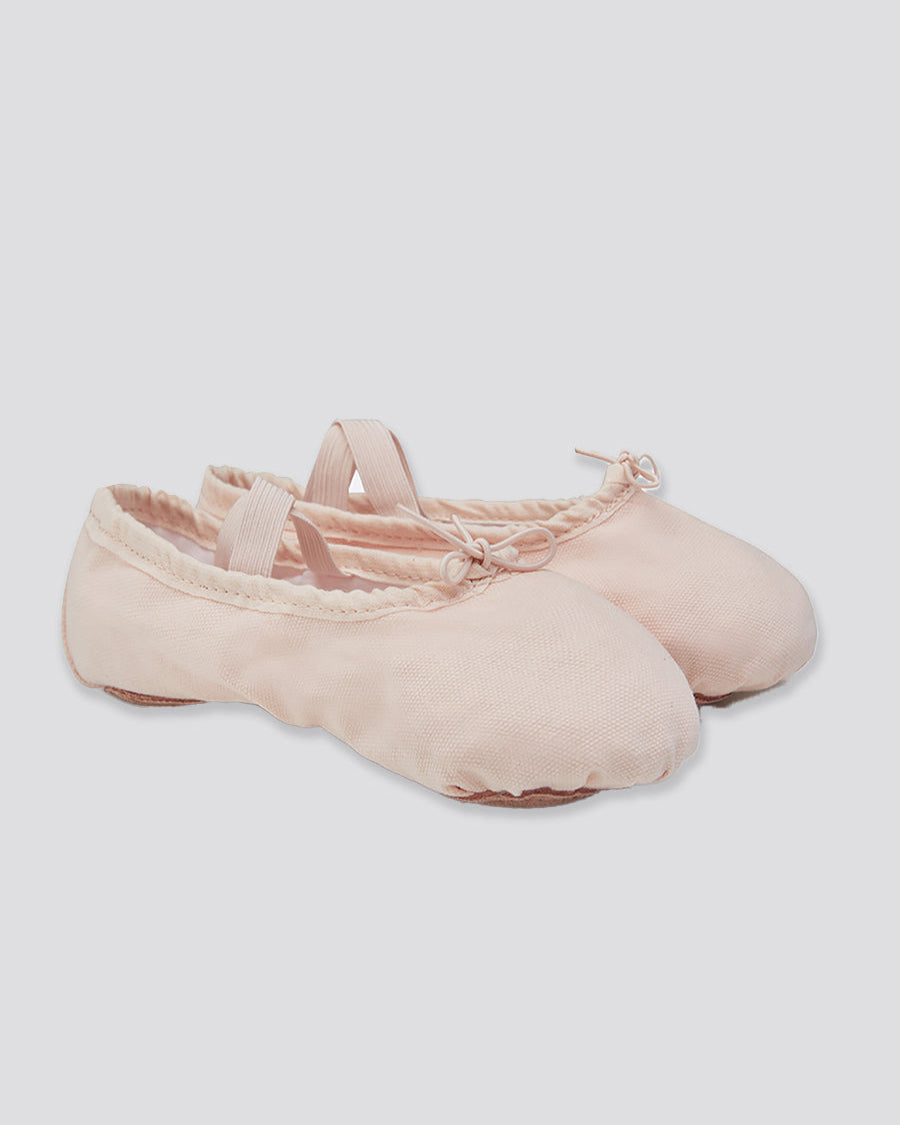
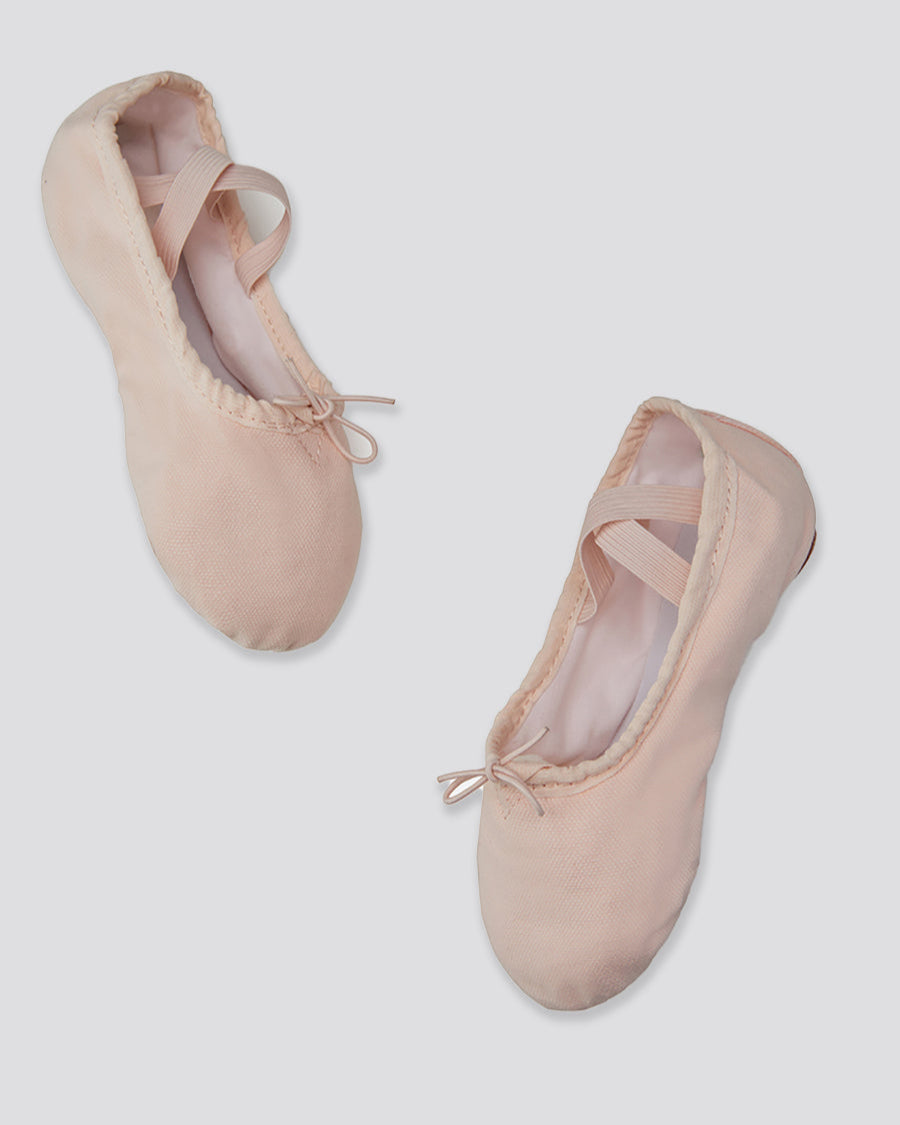
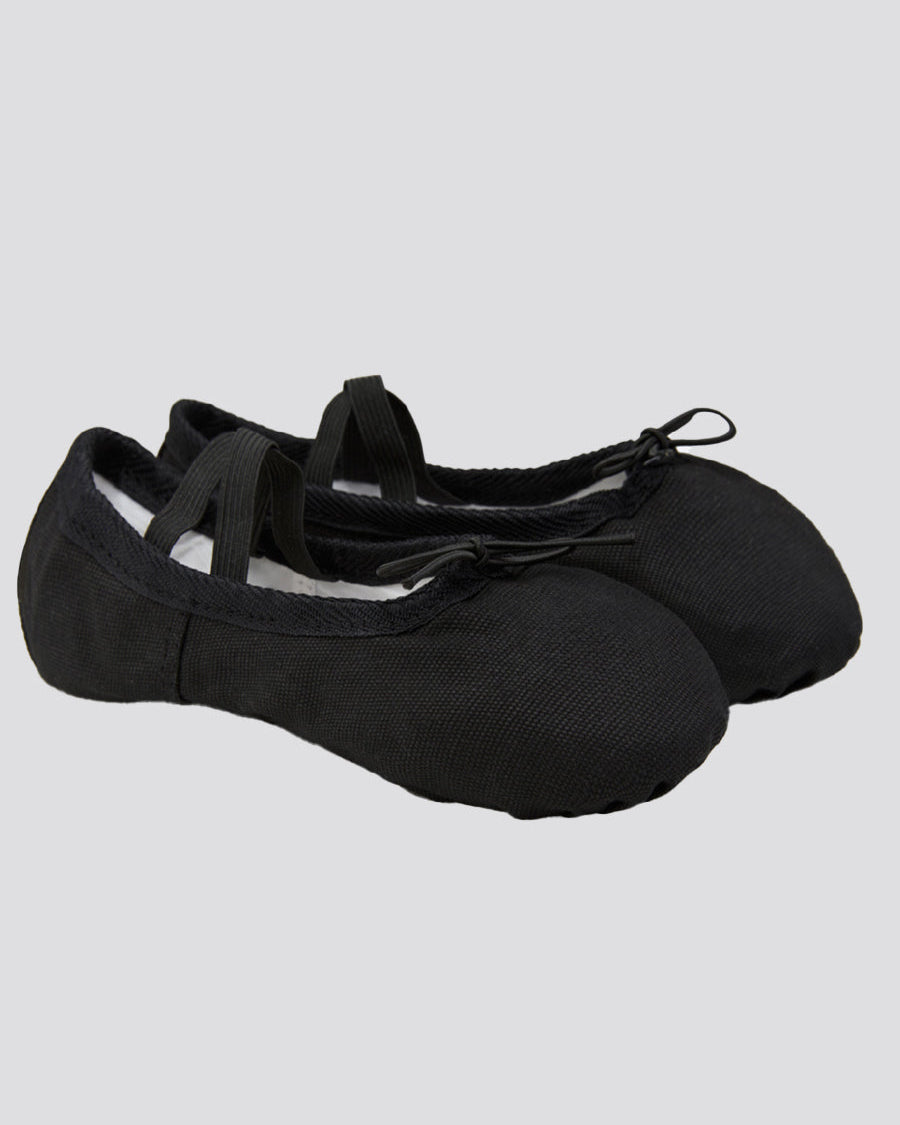
There are two configurations: a single band straight across the top of the foot, or two bands that criss-cross. Single works well for most children. Criss-cross is better for a higher instep or a narrower ankle — the crossed tension keeps the shoe more secure and distributes the pull more evenly across the foot.
If sewing isn't something you want to tackle, any tailor can do it in a few minutes. Many studios also help parents with this at the start of term — it's a routine request.
Drawstring: One Thing Most Parents Don't Think About
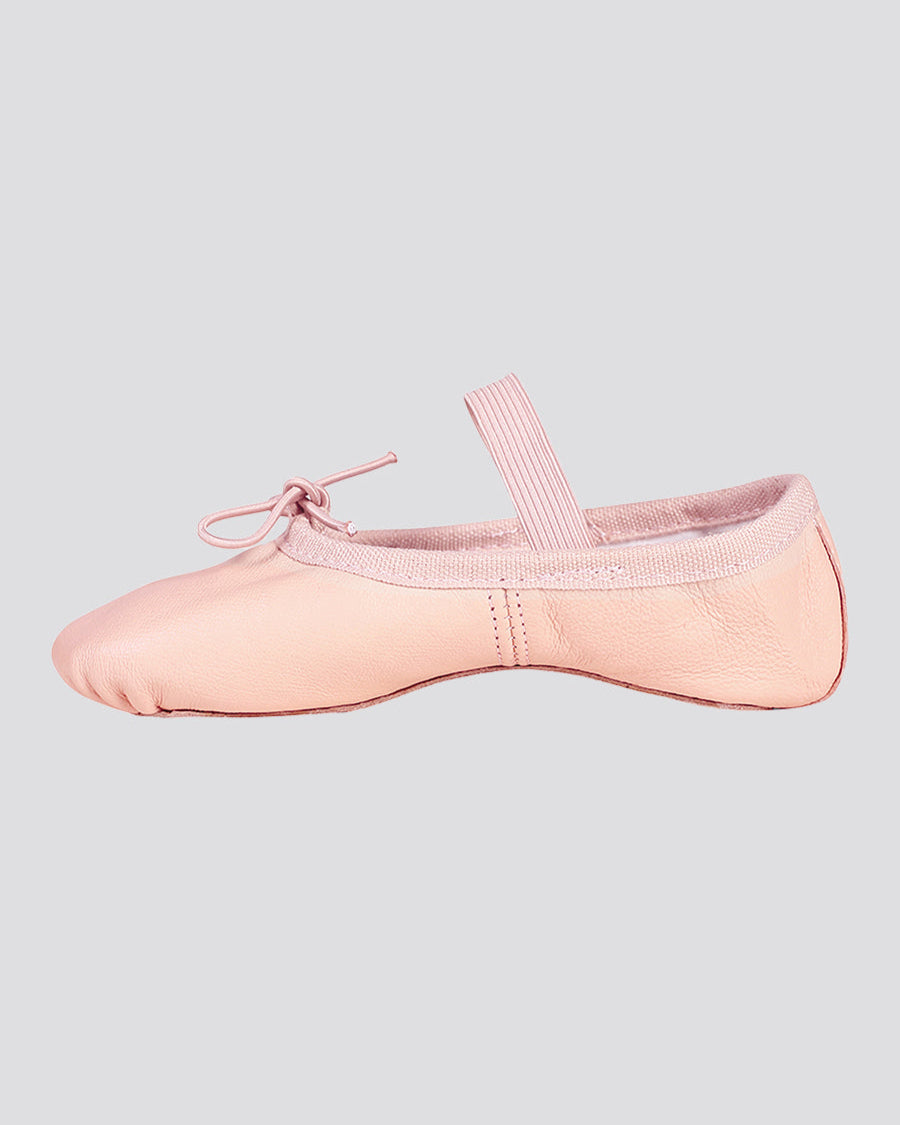
Once you've tightened the drawstring to a comfortable fit, tuck the excess cord inside the shoe. Don't tie a bow.
A bow will come loose during class — the ends end up underfoot, and stopping to retie it mid-lesson loses time and breaks focus. Tucked inside, it stays put and the front of the shoe stays clean.

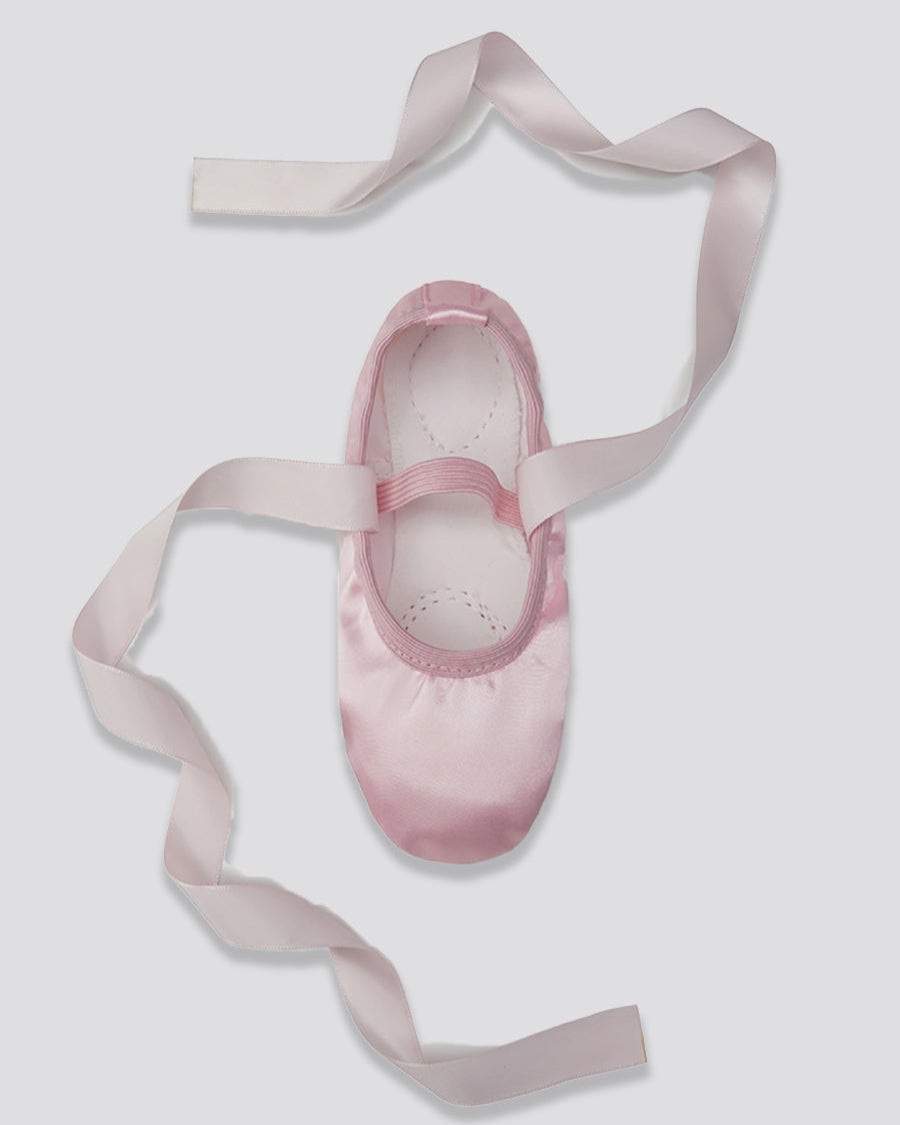
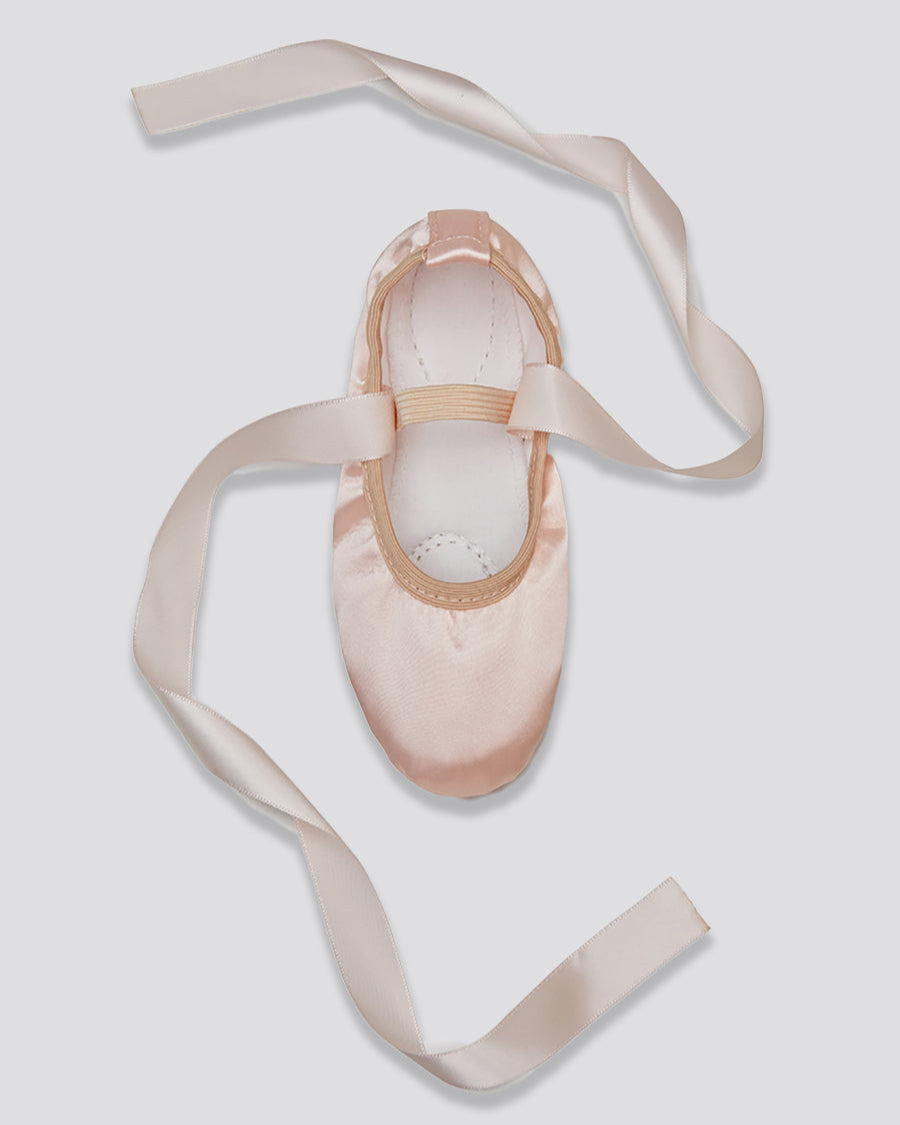
On ribbons: Ribbons are for performances and exams. If her teacher wants them for class, she'll say so. You don't need to add them by default.
4: Mistakes That Are Easy to Avoid
Buying a Size Up "To Give Her Room to Grow"
Upsizing makes sense for school shoes and sneakers. For ballet shoes, it's one of the most common ways to get the purchase wrong.
When a ballet shoe is too big, the foot slides around inside it. That movement — even a few millimeters — affects balance, reduces floor contact, and shifts the foot slightly out of position on every exercise. Over weeks and months, that adds up. There's also a more immediate issue: excess fabric at the toe is a trip hazard on a studio floor.
Buy the right size now and replace when she outgrows them. At $14–$20 a pair, the cost of replacing Stelle's kids' ballet shoes as needed is manageable.
Buying Fashion Slippers Instead of Dance Shoes
Clothing stores and general retailers sell a lot of soft shoes that look like ballet shoes but aren't made for dance. They don't have a suede sole, they're not structured for repetitive movement on a studio floor, and most teachers will ask for them to be replaced at the first class.
Two things to check: does it have a suede sole (not rubber, not smooth fabric), and is it made by a brand that specializes in dancewear? If both answers are yes, you're looking at a real dance shoe.
Assuming All Brand Sizing Is the Same
There's no standardized sizing across dance brands. If you've bought ballet shoes before from a different label, that size doesn't carry over — it may be off by half a size or more. Any time you switch brands, measure again and use that brand's size chart.
5: When to Buy a New Pair
For children between three and eight, replacing ballet shoes once or twice a year is completely normal. Feet at that age can grow a full size in six months. If you find yourself buying new pairs frequently, that's not a quality issue — it's just the pace of growth.
Four signs it's time:
The suede sole is worn smooth. Suede grips the studio floor. Once it's flat and shiny, the shoe is slippery — and a slippery ballet shoe is a safety issue, not just a wear issue.
The shoe no longer fits snugly. Canvas loosens with wear. When it starts to feel baggy or the heel slips consistently during class, it's done its job.
Her toes are reaching the front of the shoe. There should be roughly a thumb's width of space between her longest toe and the toe of the shoe. When that space is gone, she needs the next size up.
The elastic has lost its tension. If the shoe is falling off her heel or needs constant readjustment, the elastic needs replacing — or the shoe itself has stretched beyond use.
Don't wait for the shoes to fall apart. A worn sole or a loose fit is already affecting how she moves, even if the shoe still technically fits on her foot.
Conclusion
That covers the main decisions: material, sole type, sizing, and what to do once the shoes are in your hands. Get those right, and the rest takes care of itself.
When you're ready to shop, Stelle's kids' ballet shoe collection has canvas and leather options for beginners through to more advanced students, all between $14 and $20.