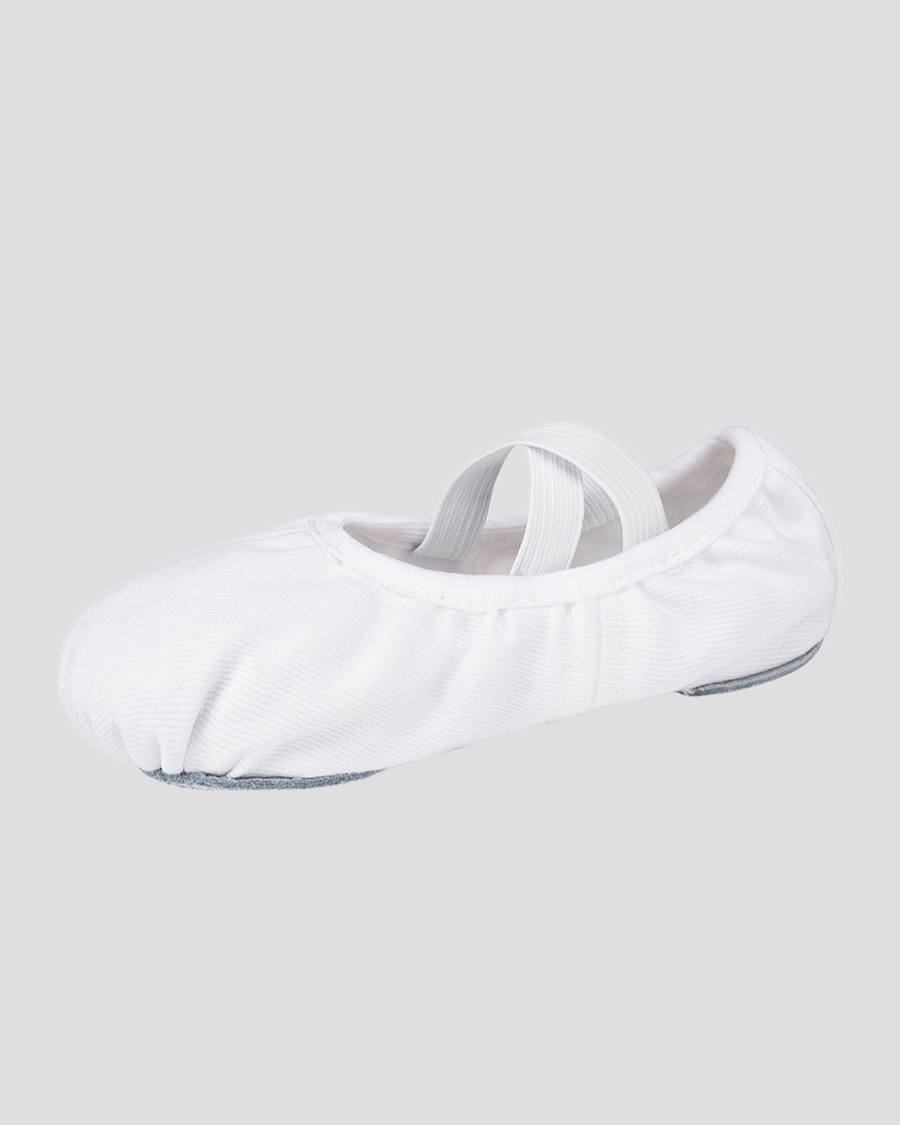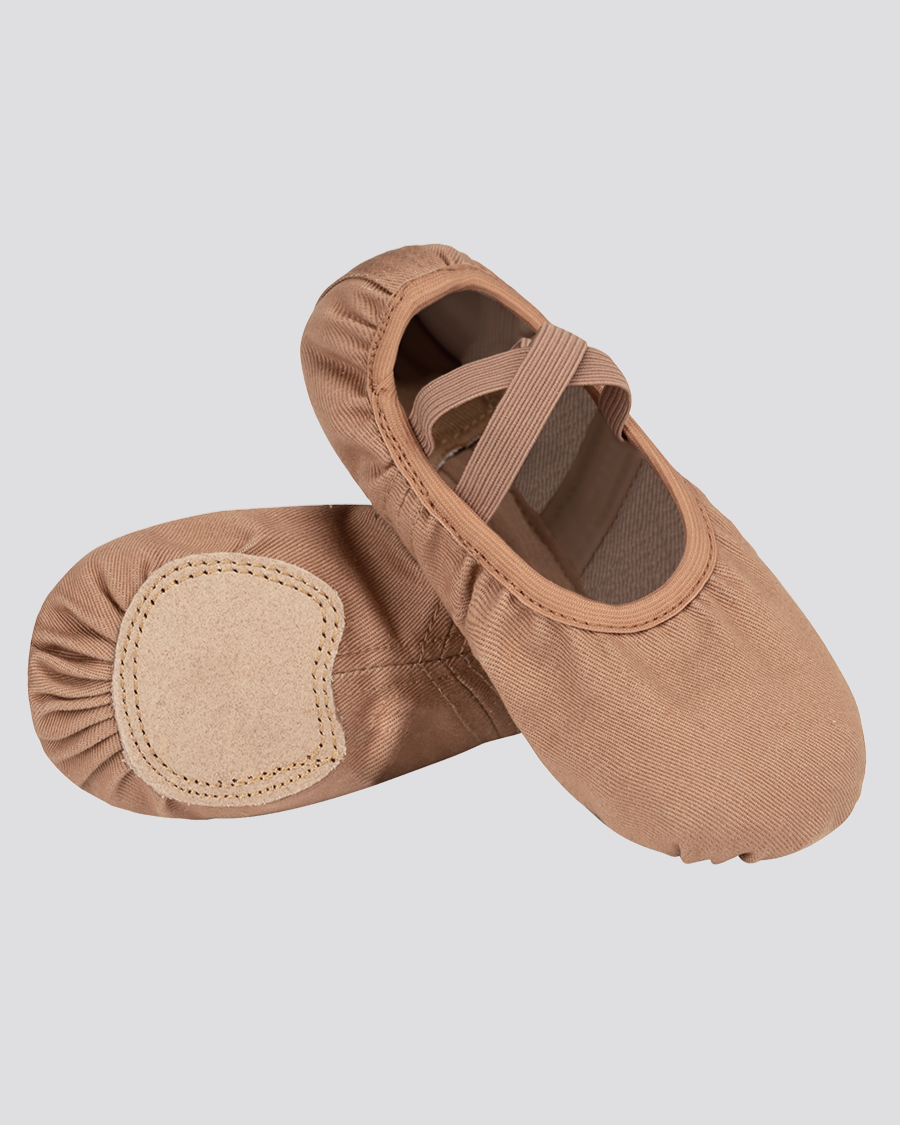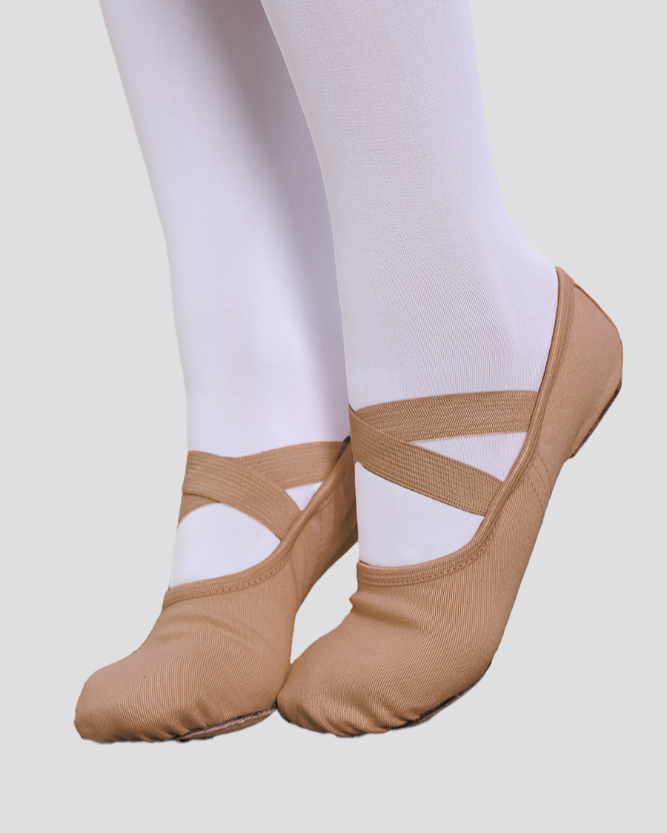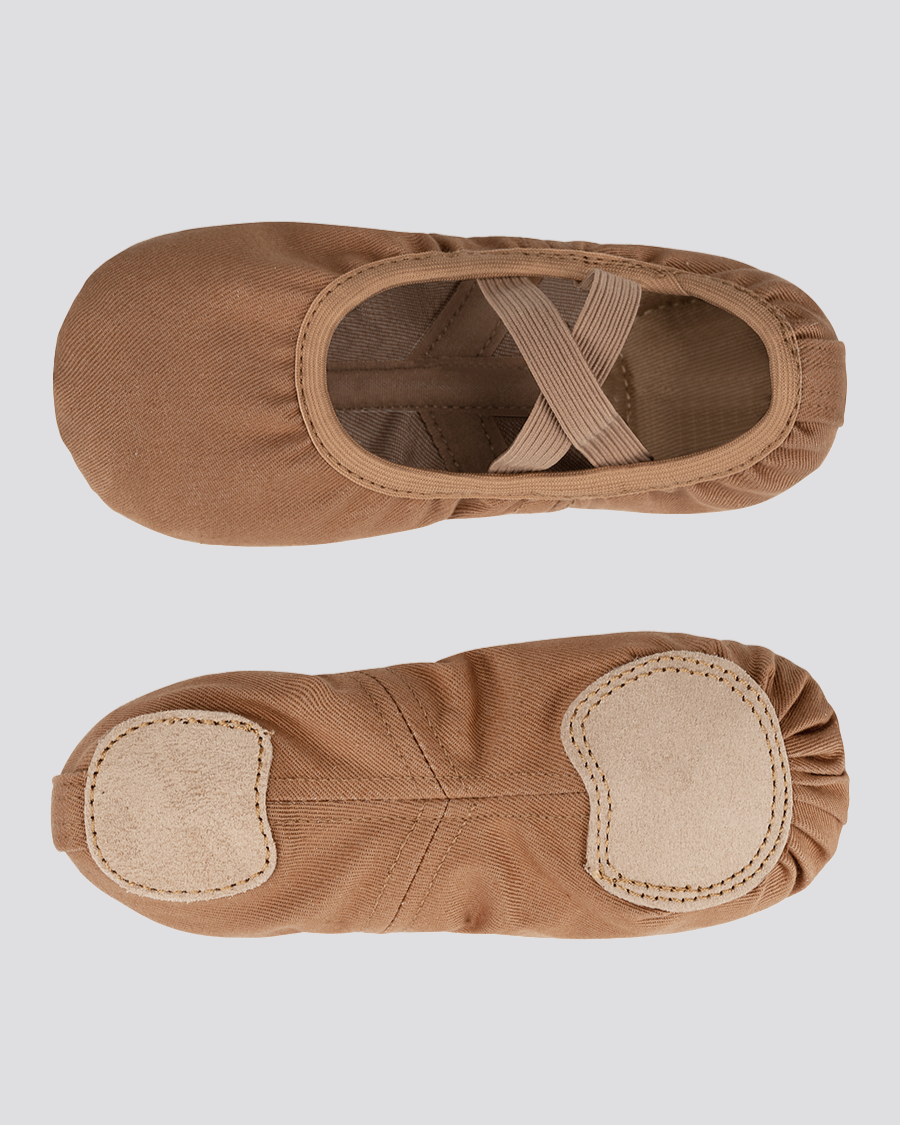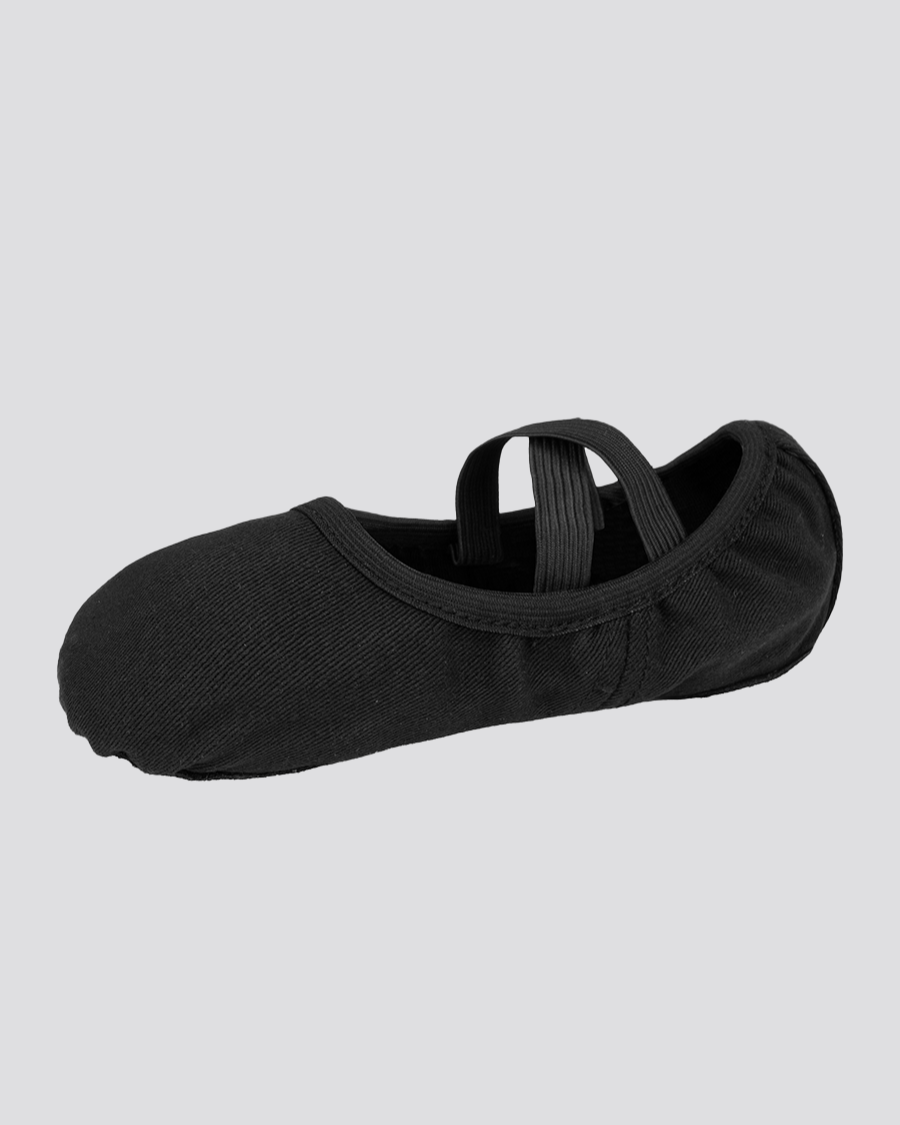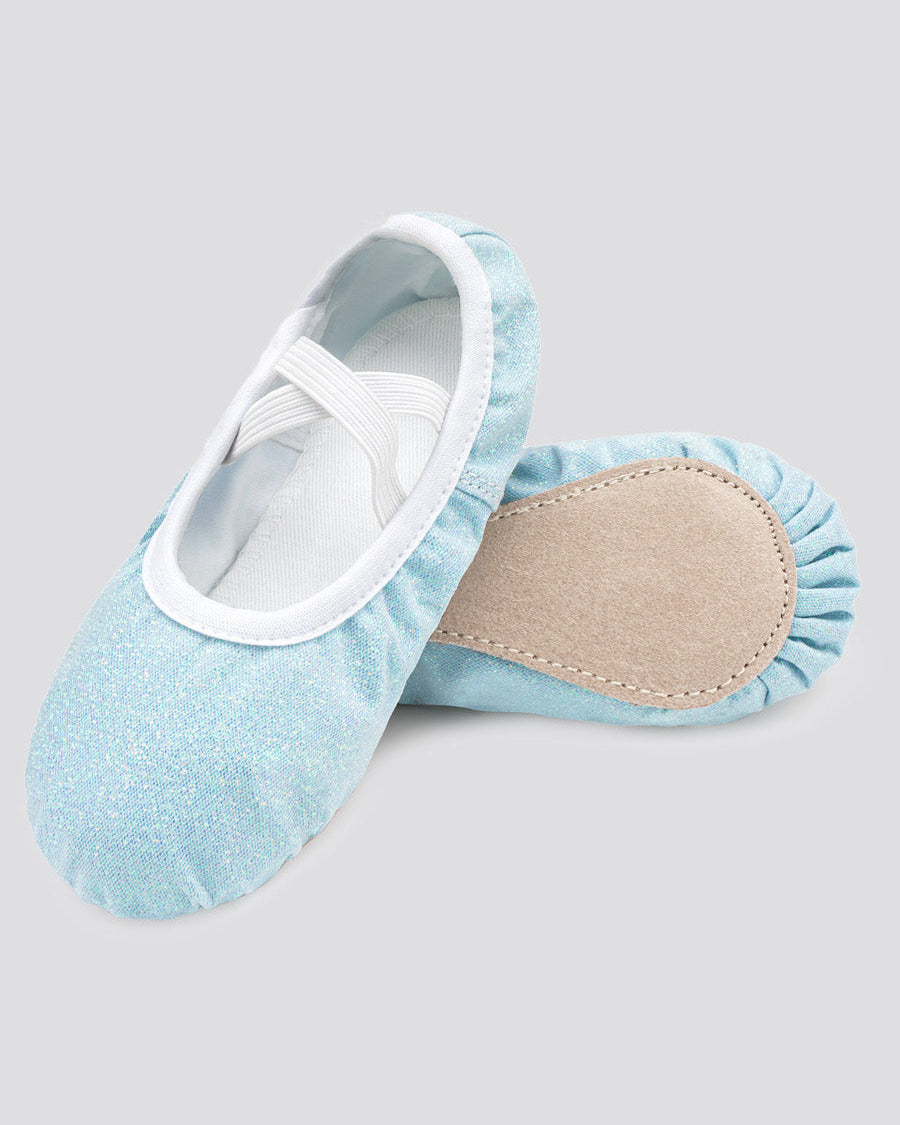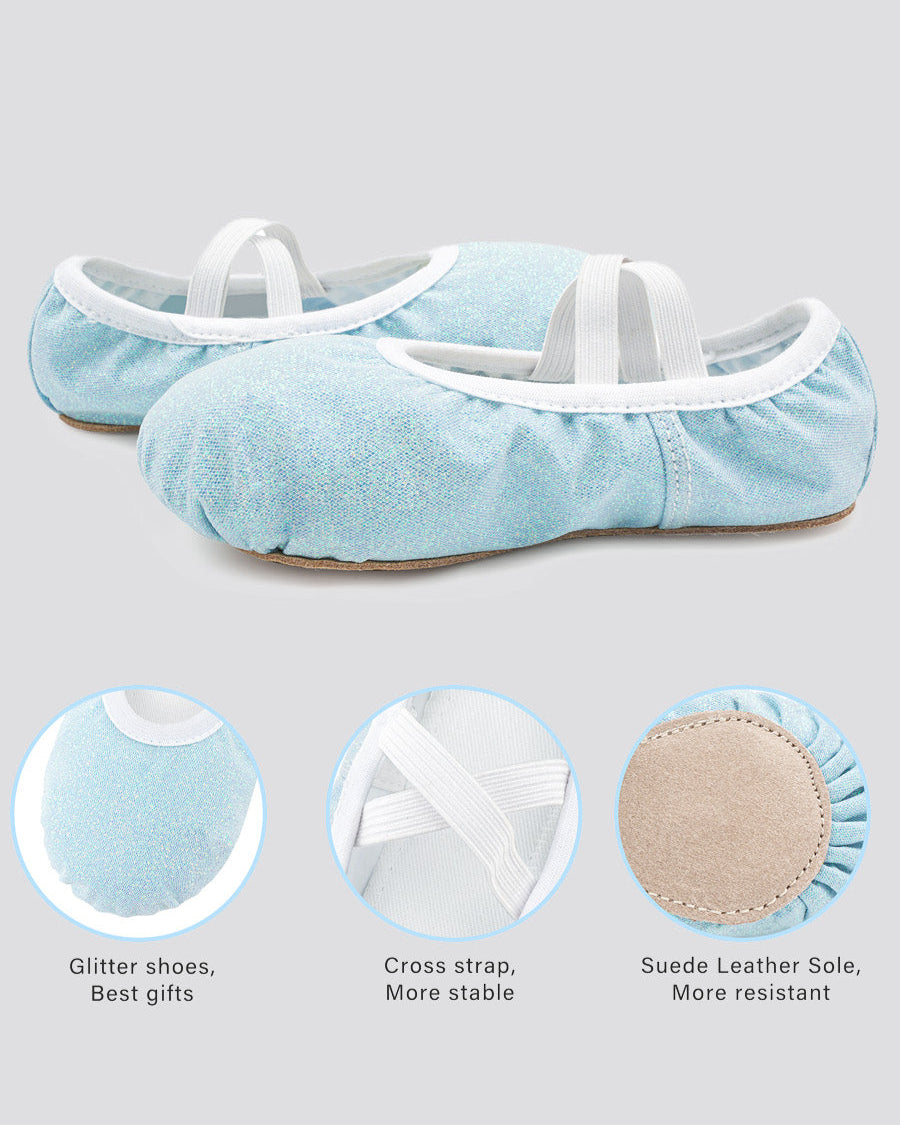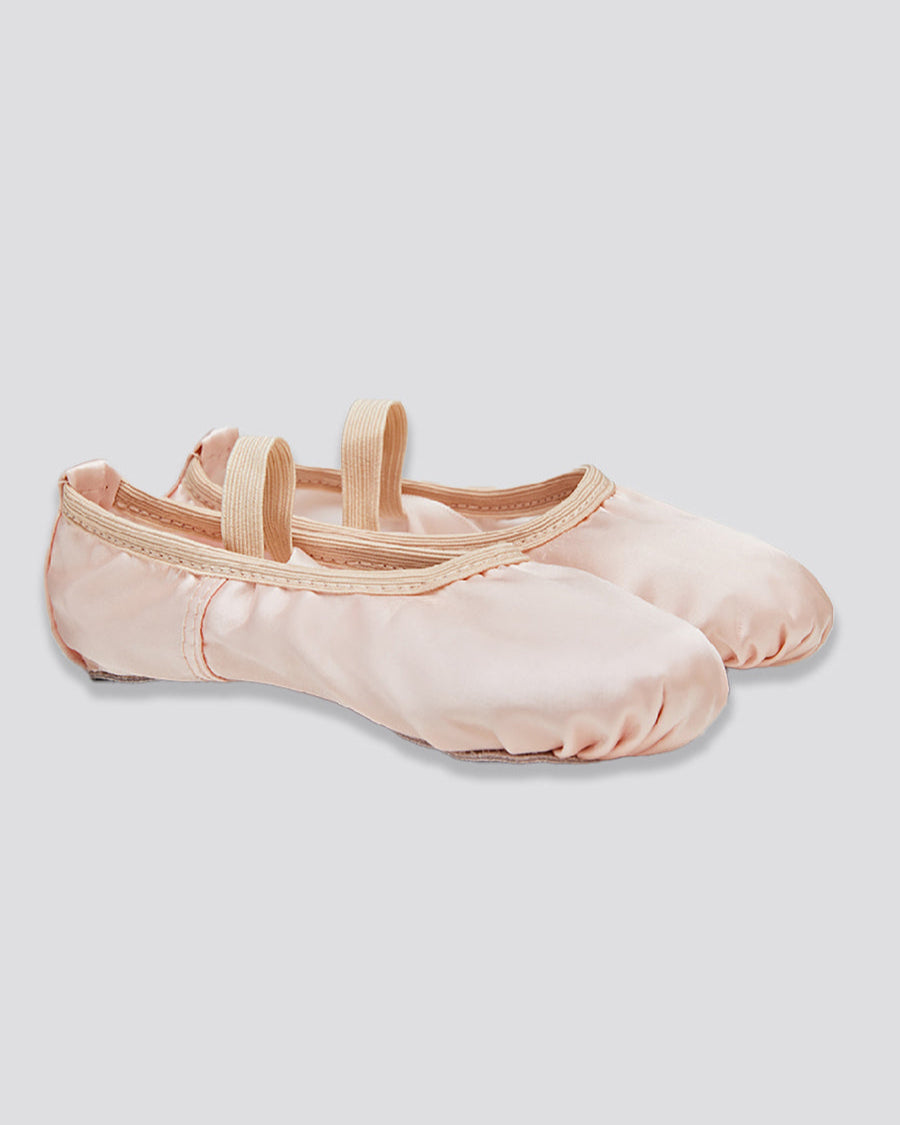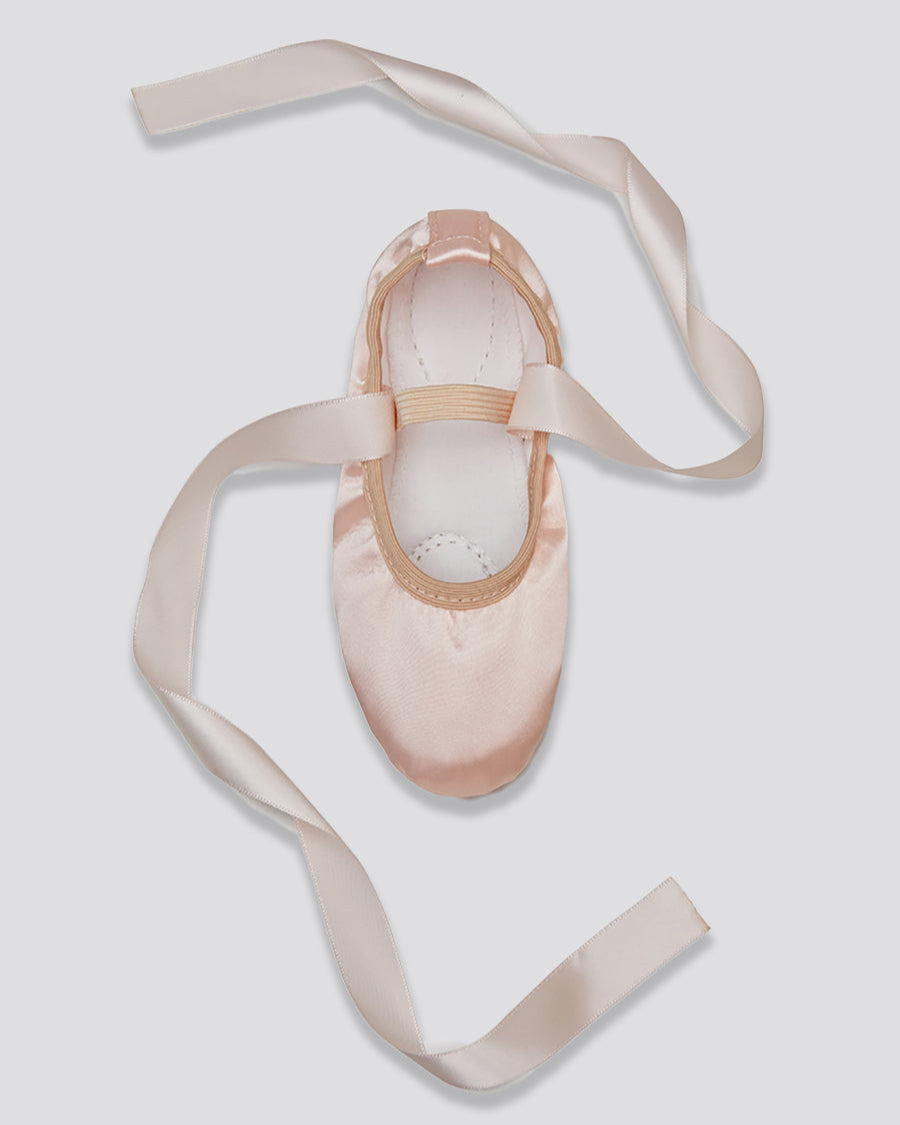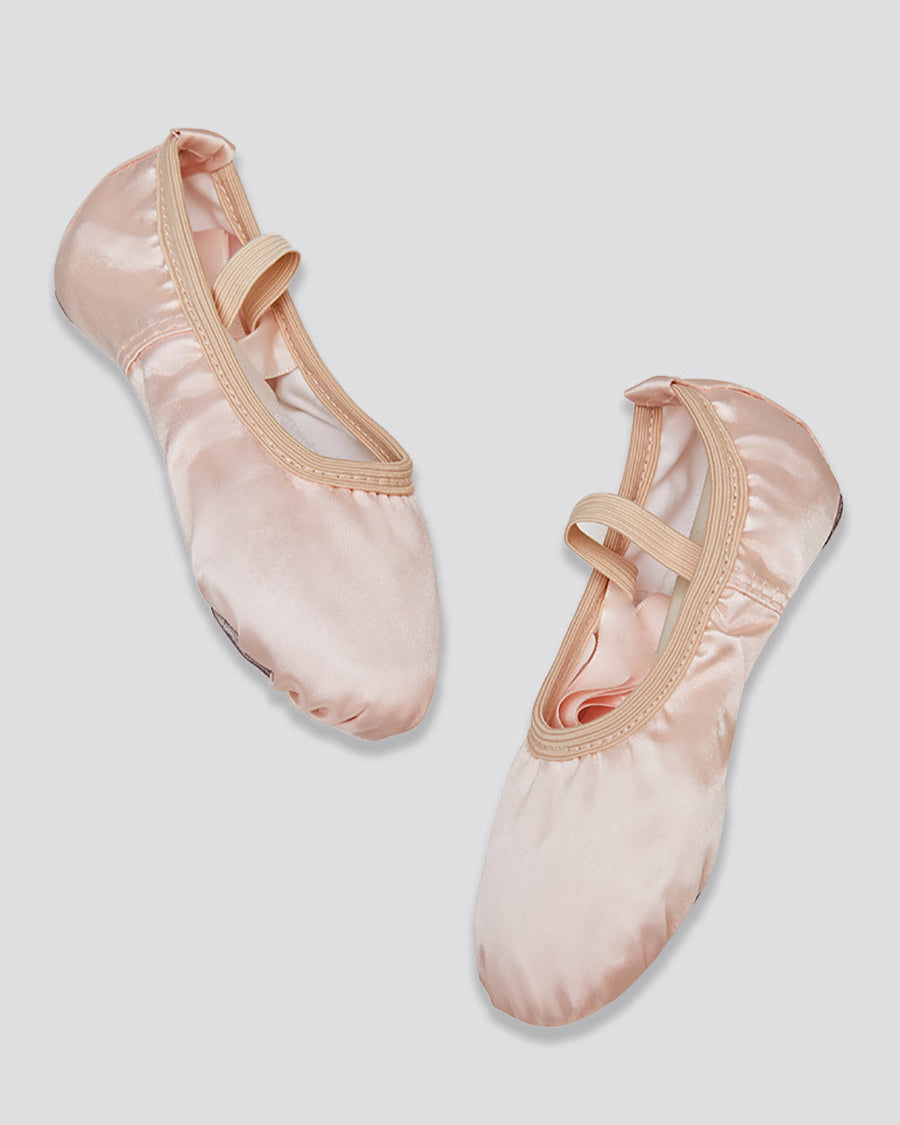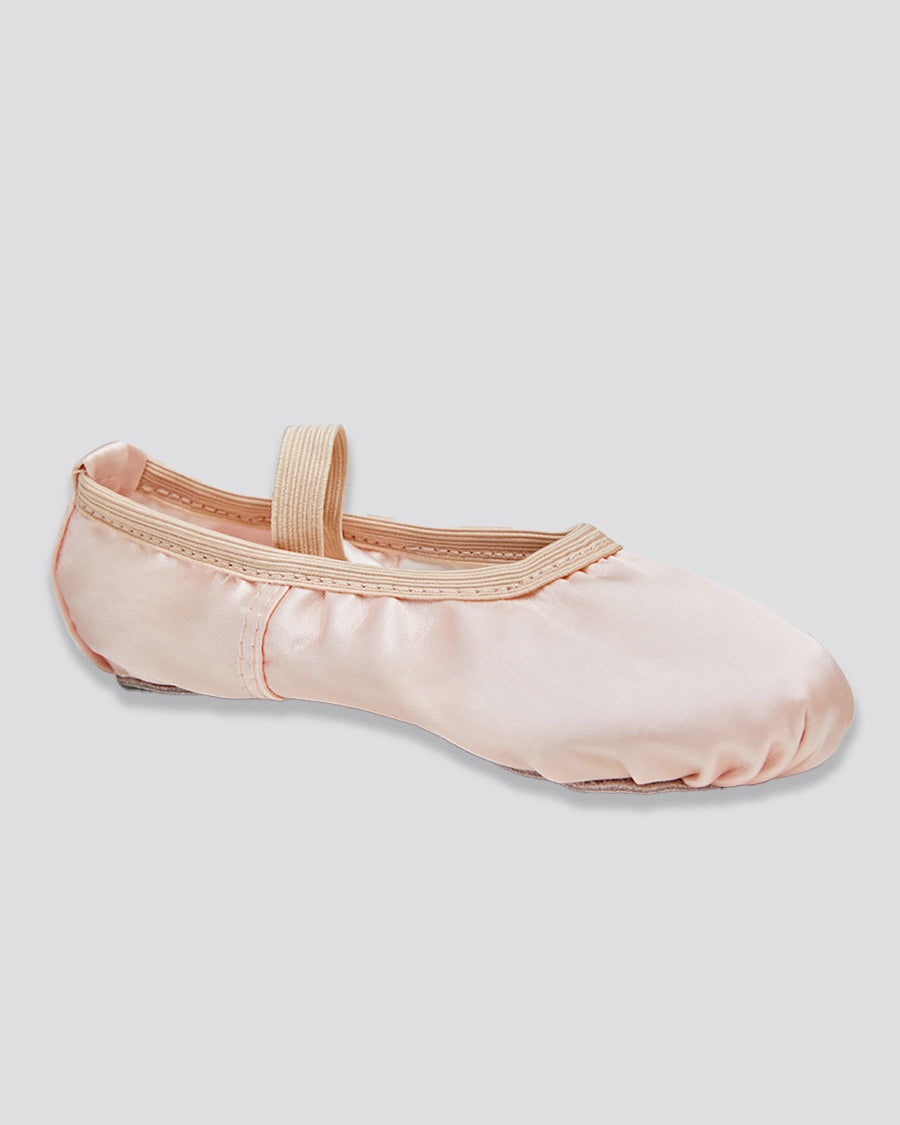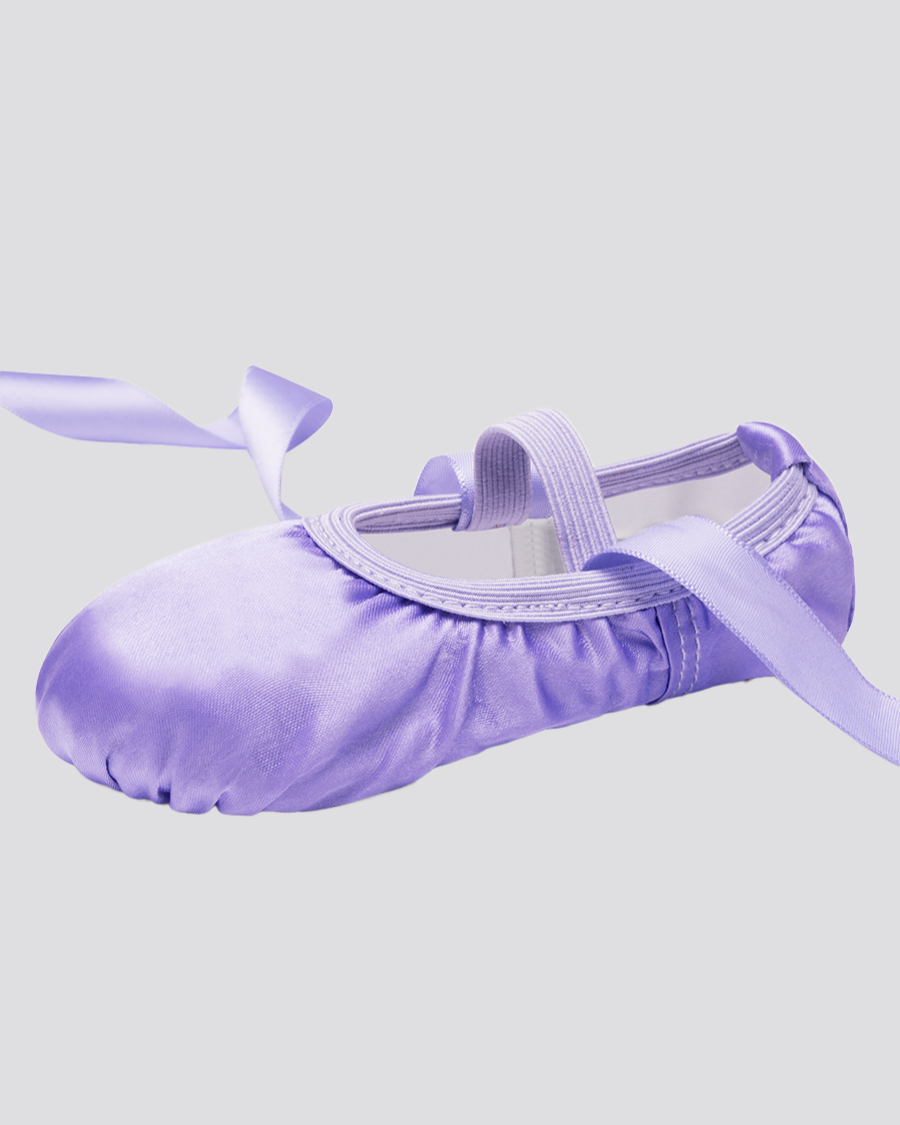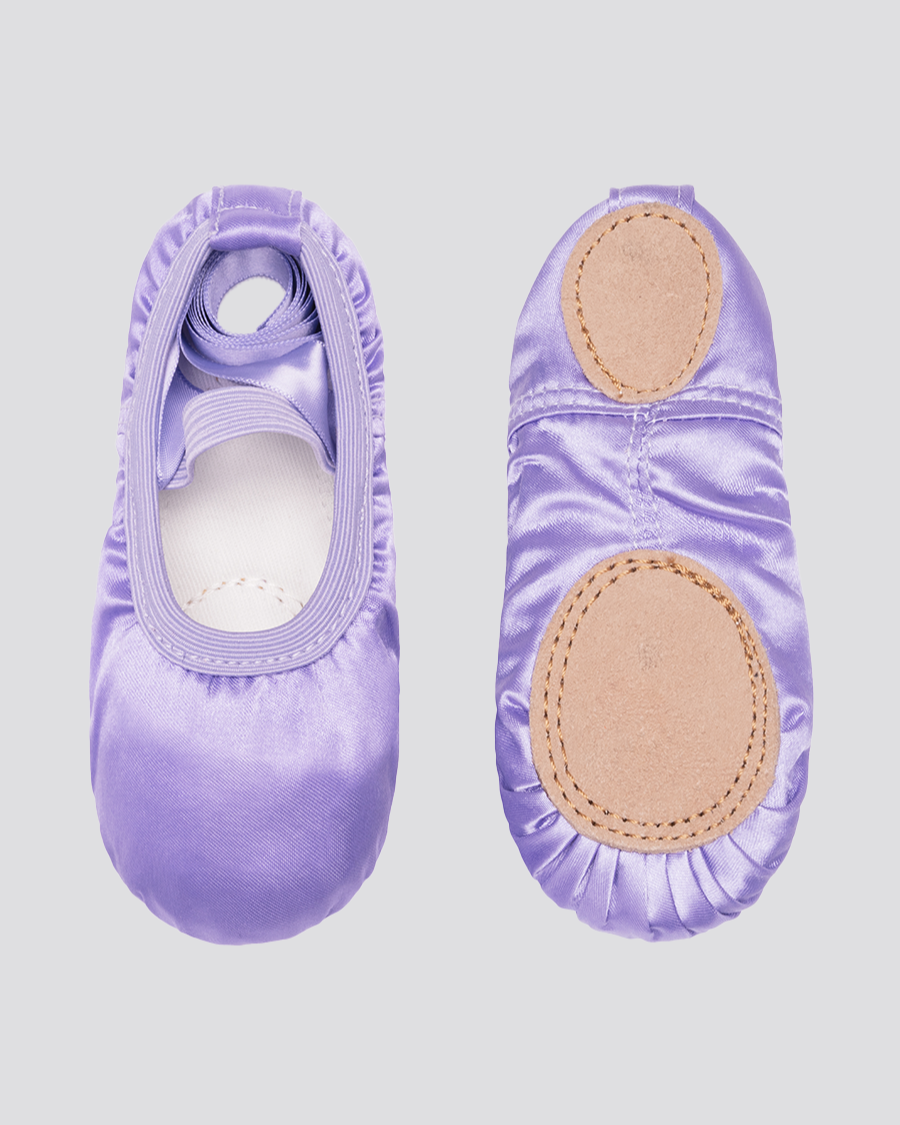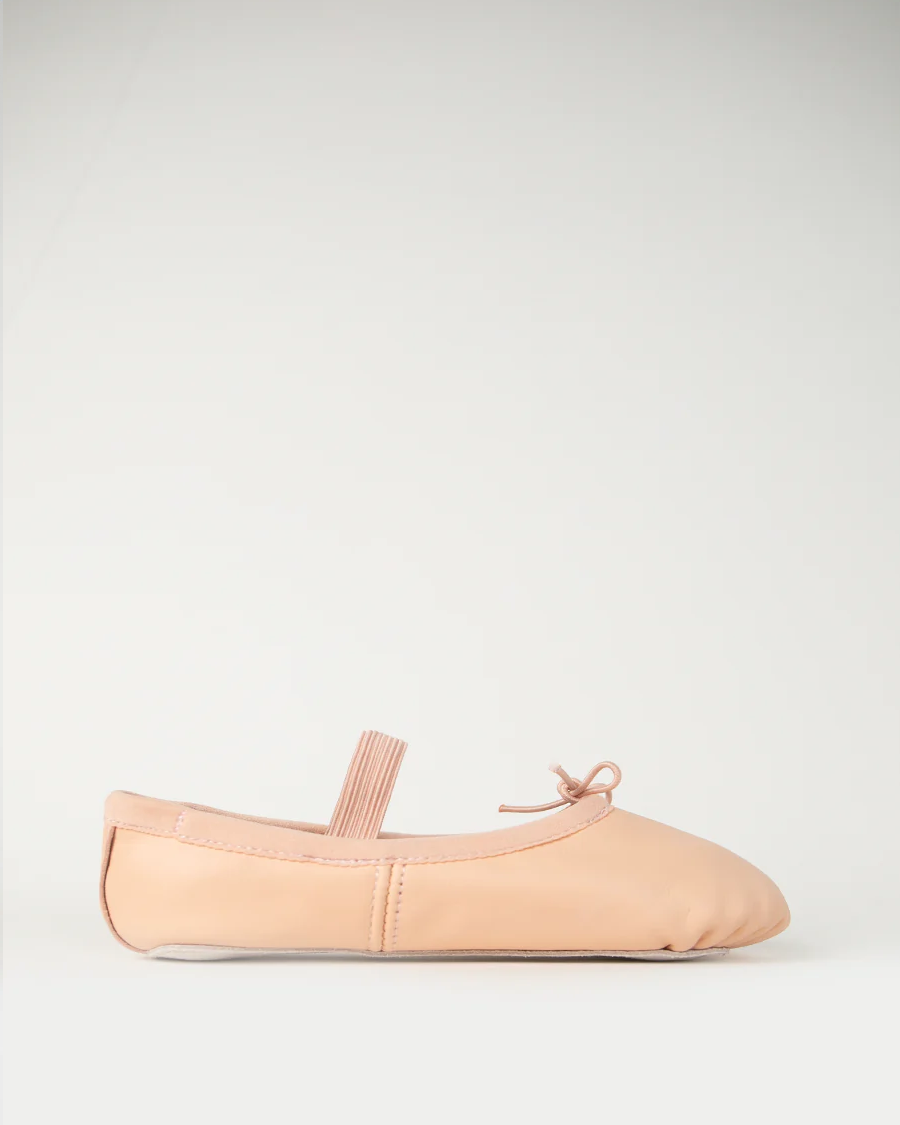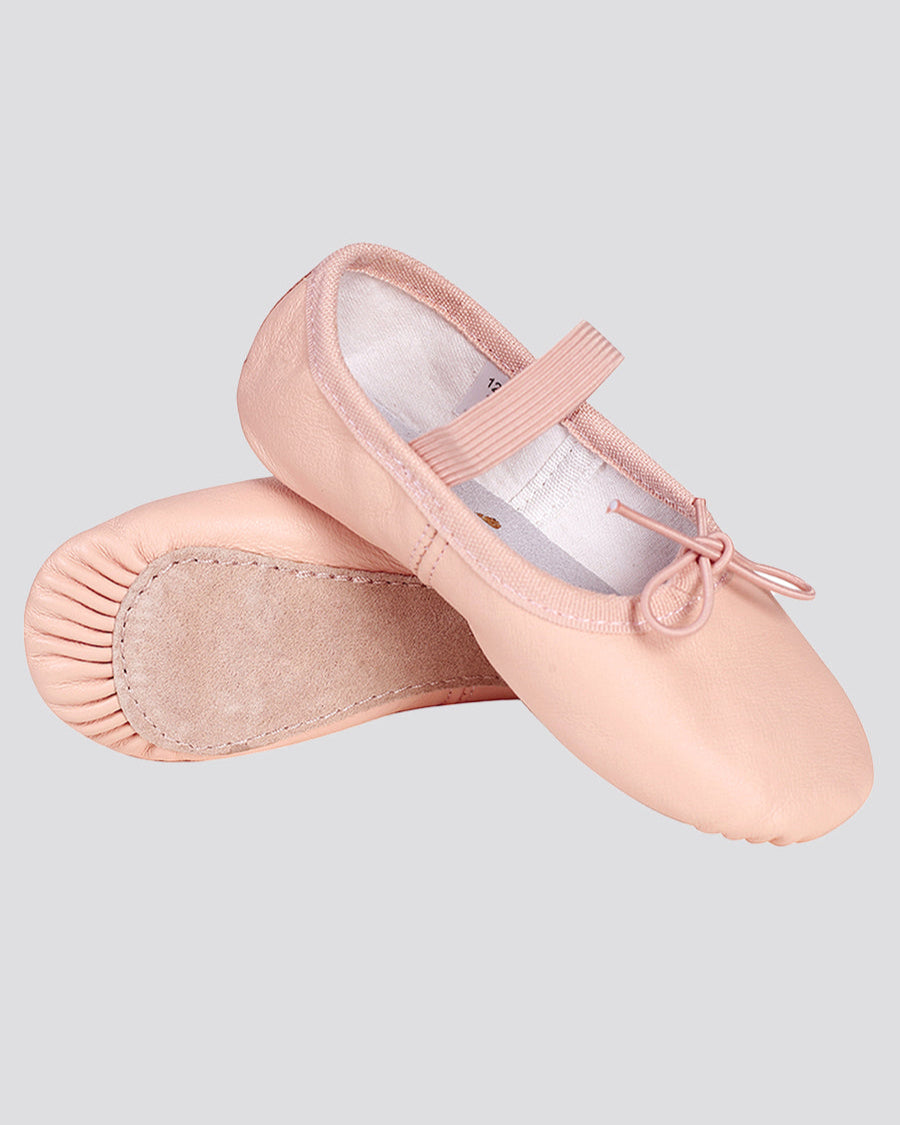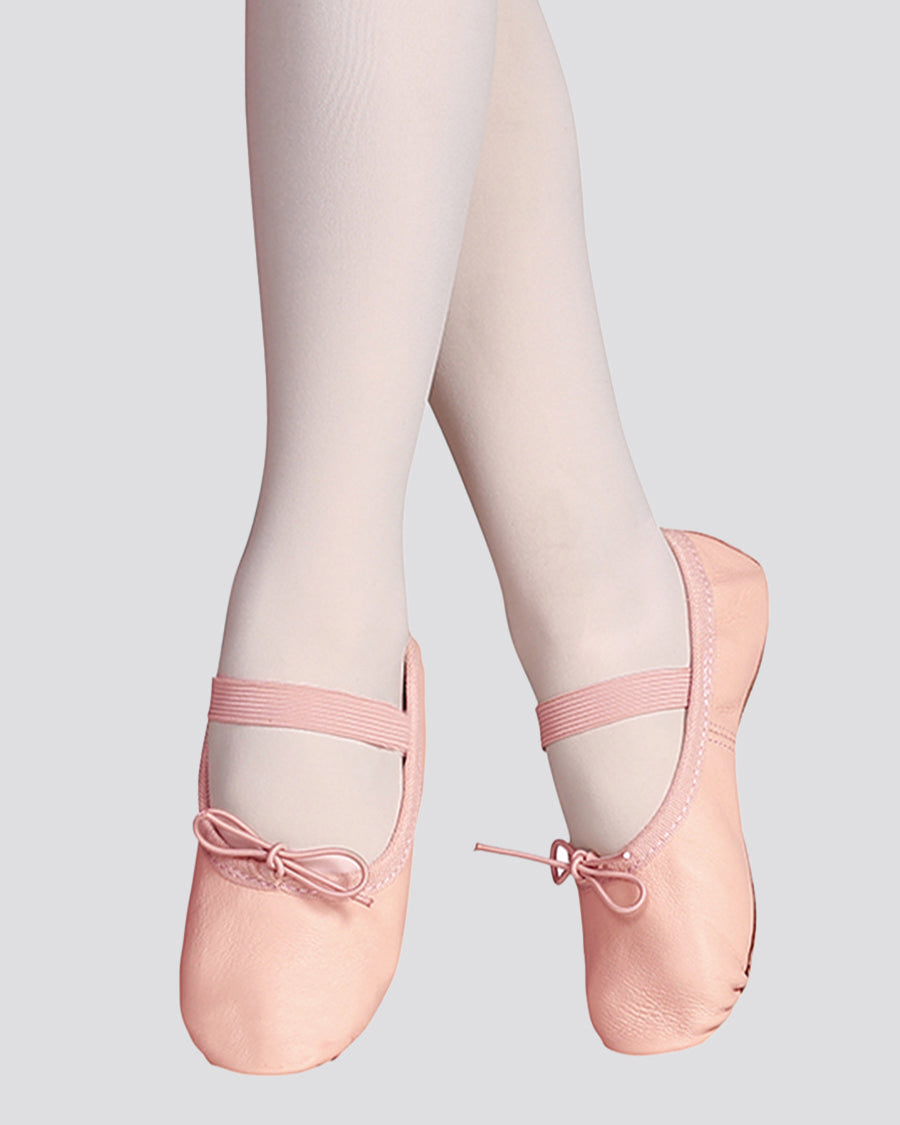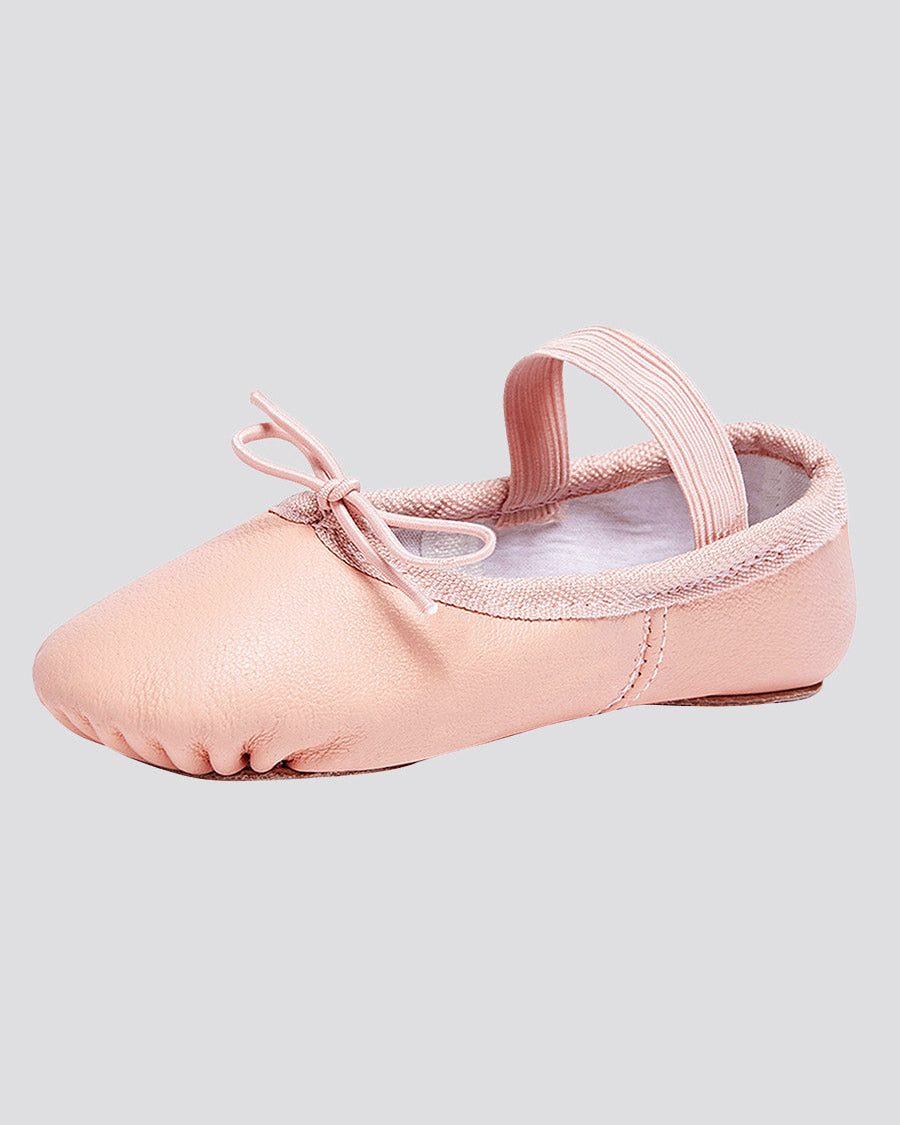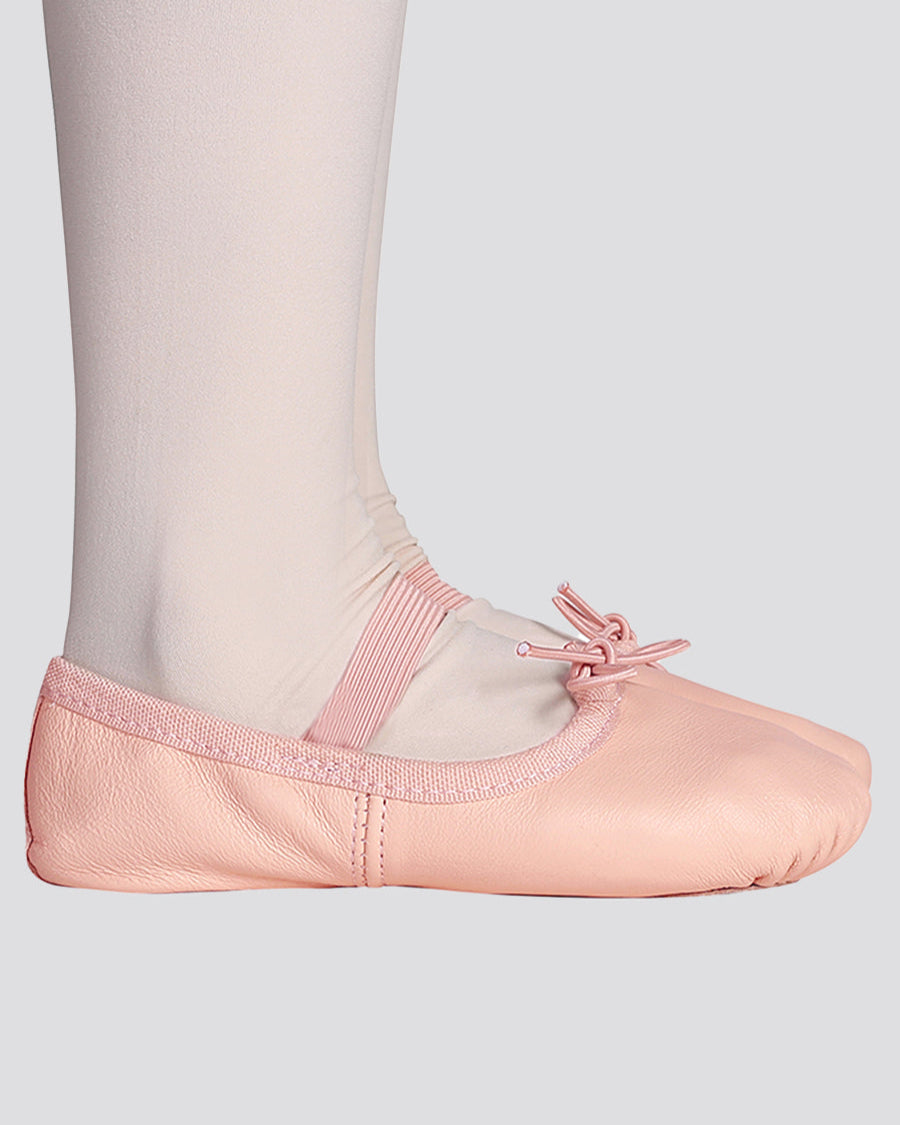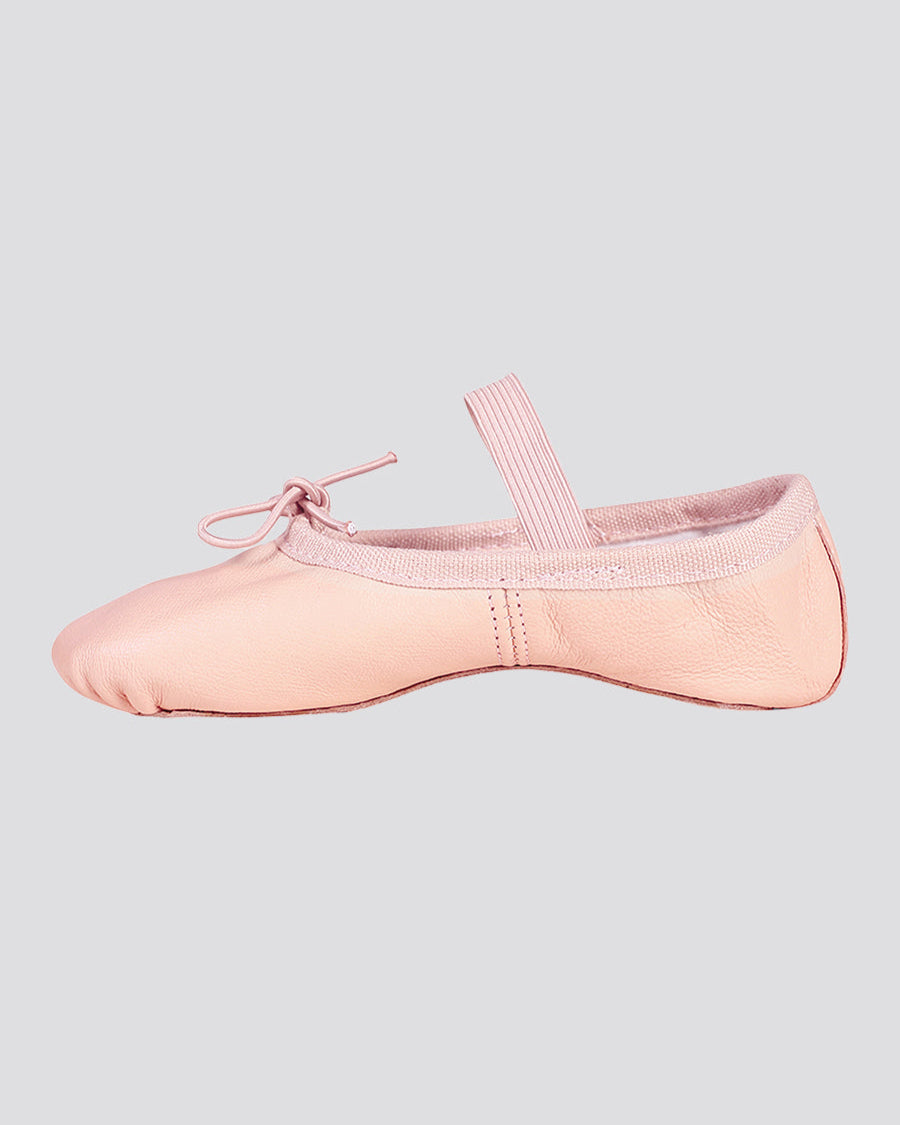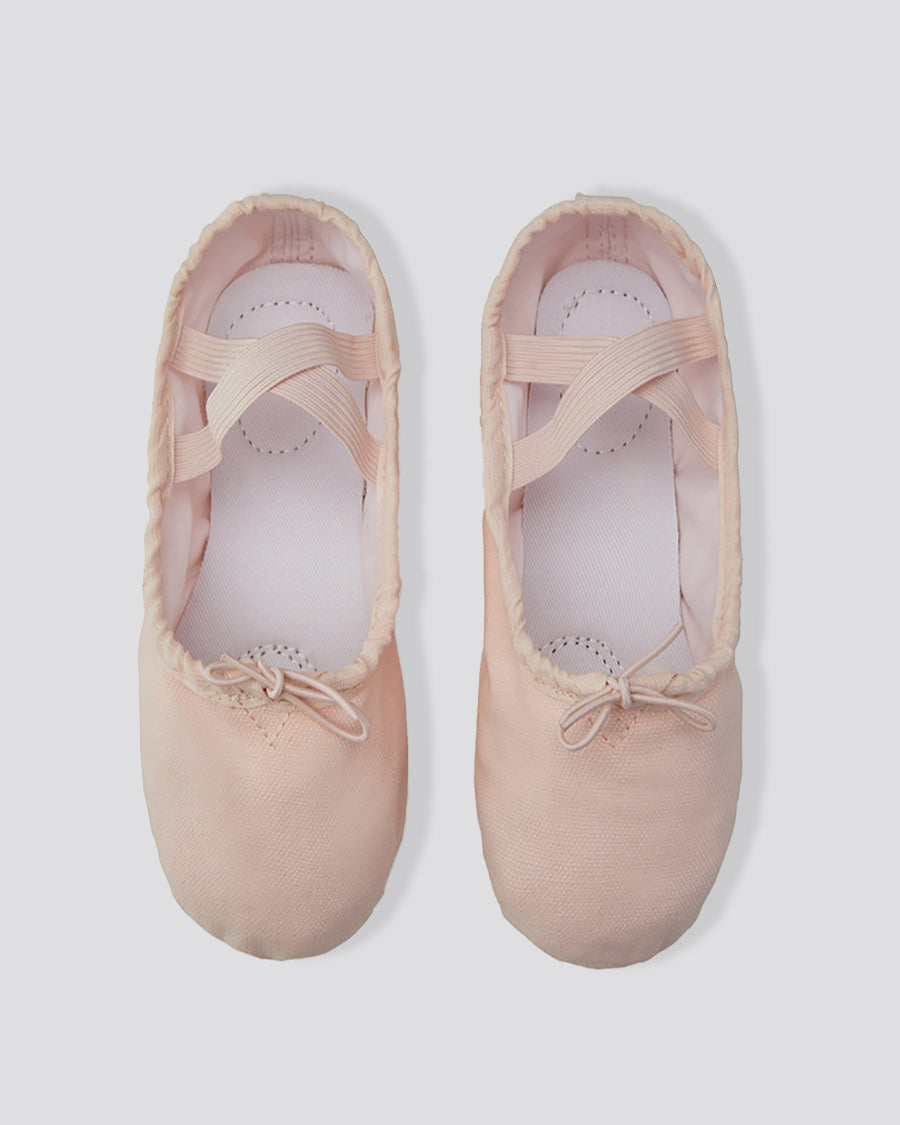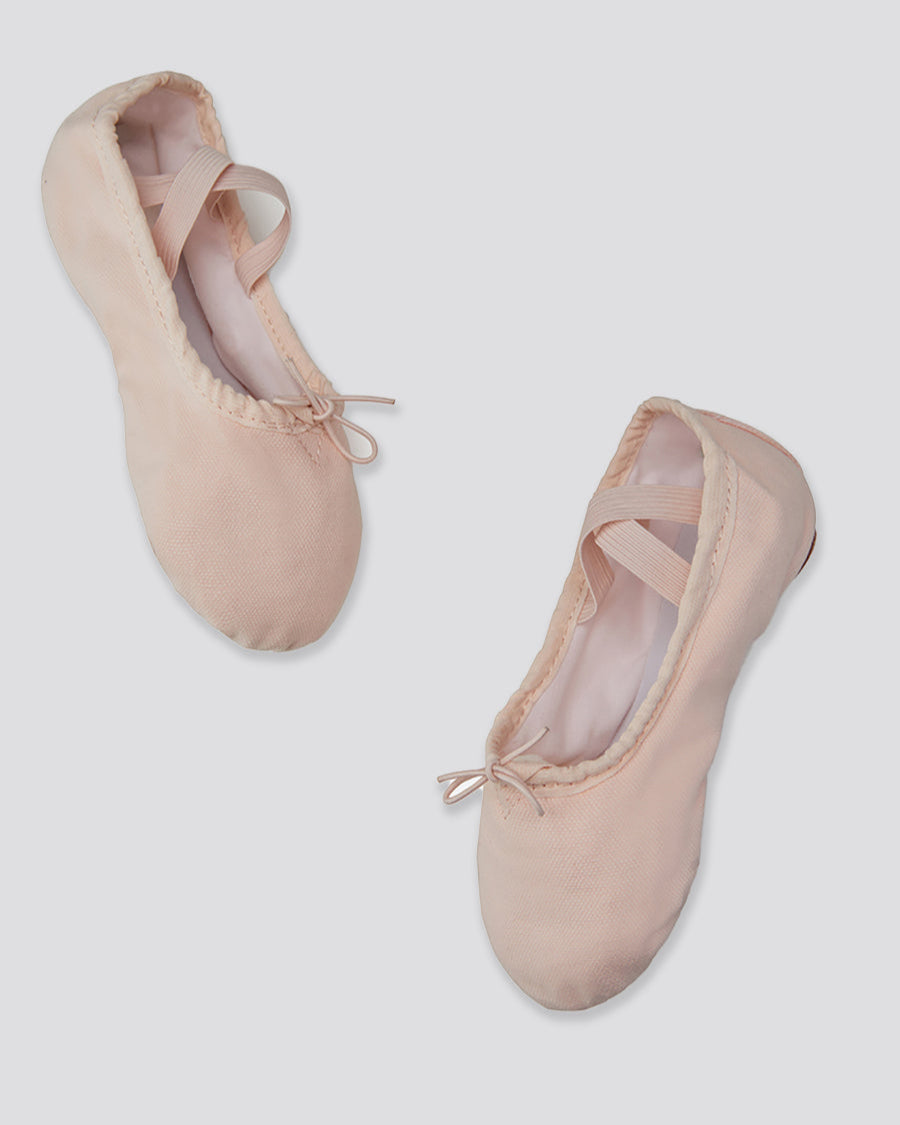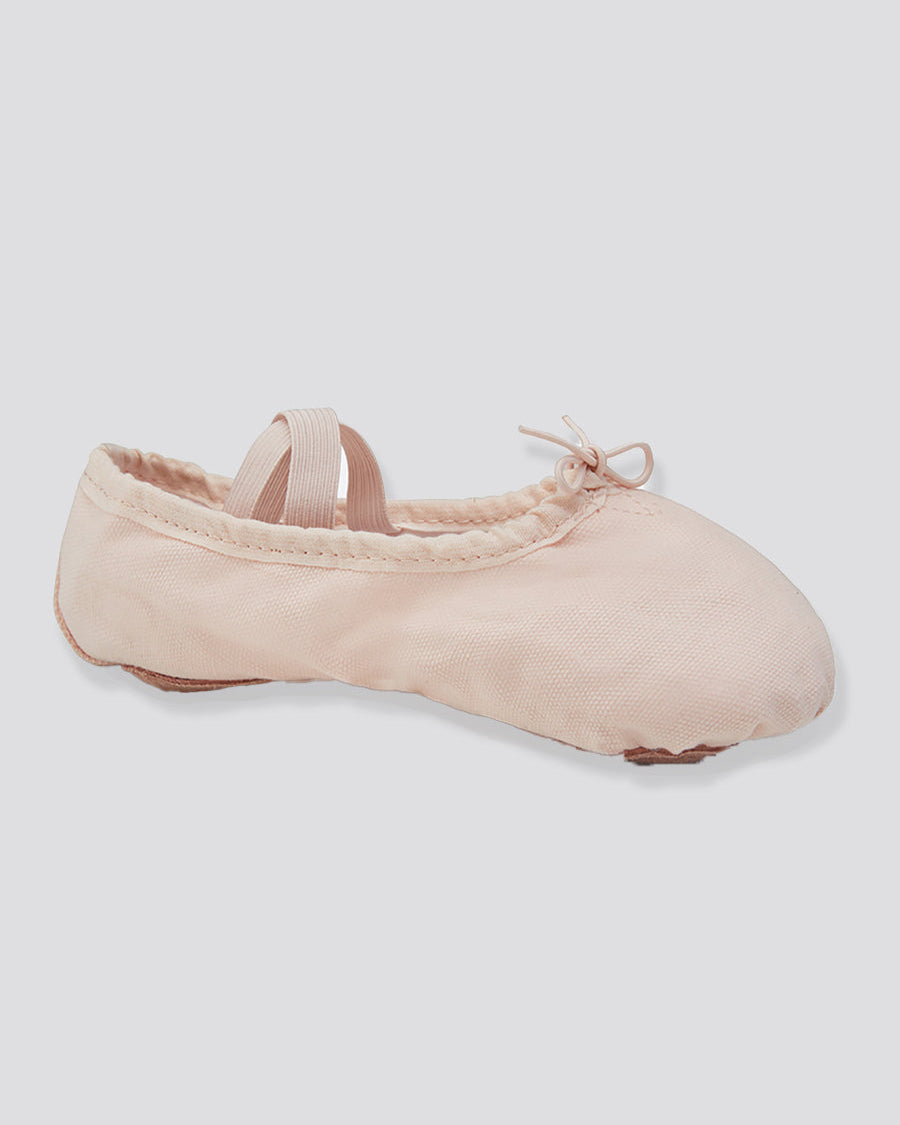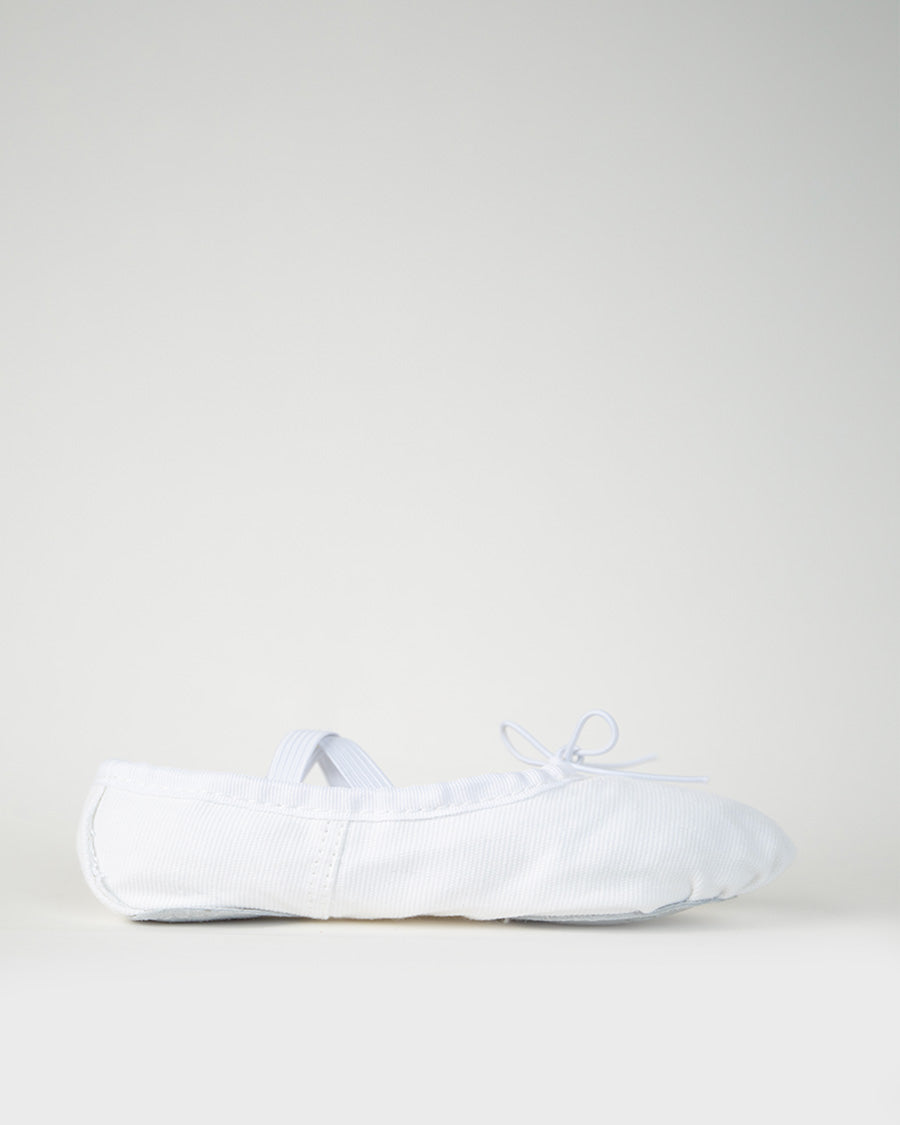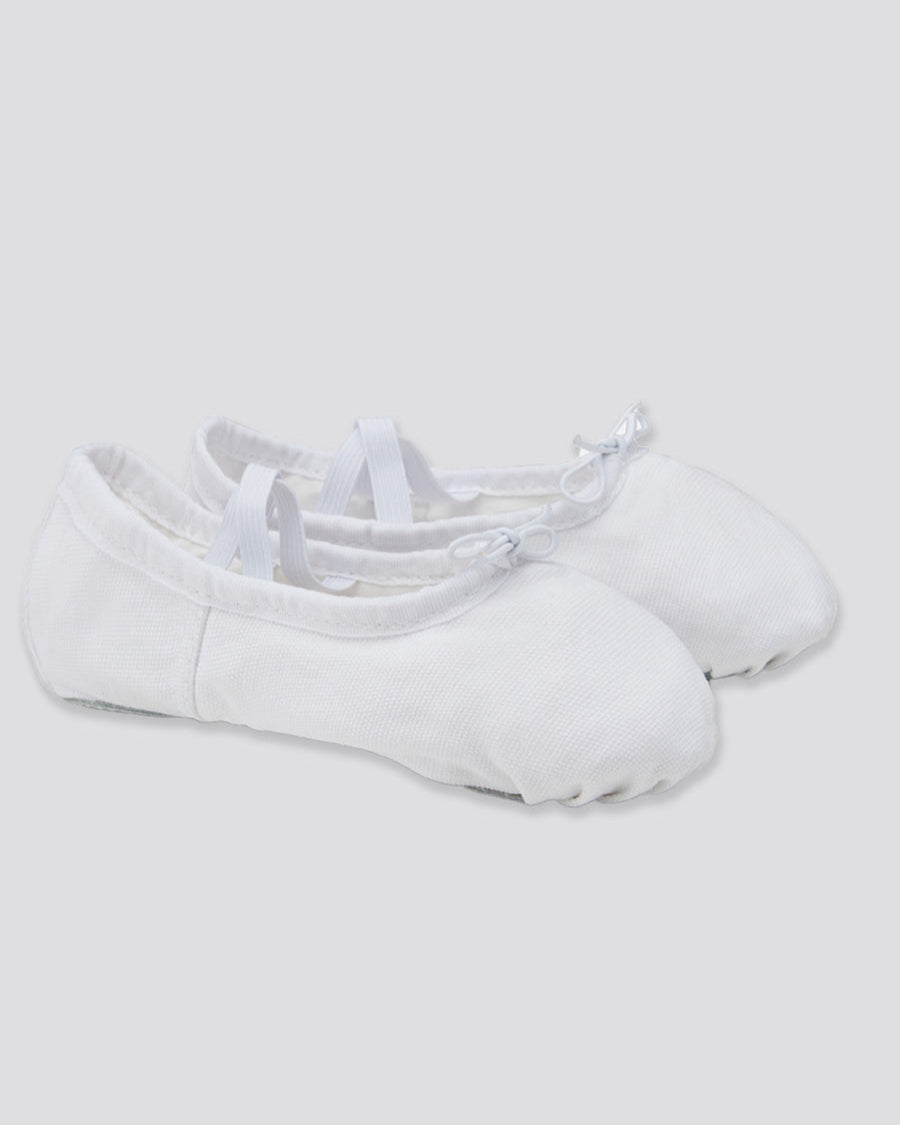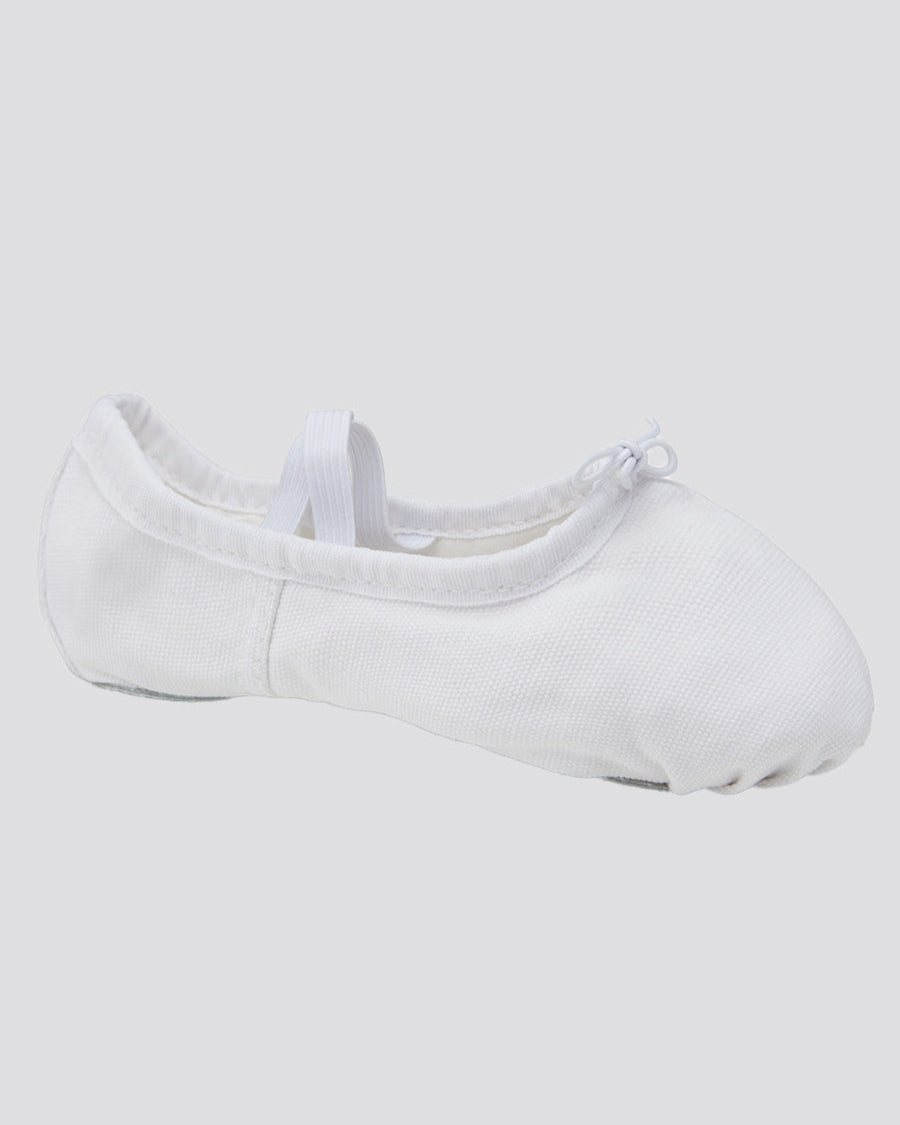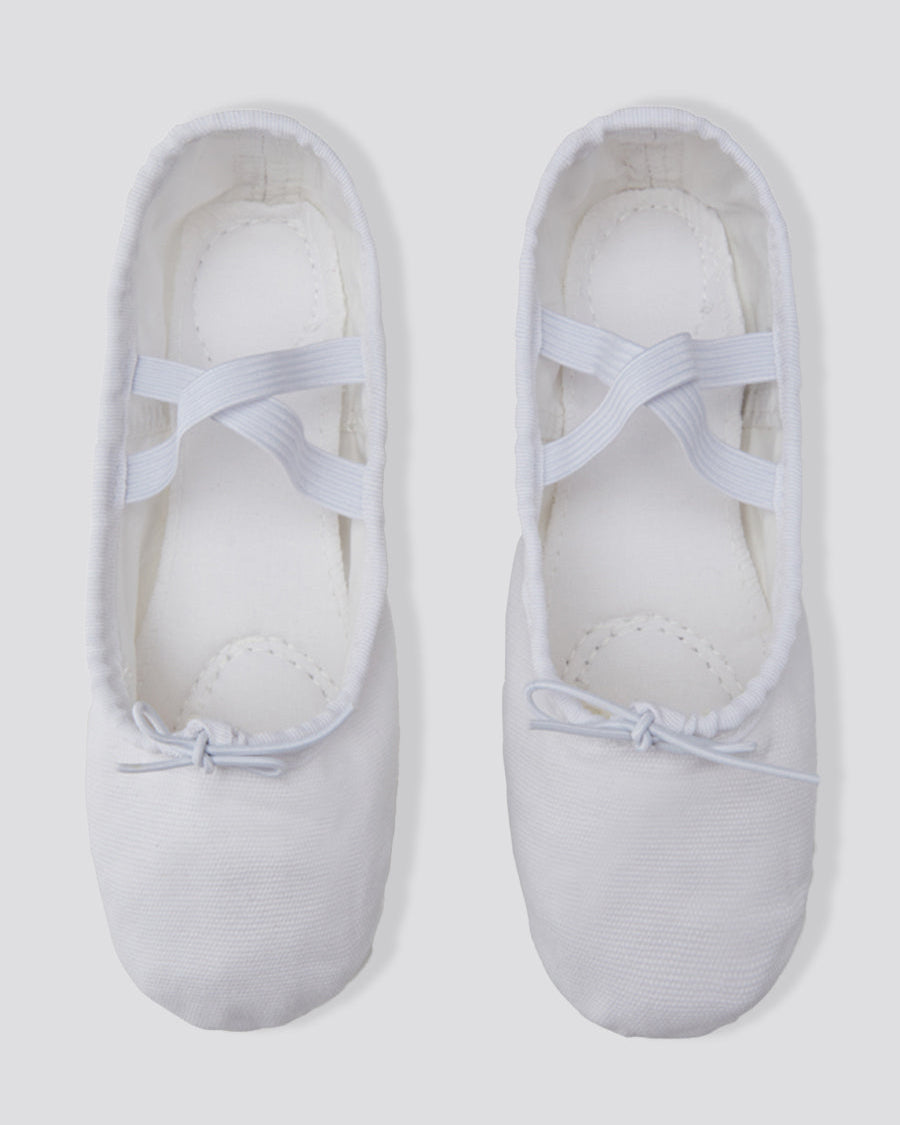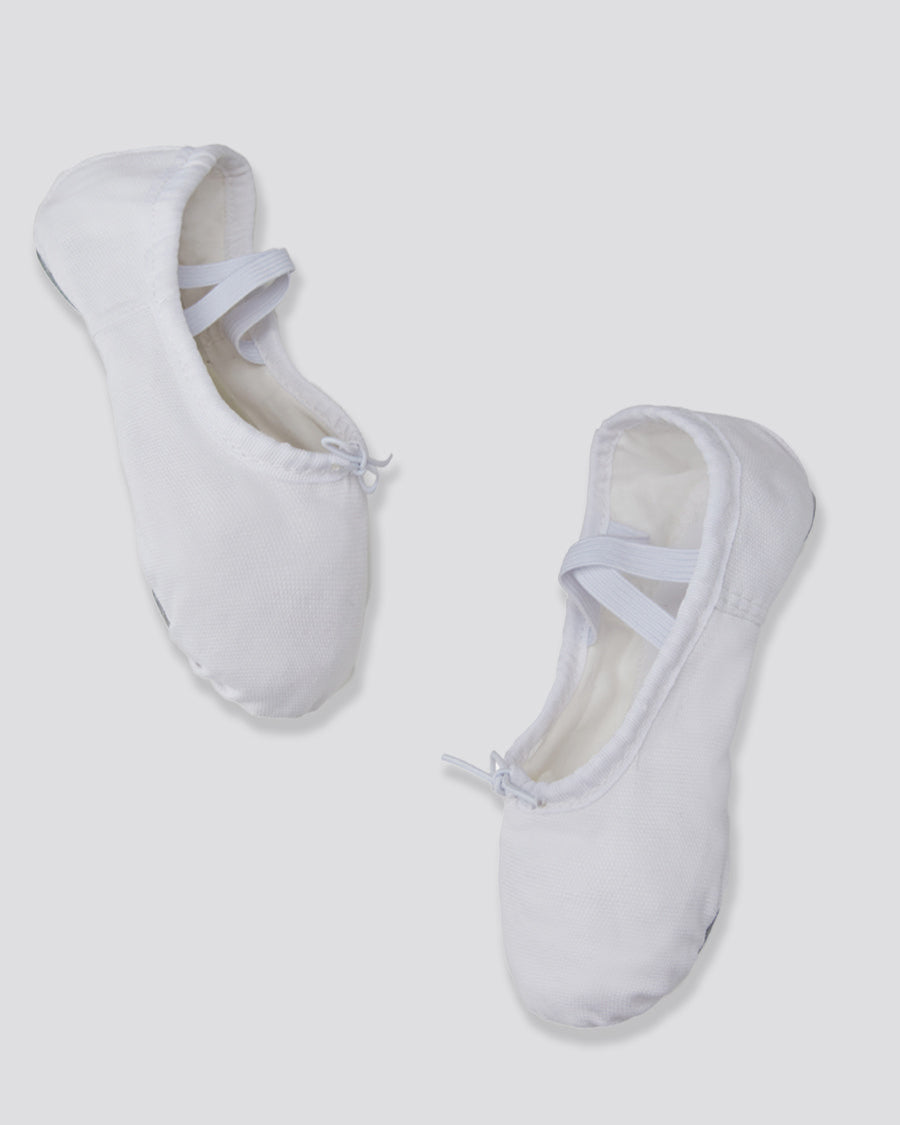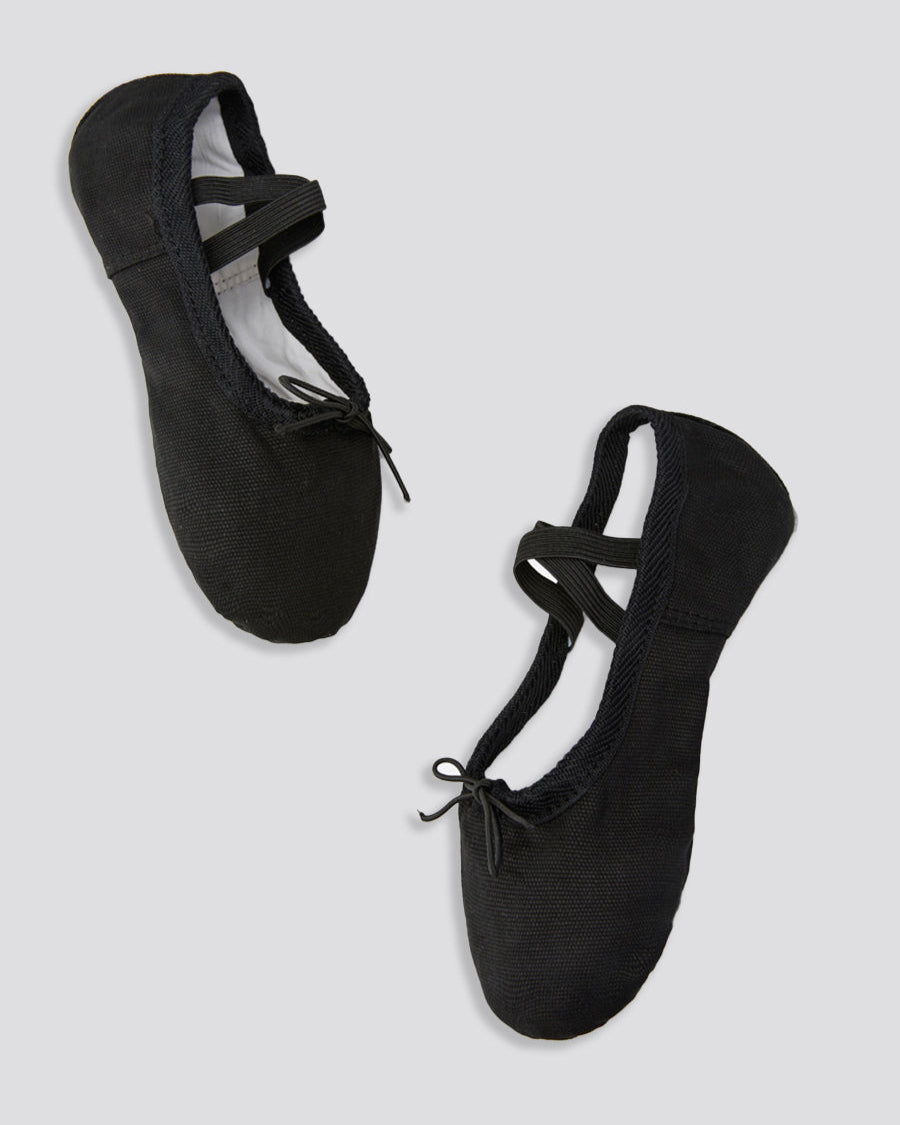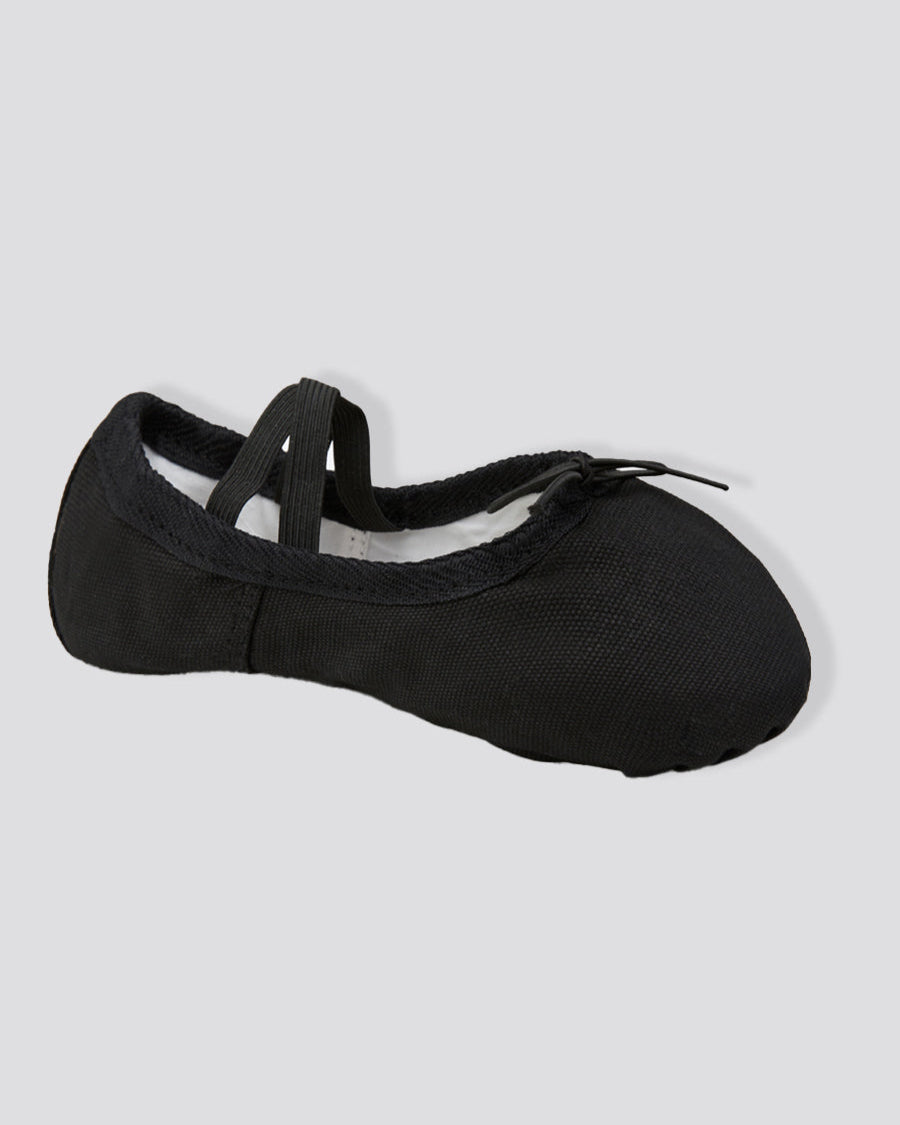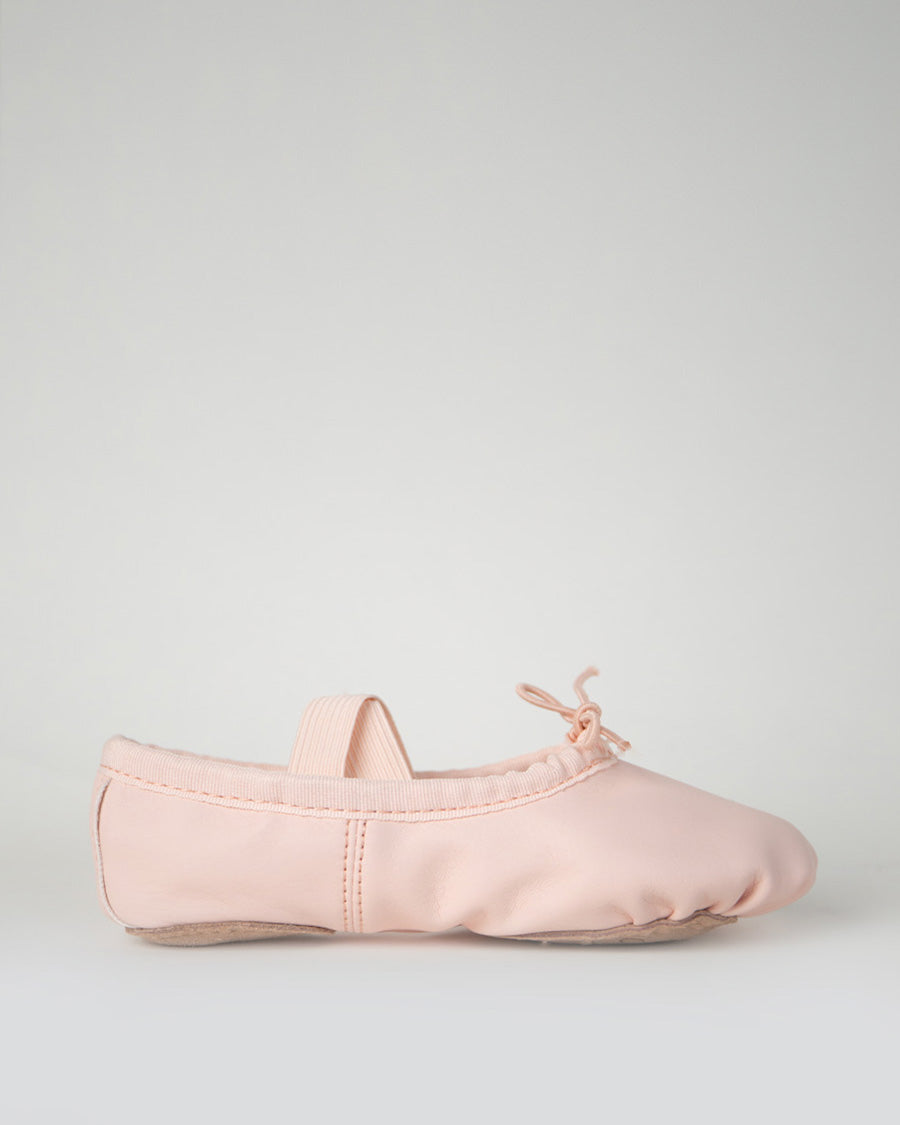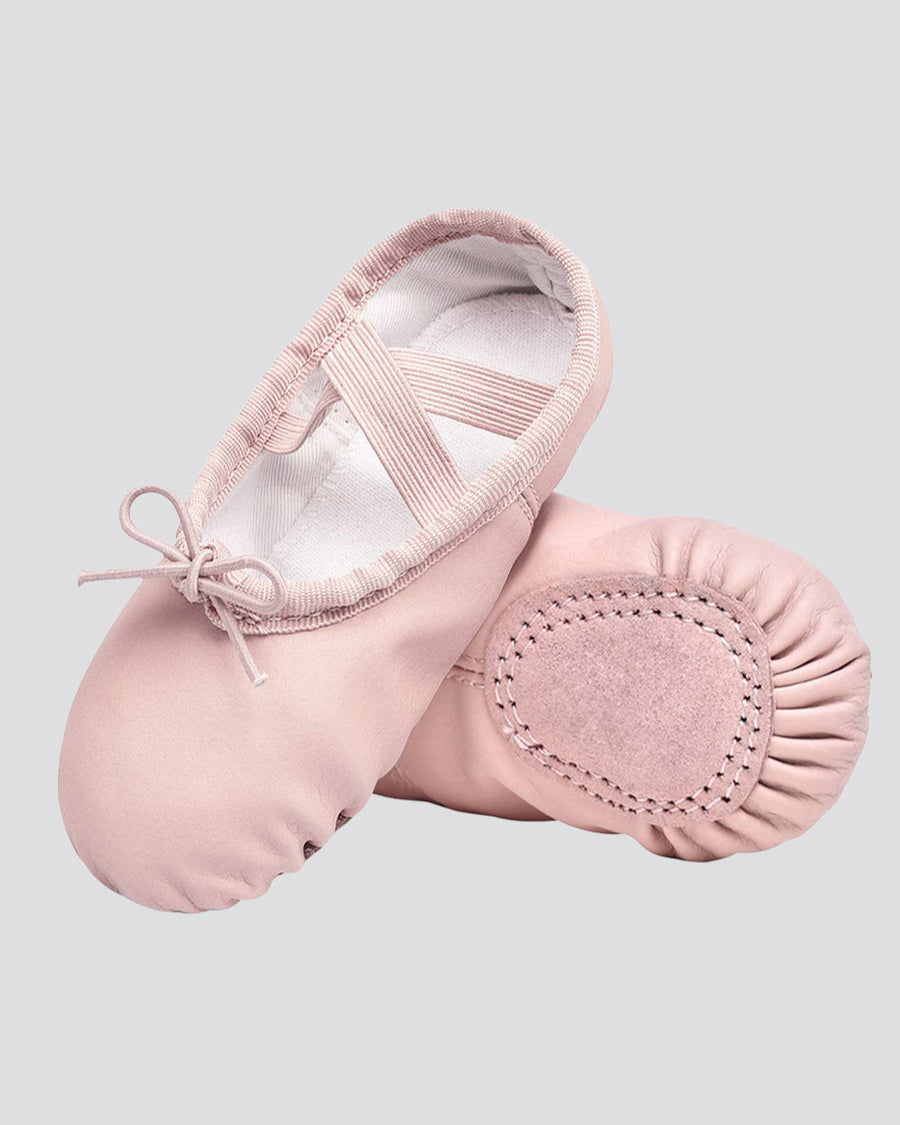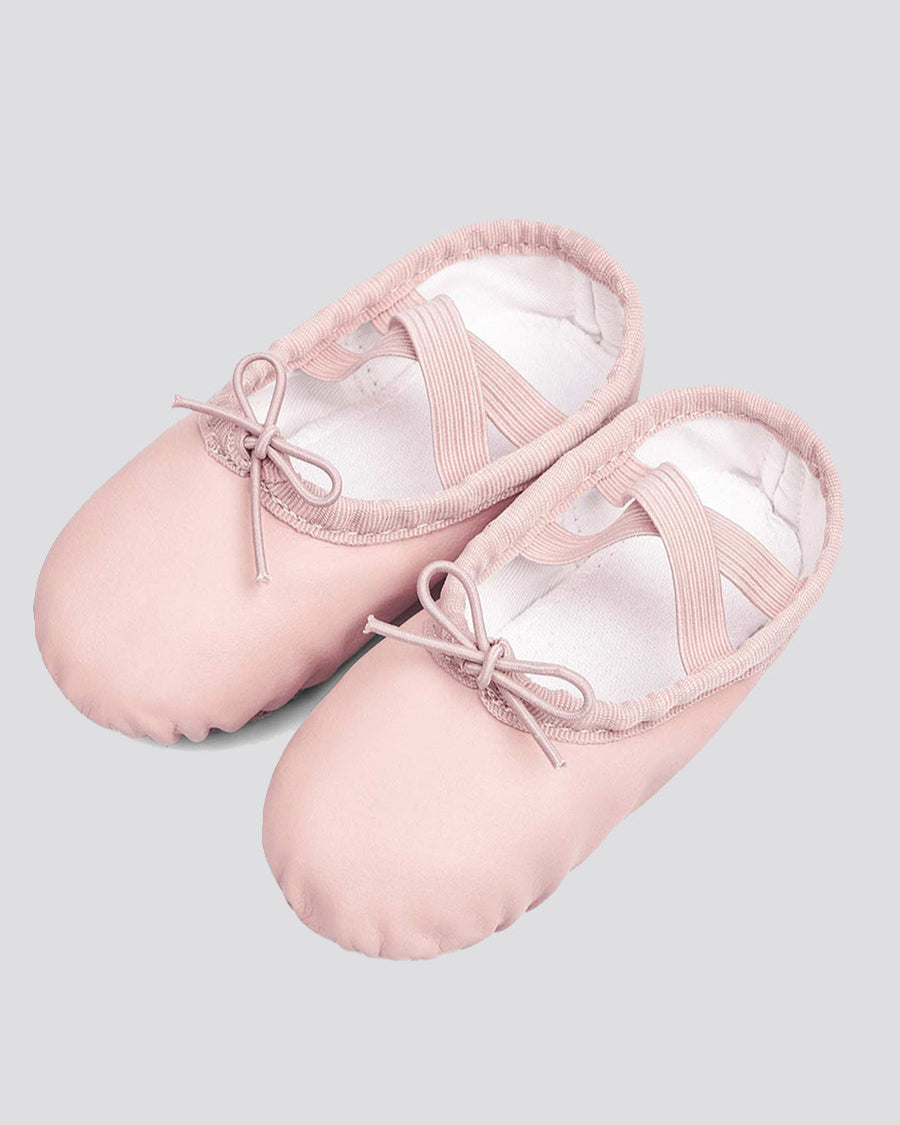


















If your child just started ballet, you've probably already run into the question that stumps almost every parent standing in the dancewear aisle: full sole or split sole? It sounds like a tiny detail, but it's the first real decision you'll make about their ballet shoes, and a wrong guess often means buying twice. Here's the honest, no-jargon version of what you actually need to know.
The Short Answer
If you just want to grab a pair and go: for a child who's starting out, full sole ballet shoes are usually the safest bet. It's what most teachers will steer you toward. The full sole gives little feet extra support and a bit of gentle resistance that helps them get stronger. Split sole tends to come later, once your child has built up some strength and their teacher feels they're ready. That's the gist, but the details below will help you feel confident about the call.
A Quick Way to Figure Out Which One You Need
Sole choice has less to do with your child's exact age and more to do with where they are in their learning. Use these stages as a rough guide to land on the right ballet shoes for beginners. Treat them as scenarios, not strict rules.
|
Where your dancer is right now |
A sensible starting point |
|
Brand new to ballet (first year) |
Full sole |
|
A year or two in, still building the basics |
Full sole |
|
Comfortable with the basics, clearly getting stronger |
Full sole, and a good time to ask the teacher about split sole |
|
Experienced, solid technique, and the teacher suggests it |
Split sole |
One thing matters more than any of the above: if the teacher, studio, or exam syllabus asks for a specific shoe, get that. Think of this table as a starting point for when nobody's told you otherwise.
Okay, So What's Actually the Difference Between a Full Sole and Split Sole Ballet Shoe?
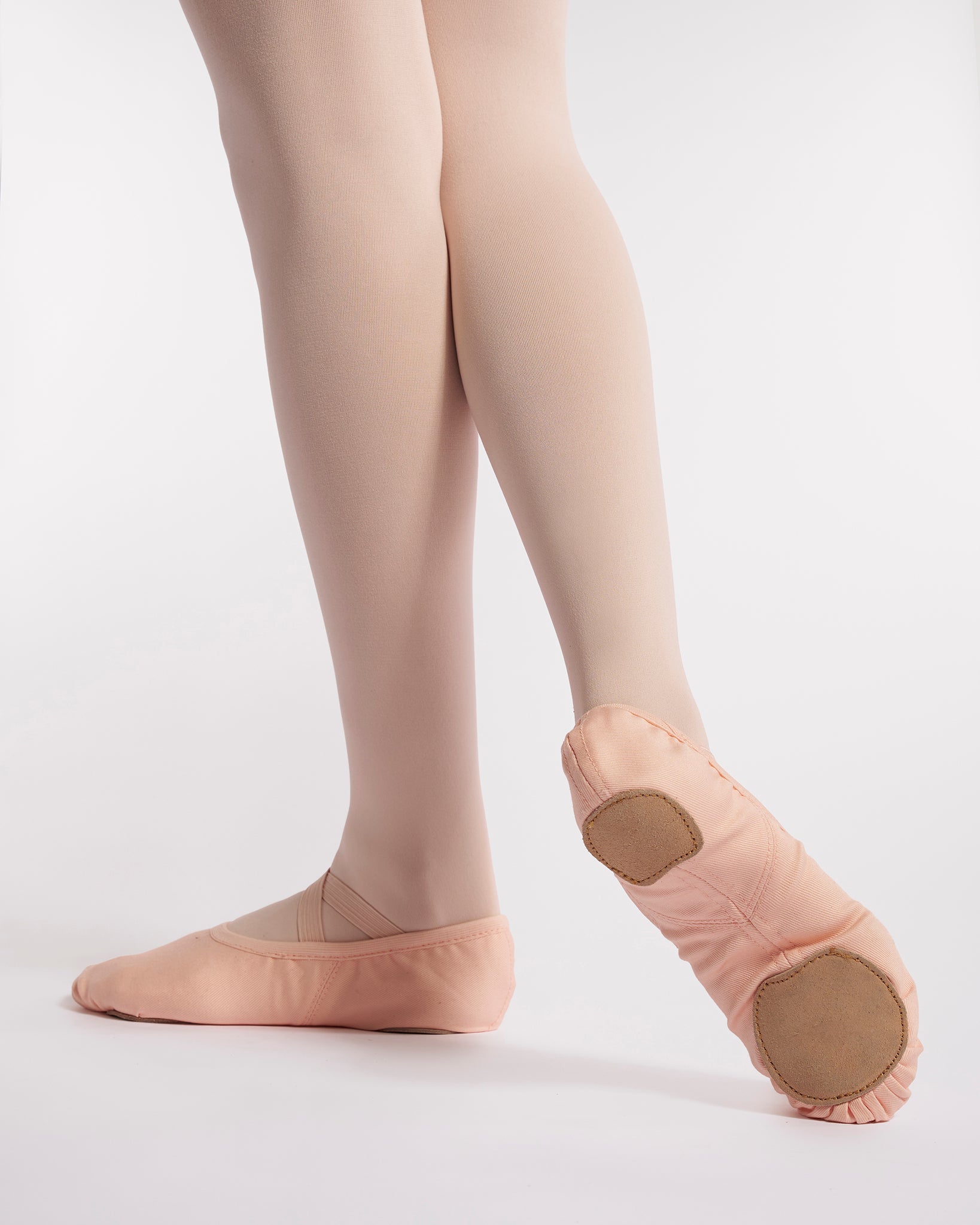
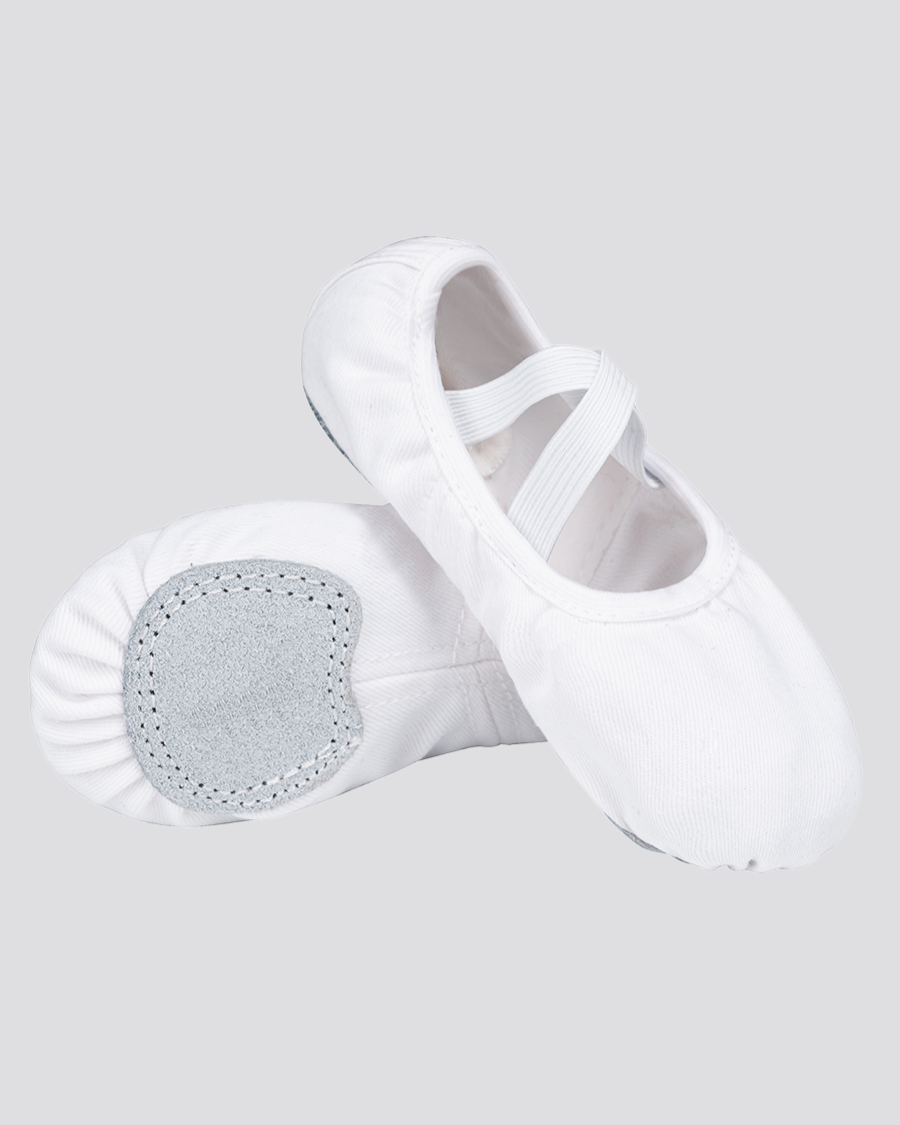
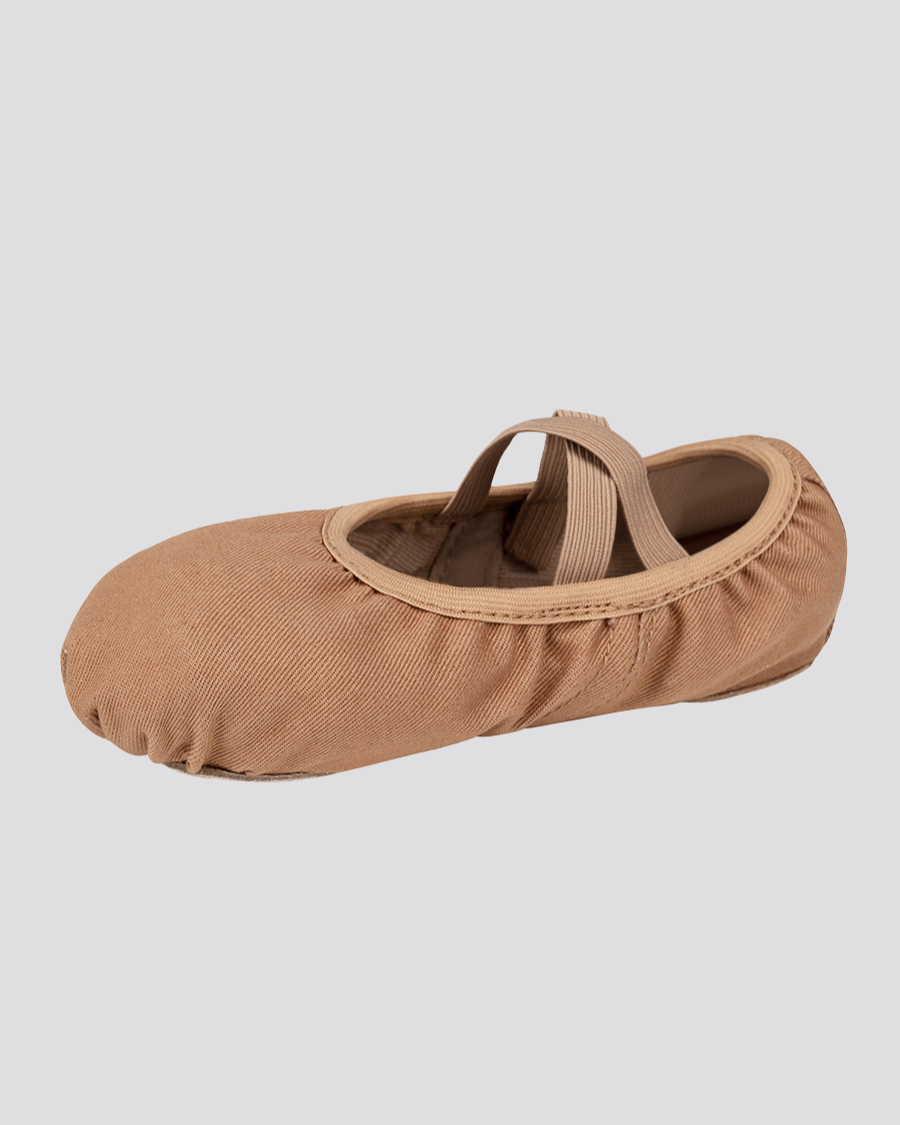
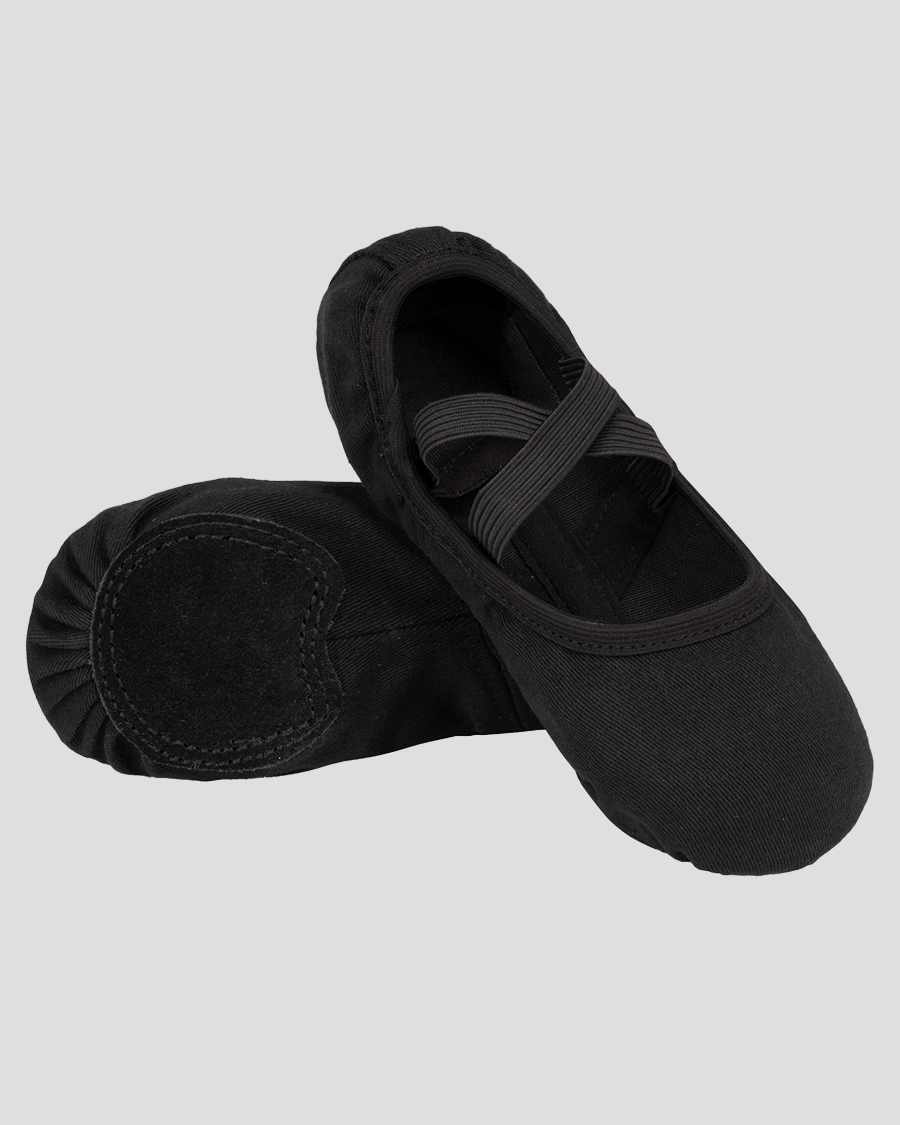
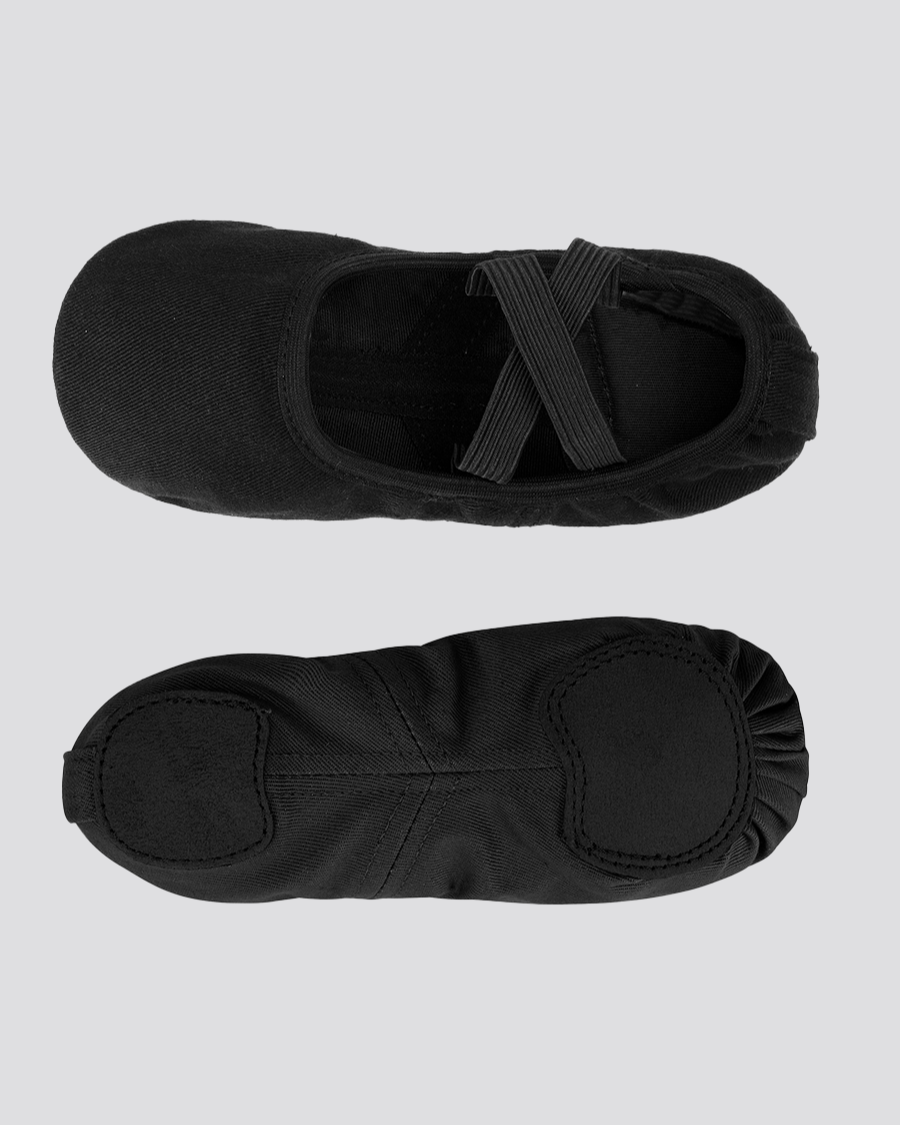
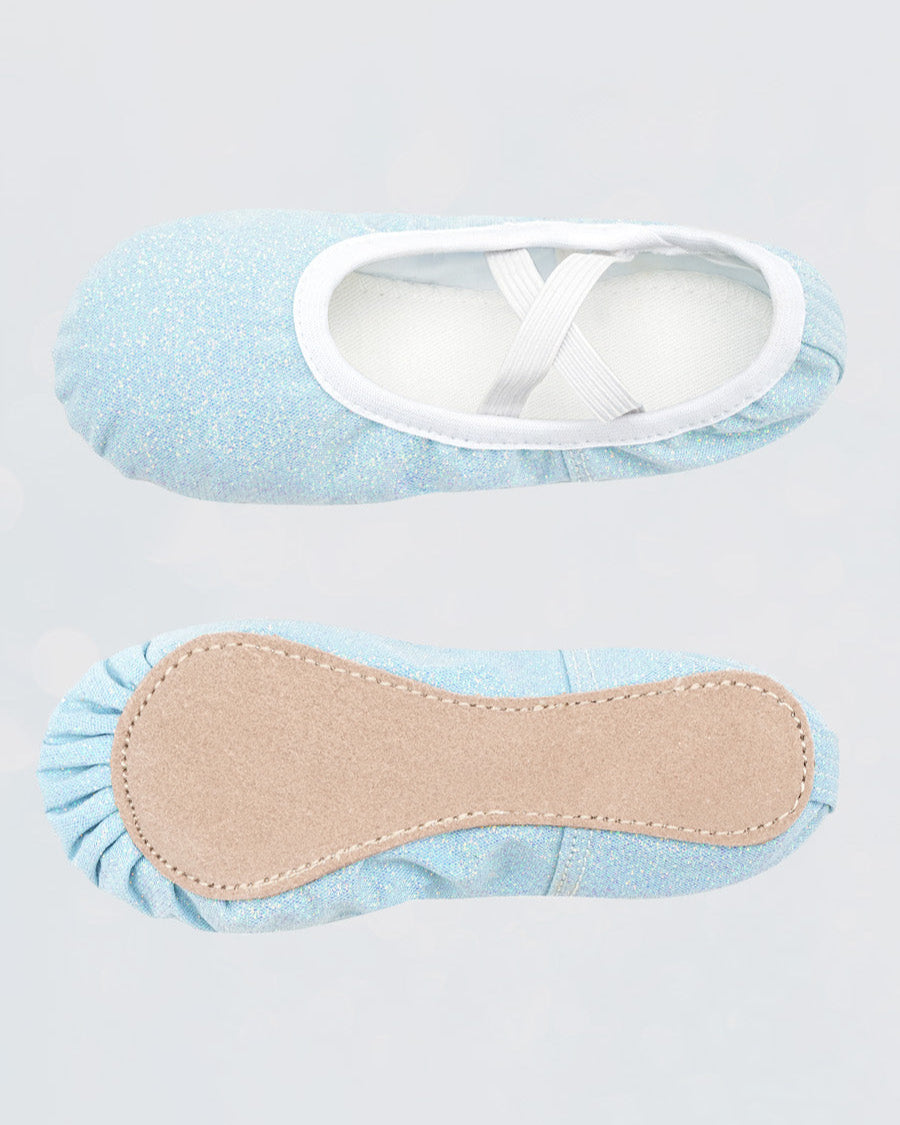
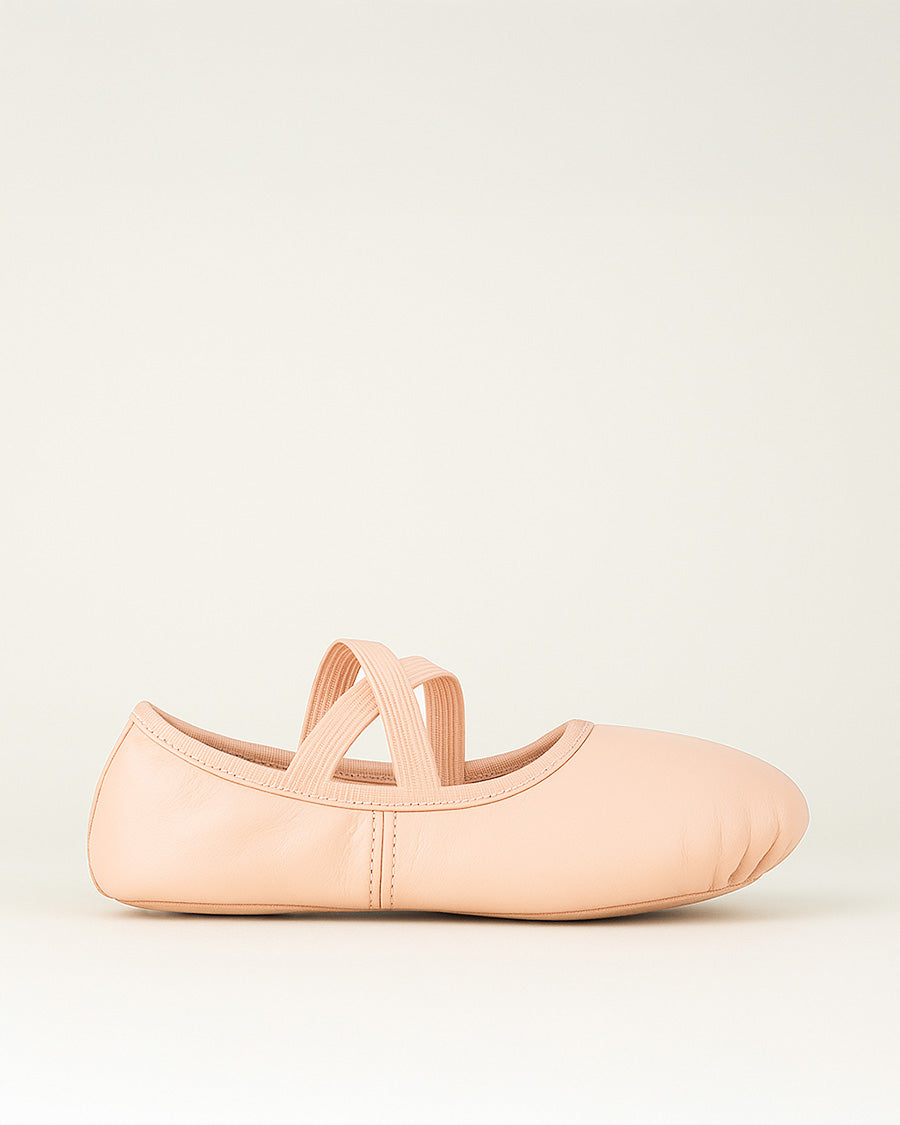
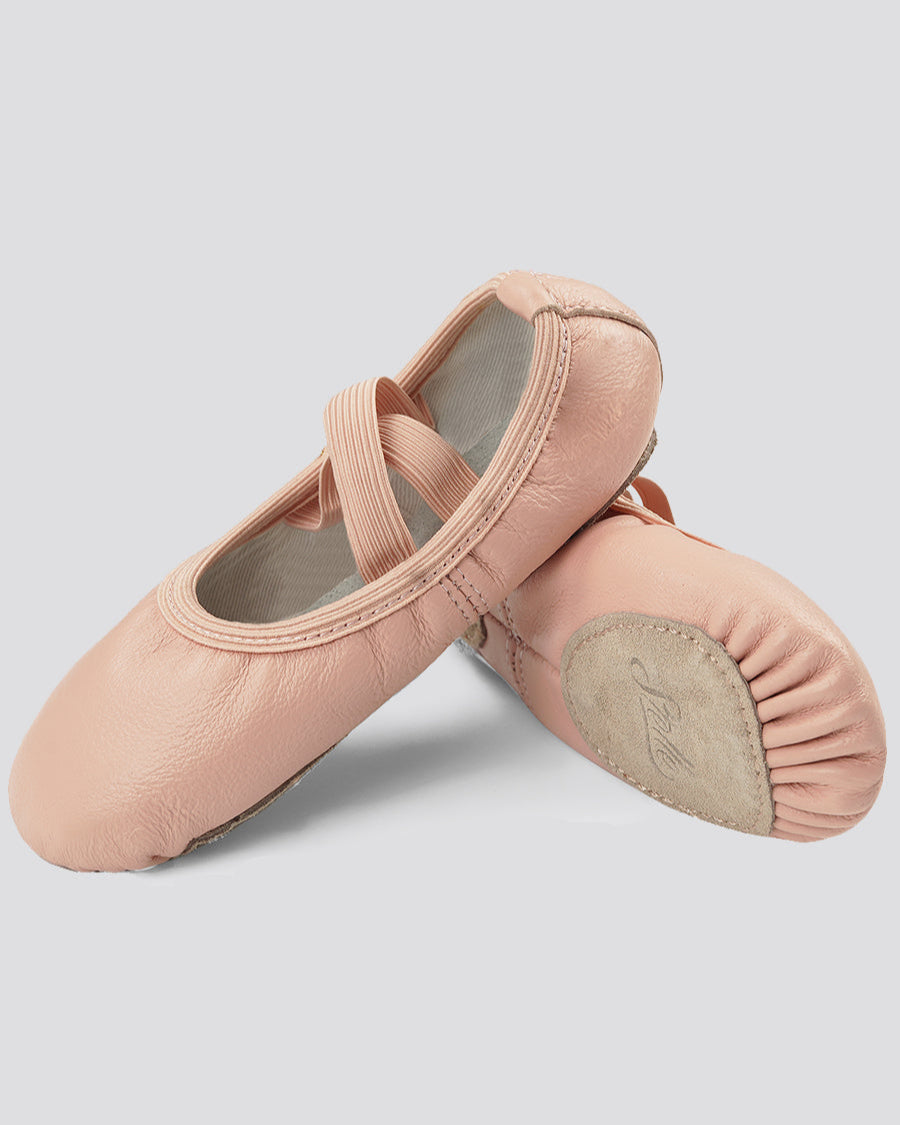
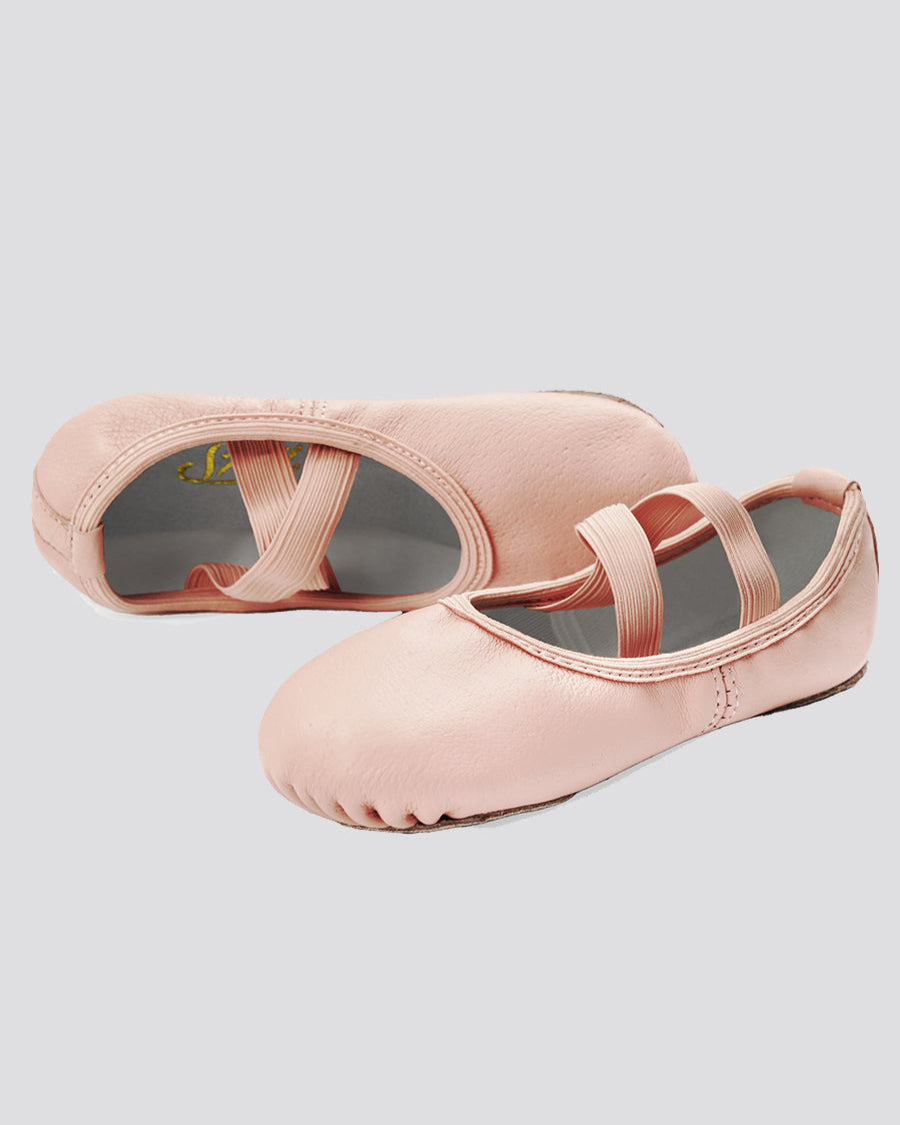
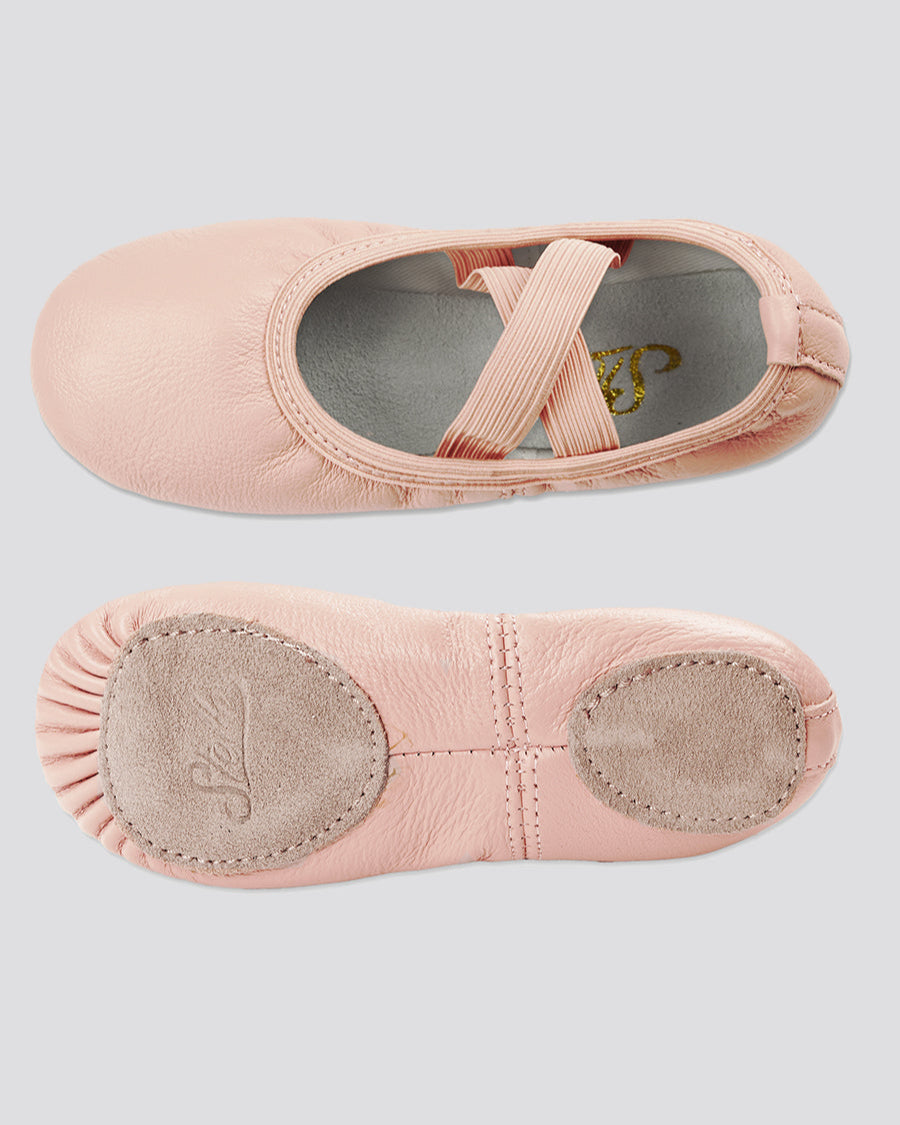
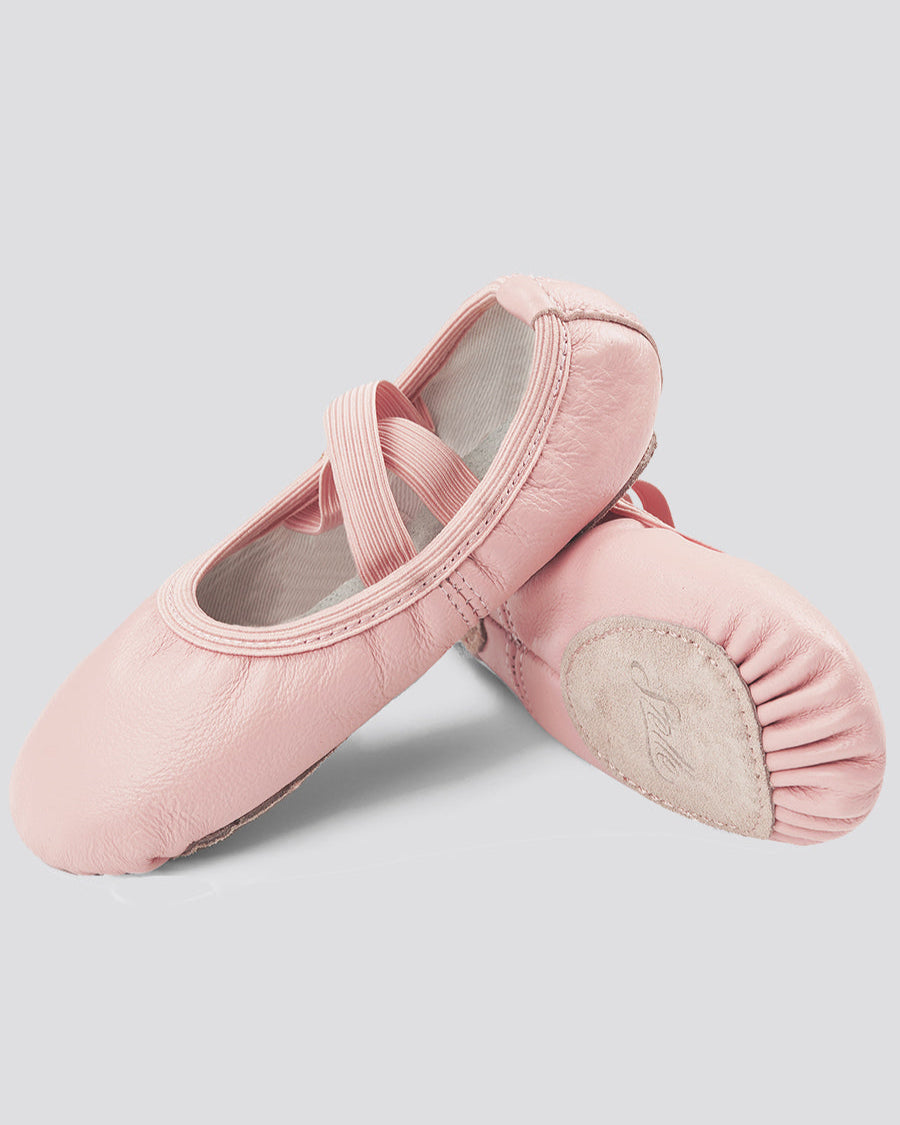
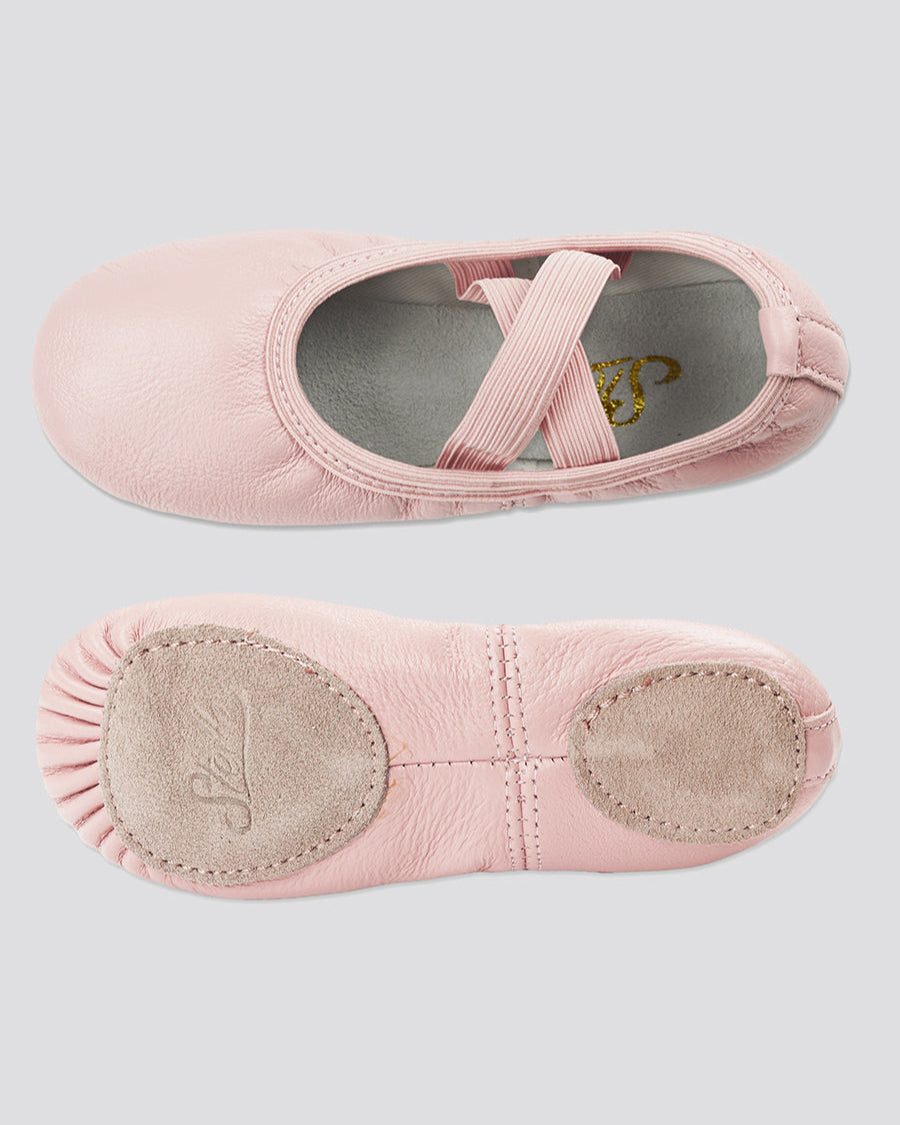
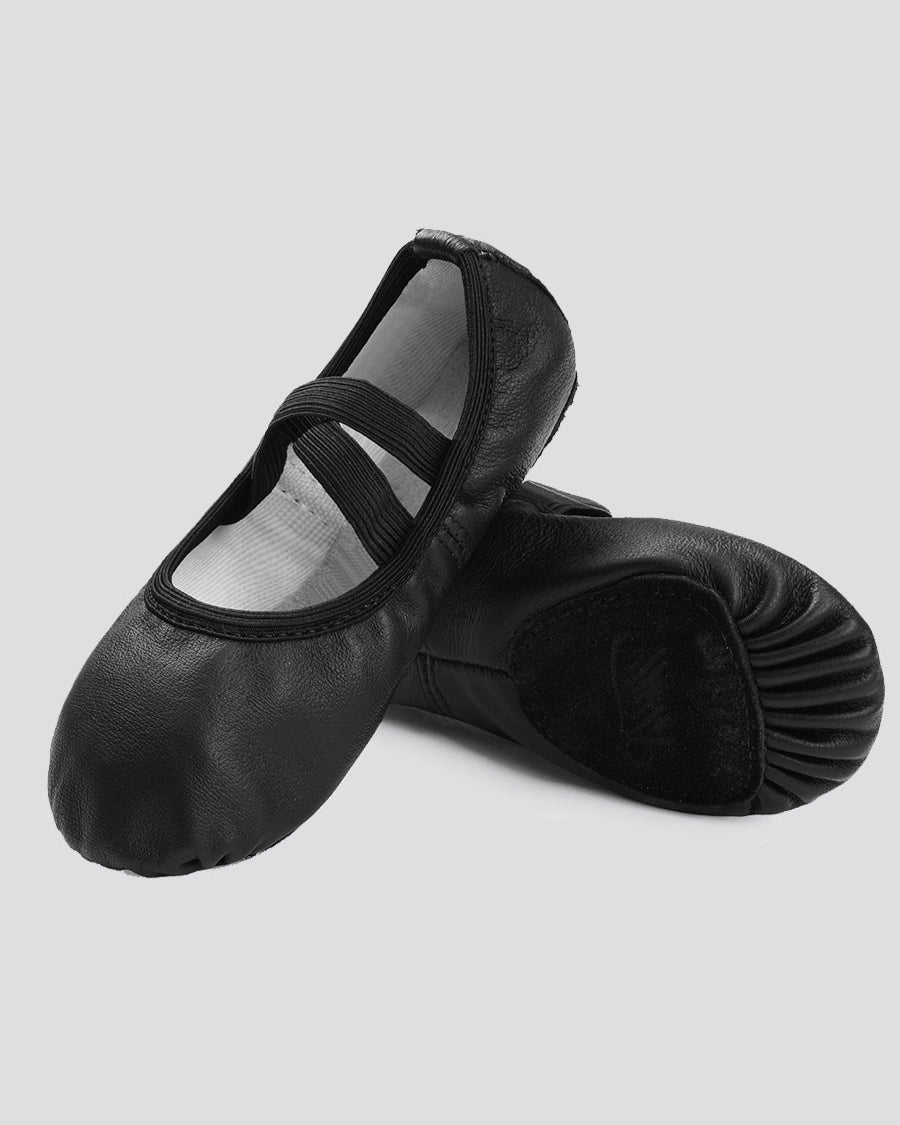
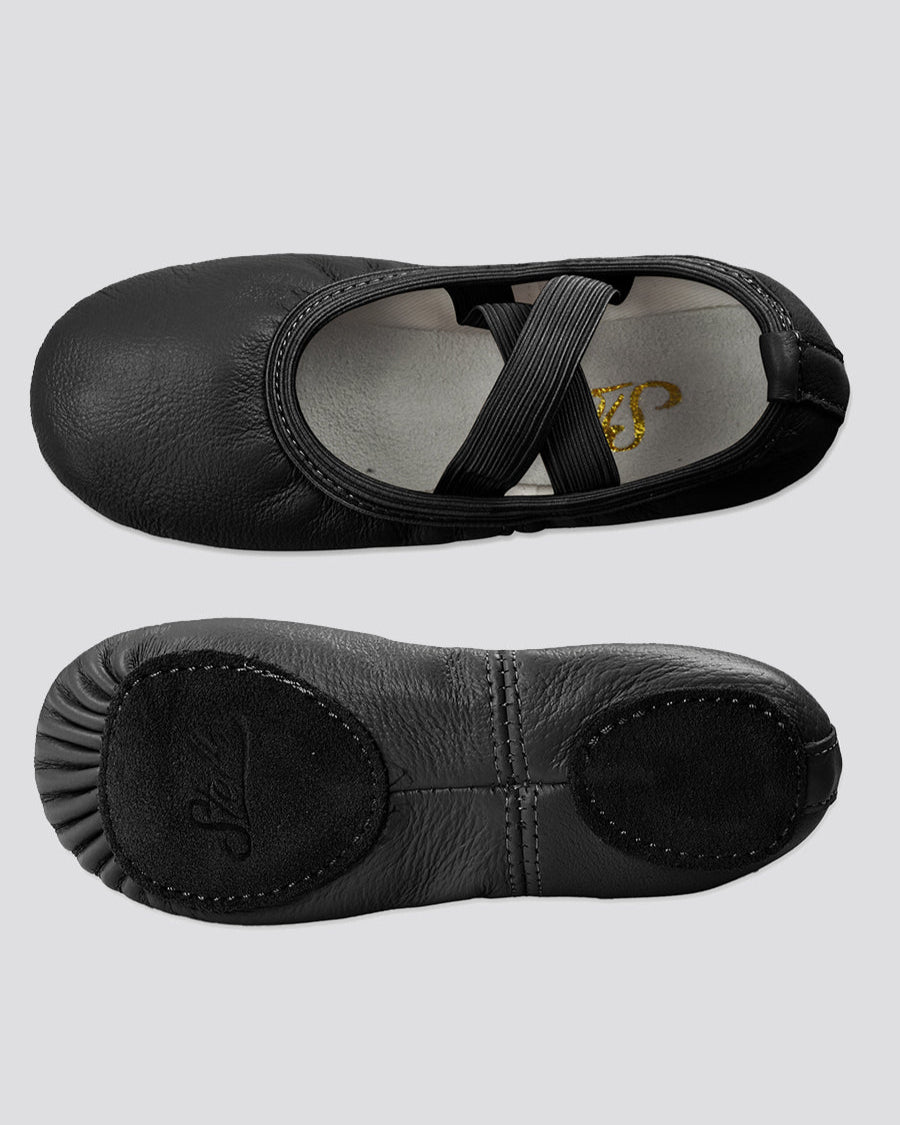
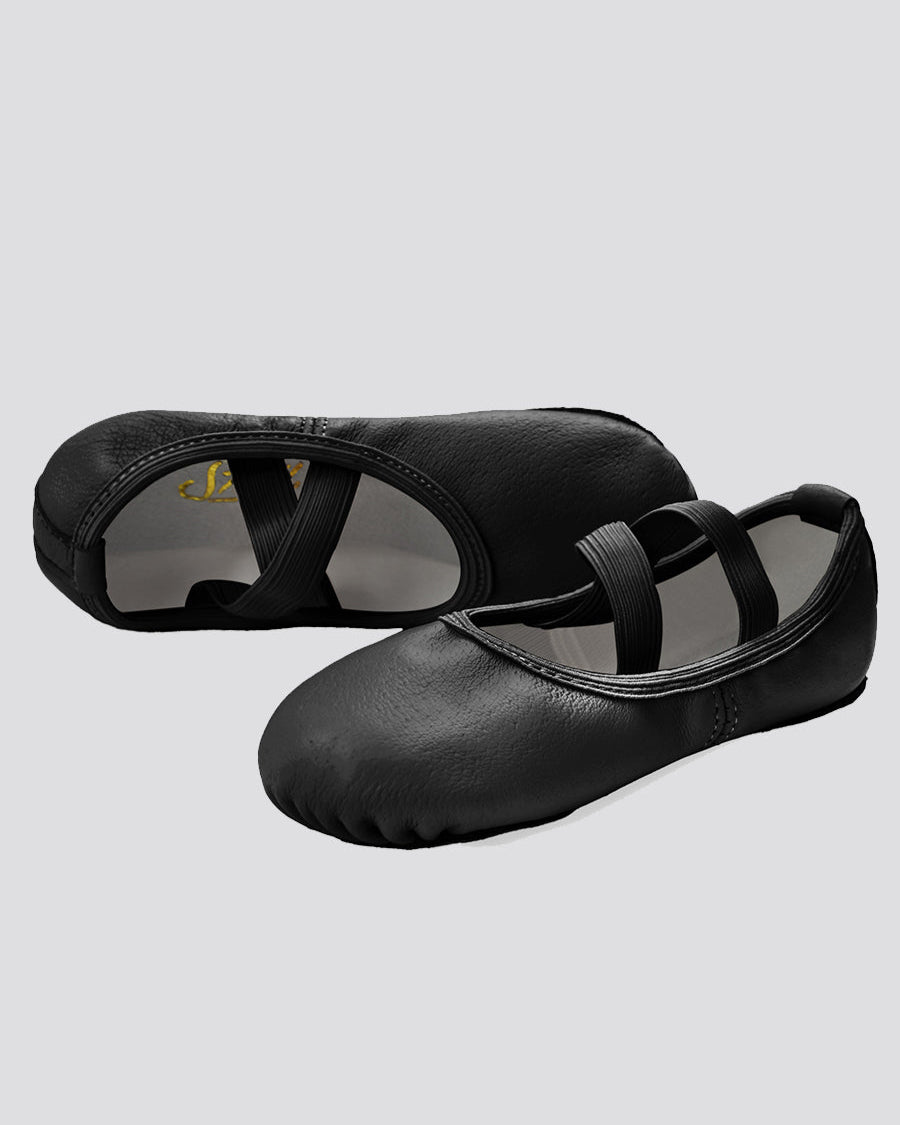
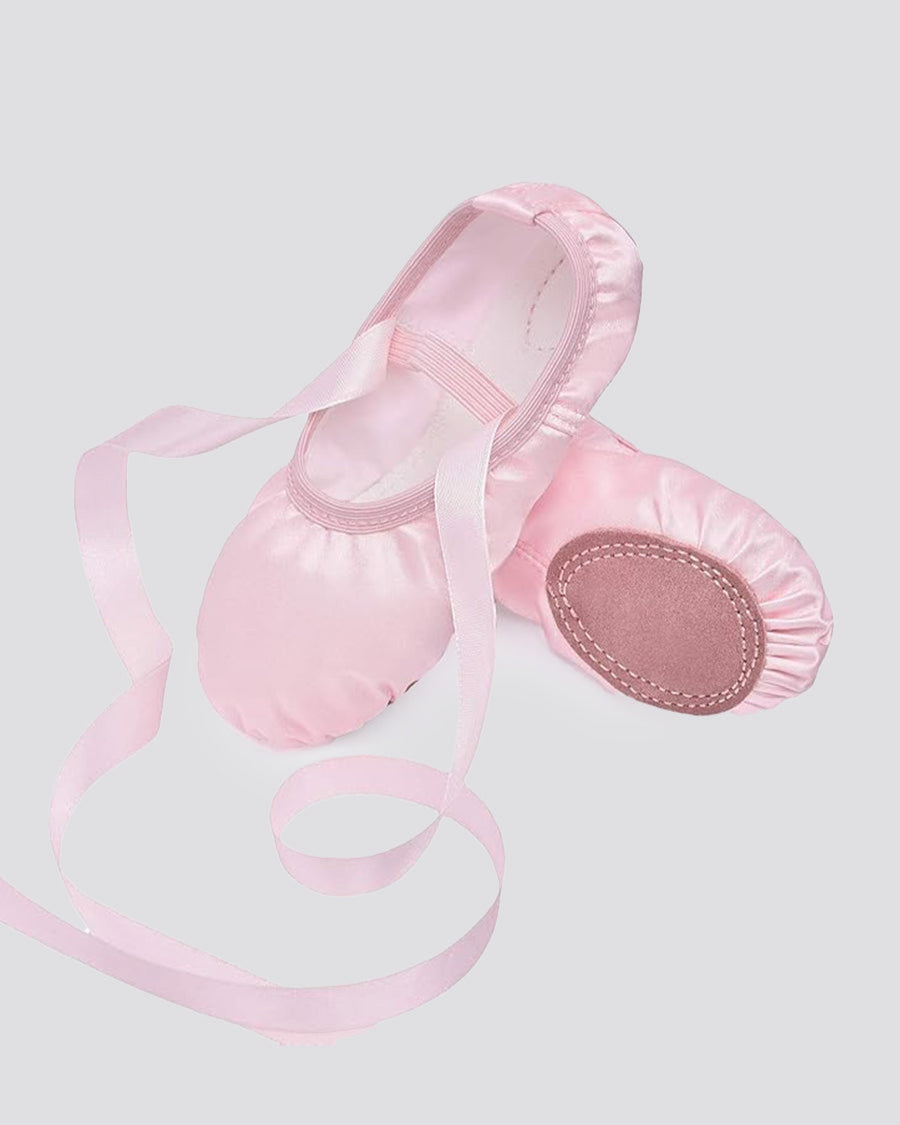
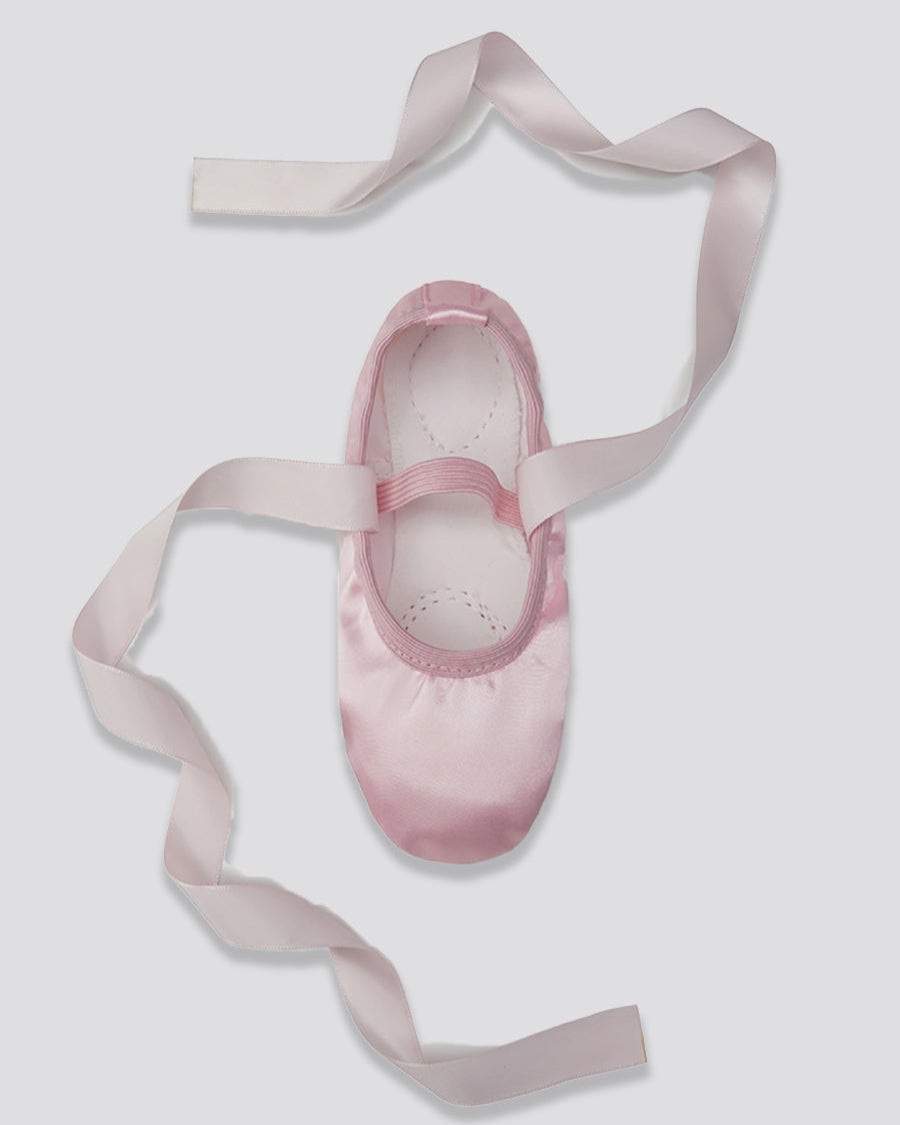
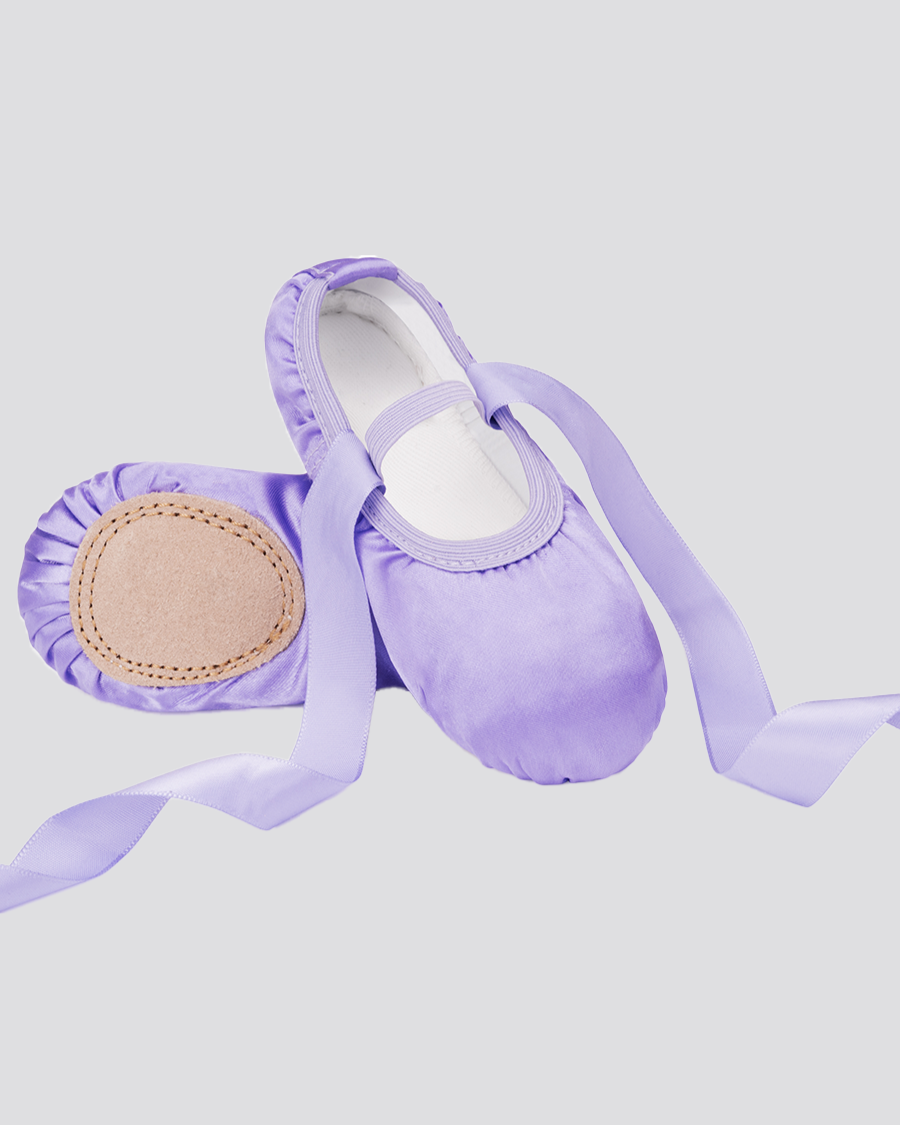
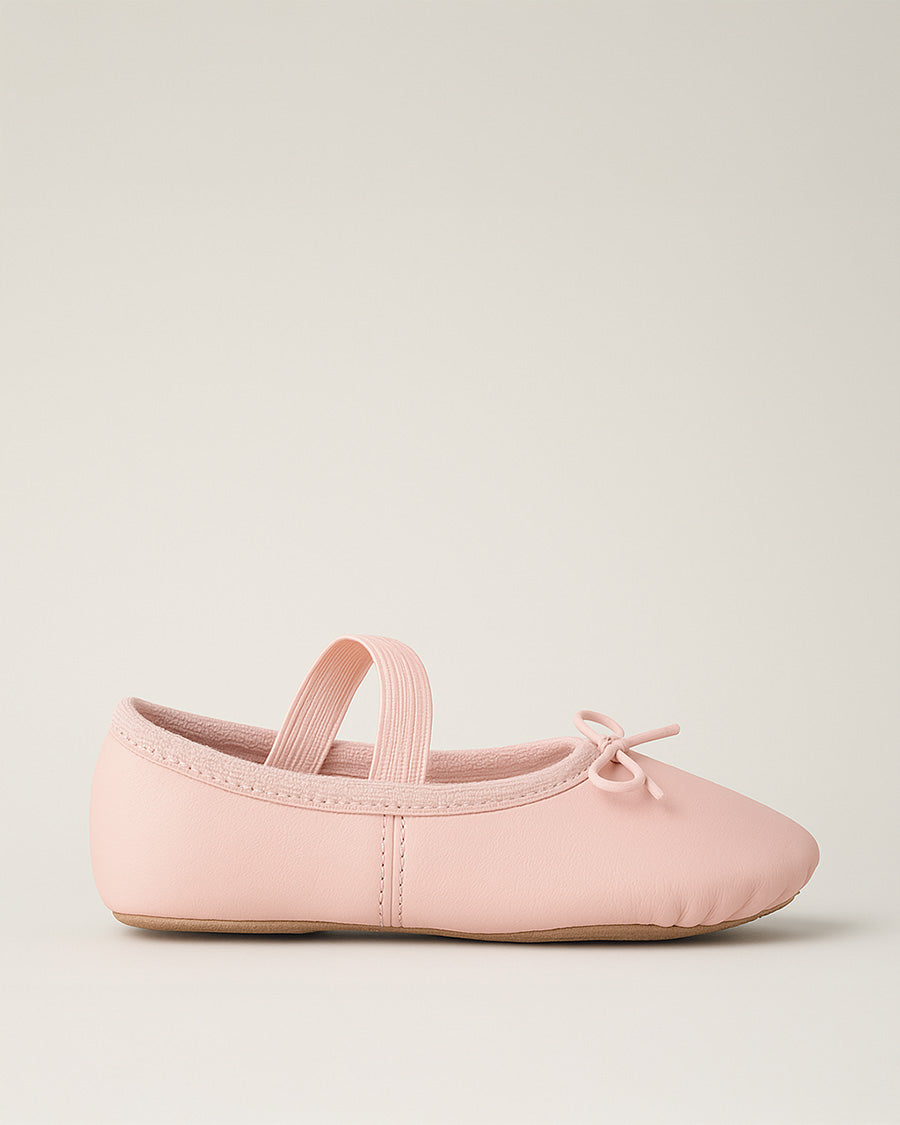
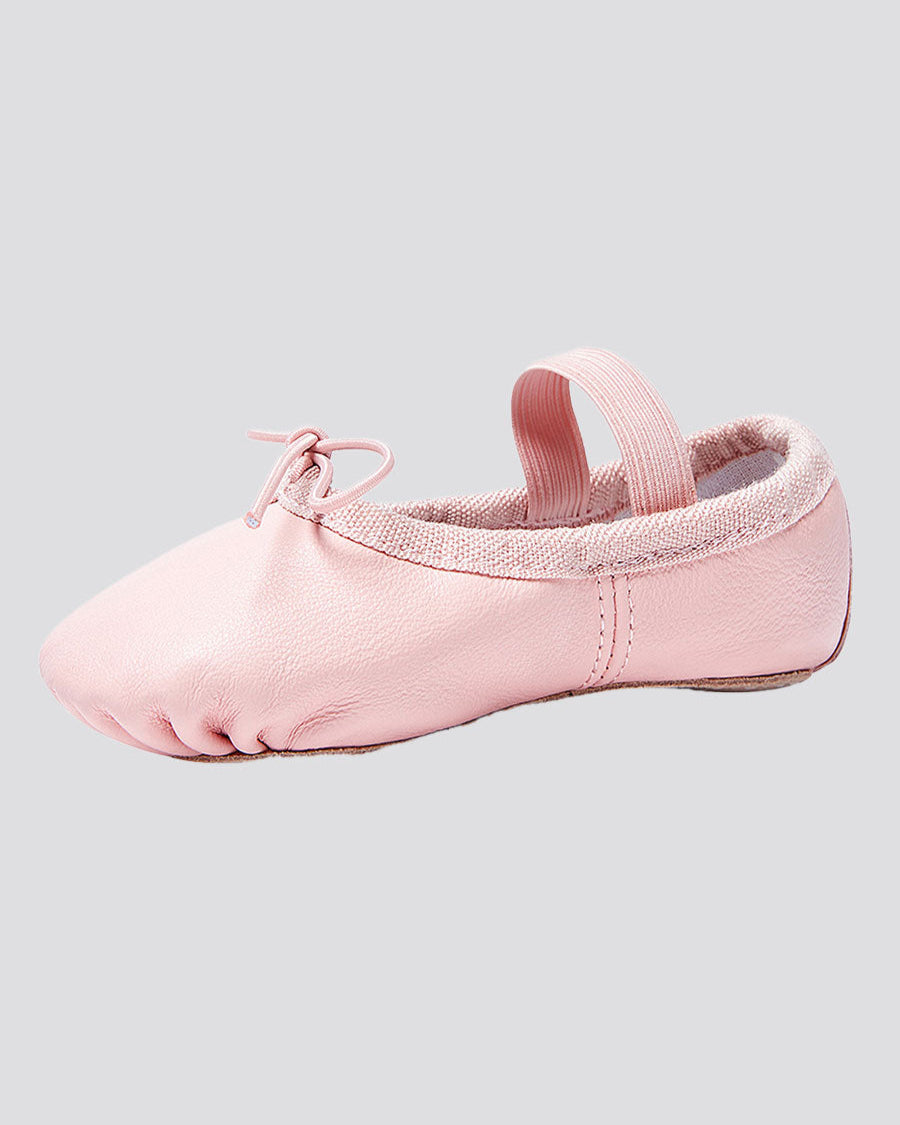
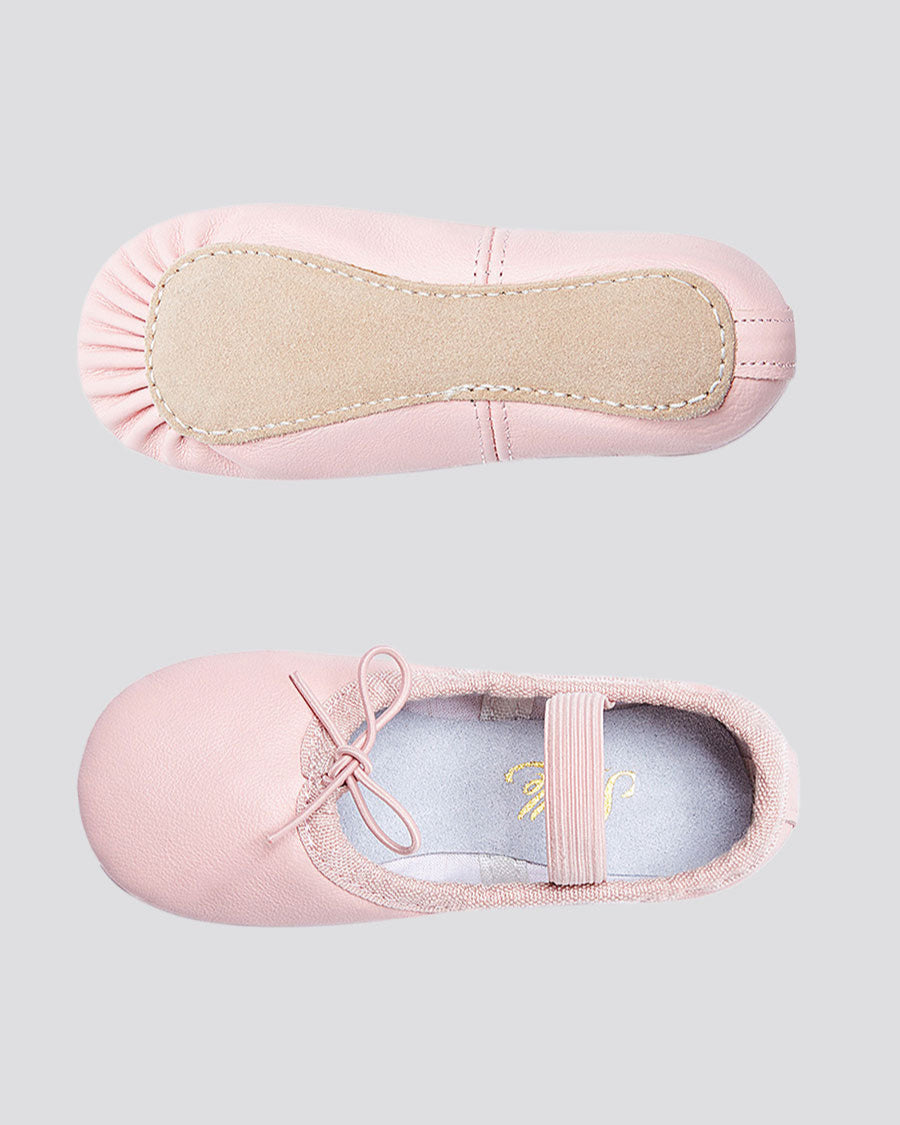
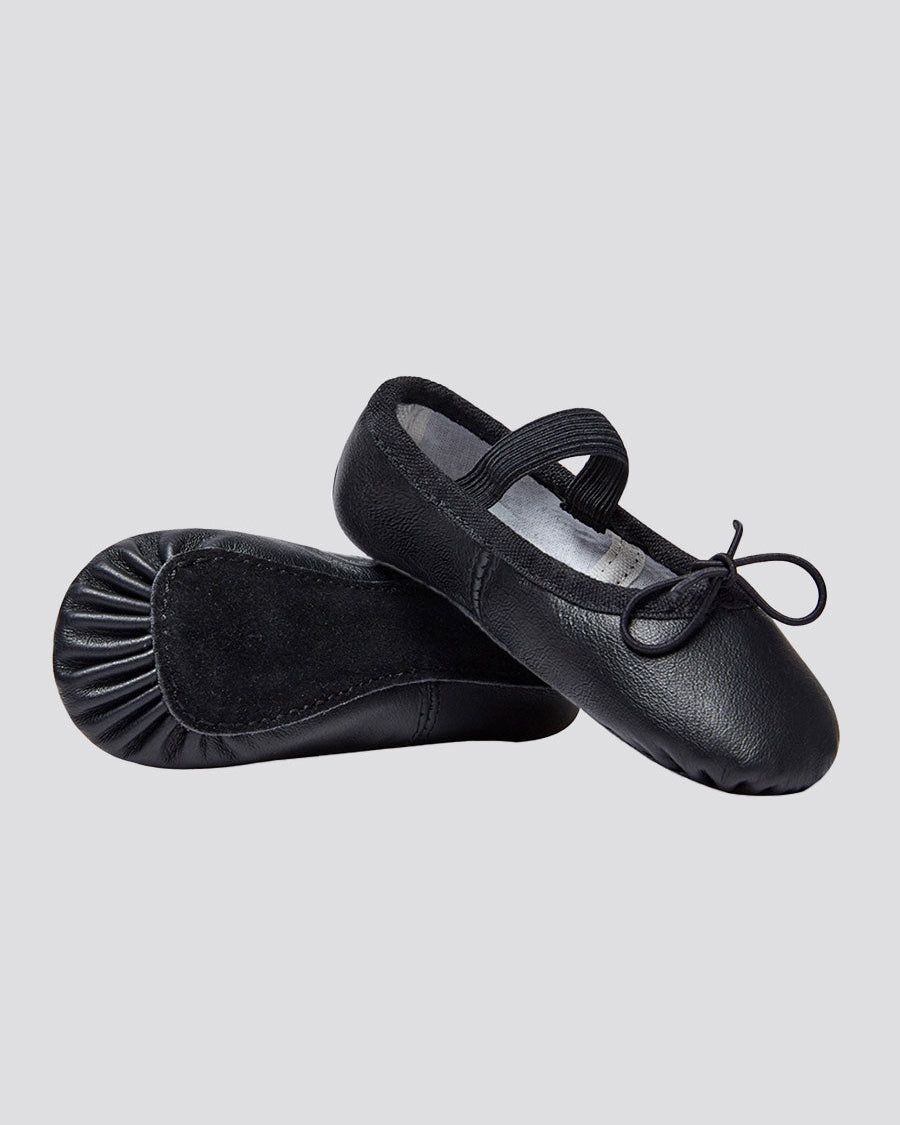
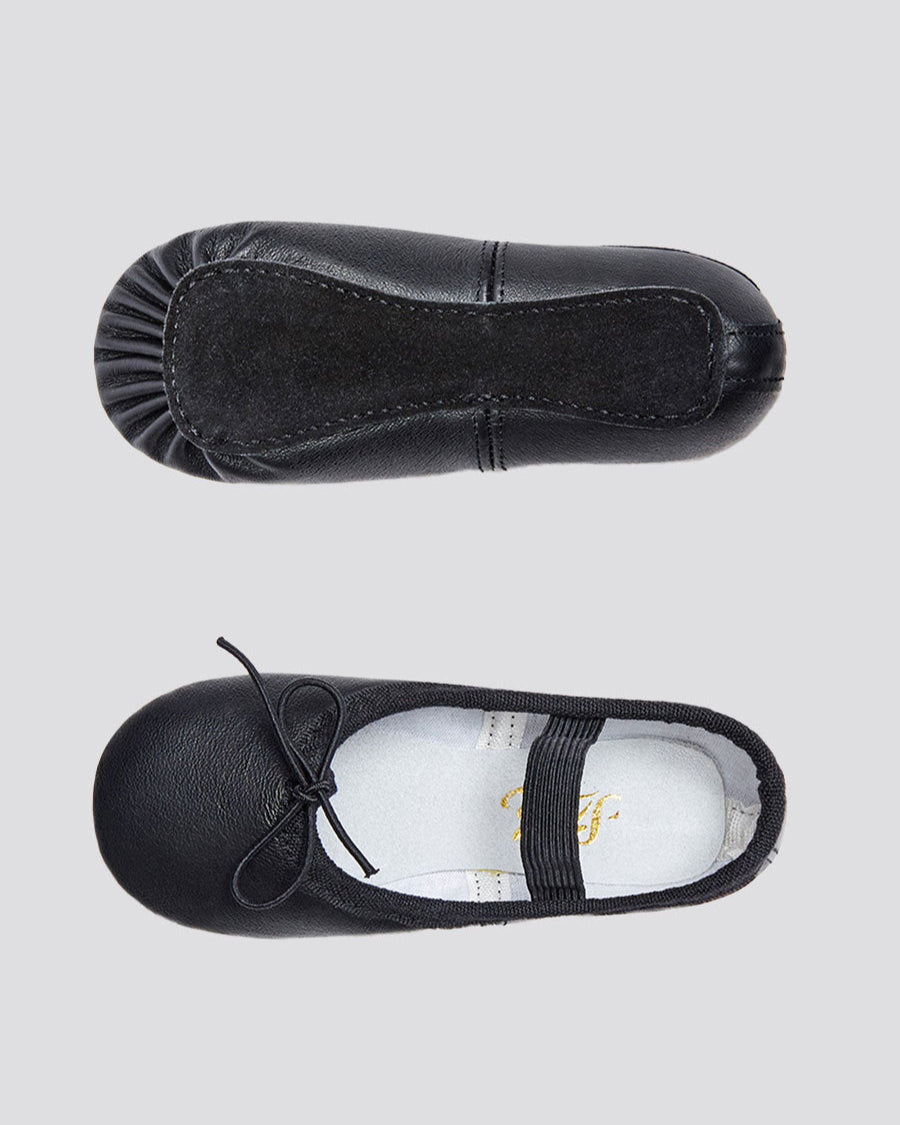
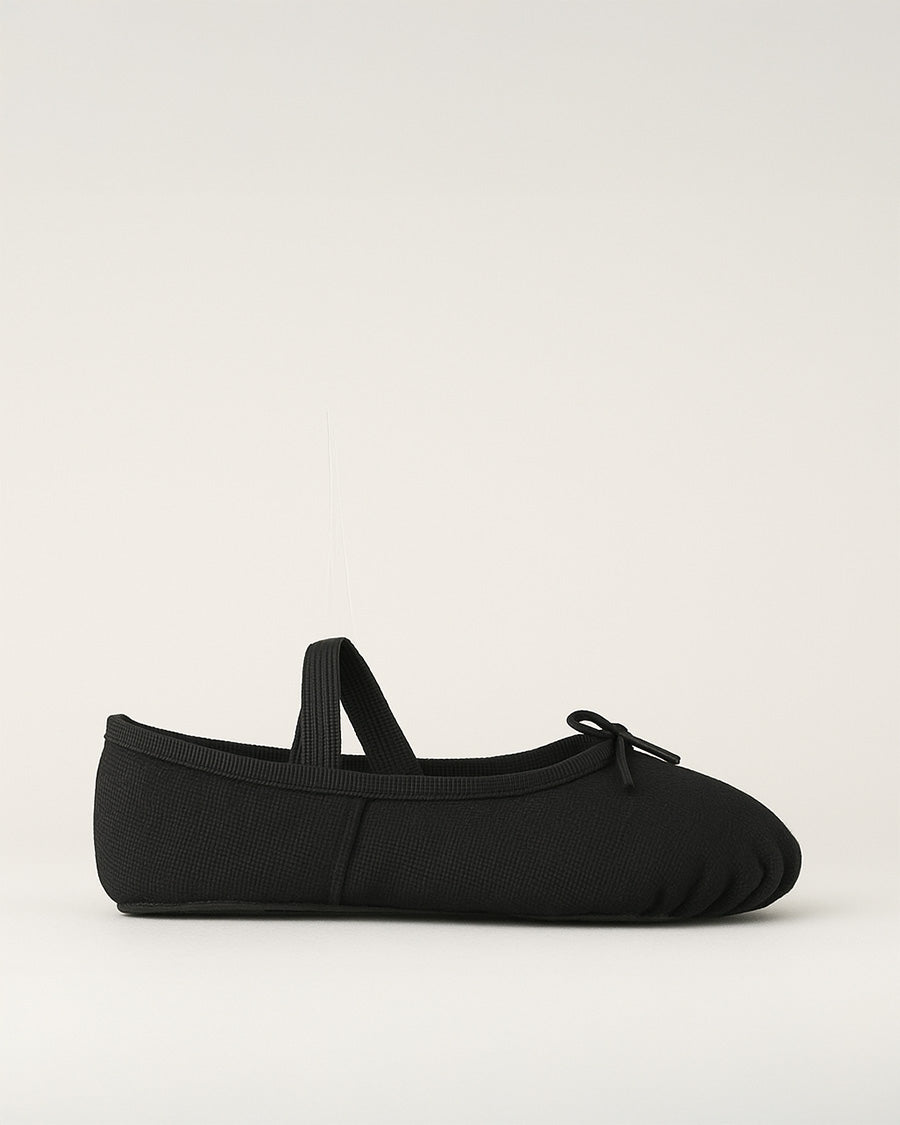
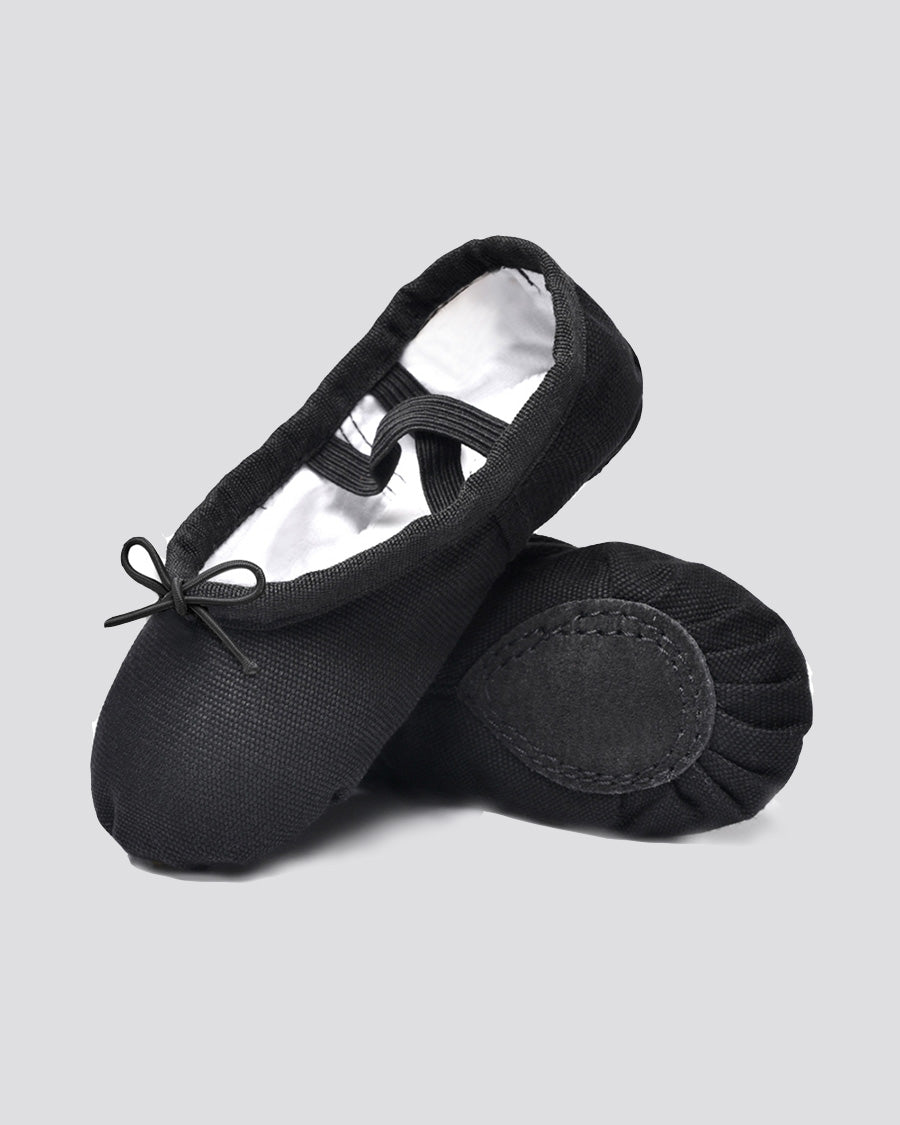
It's pretty intuitive once someone shows you. A full sole ballet shoe has one continuous sole running underneath the foot from heel to toe. A split sole has separate sole pads under the ball of the foot and the heel, leaving the arch area more flexible.
That one difference is what most of the rest comes down to:
|
Full sole ballet shoes |
Split sole ballet shoes |
|
|
Support |
More, holds and supports the whole foot |
Less structured, lets the foot move freely |
|
Flexibility |
A bit of stiffness, on purpose |
Bends freely with the foot |
|
Often suits |
Beginners learning the basics |
Stronger, more experienced dancers |
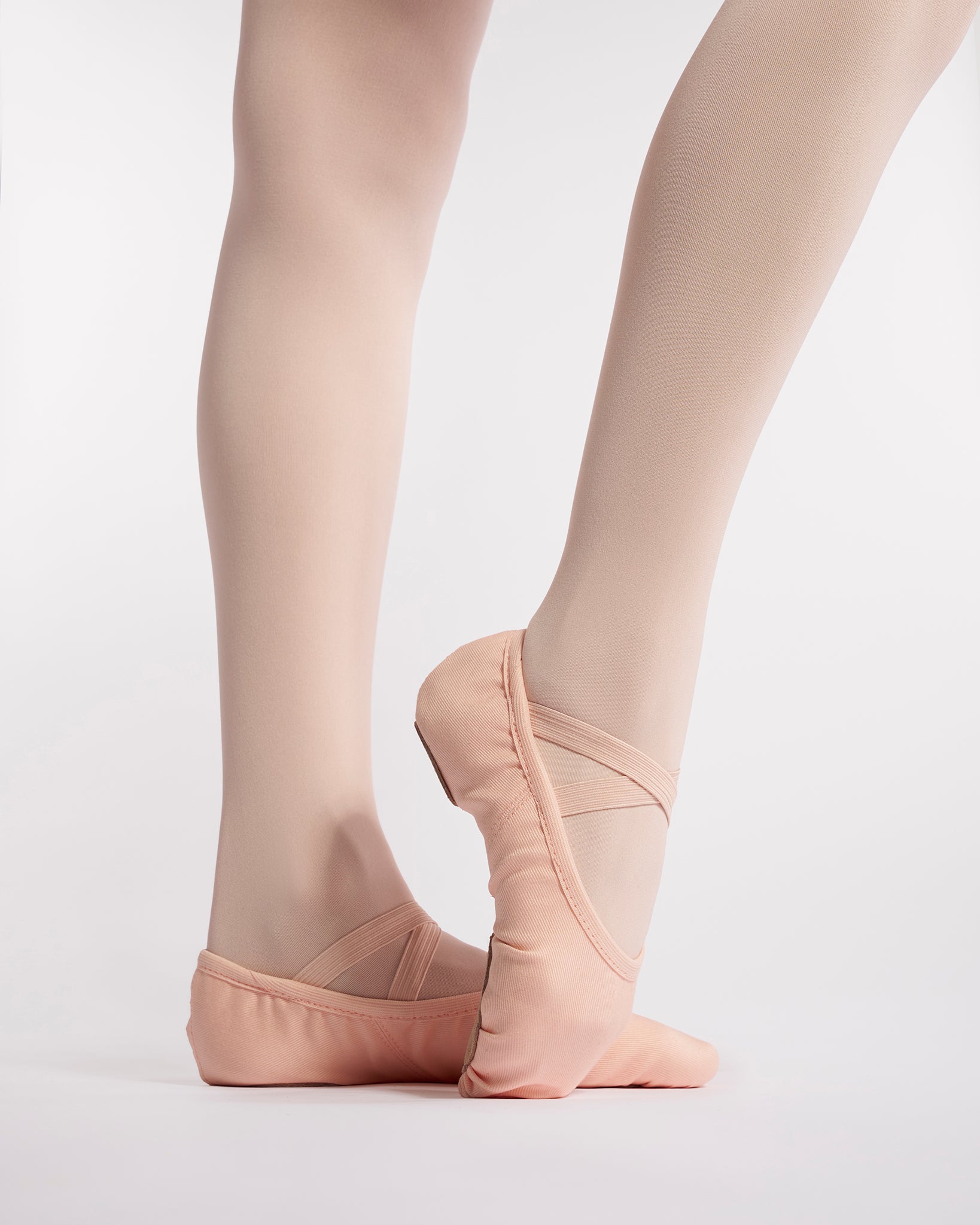
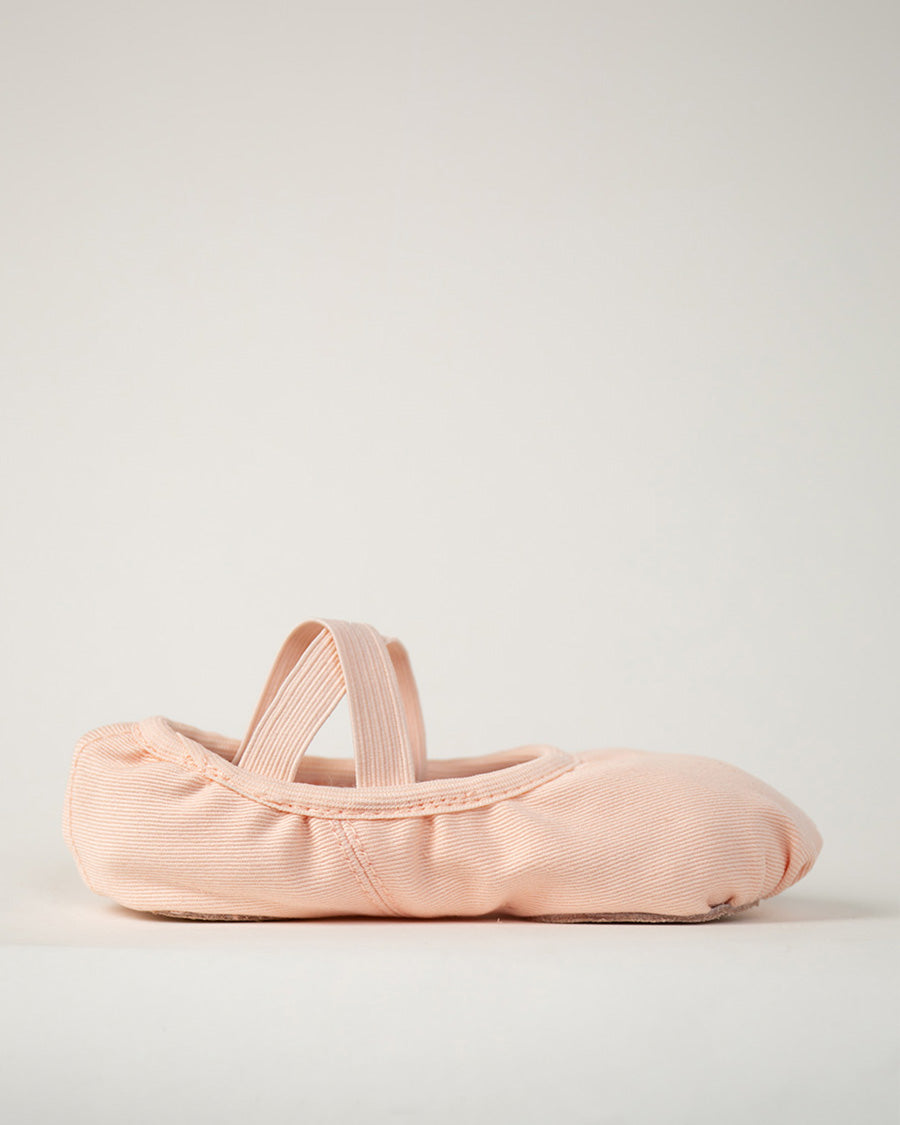
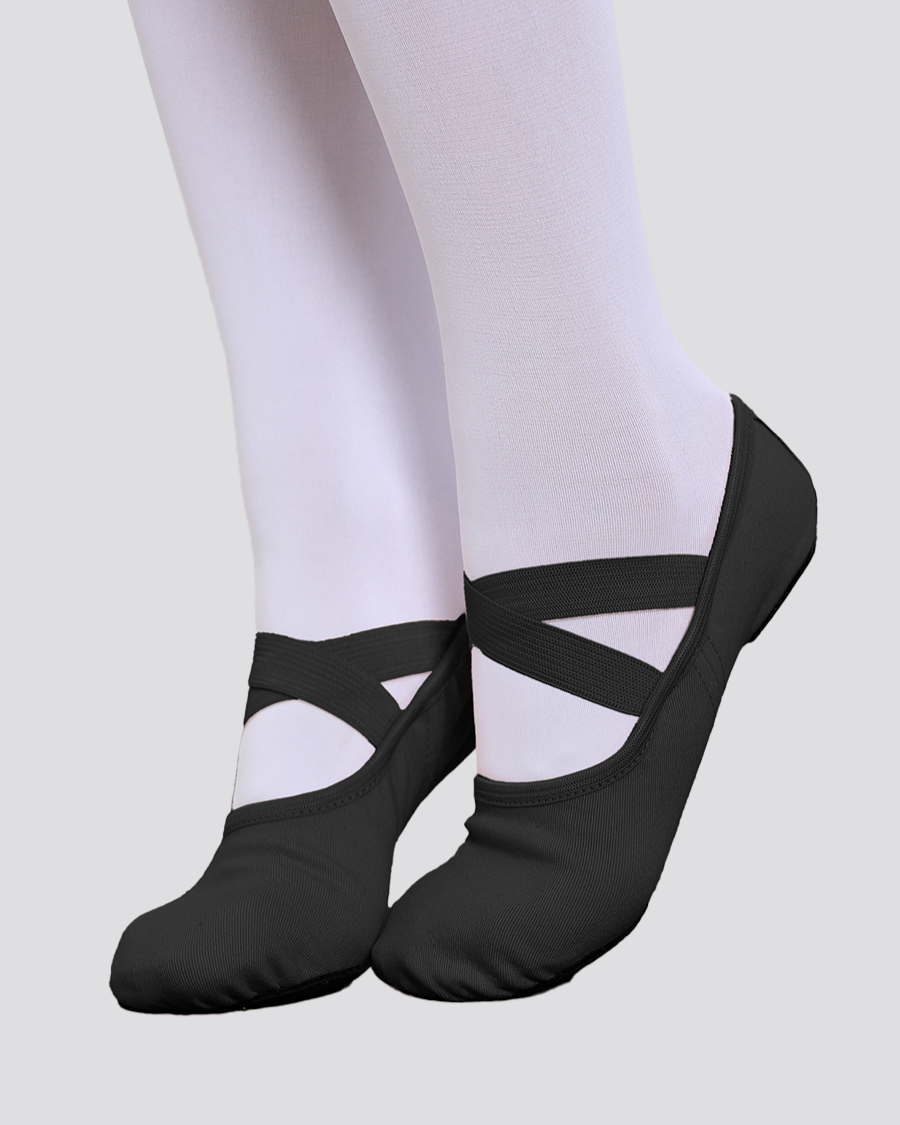
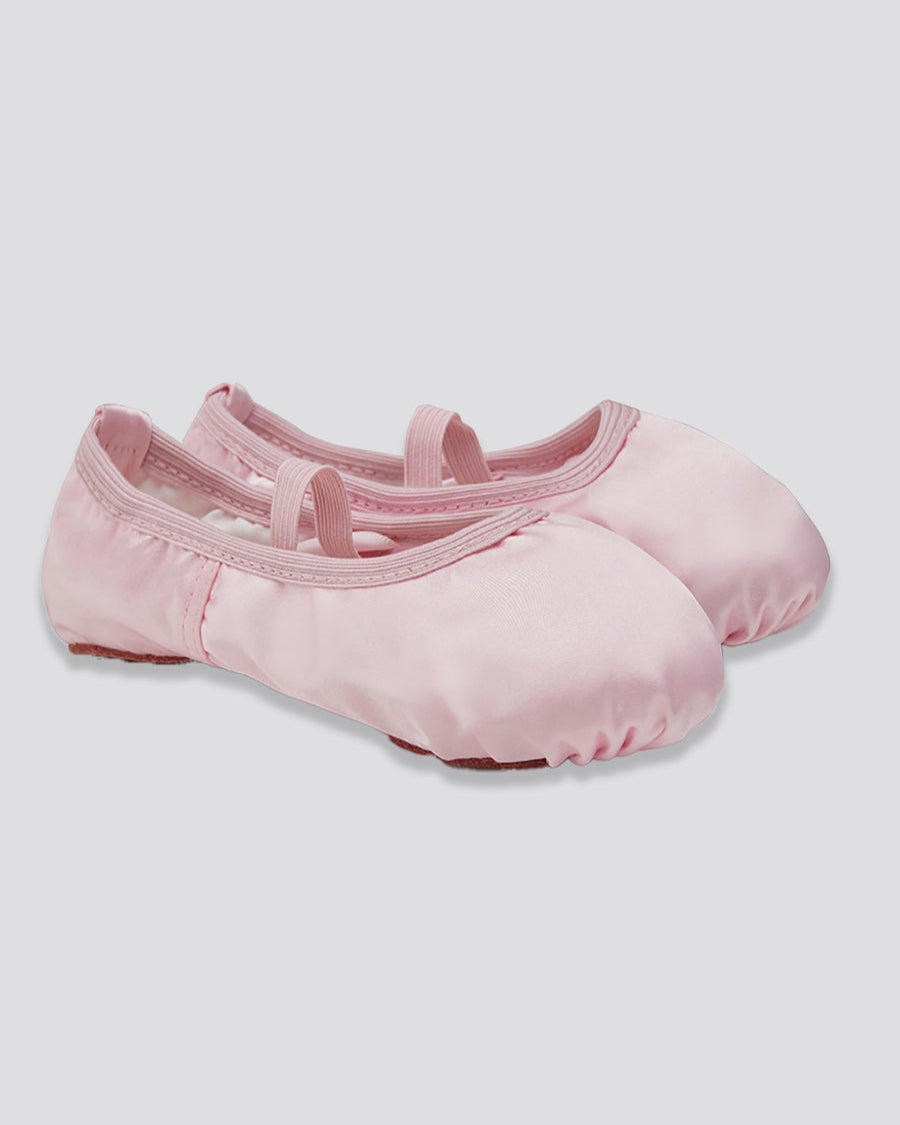
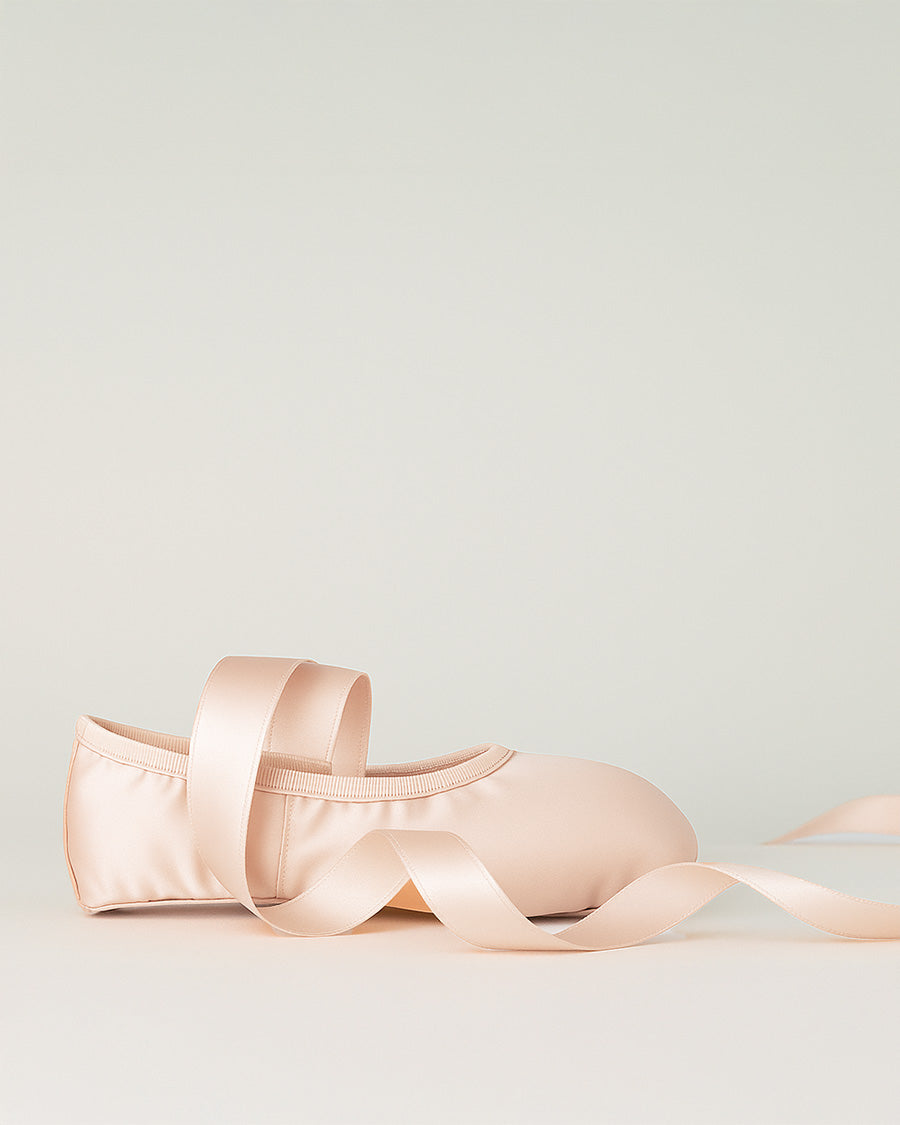
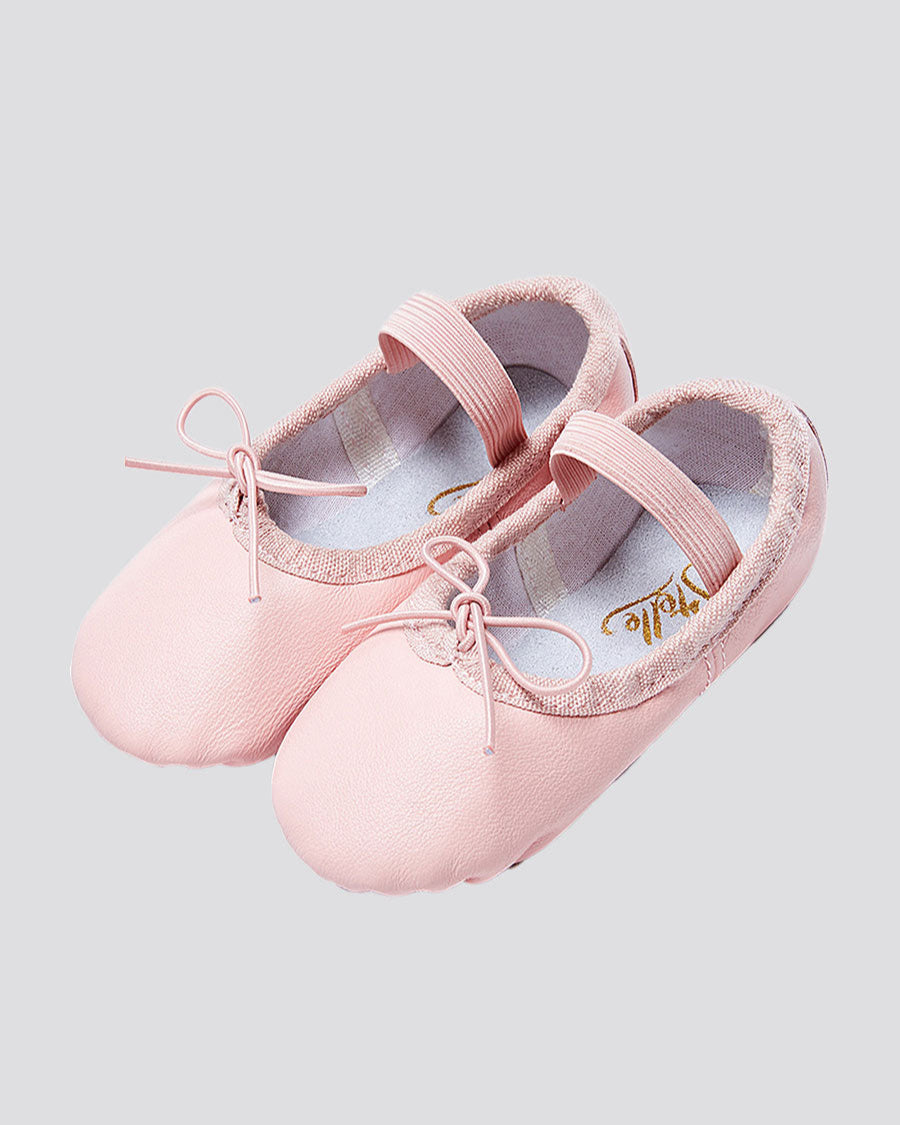
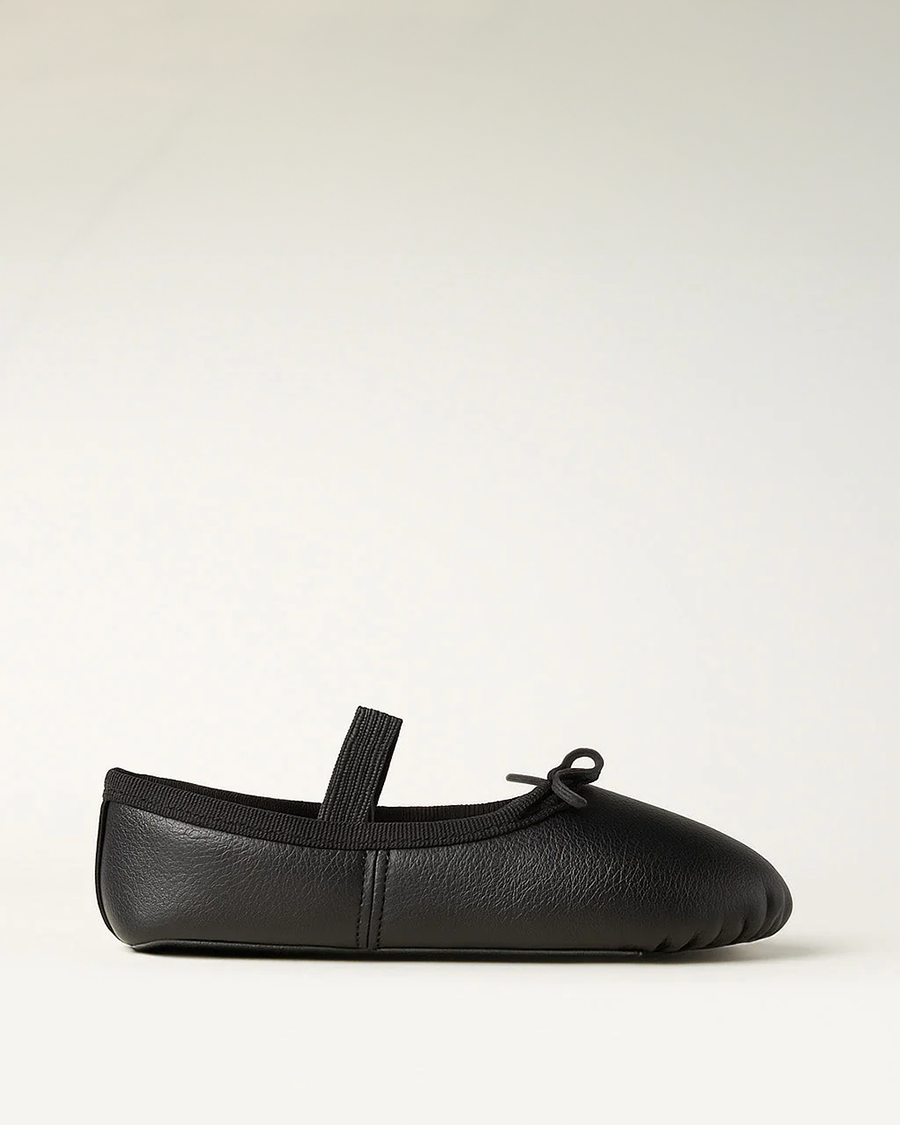
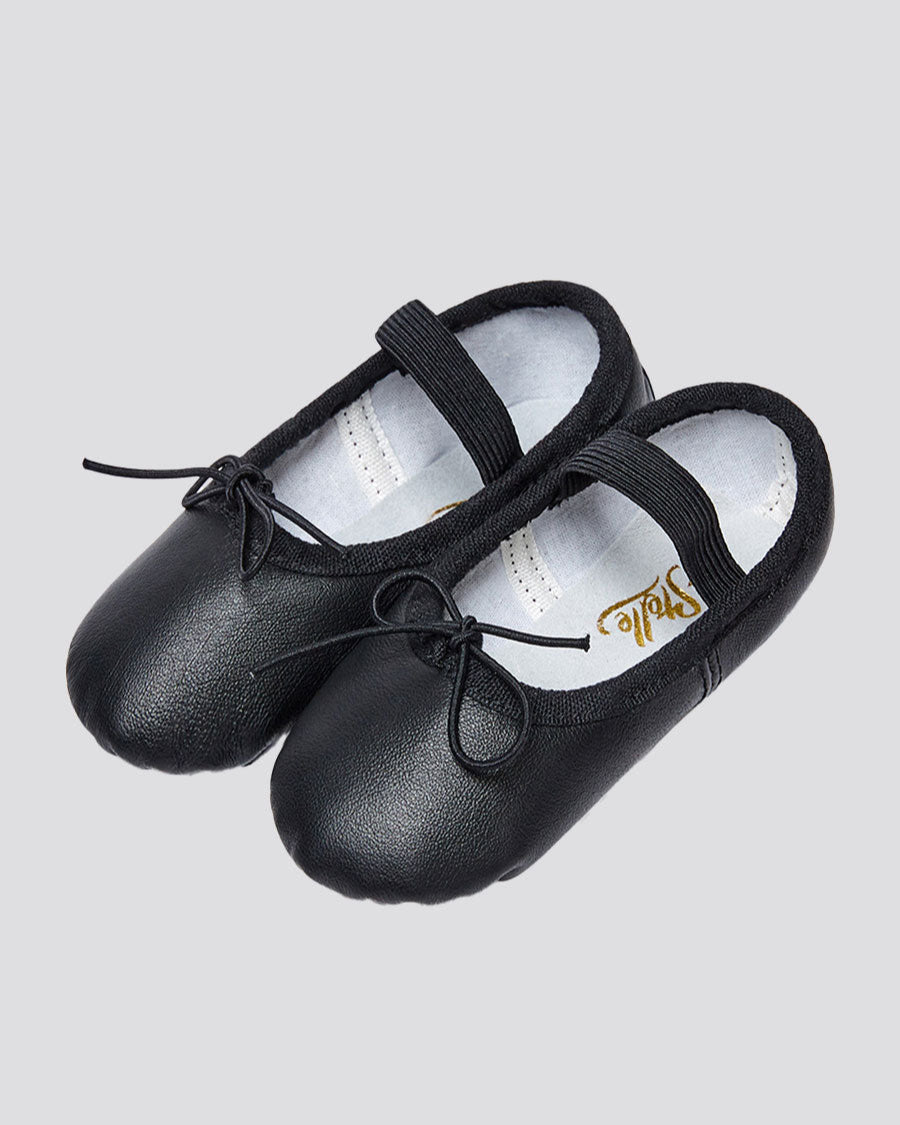
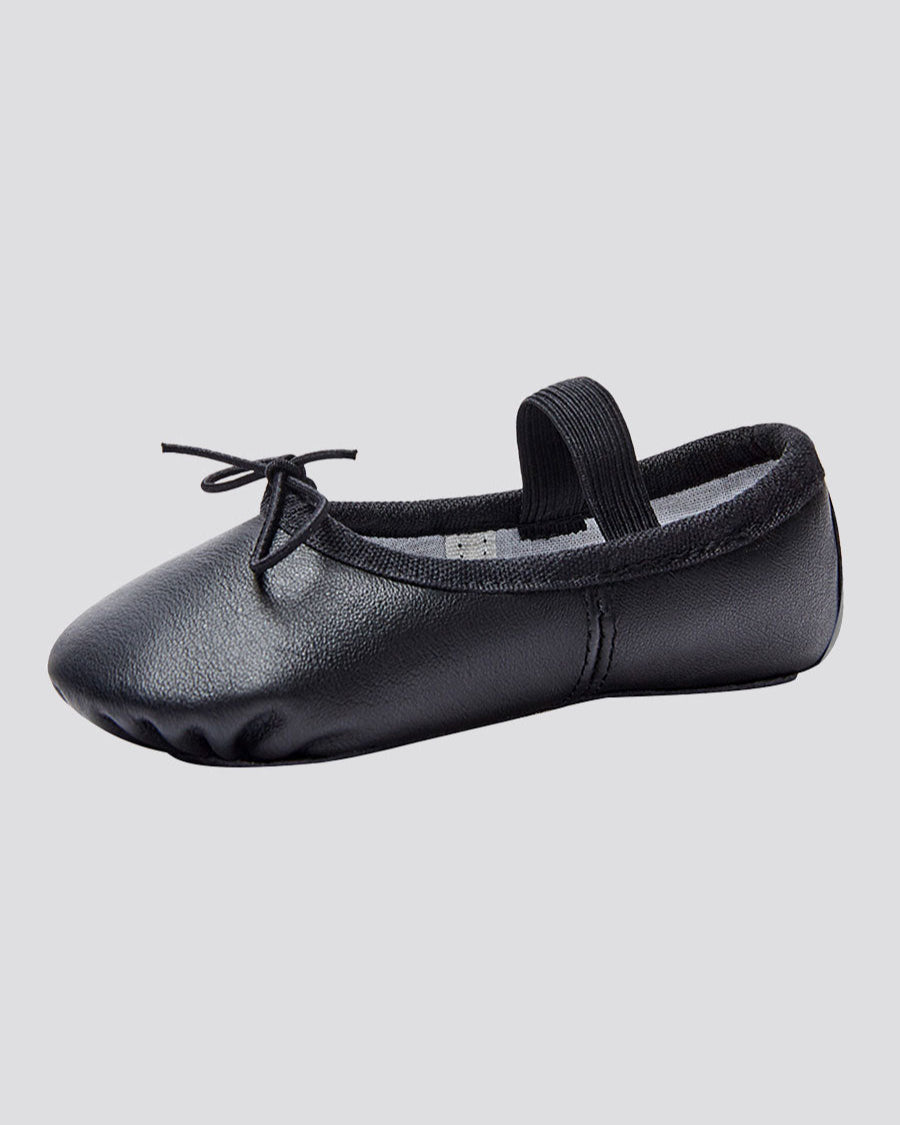
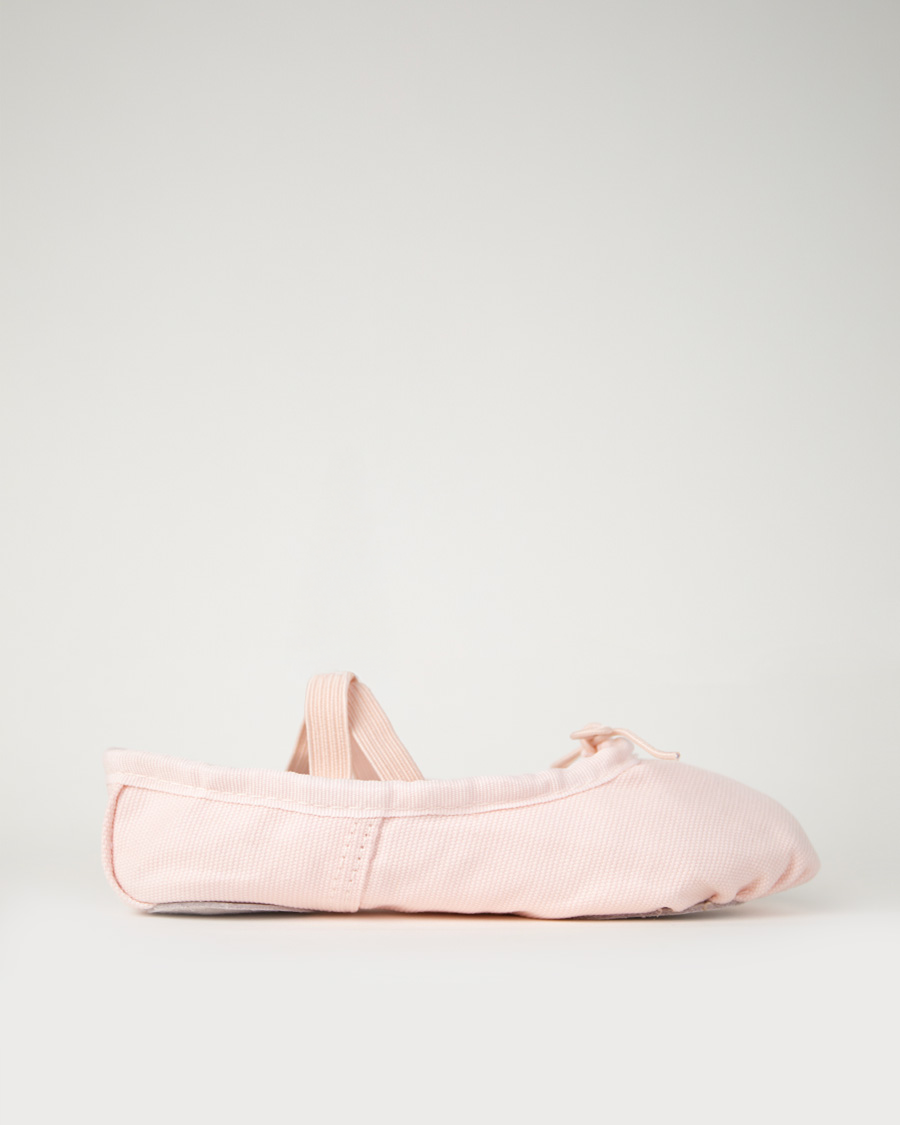
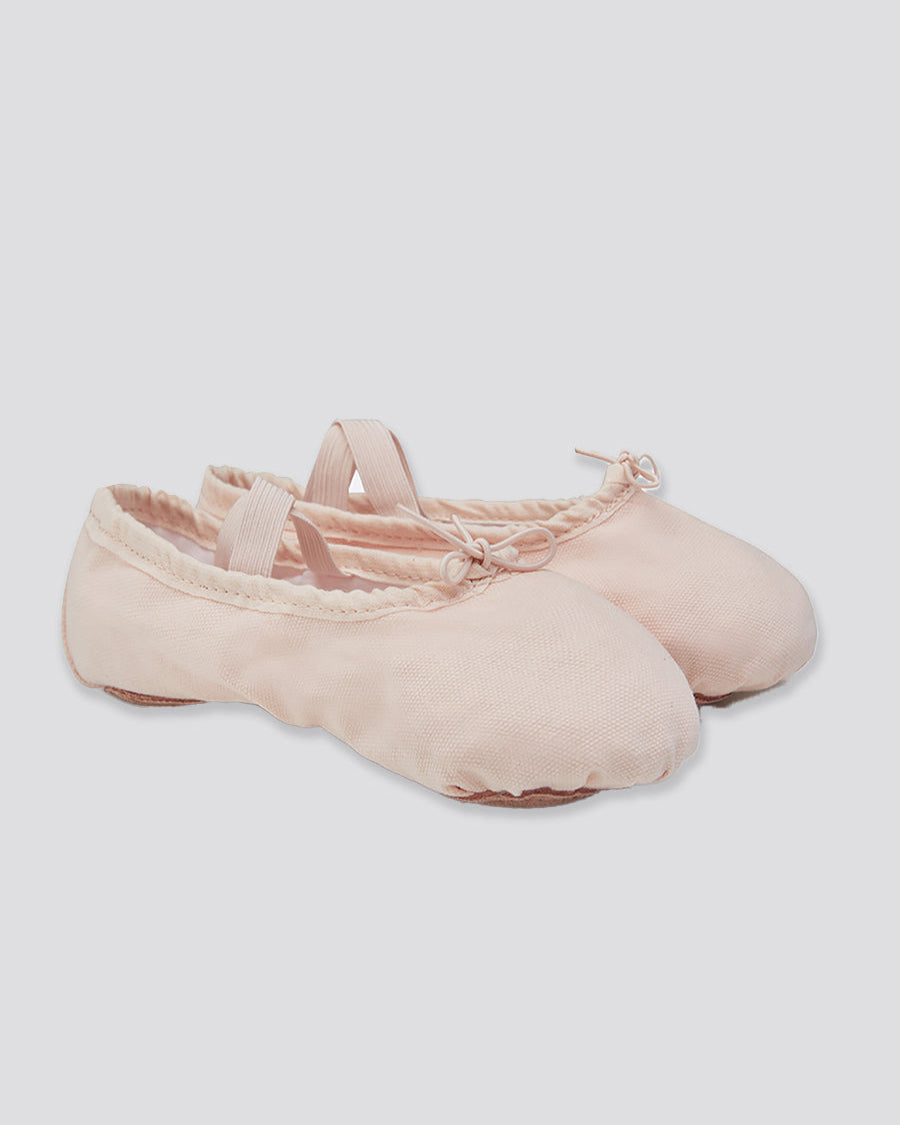
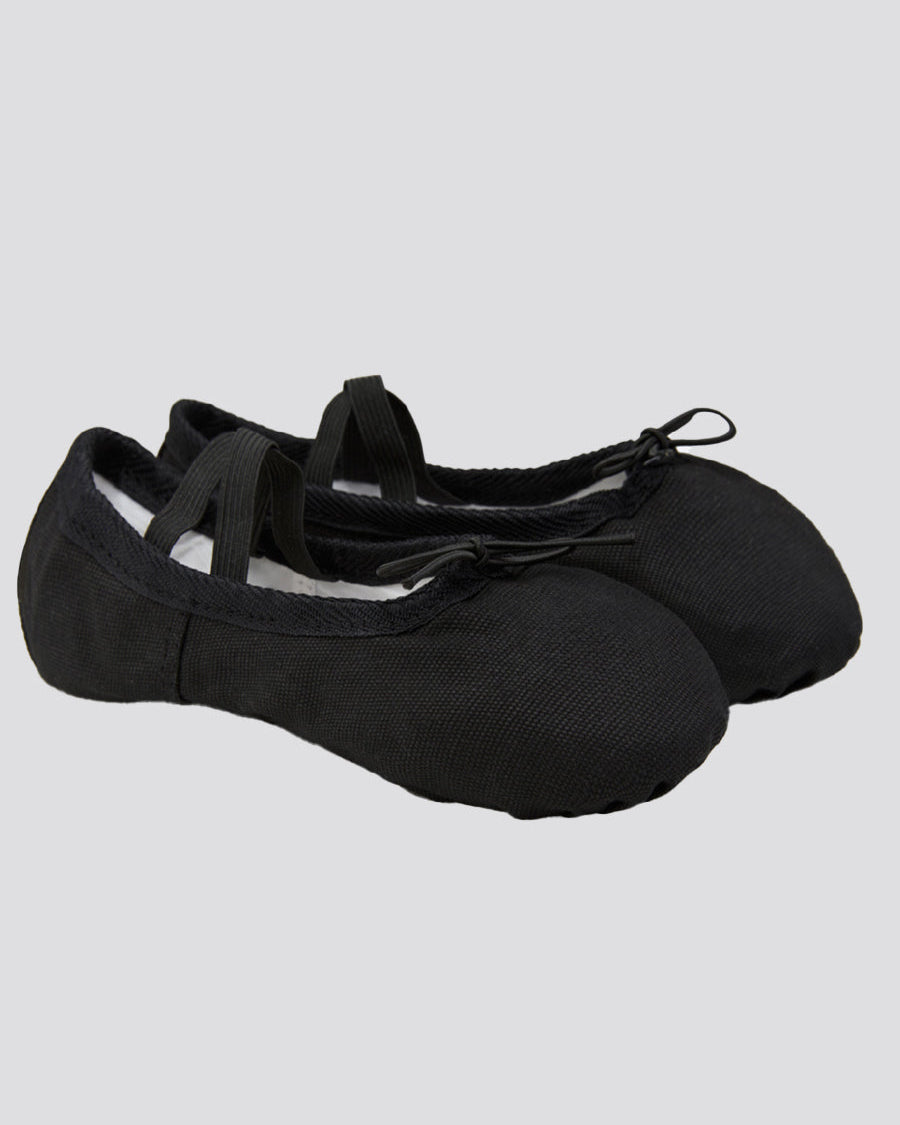
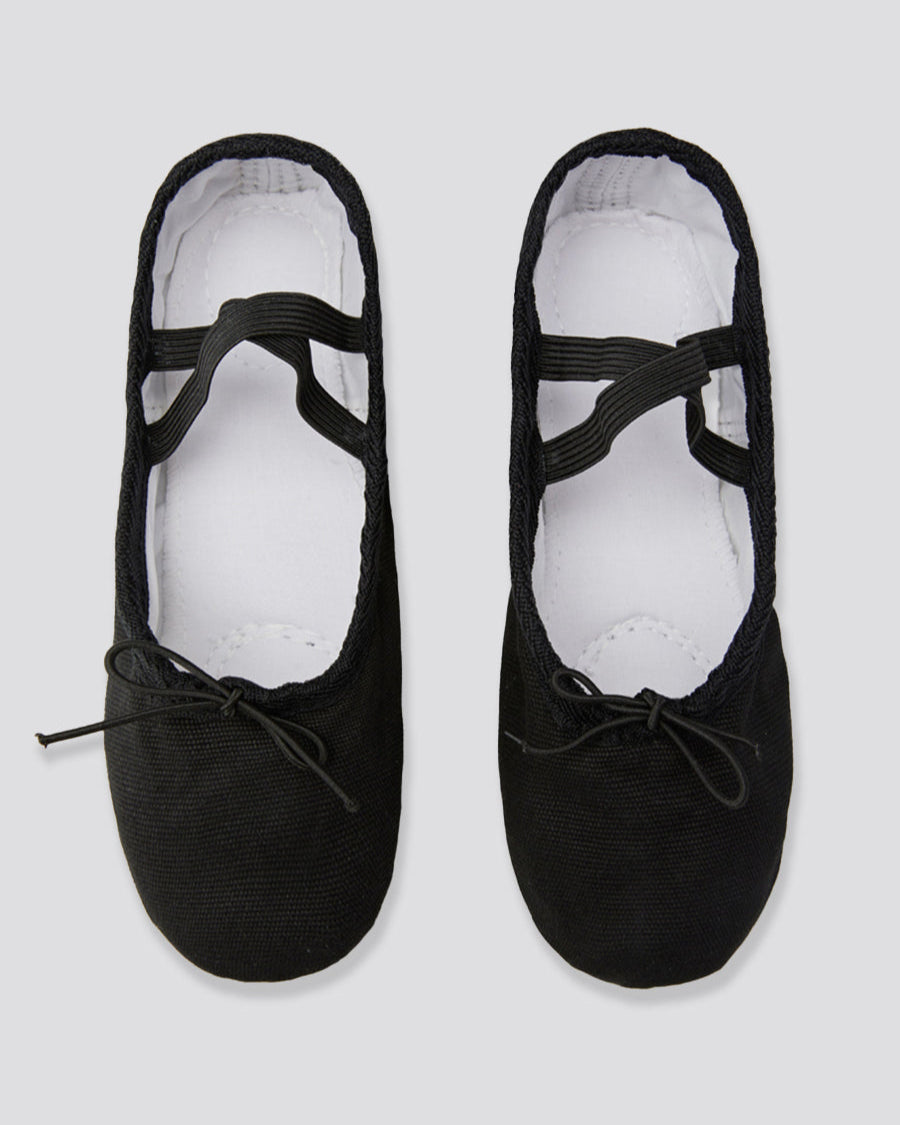
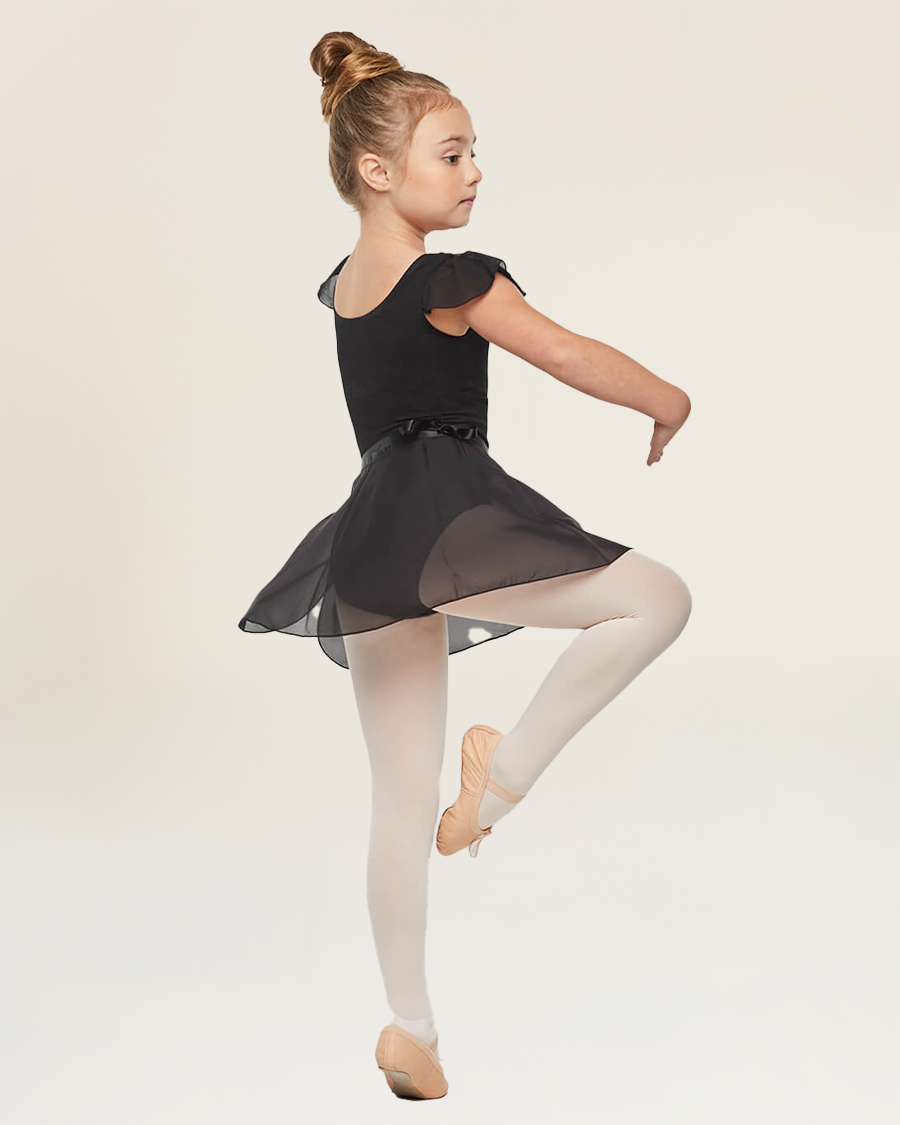
Both are the soft, round-toed slippers you picture when you think of ballet, sometimes called regular ballet shoes, to set them apart from the stiff pointe shoes that only advanced dancers wear. Nobody's putting a five-year-old in pointe shoes, so you can set those aside entirely for now.
Why Beginners Usually Start in Full Sole Ballet Shoes
Here's the part that surprises a lot of parents: that bit of stiffness in a full sole isn't really a flaw. It's sort of the point. Because the sole is one firm piece, your child's foot has to work against it a little every time they point and flex. That quiet resistance, repeated across a class, helps build the muscles in their feet over time. You can think of a full sole as a gentle workout dressed up as a shoe.
For very young beginners, a full sole can also feel more stable and structured under the foot. If your child is brand new to ballet and still figuring out balance, coordination, and basic foot placement, it is a very natural place to start.
Dance footwear specialist Laura Jenkins shares a similar view: full-sole ballet shoes are a strong starting point for beginning dancers because the resistance helps build strength and dexterity in the arches and ankles.

When Split Sole Ballet Slippers Make More Sense
Split sole ballet slippers trade some of that support for freedom. With the arch left bare, the shoe bends along with the foot, which makes it easier to fully point the toes and create that lovely arched line you see in more experienced dancers, once a dancer has the strength and control to handle it.
That's the honest reason split soles are often associated with more experienced dancers. It's not that split sole is the "better" or "fancier" shoe and full sole is the baby version. They're simply built around different priorities, support on one hand and freedom of movement on the other.
The Real Question: When Do You Switch From Full Sole to Split Sole?
This is the one parents actually want answered, and most guides go frustratingly vague on it. There's no set age and no universal rule, but here's a practical way to think about it.
The switch usually comes up as a dancer gets older, stronger, and more confident with the basics, but how quickly that happens varies a lot from child to child, so it's worth resisting the urge to rush it. The most reliable signal isn't a birthday; it's readiness. A few signs your dancer might be getting there:
-
They can do the basic steps confidently on their own.
-
Their feet have clearly gotten stronger.
-
The teacher brings it up, or you ask and they agree.
-
They have outgrown their current pair, which is a good time to ask the teacher whether they should stay with full sole or consider switching styles.
When in doubt, the teacher who watches your child in class every week is the best person to make the call, better than any chart, this one included.

A Quick Word on Material
Material usually tags along with sole type. Many beginners end up in a leather full sole, because leather is durable, supportive, and molds to a growing foot over time. Canvas is typically lightweight and breathable, which is why it shows up so often on split sole ballet dance shoes. If material is really your main question, we go deeper on it in our separate leather and canvas guides. That's a better place to start.
Buying for Toddlers and Fast-Growing Feet
We fit a lot of first-time dancers at Stelle, and the same few things tend to trip parents up every time. A few practical things worth knowing before you pay:
-
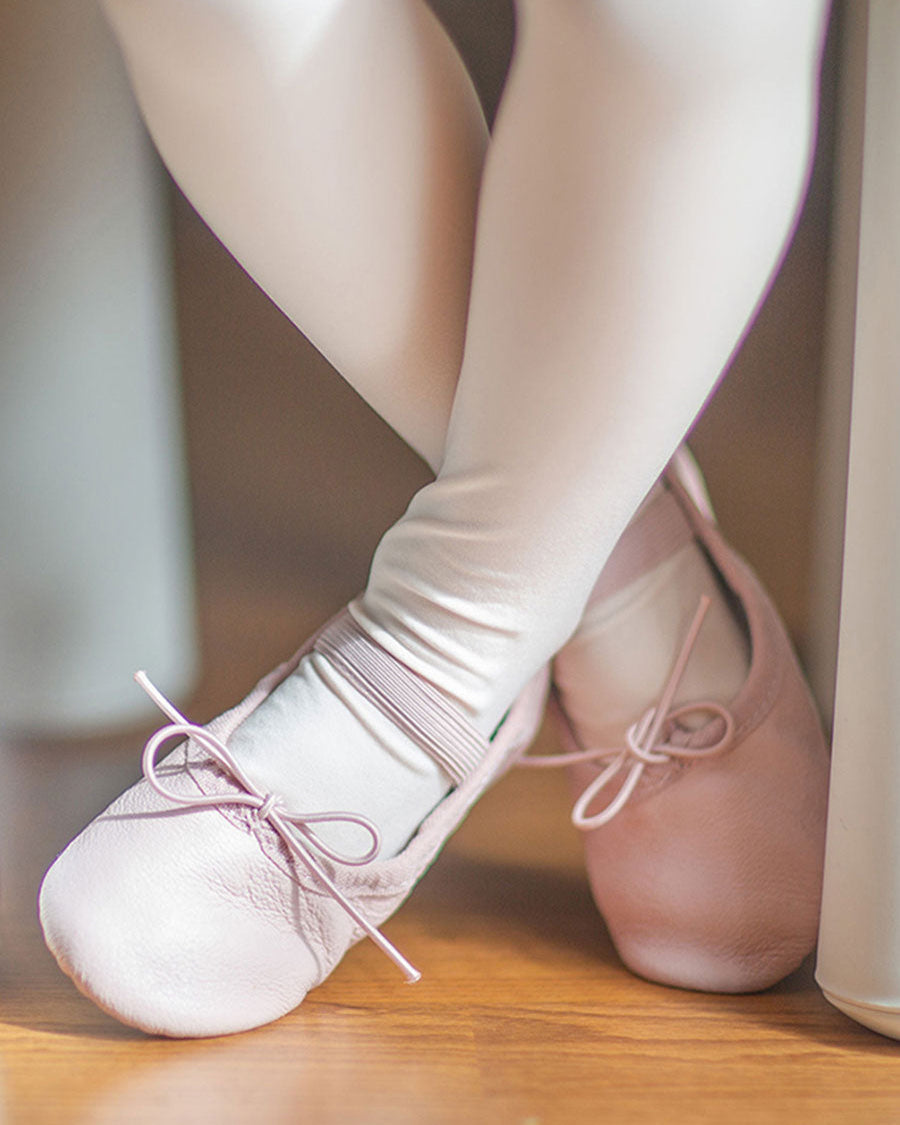
Fit them in their dance socks or tights. Have your child wear what they'll actually wear to class, and aim for a snug, sock-like fit, with no pinching but not loose either.
-
Try not to size up for "growing room." It's tempting when feet grow this fast, but a loose ballet shoe tends to slide around and makes it harder to learn good technique. Toddler ballet shoes are inexpensive enough that buying the right size now and replacing them later is usually the better call. And if you're caught between two sizes, that's what our 30-day returns are for, so you can size with confidence rather than guessing.
Because little feet change so quickly, it can help to buy from somewhere that stocks both full and split sole, so the switch is easy whenever the day comes.
A Note for Grown-Up Beginners
Quick aside, in case this is you and not just your child: adult beginners don't always make the same shoe choice as young children. Some adults prefer the flexibility of split-sole shoes, while others appreciate the structure of full sole when they first begin. Ask your teacher what's allowed, then prioritize a secure fit and the feel that helps you move comfortably in class.
A Few Questions Parents Always Ask
When should my child switch from full sole to split sole ballet shoes?
There's no magic age for it. It usually comes up as a child gets older and stronger and grows more confident with the basics, and when the teacher feels they're ready. Since every dancer develops at their own pace, let the teacher lead; they see your child dance.
Can a beginner just start in a split sole ballet shoe?
For a young child, full sole is generally the recommended starting point for the support and stability. Teens and adults tend to have a bit more leeway to start in a split sole ballet shoe if they prefer the feel, but it's still worth checking with the teacher.
Are ballet slippers, ballerina shoes, and ballet flats all the same thing?
“Ballet slippers” and “ballet shoes” usually refer to the soft shoes worn for dance class. “Ballet flats” can also refer to everyday fashion shoes, so make sure the pair you buy is designed for dance and has the appropriate soft sole for studio use.
Can my kid wear a ballet slipper as a regular shoe?
It's best not to. A ballet slipper has a thin, soft suede sole made for studio floors, so wearing ballet slippers as shoes outside wears them out quickly and offers little protection. It's better to keep the dance pair for dancing.
Do most teachers recommend full sole for beginners?
Generally, yes, it's the usual recommendation. Most teachers start beginners, especially young children, in full sole and move them to split sole later on.
Finding the Right Pair
Choosing between full sole and split sole really comes down to one thing: matching the shoe to where your dancer is right now. Full sole to build the foundation, split sole to refine things later, and a quick word with the teacher whenever you're unsure. When you're ready, have a look at our kids ballet shoes collection for a pair that fits comfortably and supports her next class.